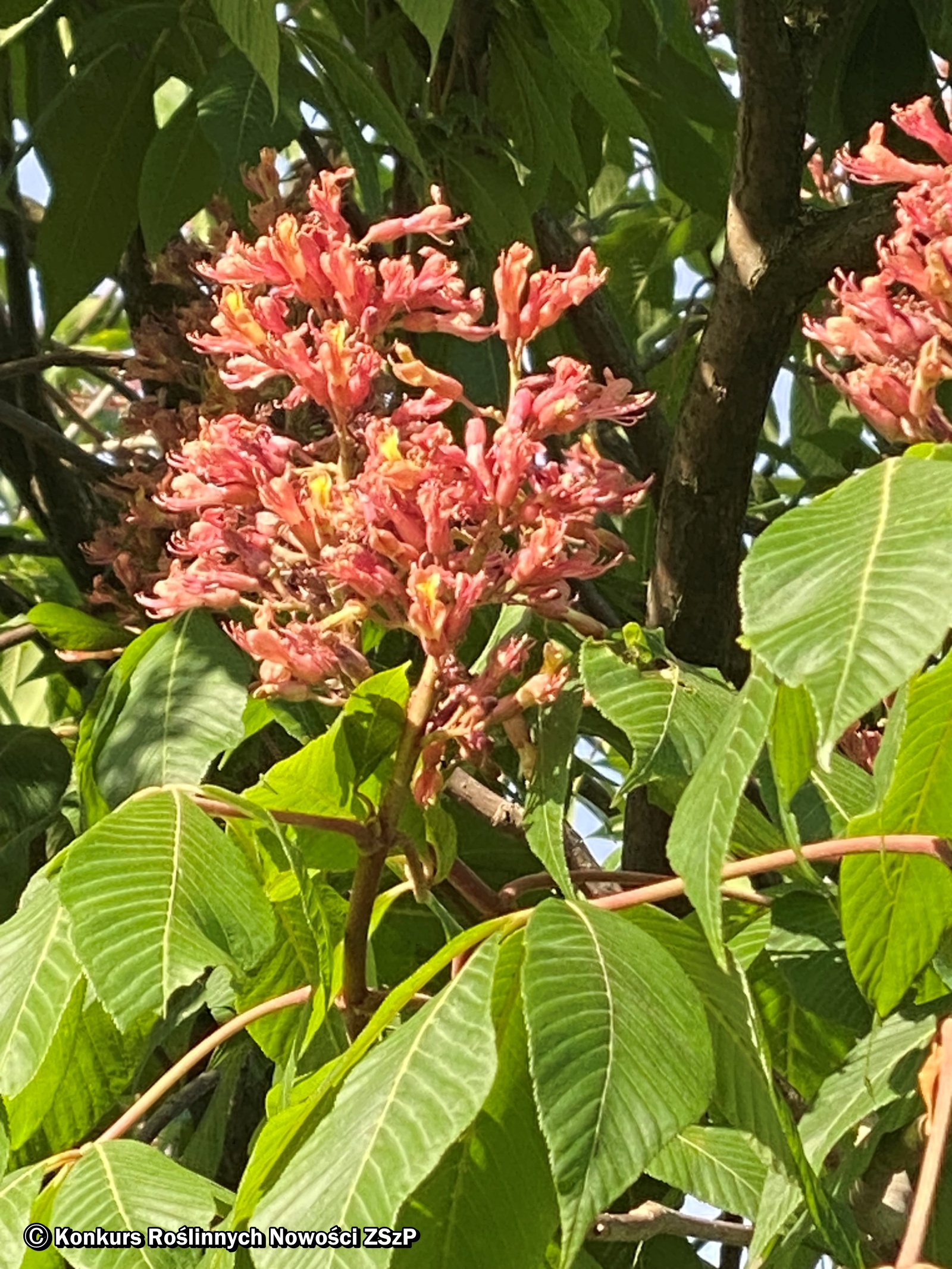
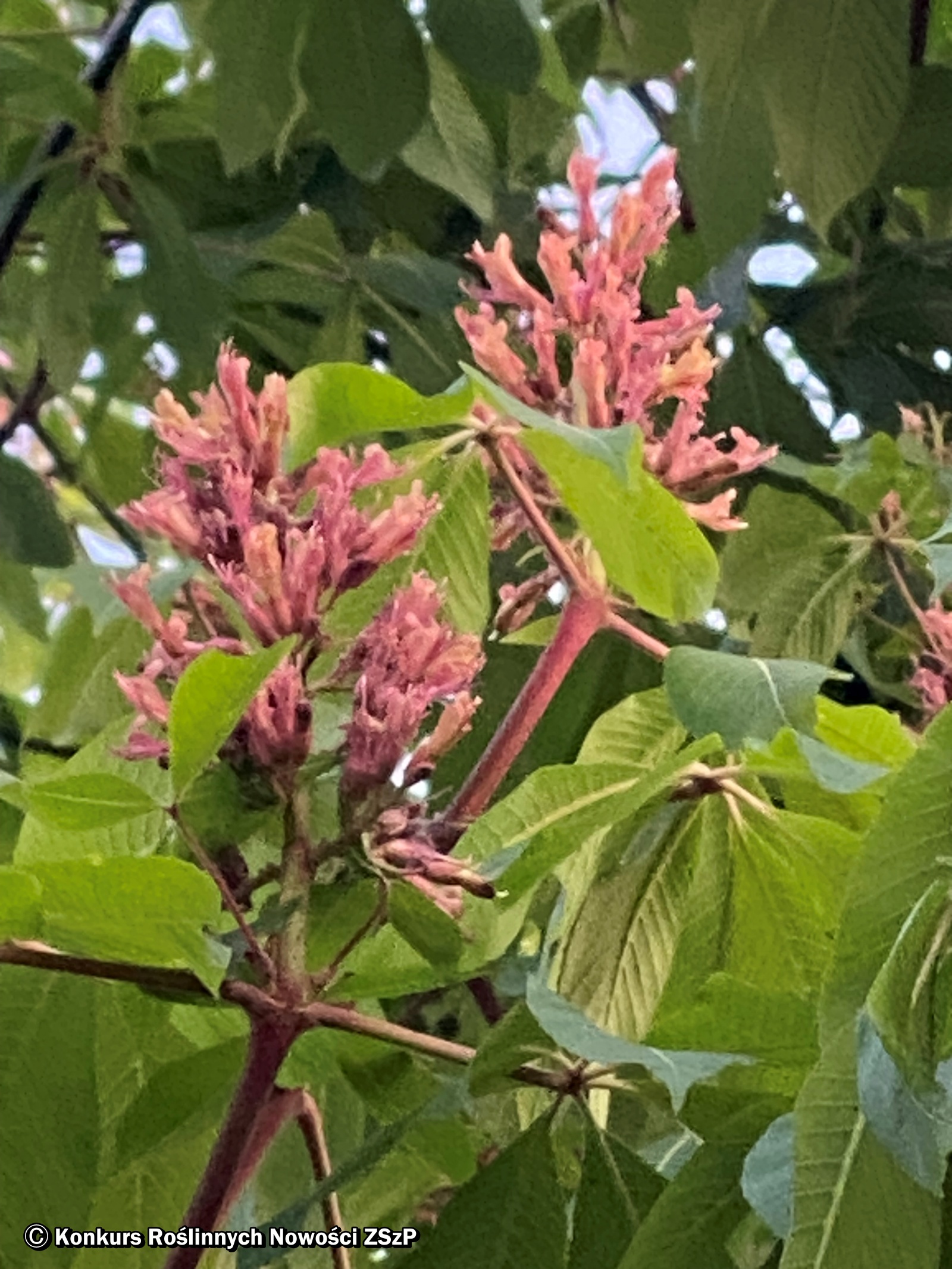
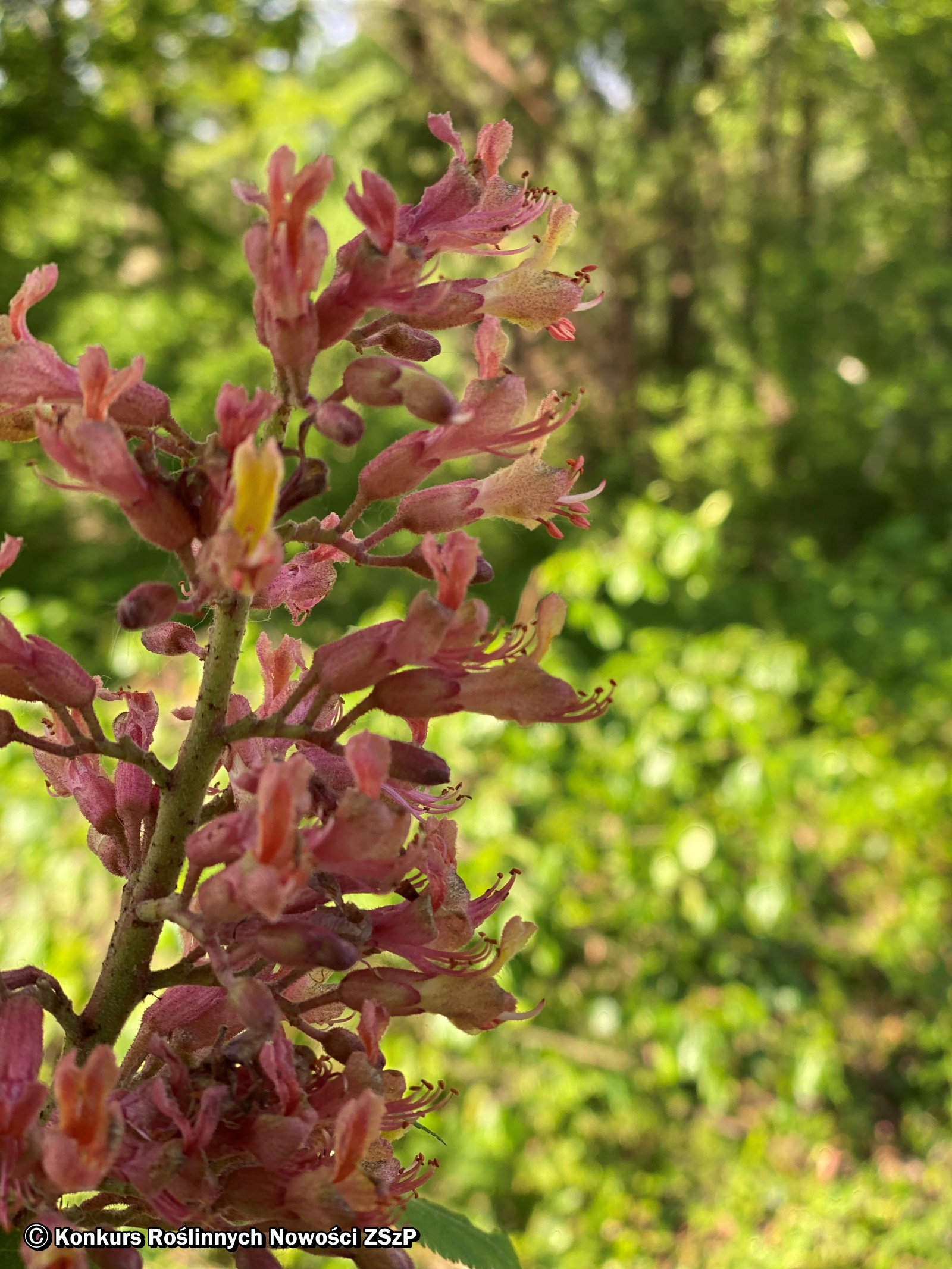
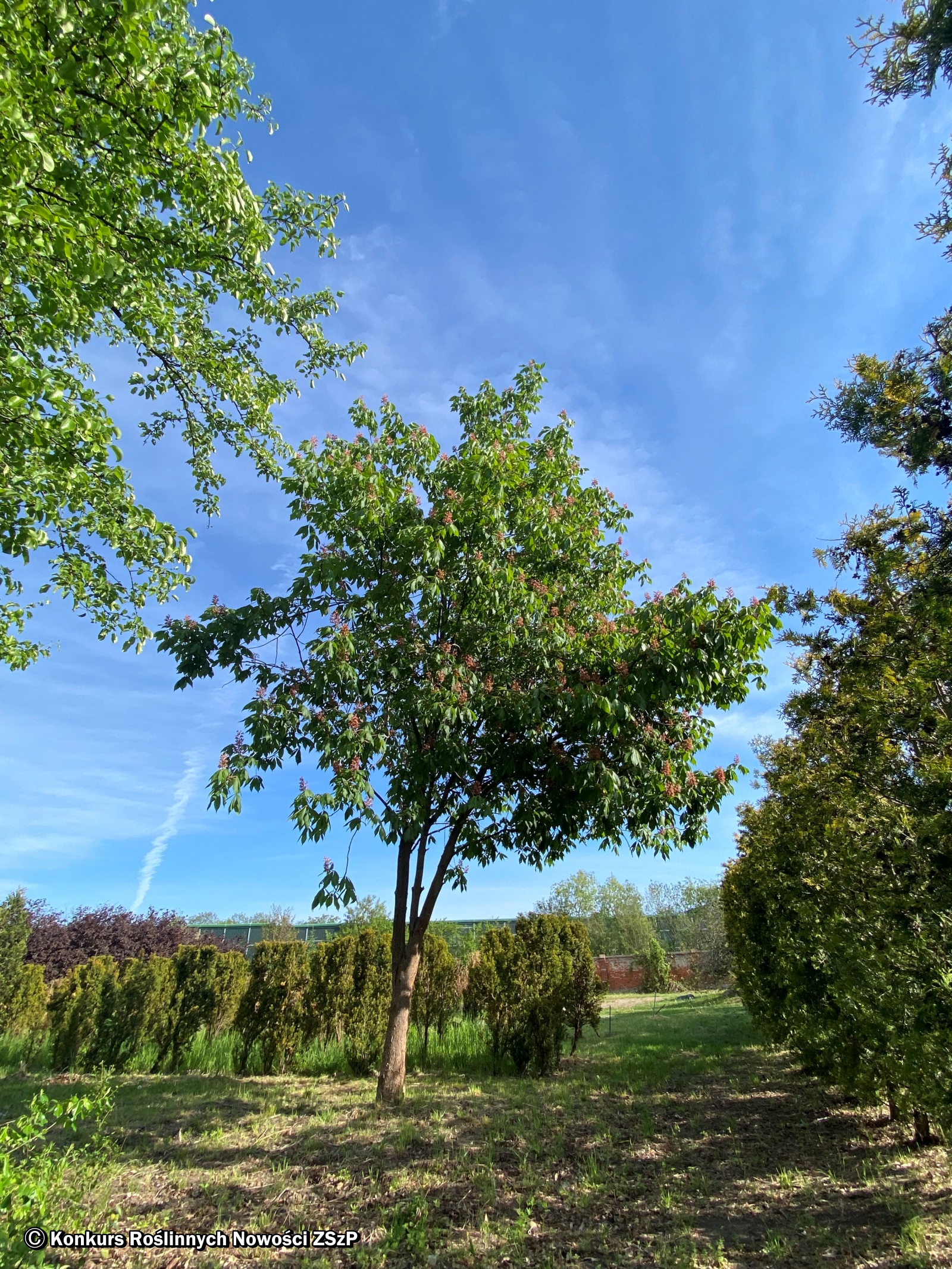
A small tree distinguished by its bicoloured red and yellow flowers. After 35 years, it reaches approximately 7.5 m in height. It is noticeably smaller and more resistant to leaf miner infestations than the commonly planted horse chestnut in Poland. The leaves are initially reddish, later turning dark green on the upper side and distinctly glaucous underneath, creating a two-toned effect; in autumn they change colour to yellow and orange. It bears abundant fruit in October. The fruits are smooth and resemble those of the yellow horse chestnut. The seeds are dark brown with a subtle marbled pattern. The plant is melliferous. This is not only a promising dendrological curiosity but also a fascinating story. The seedling, later described as a new variety, was grown from seeds sown by Piotr Tadeusz Hoser in the late 1980s, shortly before his death. After 30 years, the seedling was selected by his grandson, Wojciech, who named it in honour of his grandfather. Hardiness zone: 5b (−26 to −23°C).
Cultivar denomination: ‘Piotr III’
Breeder: Wojciech Hoser, Poland
Year of market introduction: 2026
Applicant: SZKÓŁKI ŻBIKOWSKIE, ul. Żbikowska 51, 05-860 Pruszków, Poland