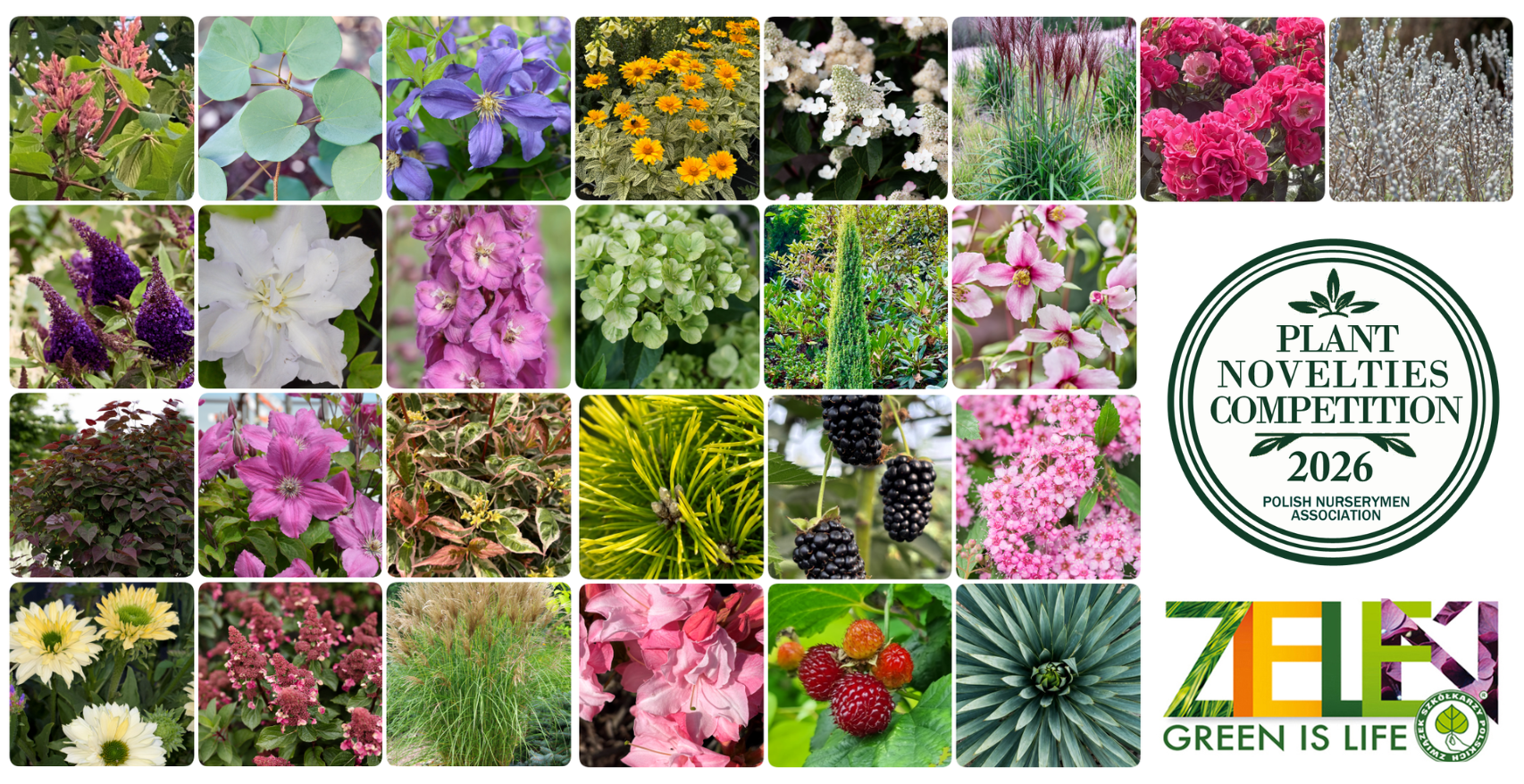
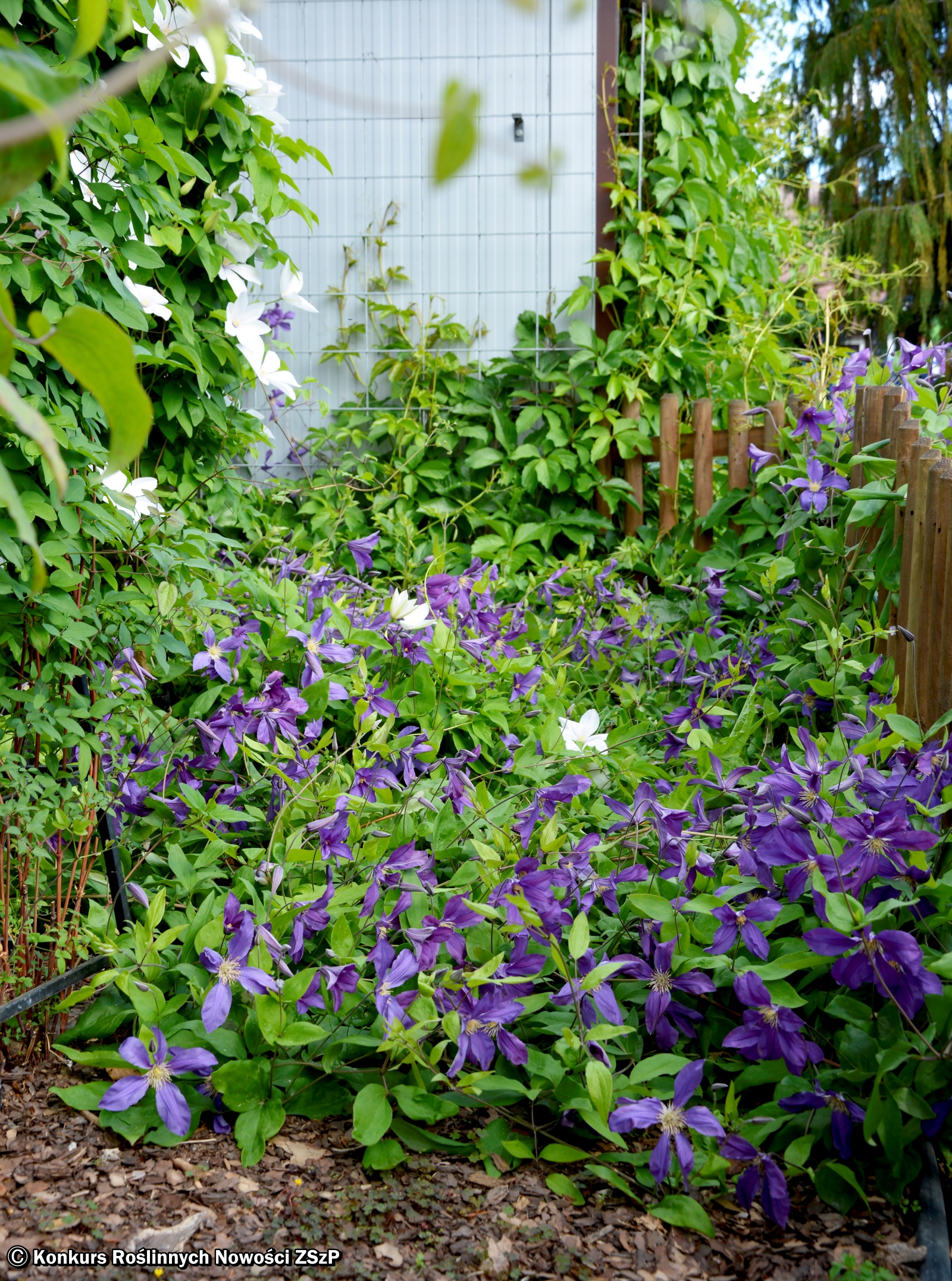
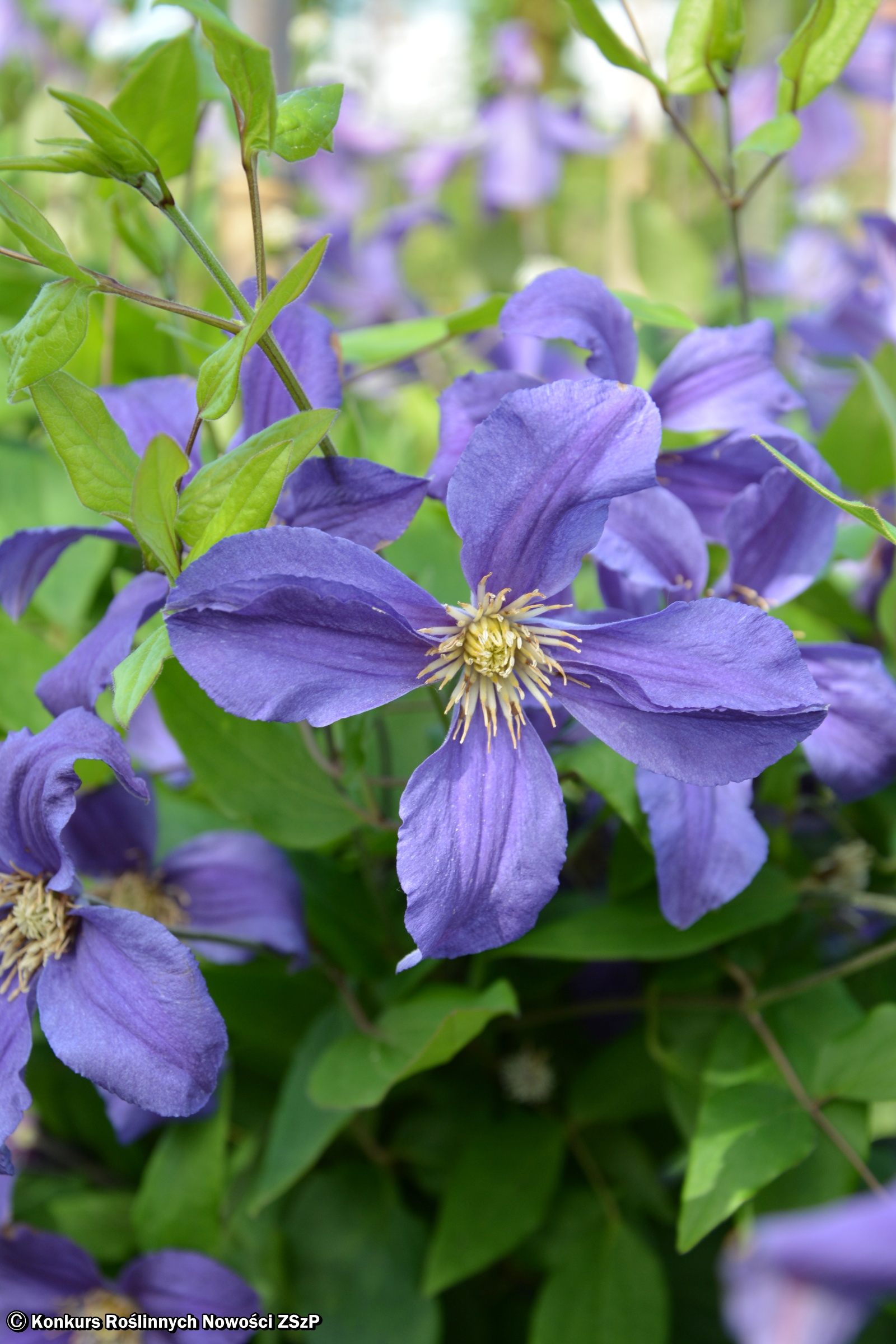
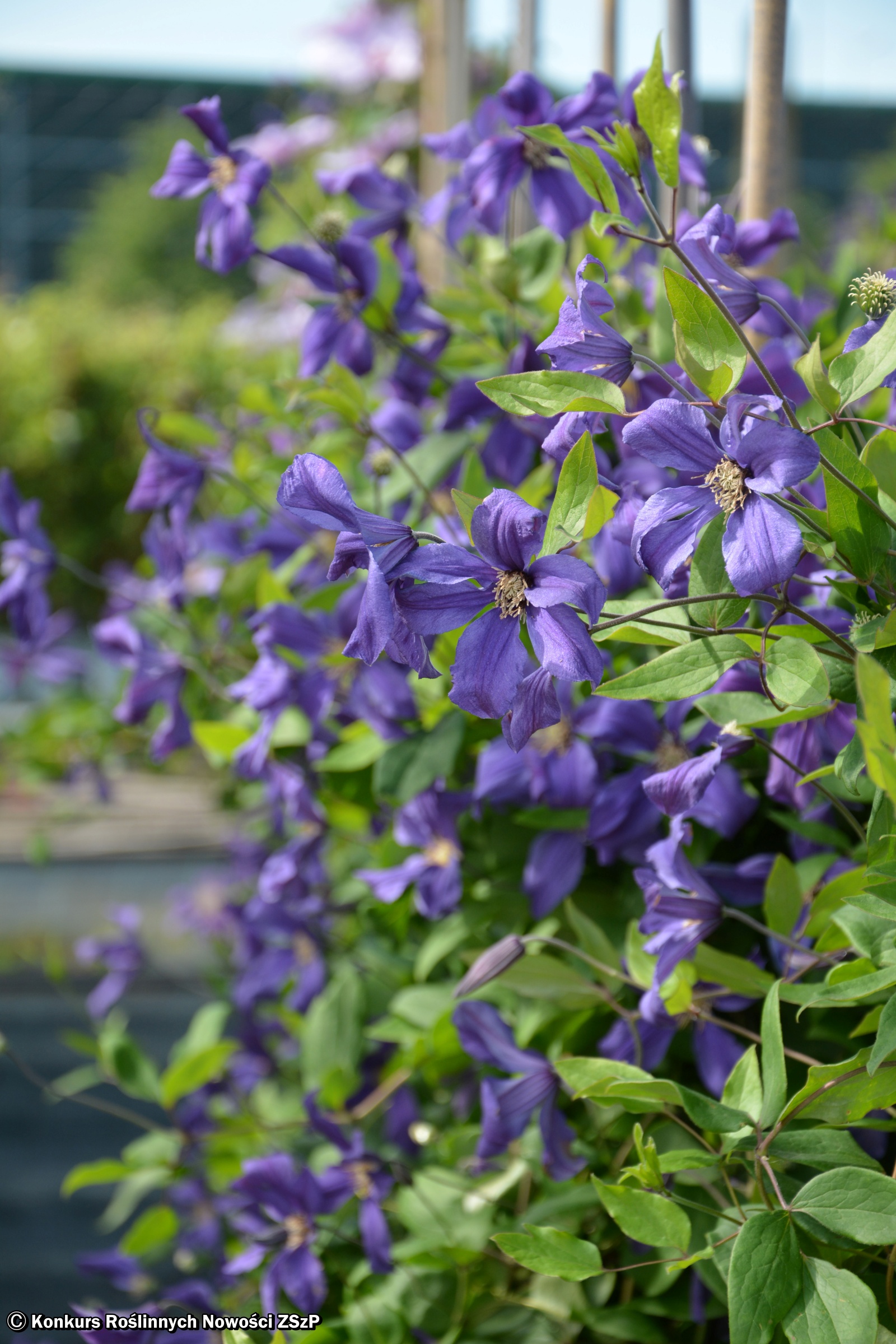
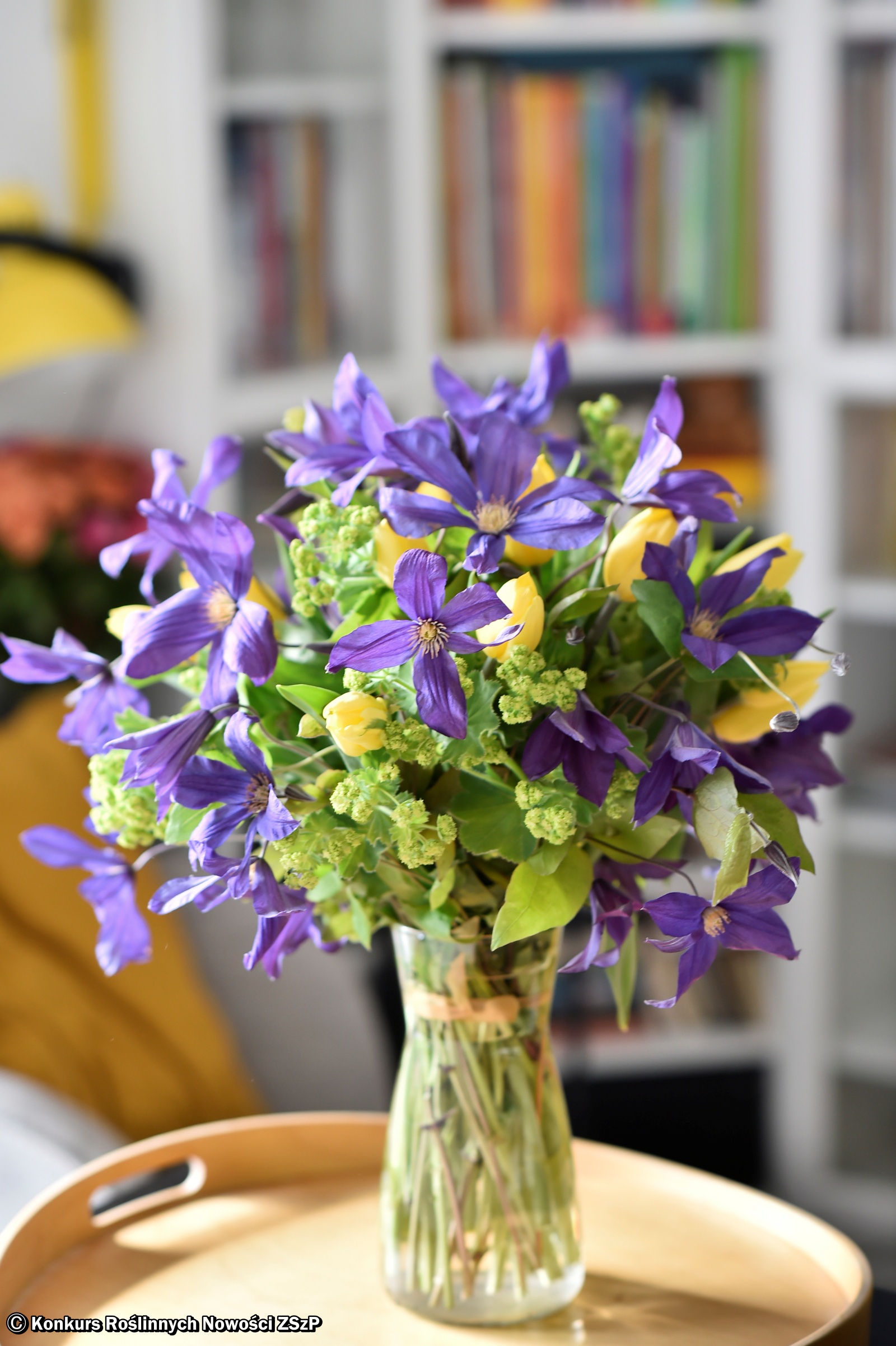
Aesculus ×arnoldiana ‘Piotr III’

Aesculus ×arnoldiana ‘Piotr III’

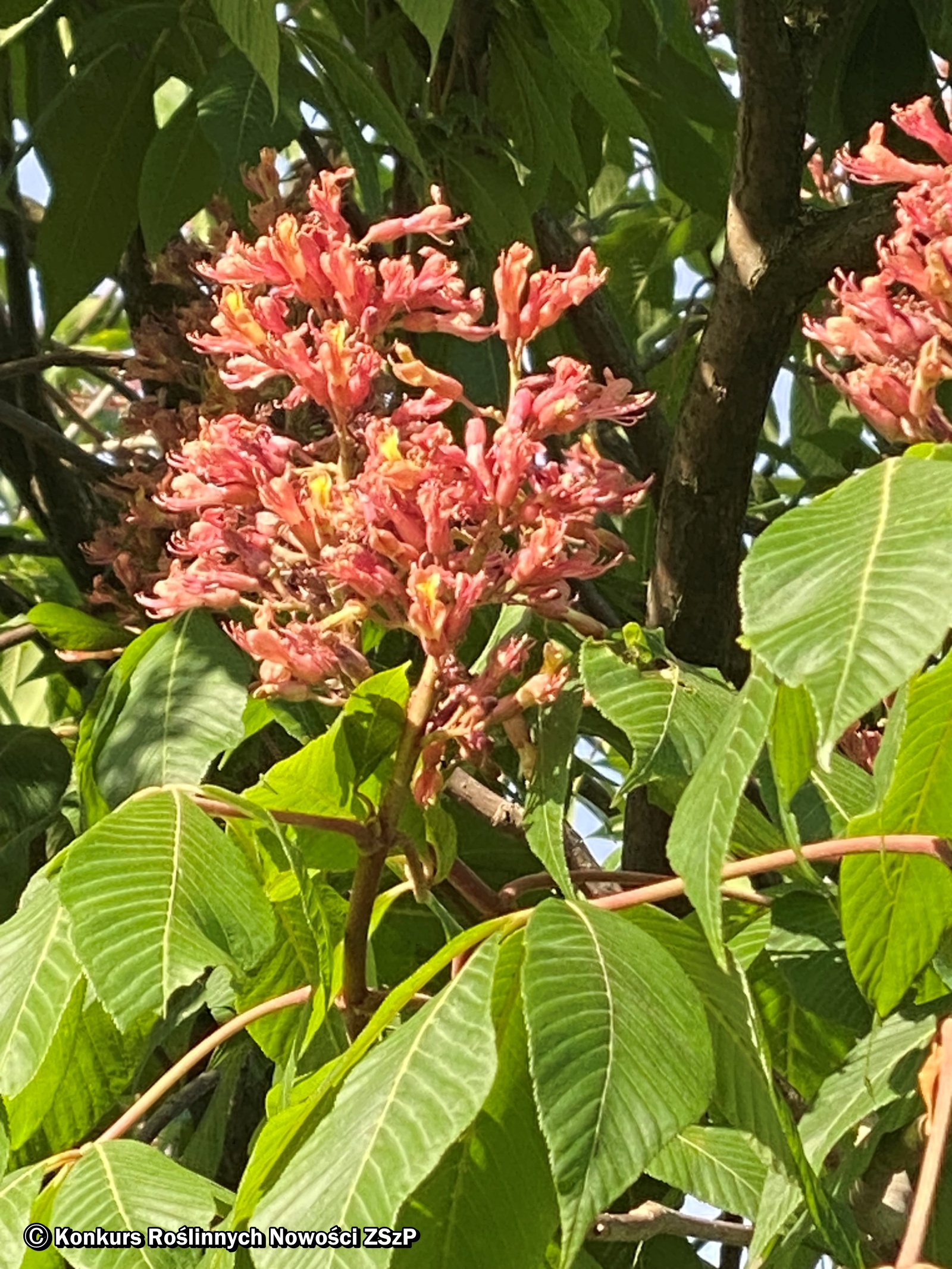
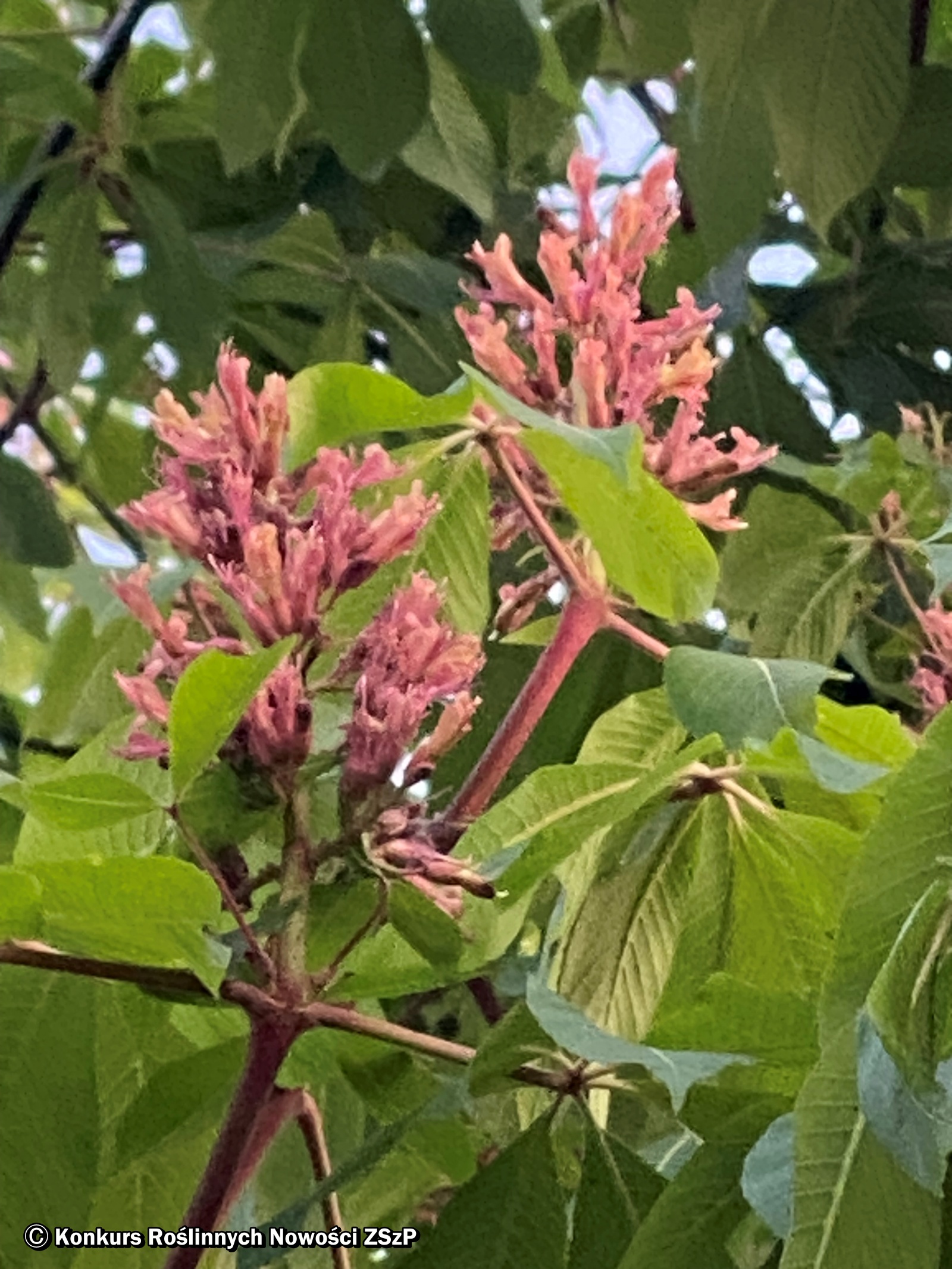
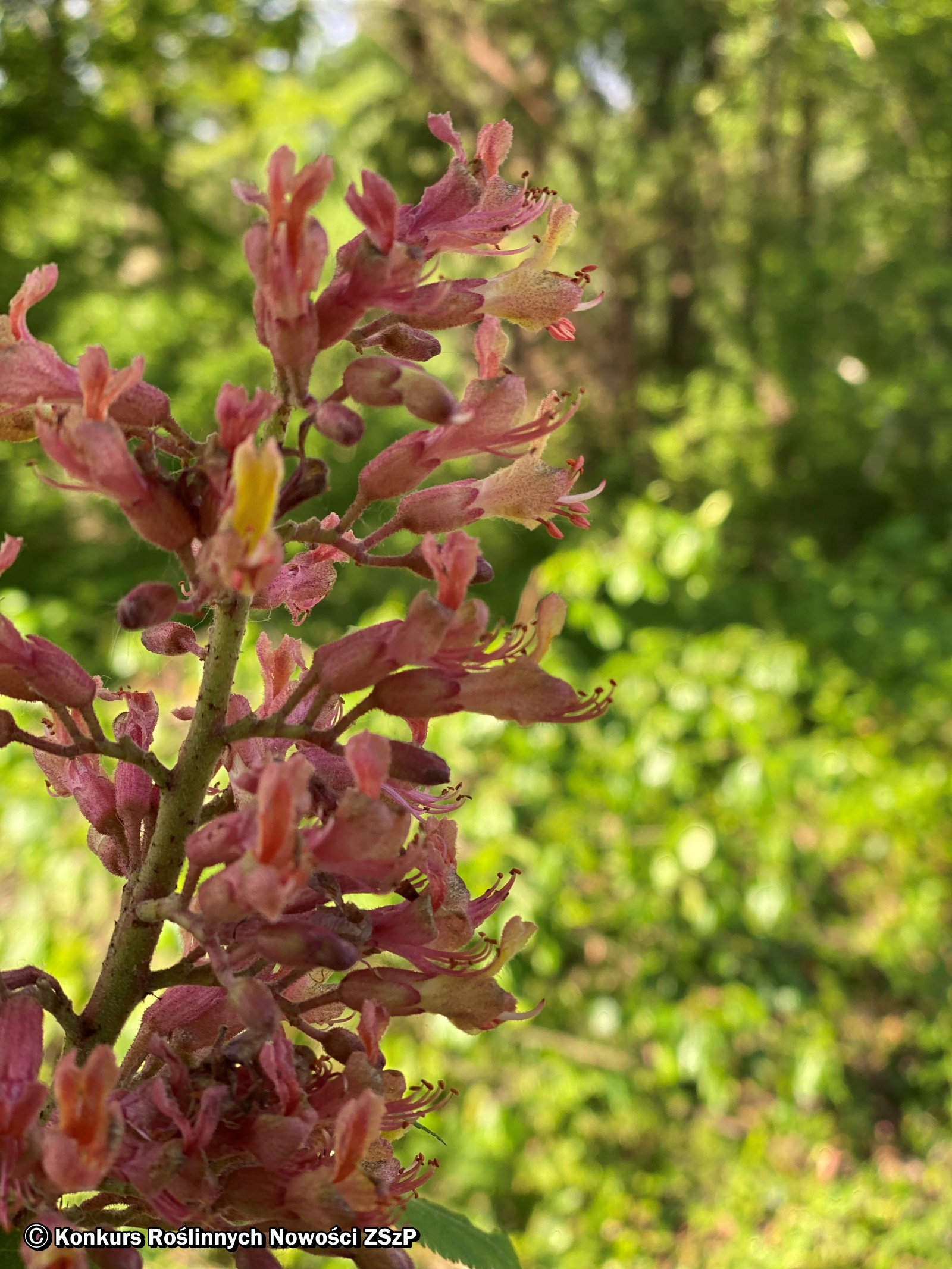
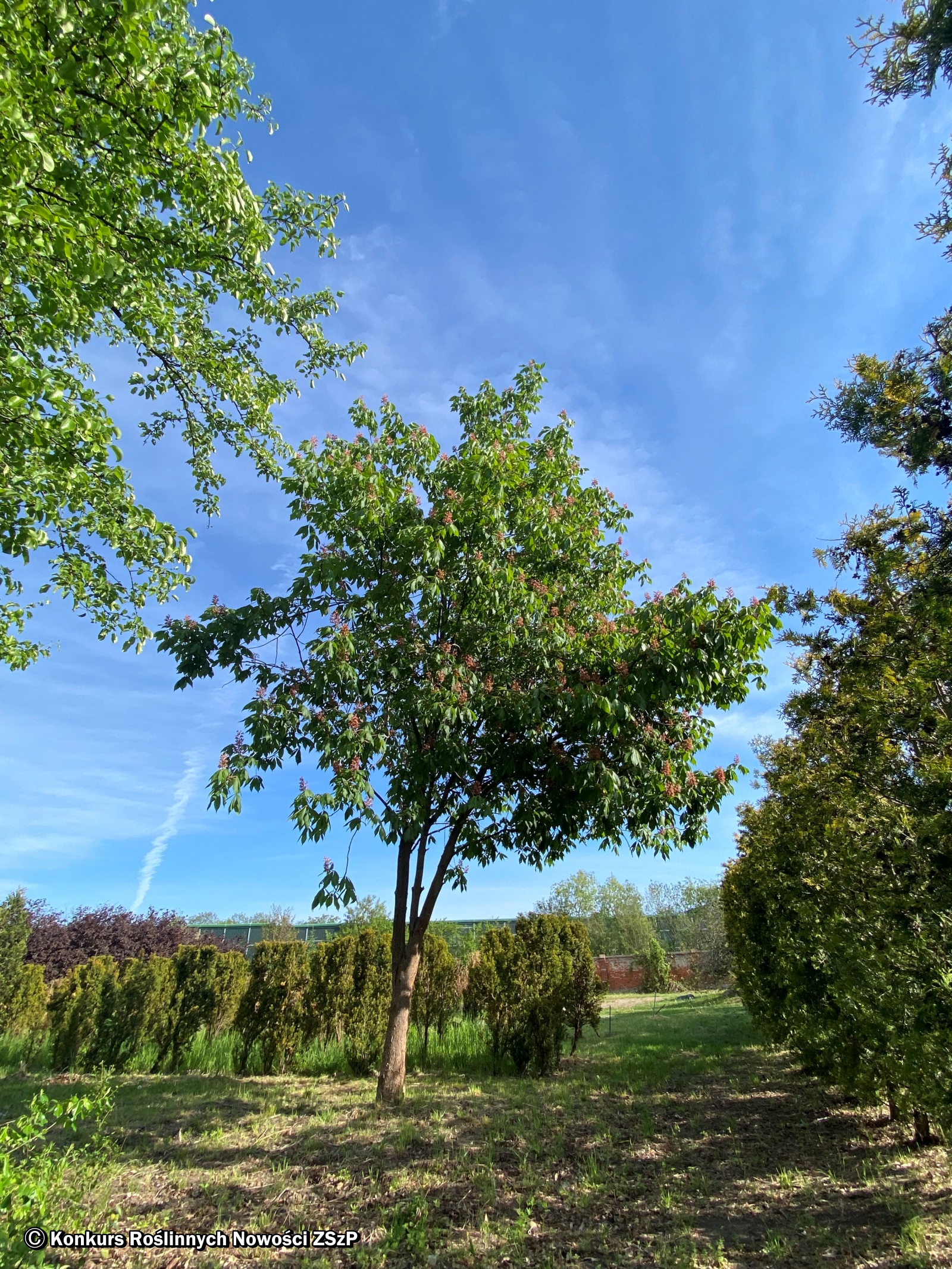
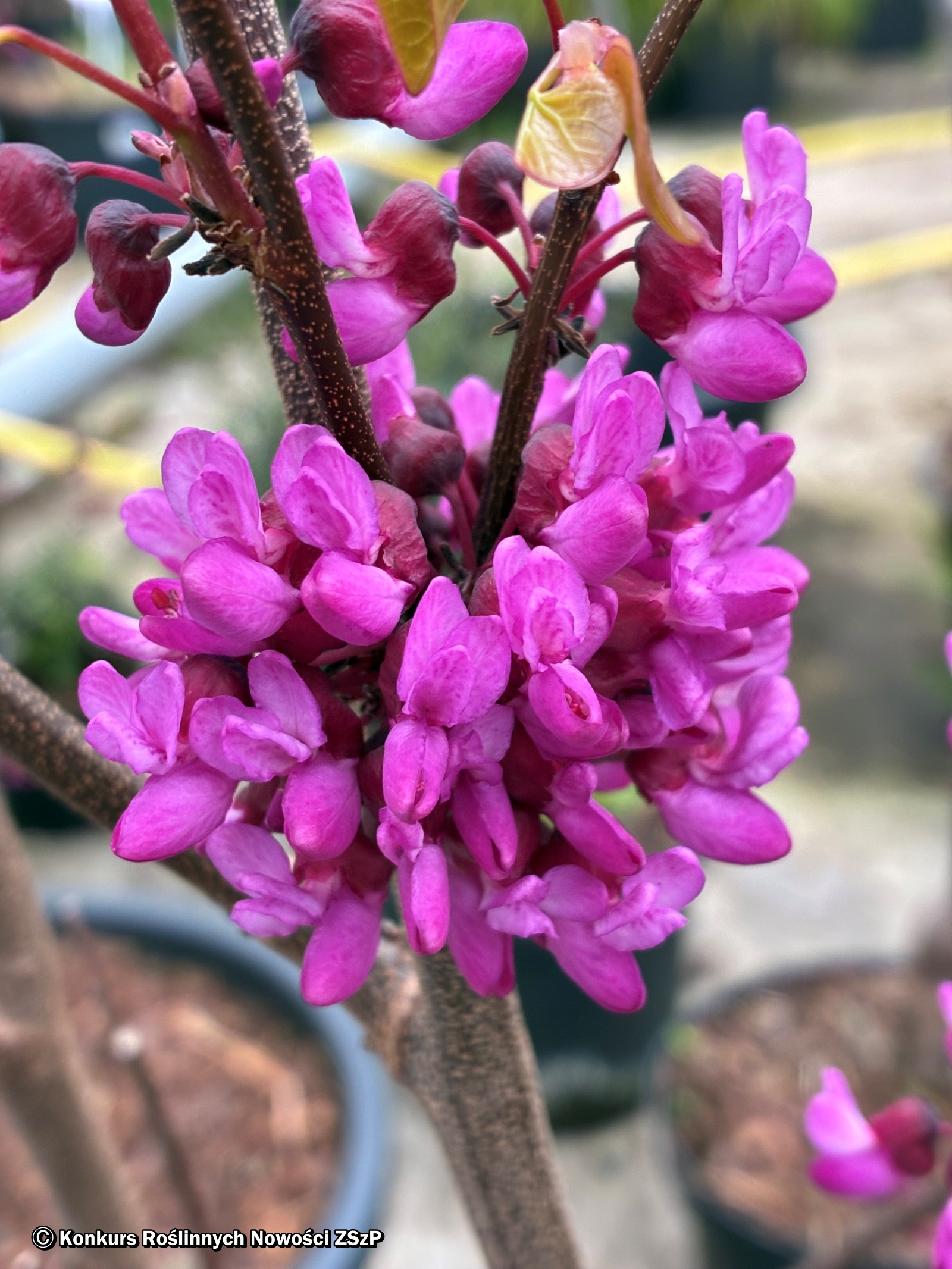
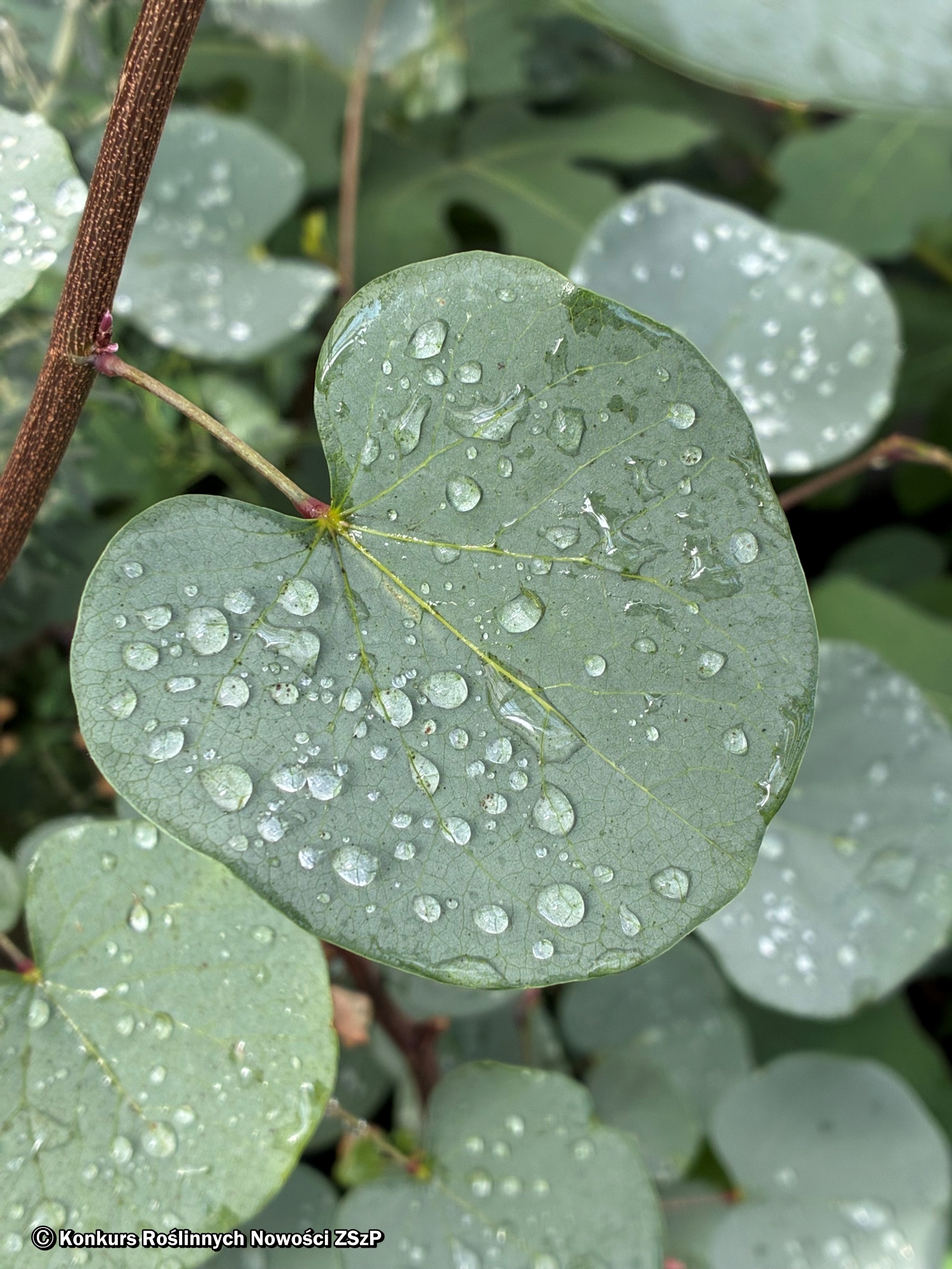
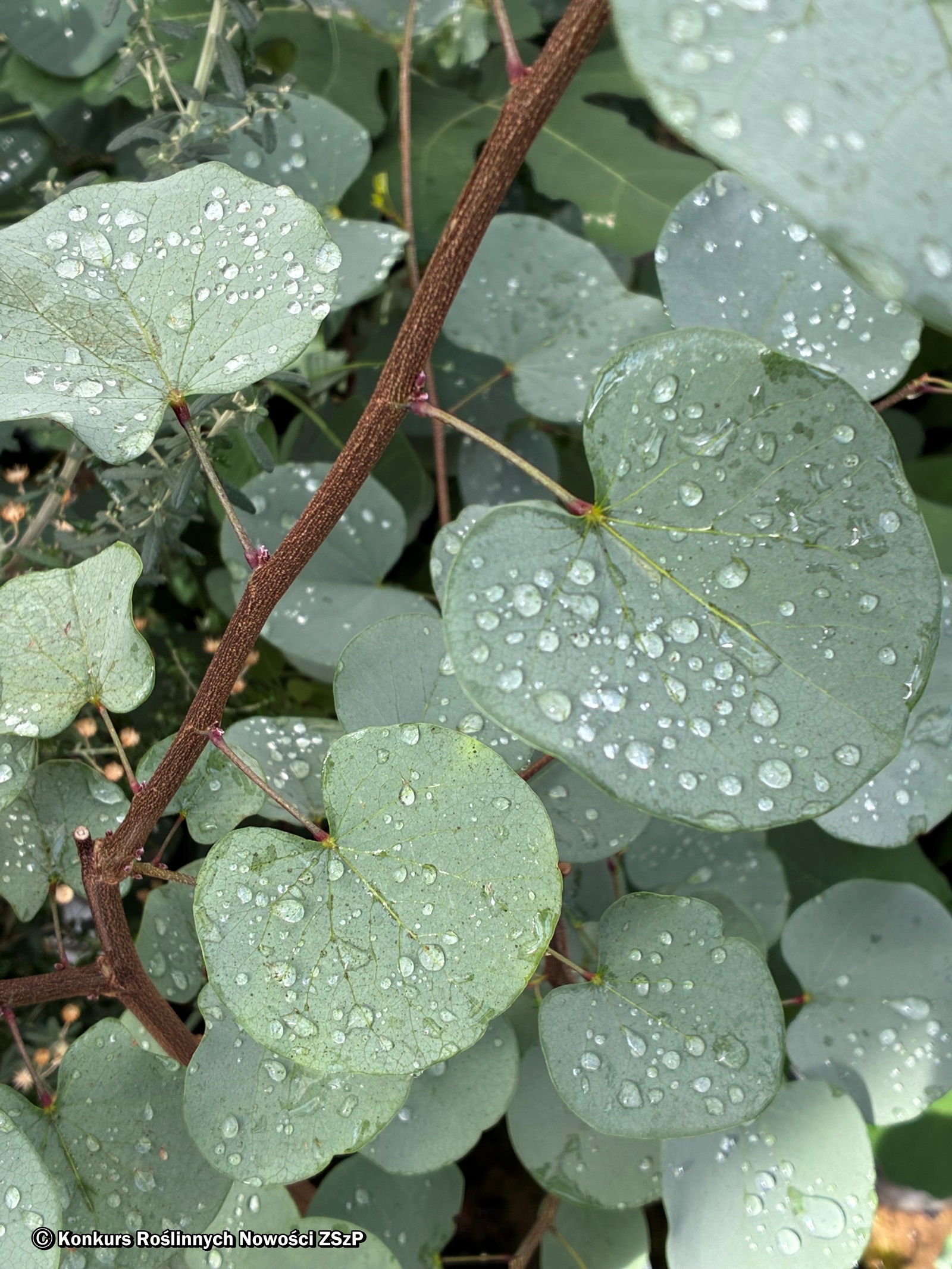
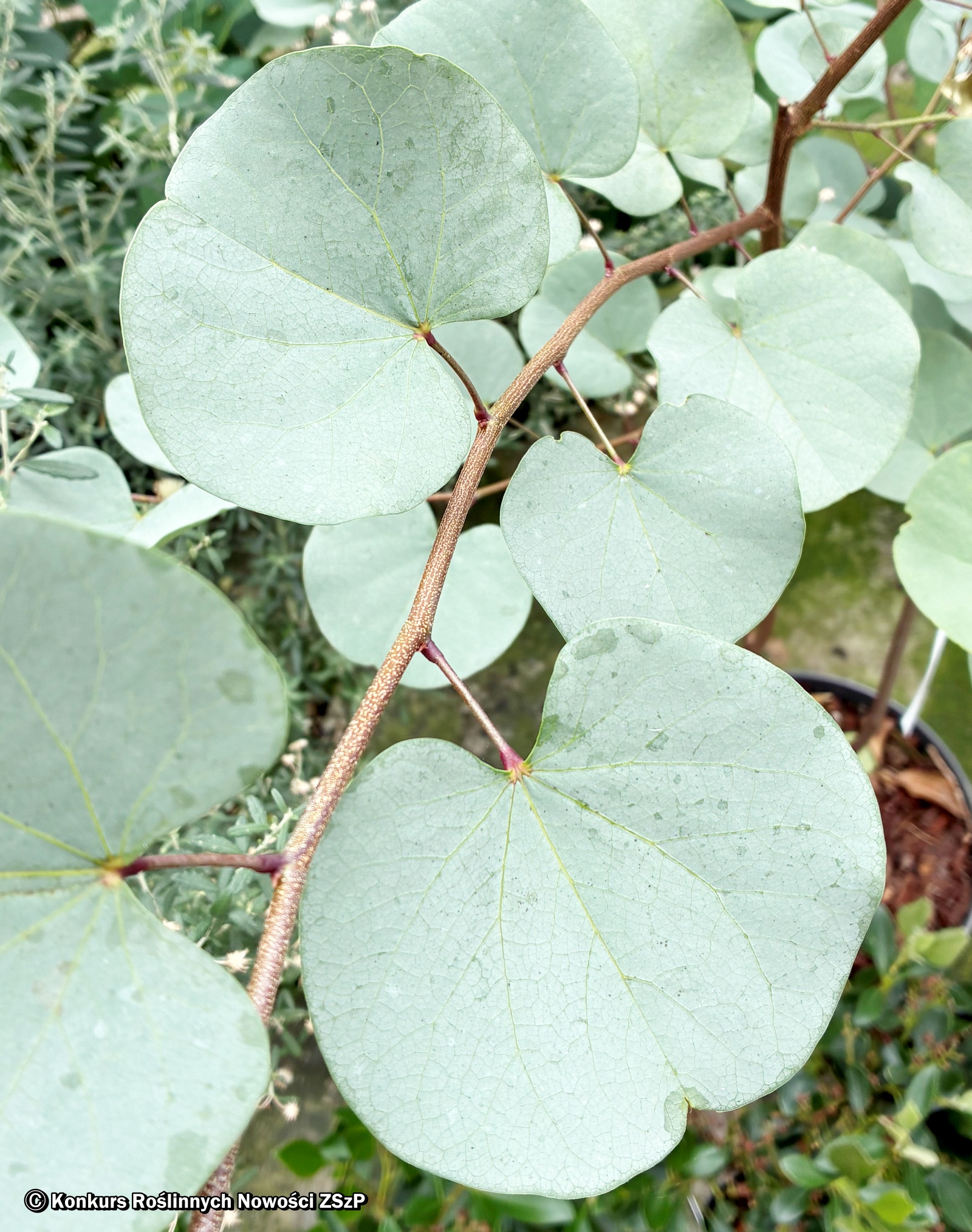
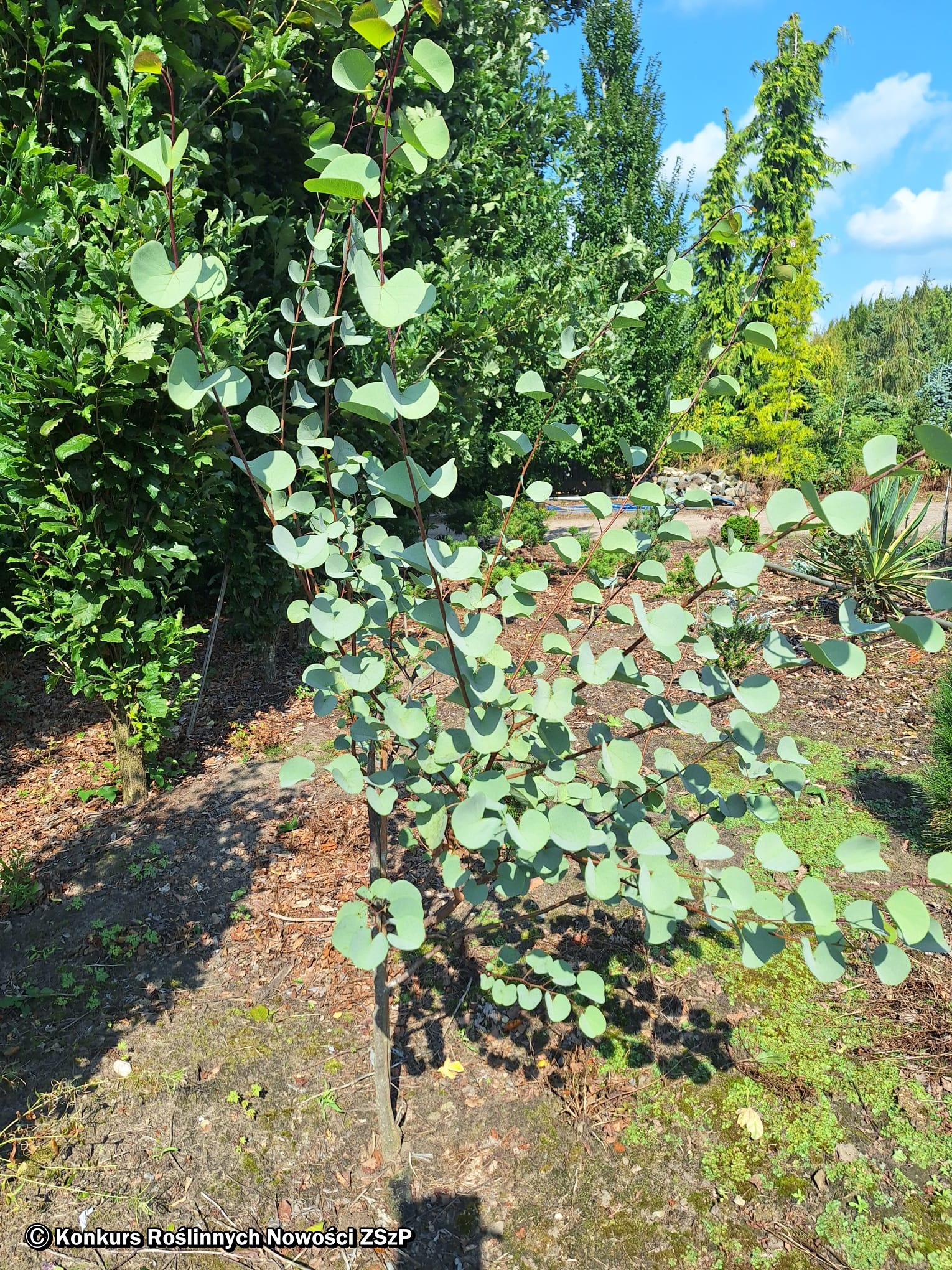
A small tree distinguished by its bicoloured red and yellow flowers. After 35 years, it reaches approximately 7.5 m in height. It is noticeably smaller and more resistant to leaf miner infestations than the commonly planted horse chestnut in Poland. The leaves are initially reddish, later turning dark green on the upper side and distinctly glaucous underneath, creating a two-toned effect; in autumn they change colour to yellow and orange. It bears abundant fruit in October. The fruits are smooth and resemble those of the yellow horse chestnut. The seeds are dark brown with a subtle marbled pattern. The plant is melliferous. This is not only a promising dendrological curiosity but also a fascinating story. The seedling, later described as a new variety, was grown from seeds sown by Piotr Tadeusz Hoser in the late 1980s, shortly before his death. After 30 years, the seedling was selected by his grandson, Wojciech, who named it in honour of his grandfather. Hardiness zone: 5b (−26 to −23°C).

Cultivar denomination: ‘Piotr III’

Breeder: Wojciech Hoser, Poland

Year of market introduction: 2026

Applicant: SZKÓŁKI ŻBIKOWSKIE, ul. Żbikowska 51, 05-860 Pruszków, Poland

Buddleja davidii BUTTERFLY CANDY® LITTLE BLACKBERRY

Buddleja davidii BUTTERFLY CANDY® LITTLE BLACKBERRY

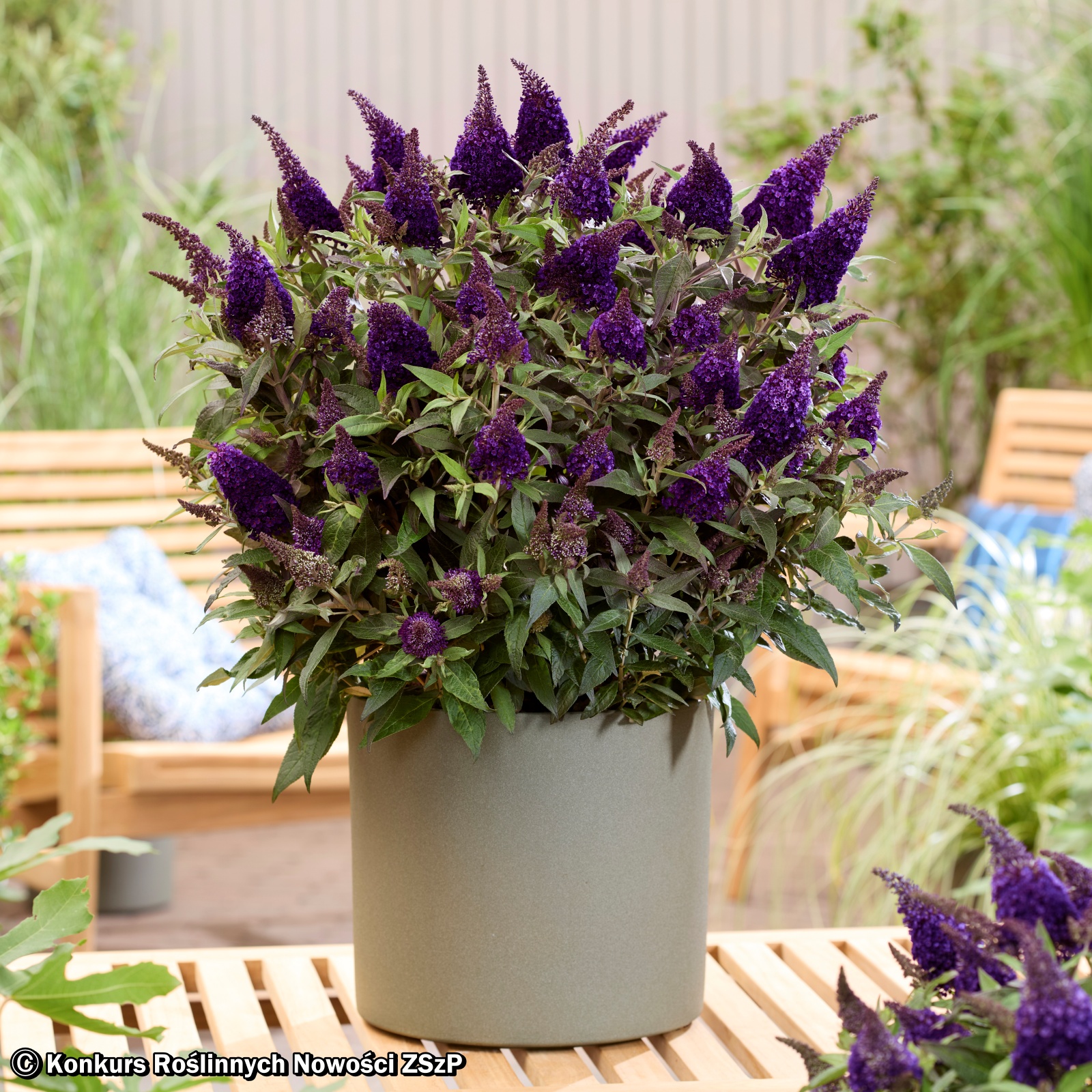
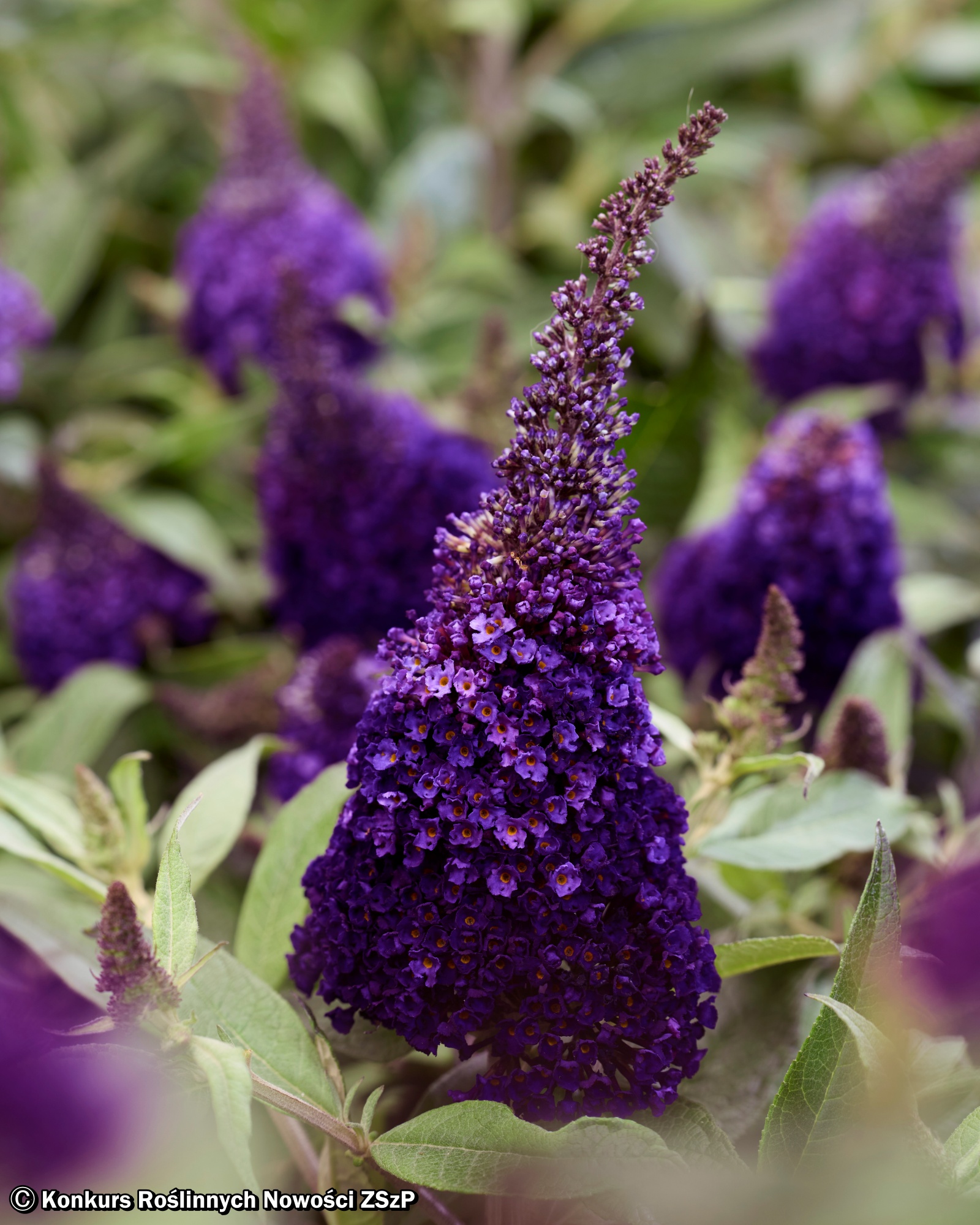
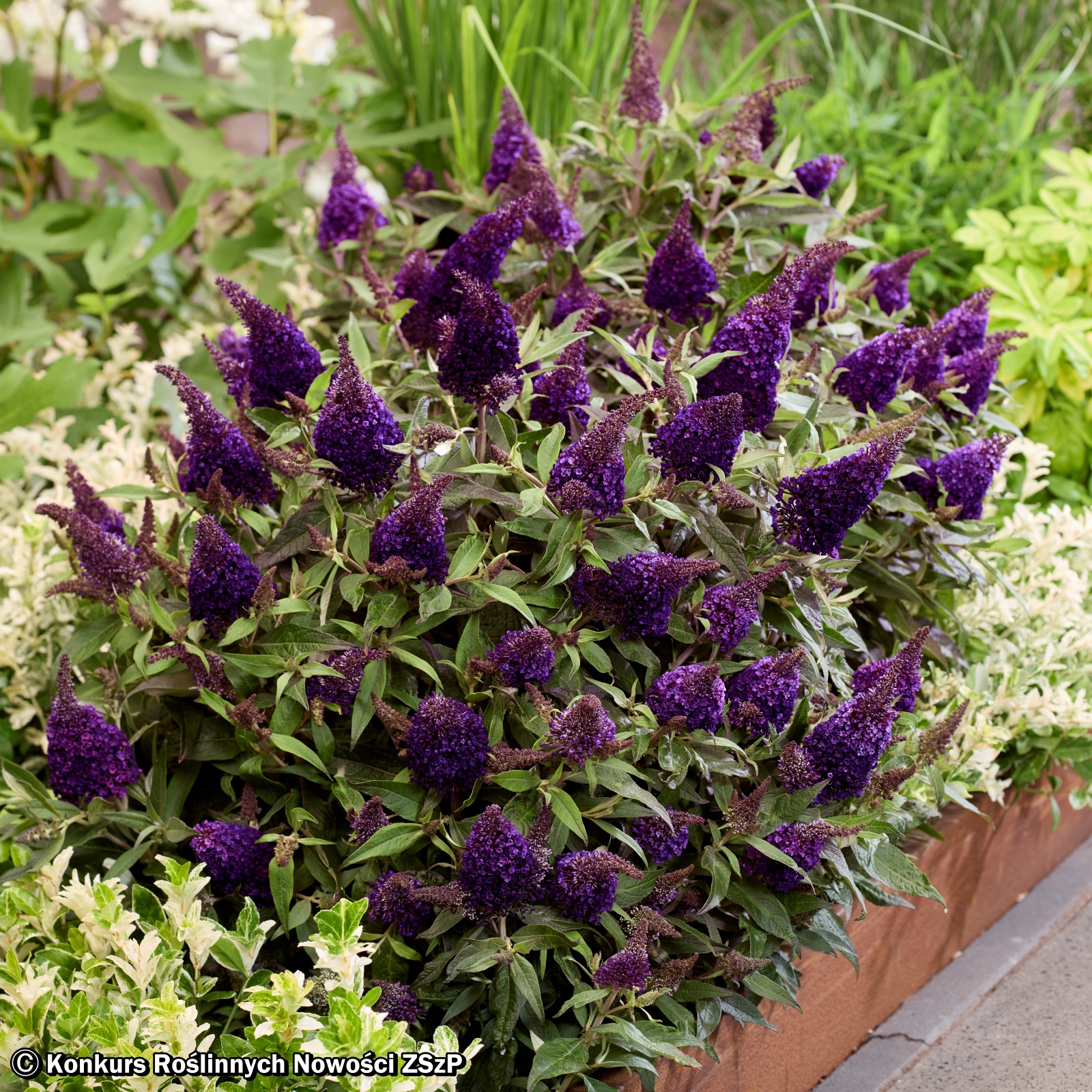
A low shrub characterized by a compact, rounded habit and dark purple flowers. The plant is well-branched and dense, reaching up to 0.8 m in height and a similar width. The leaves are lanceolate and grey-green. It blooms profusely from June to September, producing flowers in the darkest shade of purple, arranged in large, showy panicles. The flowers emit a light, sweet fragrance and are attractive to butterflies and bees. Thanks to its small size, it is suitable for small home gardens as well as for container planting on balconies, terraces, and patios. It flowers on current-year shoots and requires pruning in spring. It grows best in sunny locations. It prefers well-drained, fertile, and moderately moist soils. Hardiness zone: 7a (−17 to −15°C).

Cultivar denomination: ‘BotEx 016’ PBR

Breeder: Botanic Experience BV, The Netherlands

Year of market introduction: 2026

Applicant: Van SON & KOOT BV, Dongenseweg 3a, 5171 NA, Kaatsheuvel, The Netherlands

Cercis canadensis GARDEN GEMS® AMETHYST

Cercis canadensis GARDEN GEMS® AMETHYST

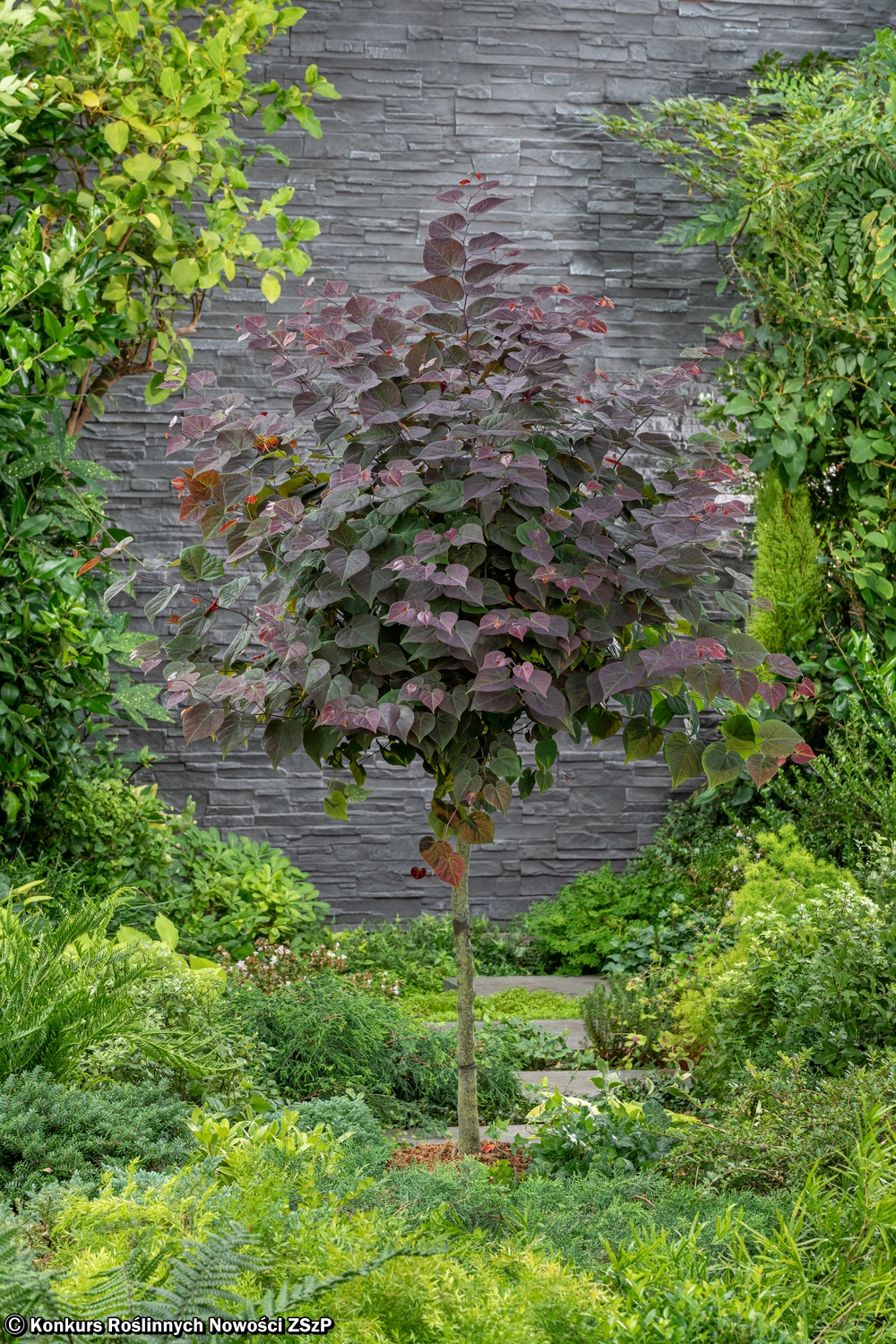
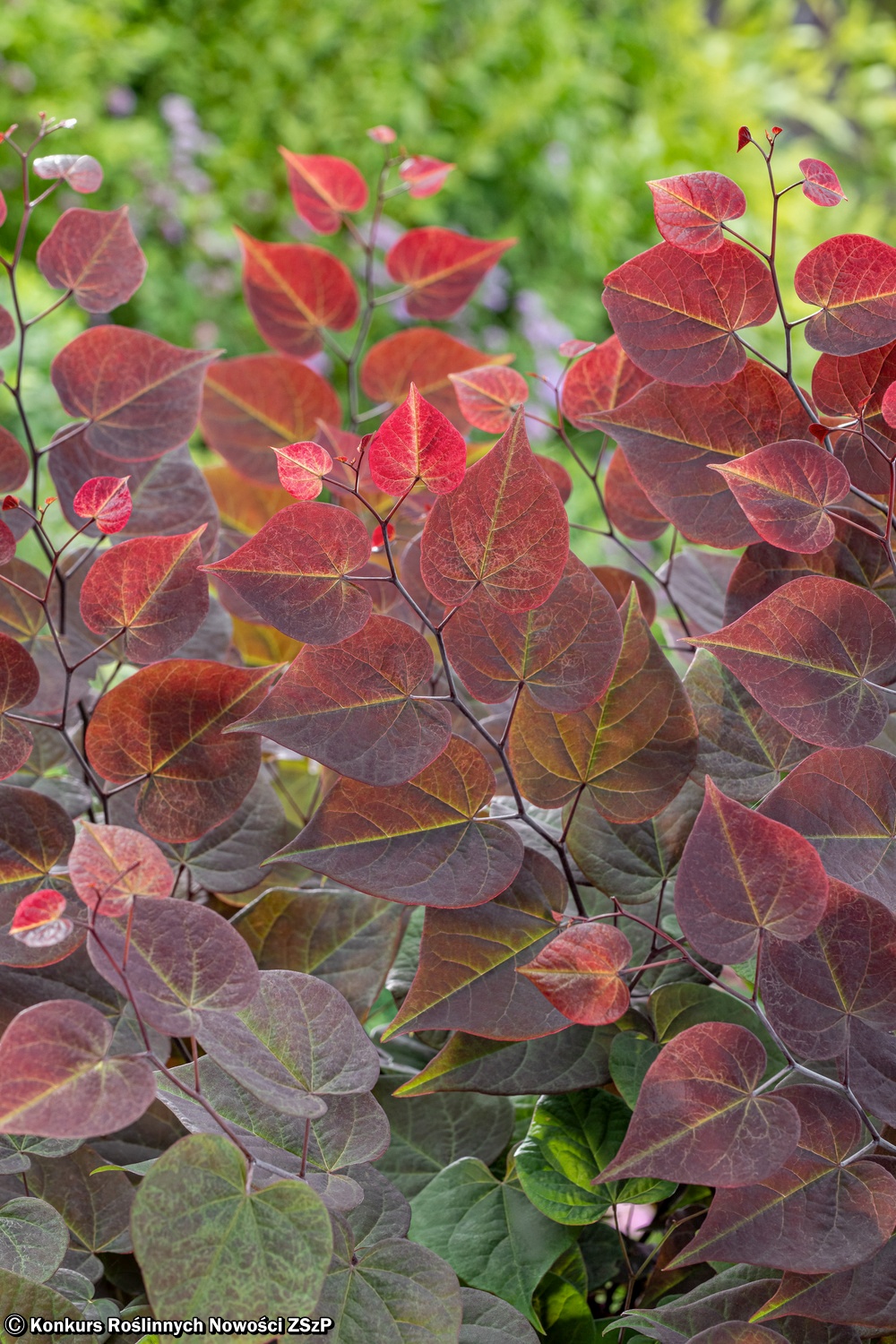
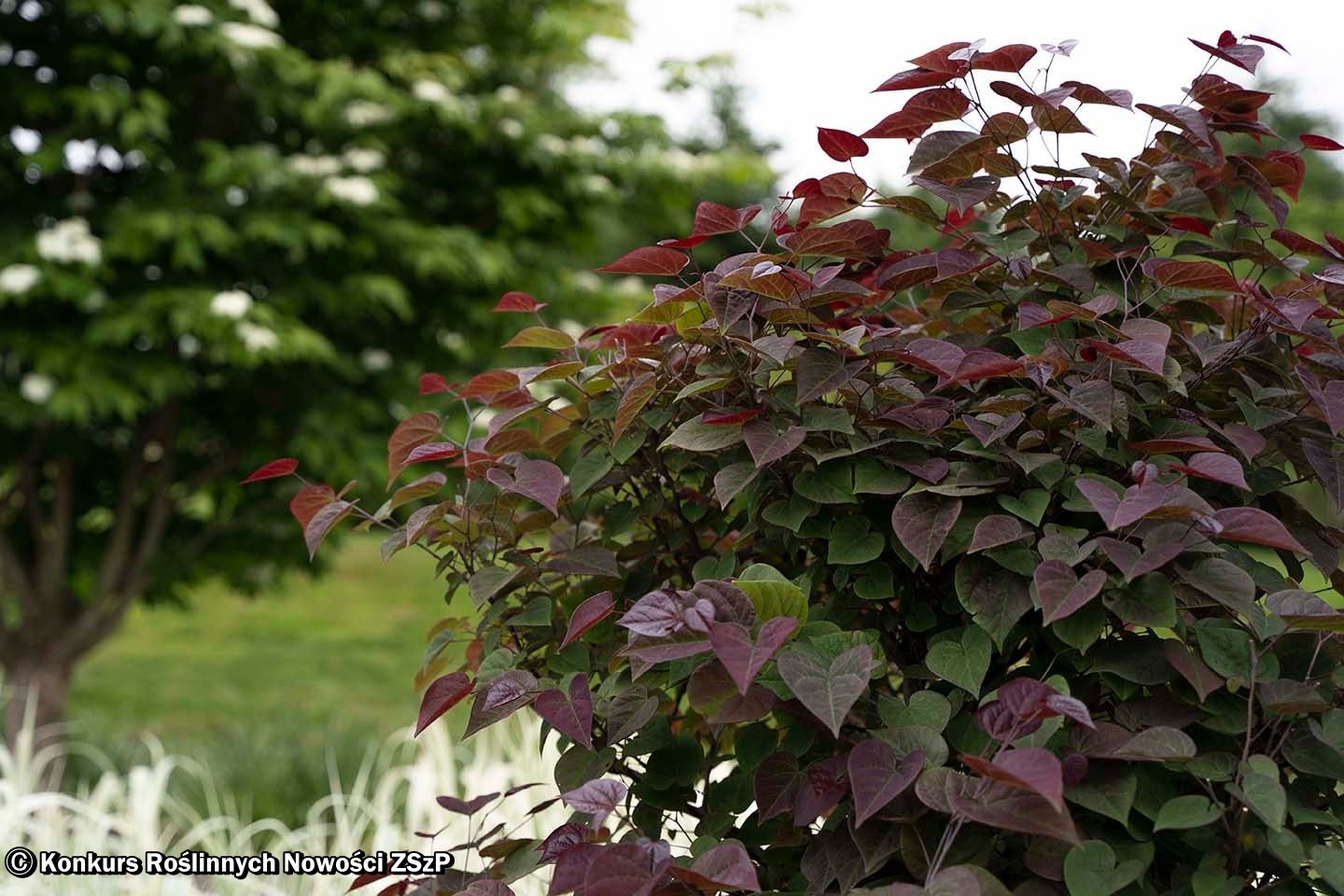
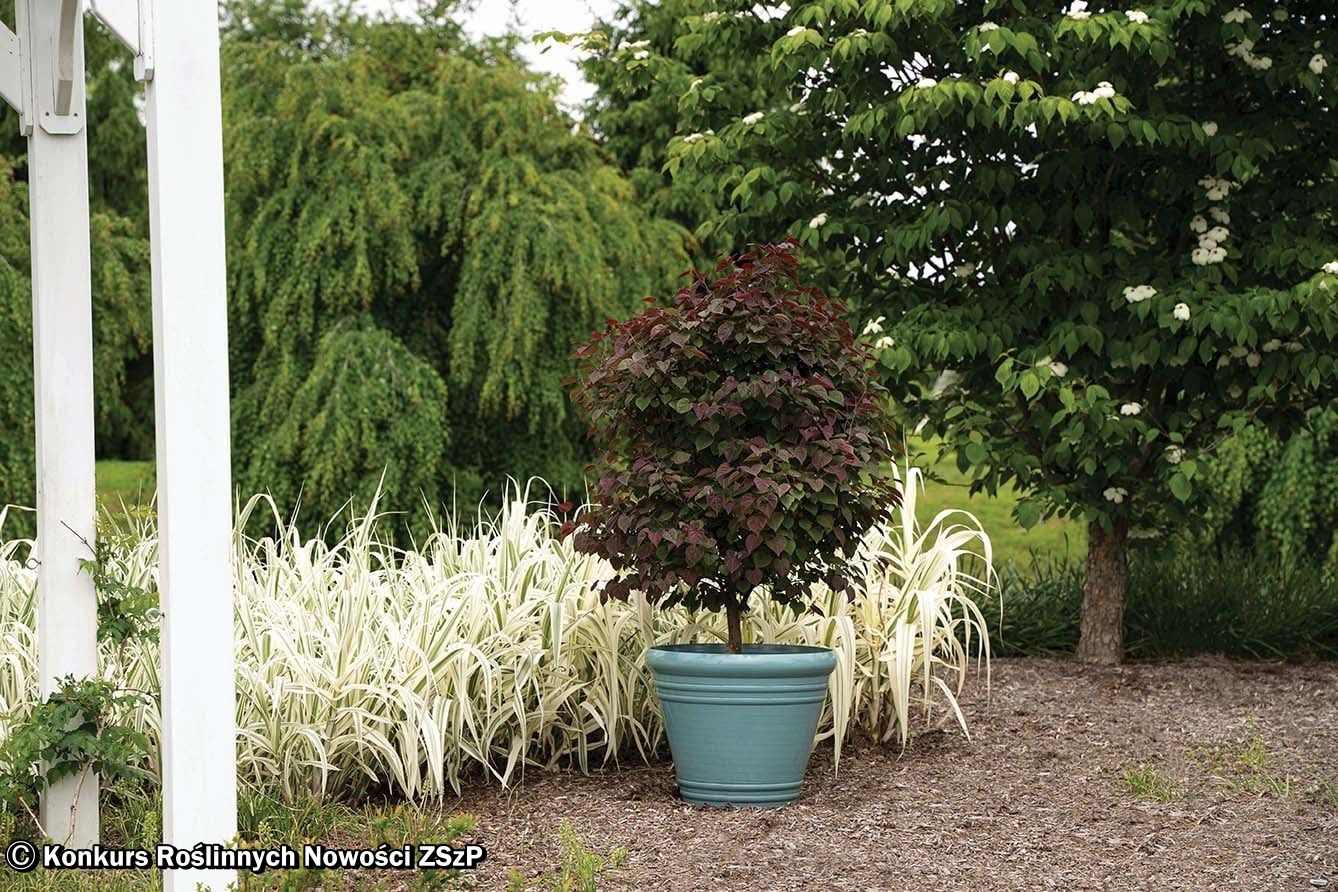
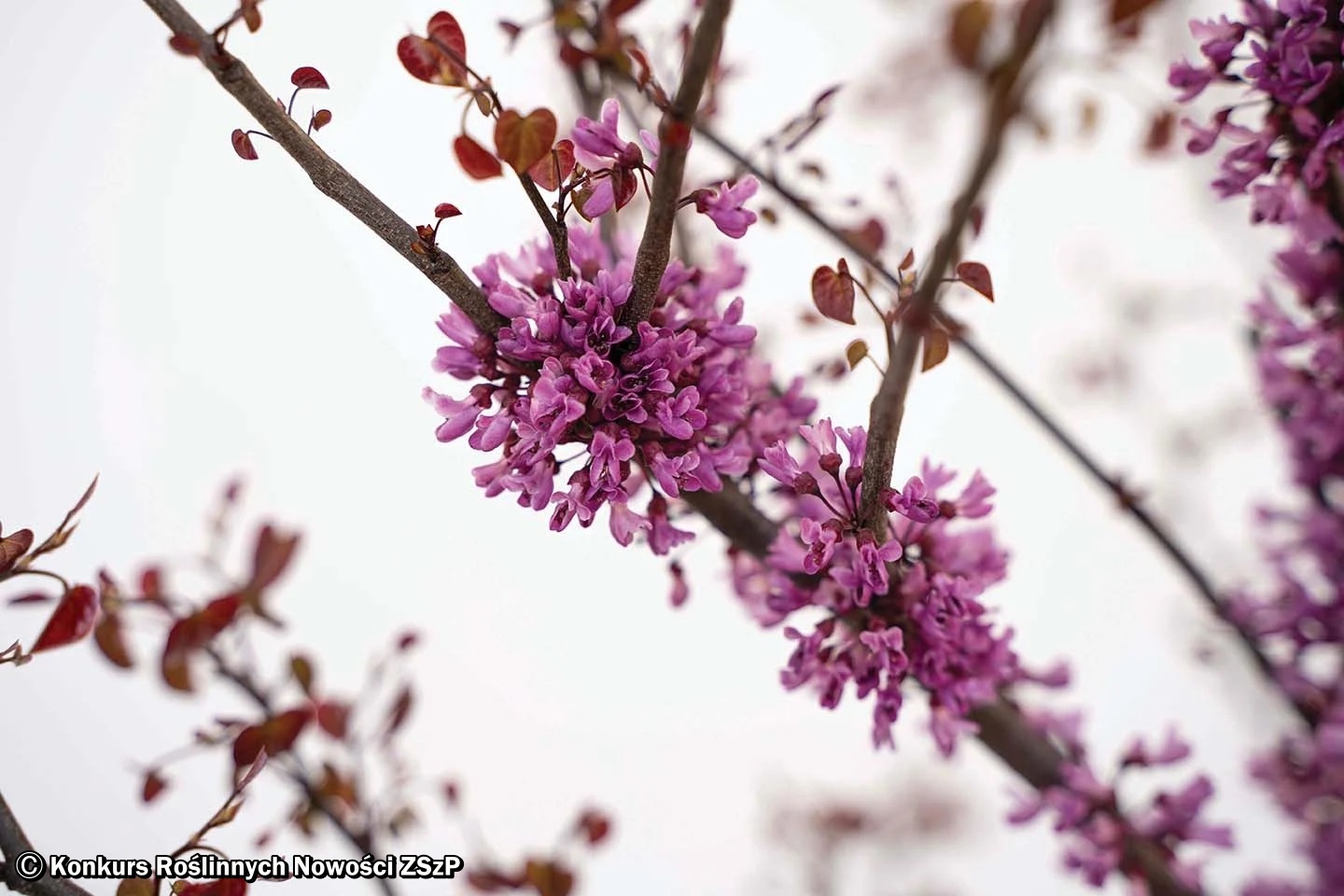
A small tree with a naturally dense habit and purple foliage, growing to 2–3 m in height. This cultivar was developed by crossing the redbud varieties ‘Ruby Falls’ and ‘Ace of Hearts’. Pink flowers appear in early spring directly on the trunk and branches, arranged in clusters, attracting bees and other pollinating insects. The leaves are small, heart-shaped, and display an exceptionally deep amethyst-purple colour that retains its intensity throughout the growing season. It prefers fertile, moderately moist soils and sunny positions. This plant is recommended for home gardens as well as for container cultivation on large balconies and terraces. Hardiness zone: 6b (−20 to −18°C).

Cultivar denomination: ‘NC2017-6’ PBR

Breeder: Dennis J. Werner, Leanne M. Kenealy, USA

Year of market introduction: 2023

Applicant: PLANTLINE B.V, Zwedenlaan 4, 2391 PL Hazerswoude-Dorp, The Netherlands

Cercis griffithii BLUE LAGOON

Cercis griffithii BLUE LAGOON

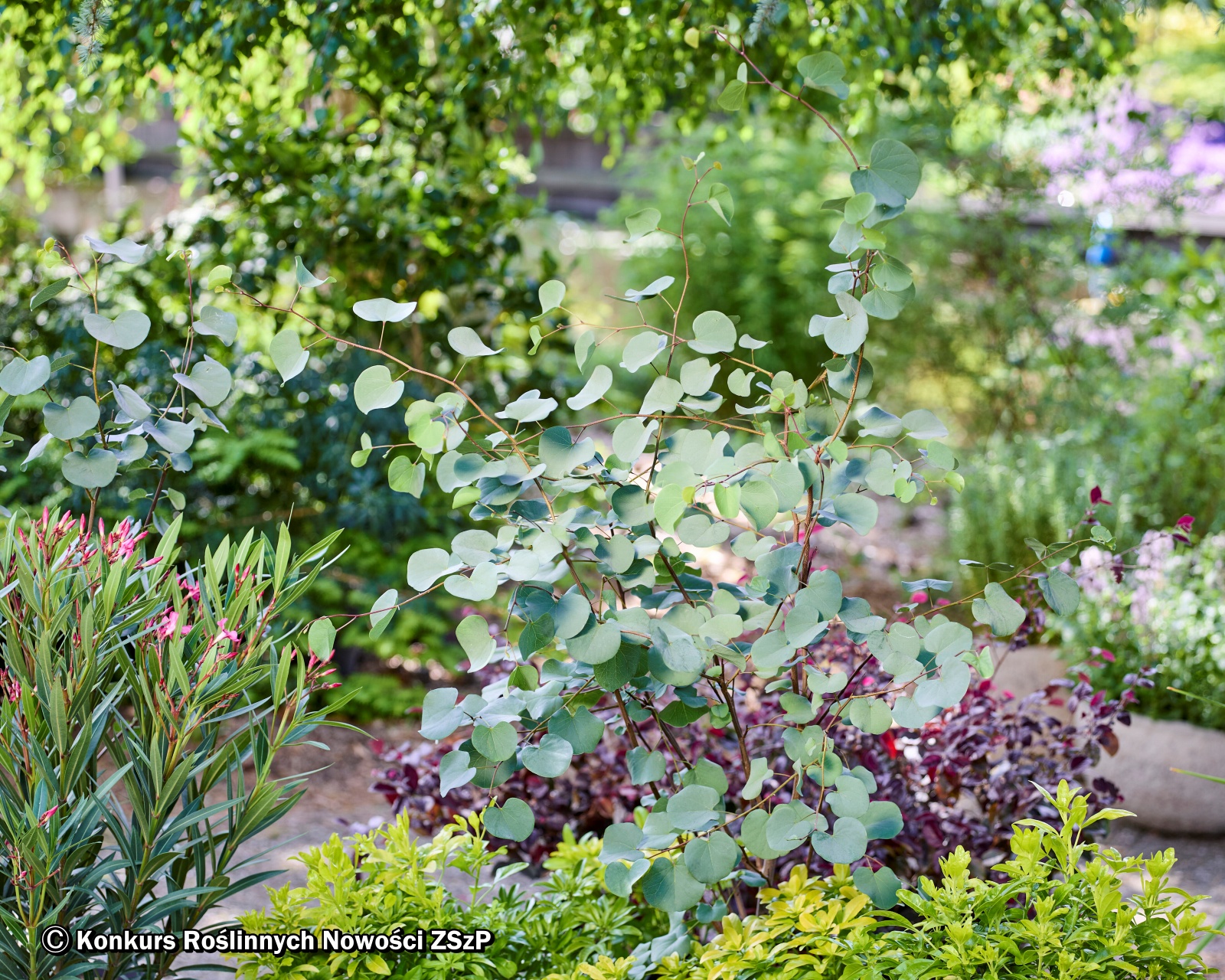
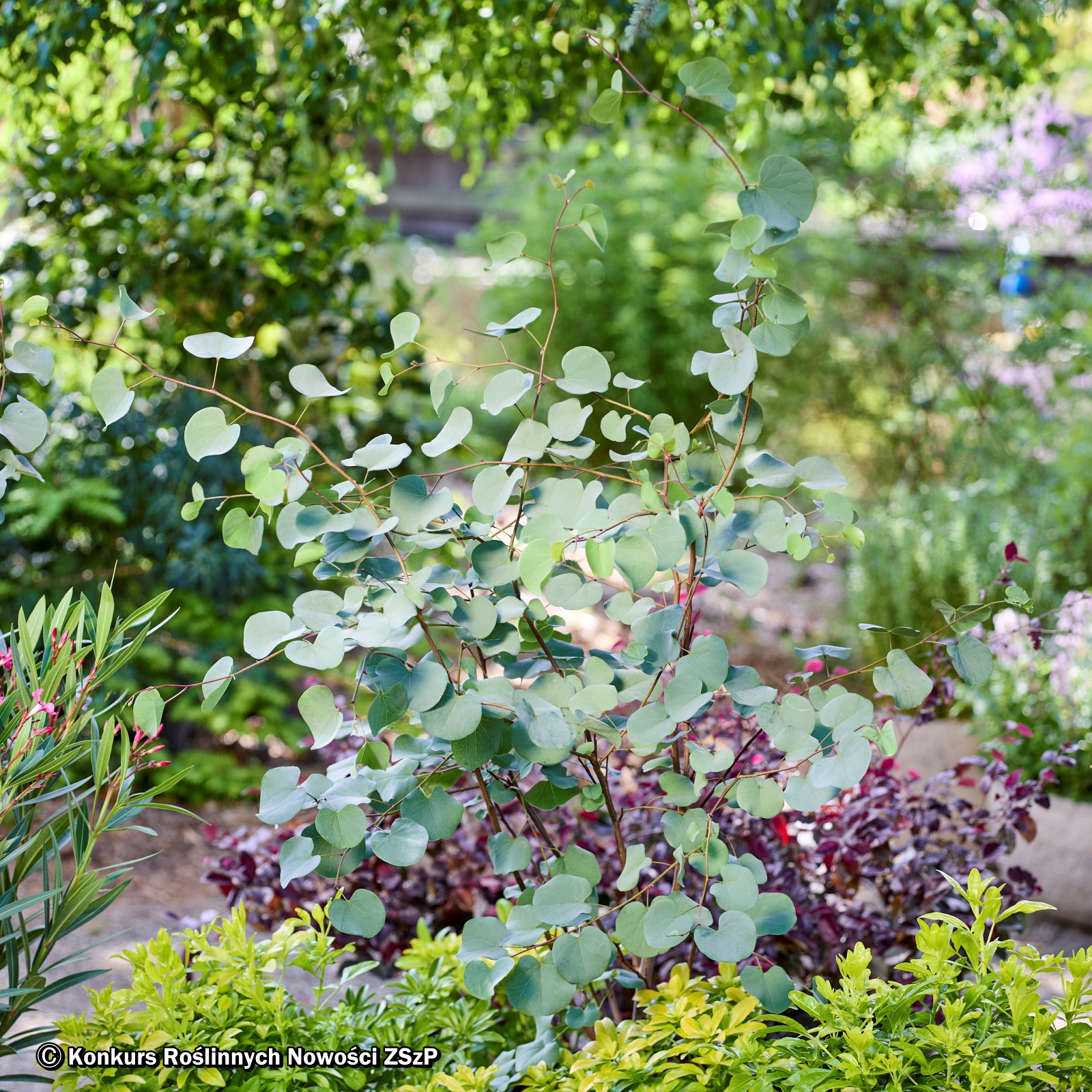
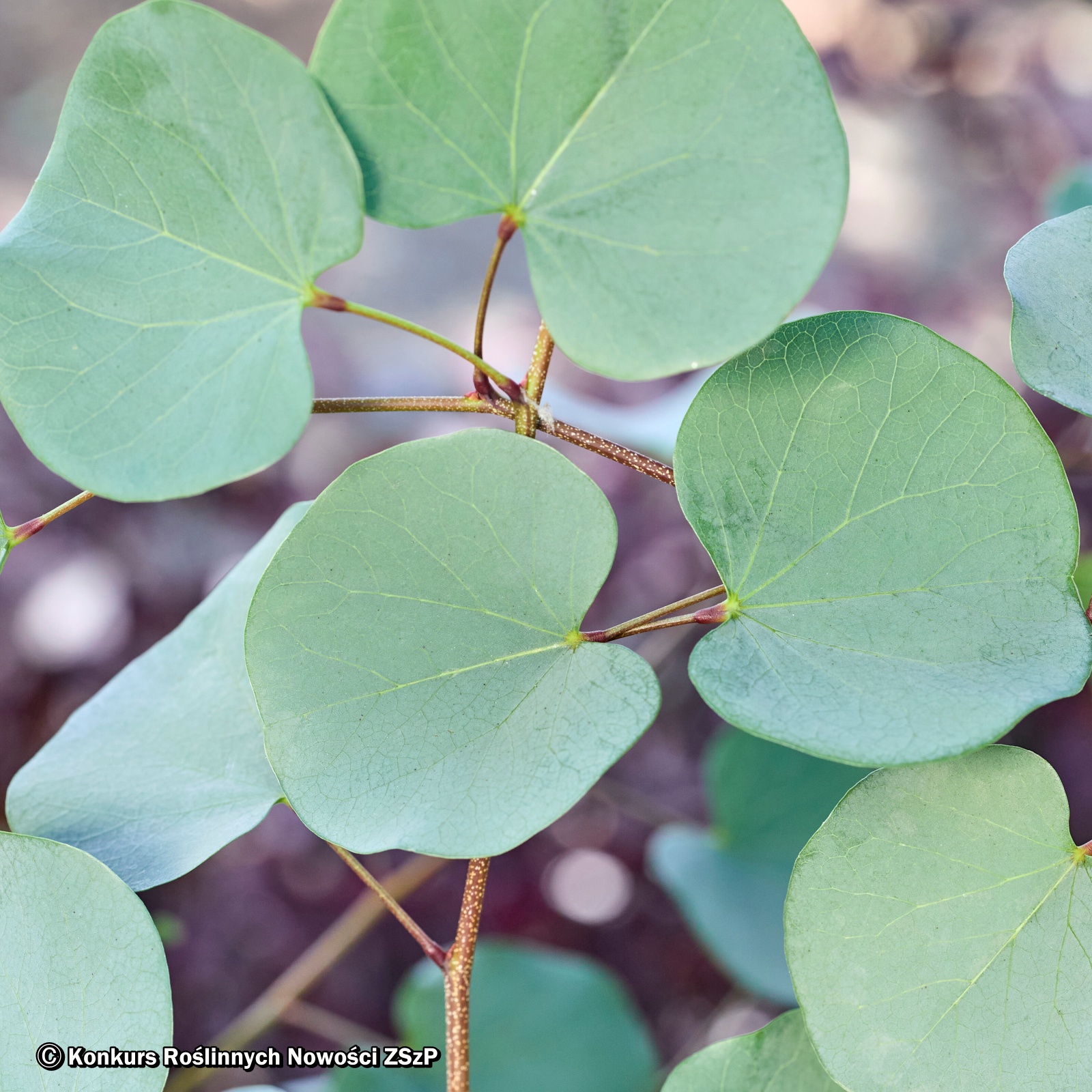
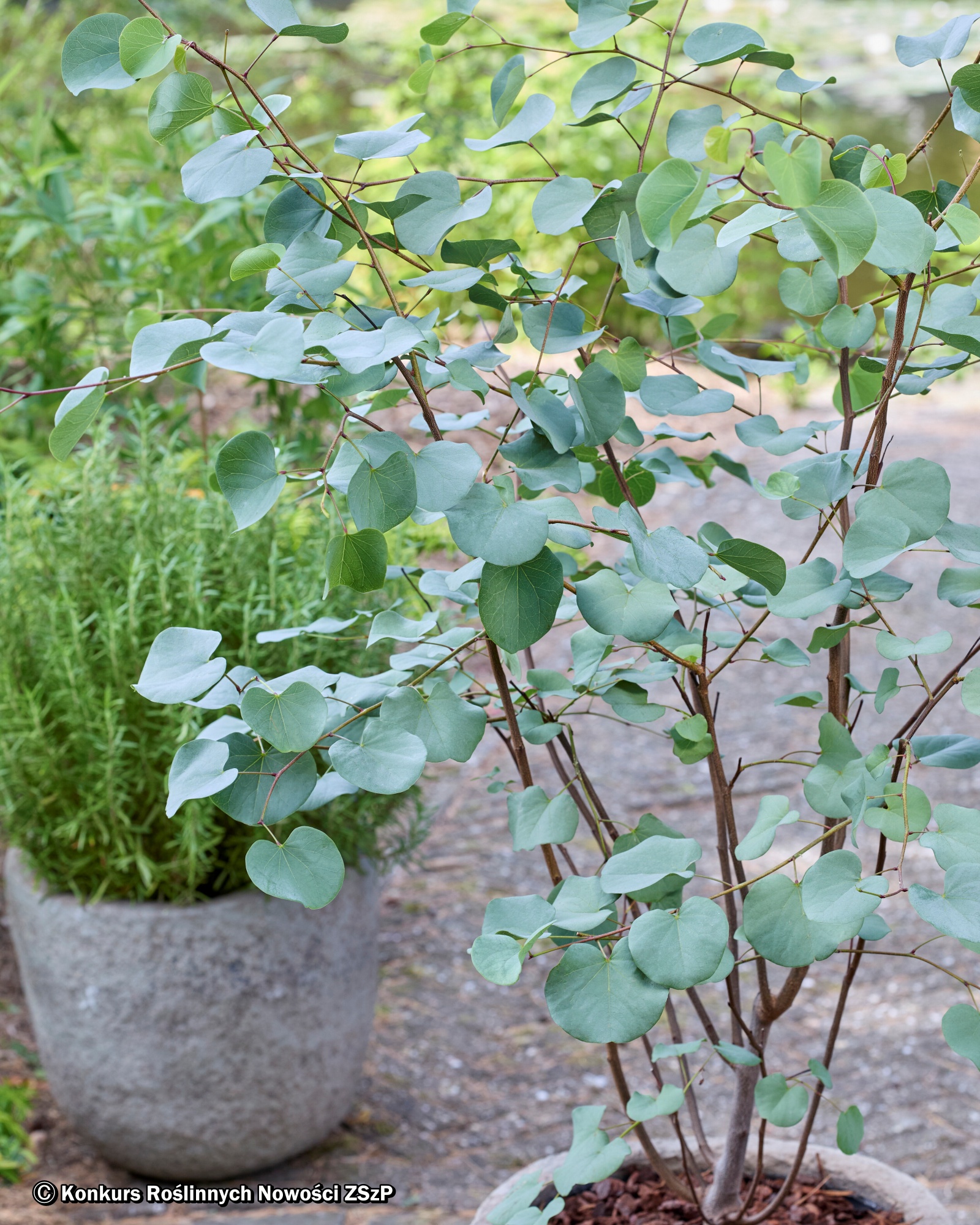
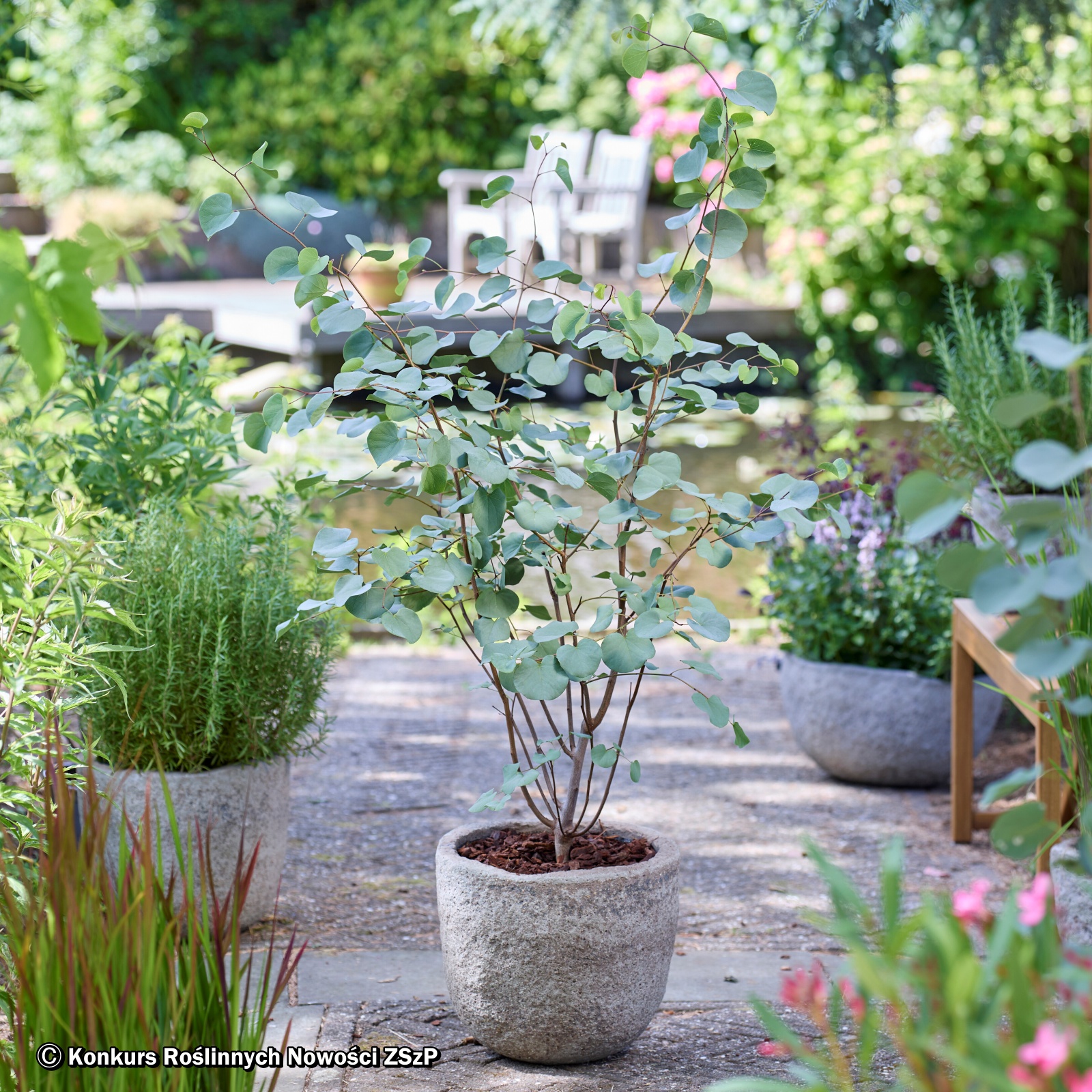
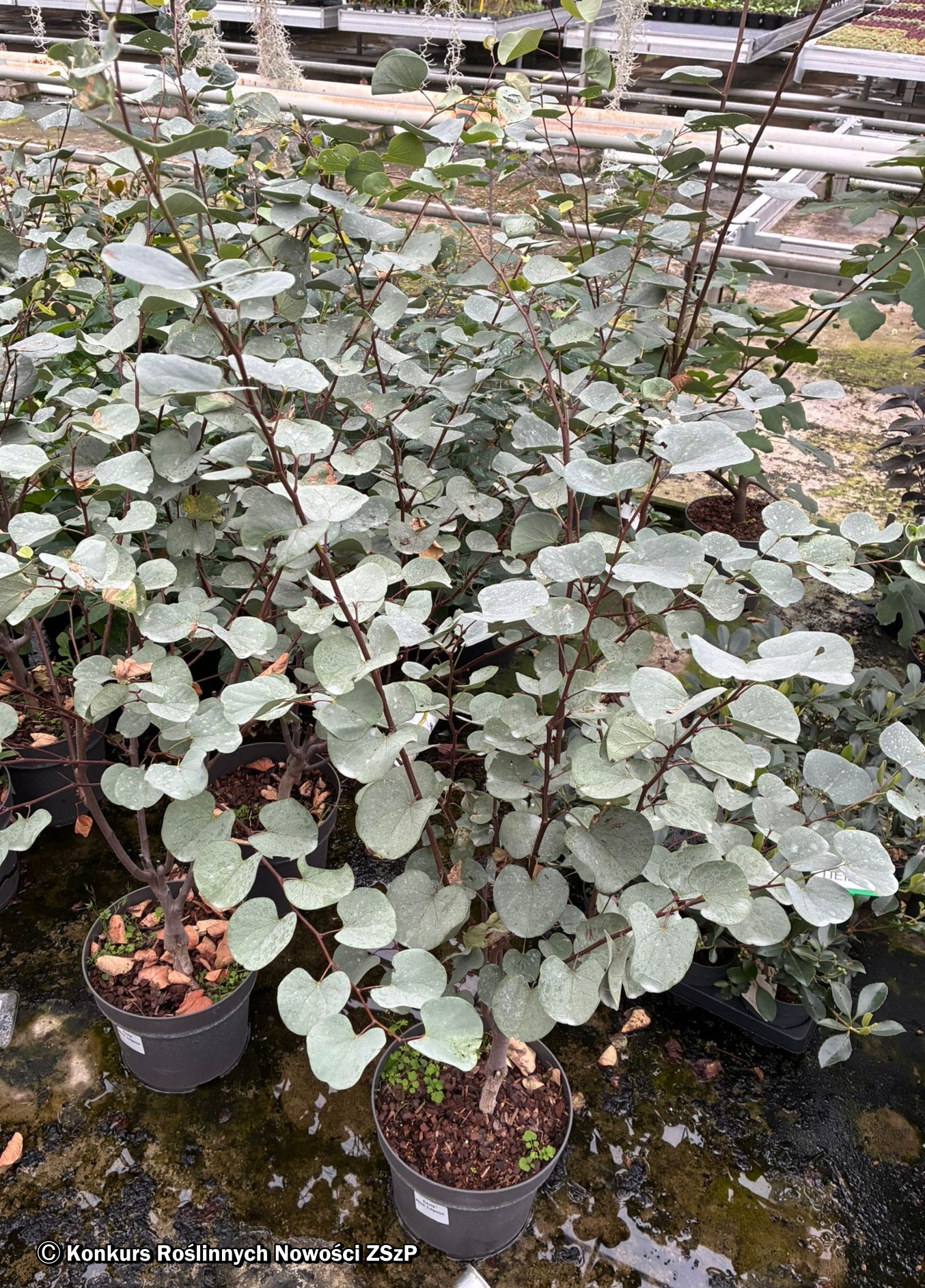
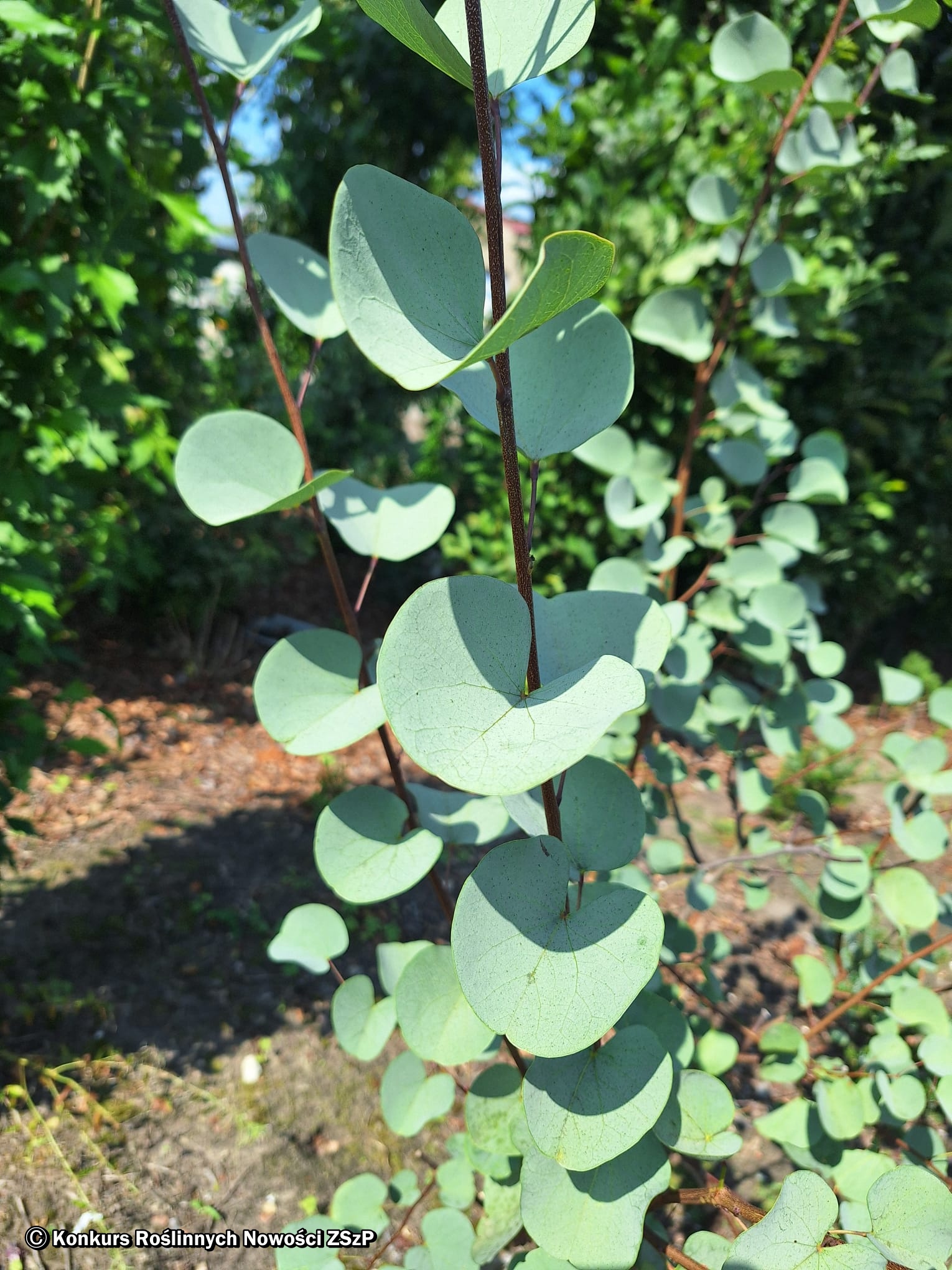
A shrub or small tree distinguished by its attractive bluish-grey foliage, which retains its characteristic colour from spring to autumn. The plant has an upright habit and, after 5 years of cultivation, reaches approximately 2–2.5 m in height. In spring, before the leaves emerge, the branches are densely covered with pink flowers. The young growth is dark red, contrasting with the cool tone of the heart-shaped leaves. It grows best in a sunny position, in moderately moist but well-drained soil. To maintain a compact habit the plant can be pruned. It works well as a specimen plant, a colour accent in borders, and as a plant for large containers. Hardiness zone: 7a (−17 to −15°C).

Cultivar denomination: ‘Rafmar 1’ PBR

Breeder: Raf Lenaerts, Belgium

Year of market introduction: 2025

Applicant: Szkółka SZMIT, ul. Kwiatowa 18, 06-400 Pęchcin, Poland

Clematis ‘Beskidzki Anioł’

Clematis ‘Beskidzki Anioł’

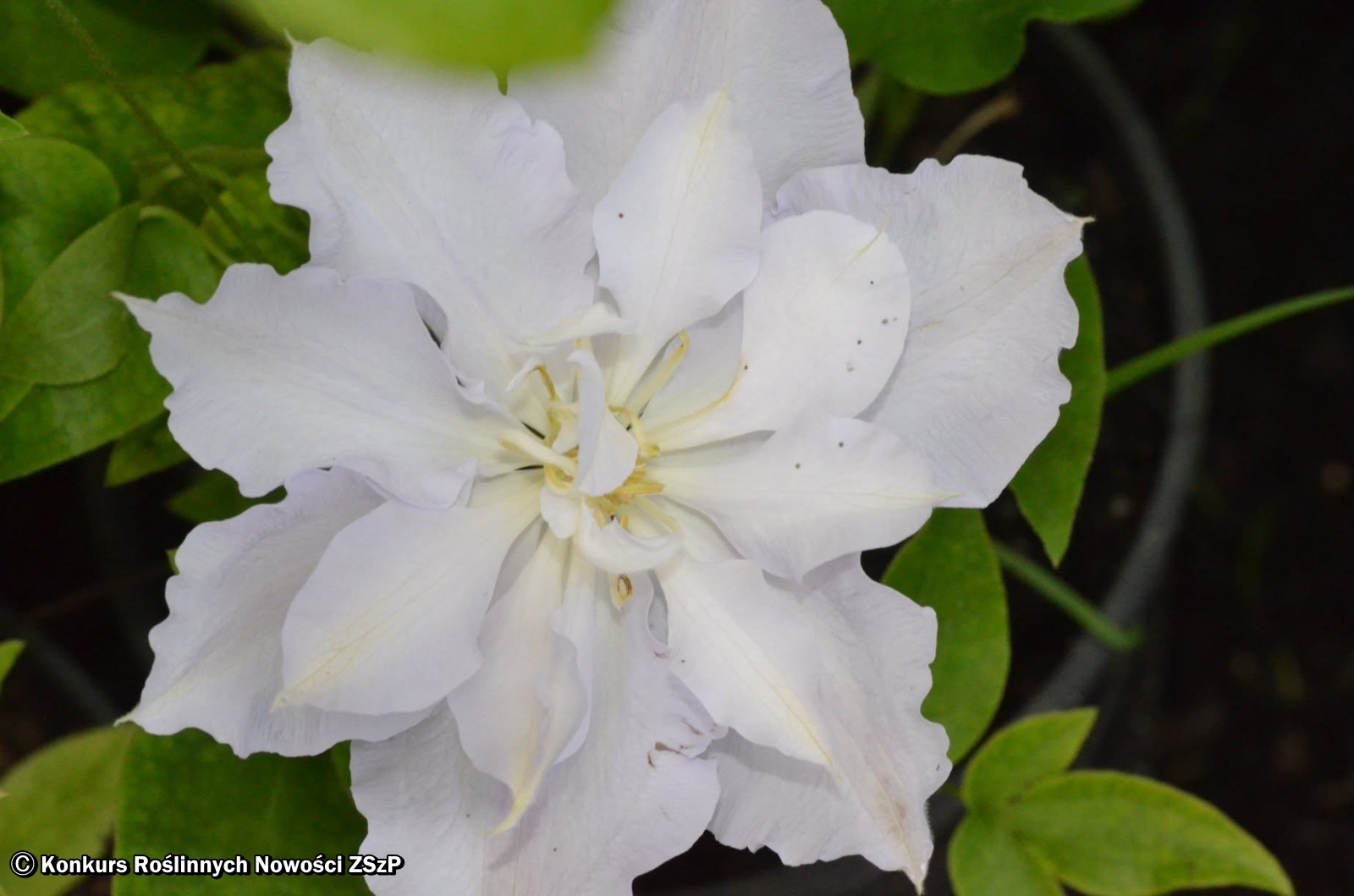
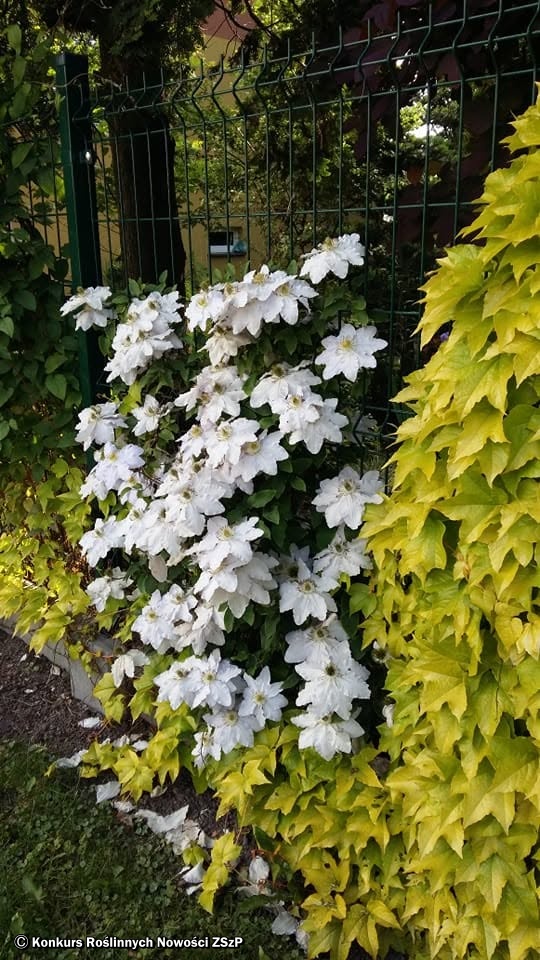
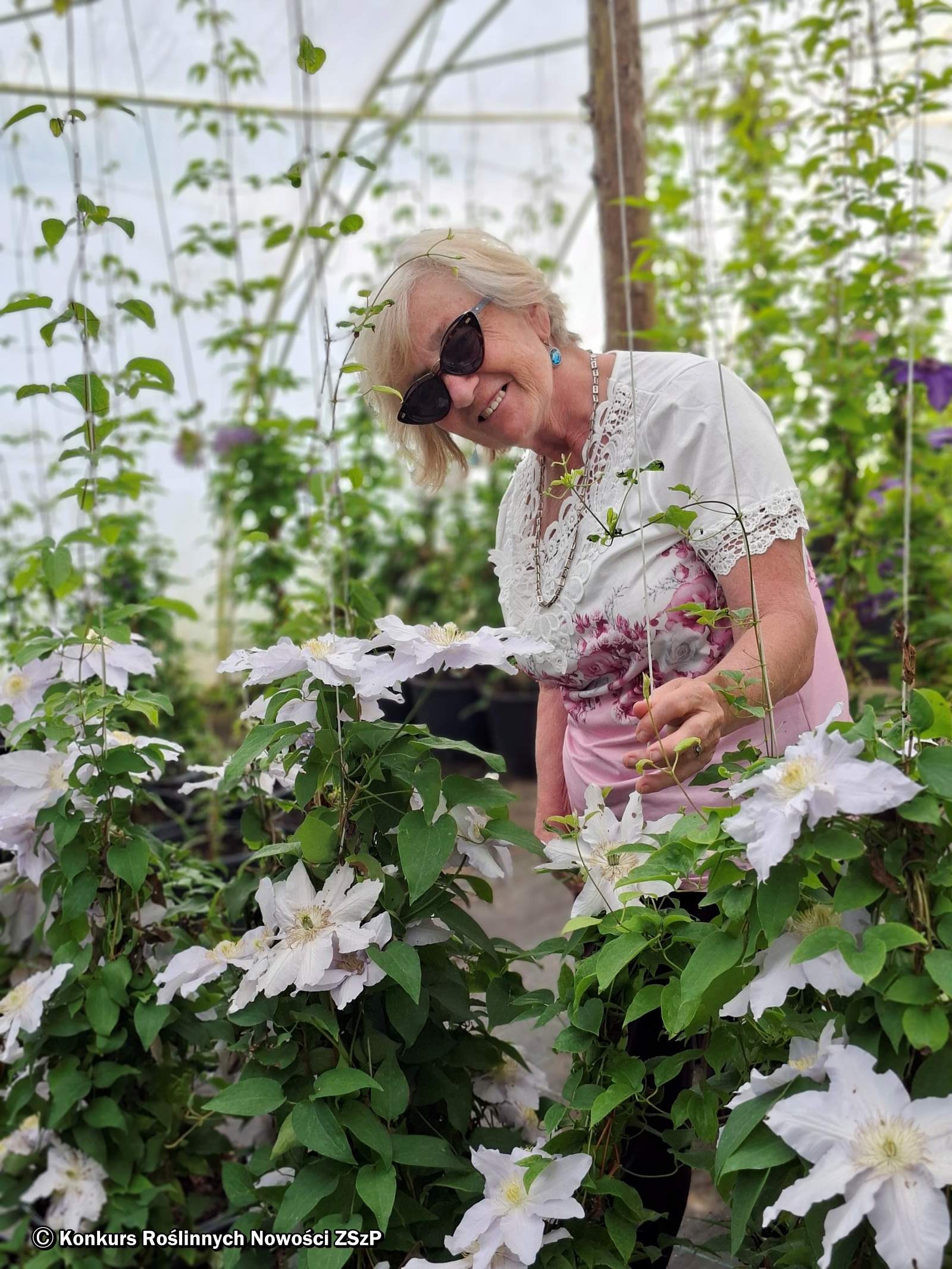
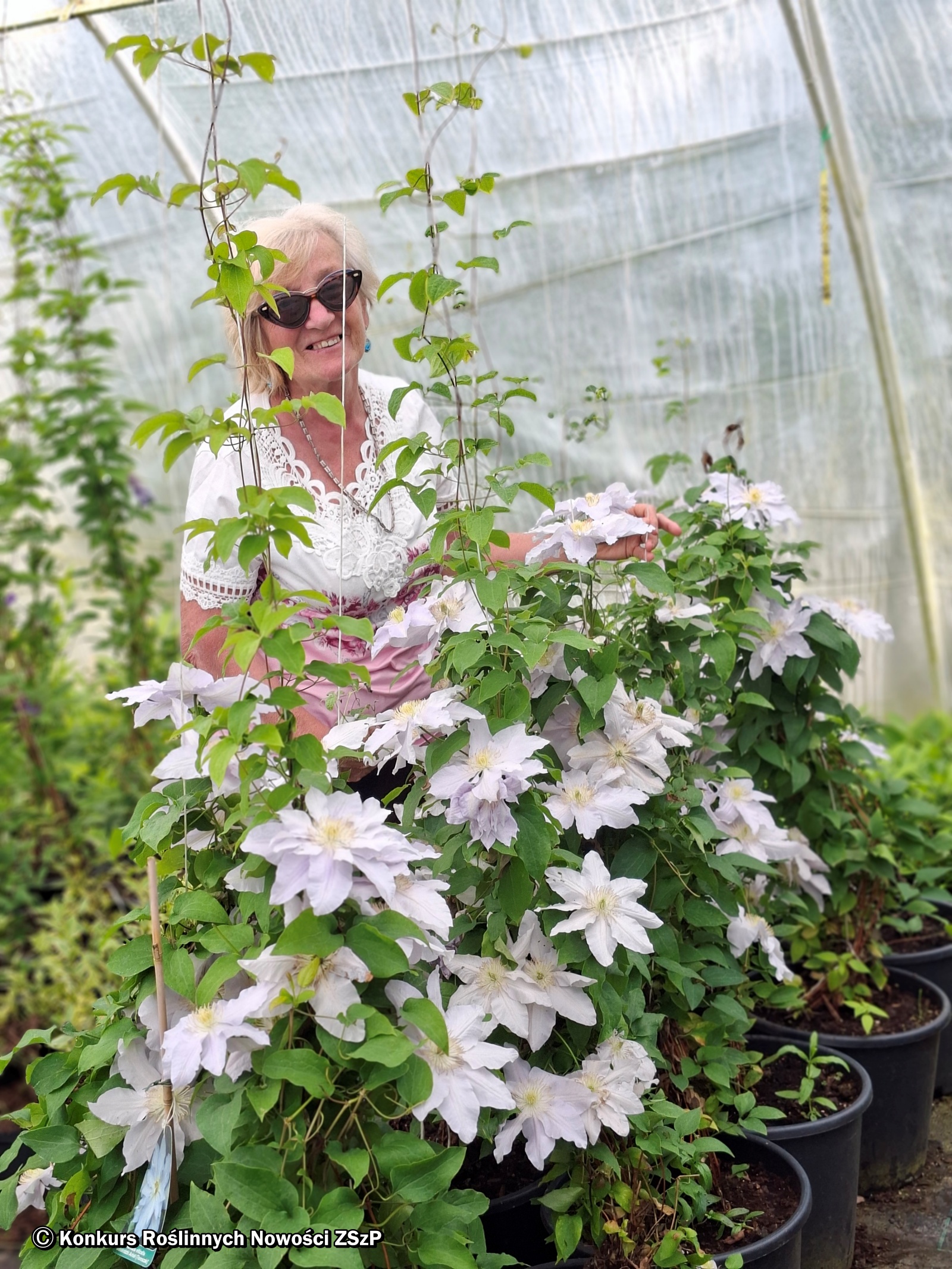
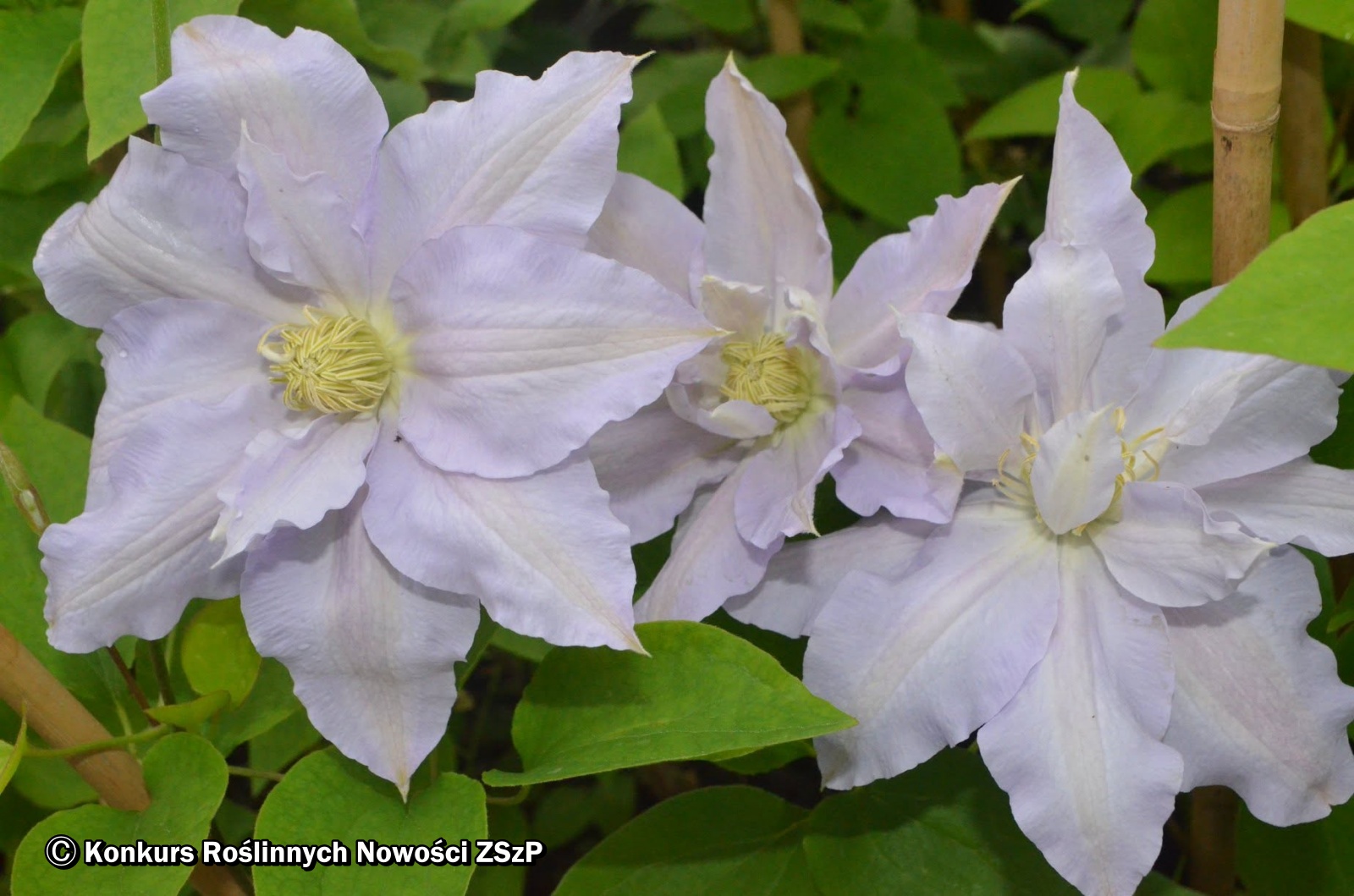
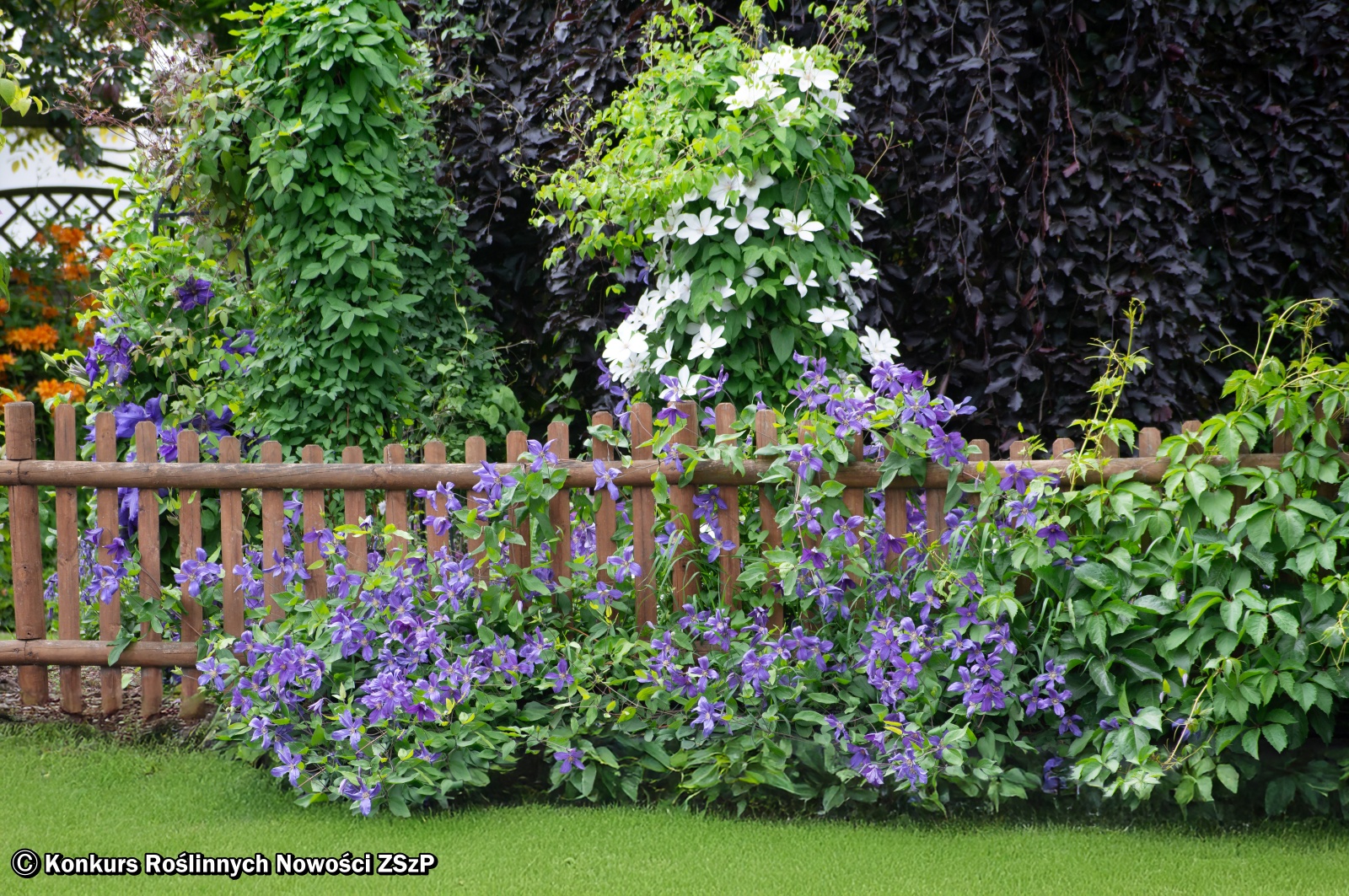
A Polish clematis variety from the Early Large-Flowered Group, valued for its medium-sized, light lilac flowers. It was obtained as a seedling of the cultivar ‘Silver Moon’. The climber grows to 2–3 m in height. The shoots attach to supports by twining their leaf petioles around them. The leaves are light green and pinnate. Individual leaflets are oval to lanceolate, 5–10 cm long. Large flowers, up to 10–14 cm in diameter, appear from May to June on the previous year’s growth, and again in August and September on the current season’s shoots. They are pale lilac to lavender; semi-double during spring flowering and single composed of 7–9 sepals on new growth. The sepals have slightly wavy edges. The anthers are yellow-green. This climber grows best in fertile, humus-rich, moist, well-drained soils with a neutral to slightly acidic pH. It does not tolerate waterlogged, overly heavy clay soils or very light, sandy soils. It flowers best in well-lit positions, in full sun or partial shade, with shaded roots. It is fully frost hardy. It requires pruning in early spring, cutting all shoots to an even height of about 100 cm. This variety is suitable for home gardens. It looks beautiful on mesh fences, trellises, ladders, and wires. It also grows very well on natural supports, such as deciduous and coniferous shrubs, especially against a dark background. Hardiness zone: 5b (−26 / −23 °C).

Cultivar denomination: ‘Beskidzki Anioł’

Breeder: Sylwester Tomszak, Poland

Year of market introduction: 2023

Applicant: Szkółka Krzewów Ozdobnych TOMSZAK Sylwester, ul. Potoczna, 43-502 Czechowice-Dziedzice, Poland

Clematis PINK HORIZON

Clematis PINK HORIZON

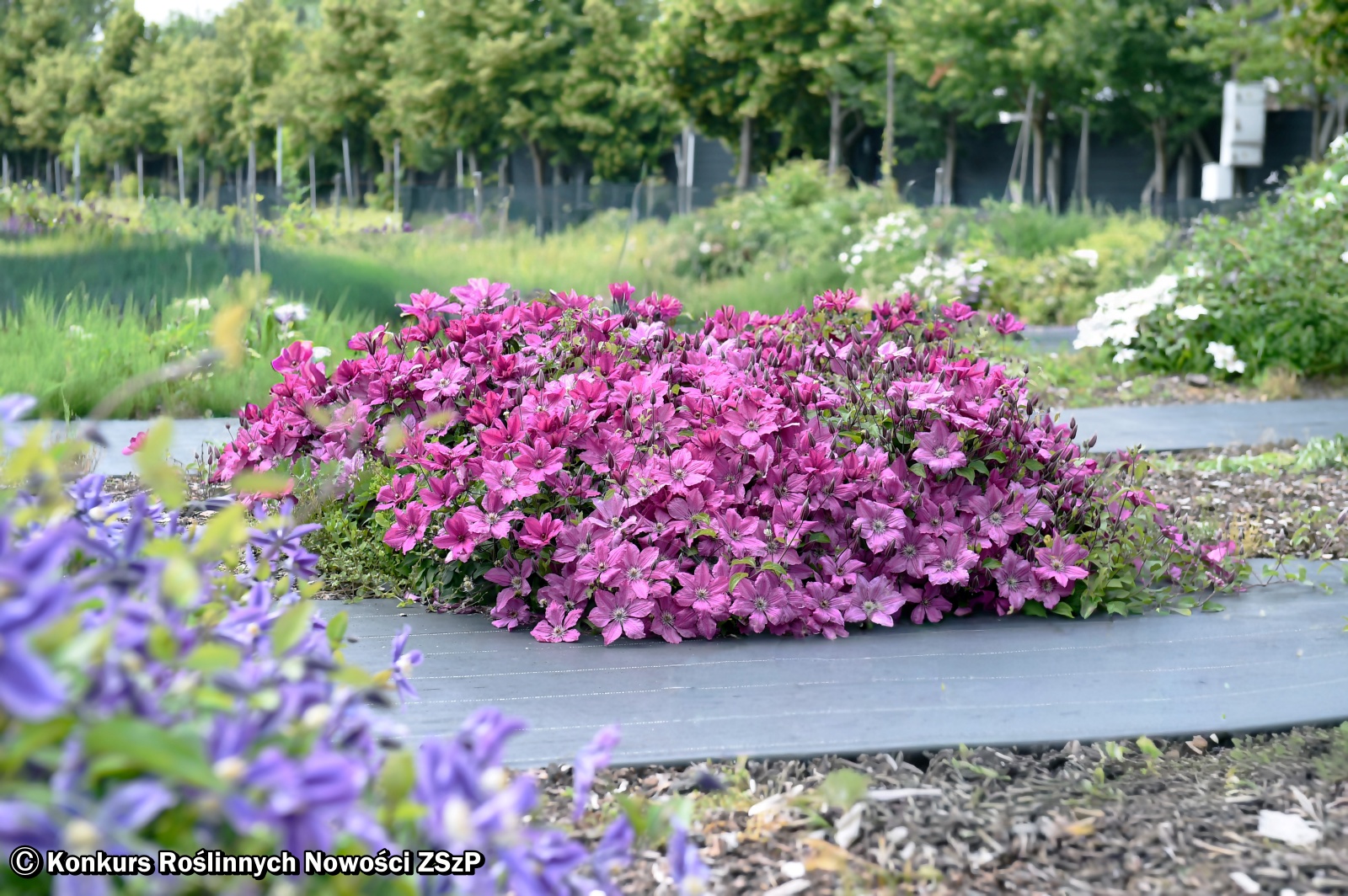
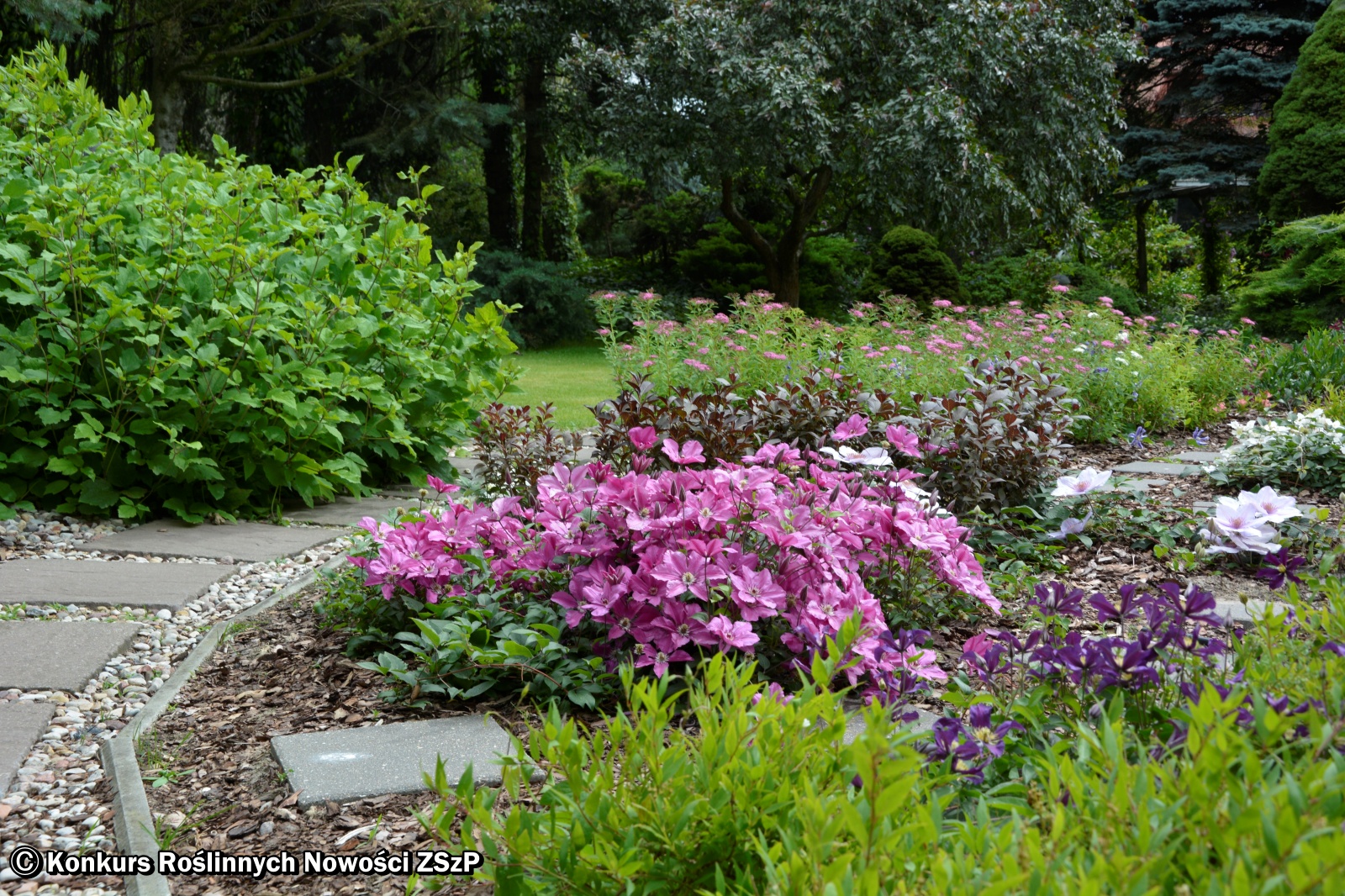
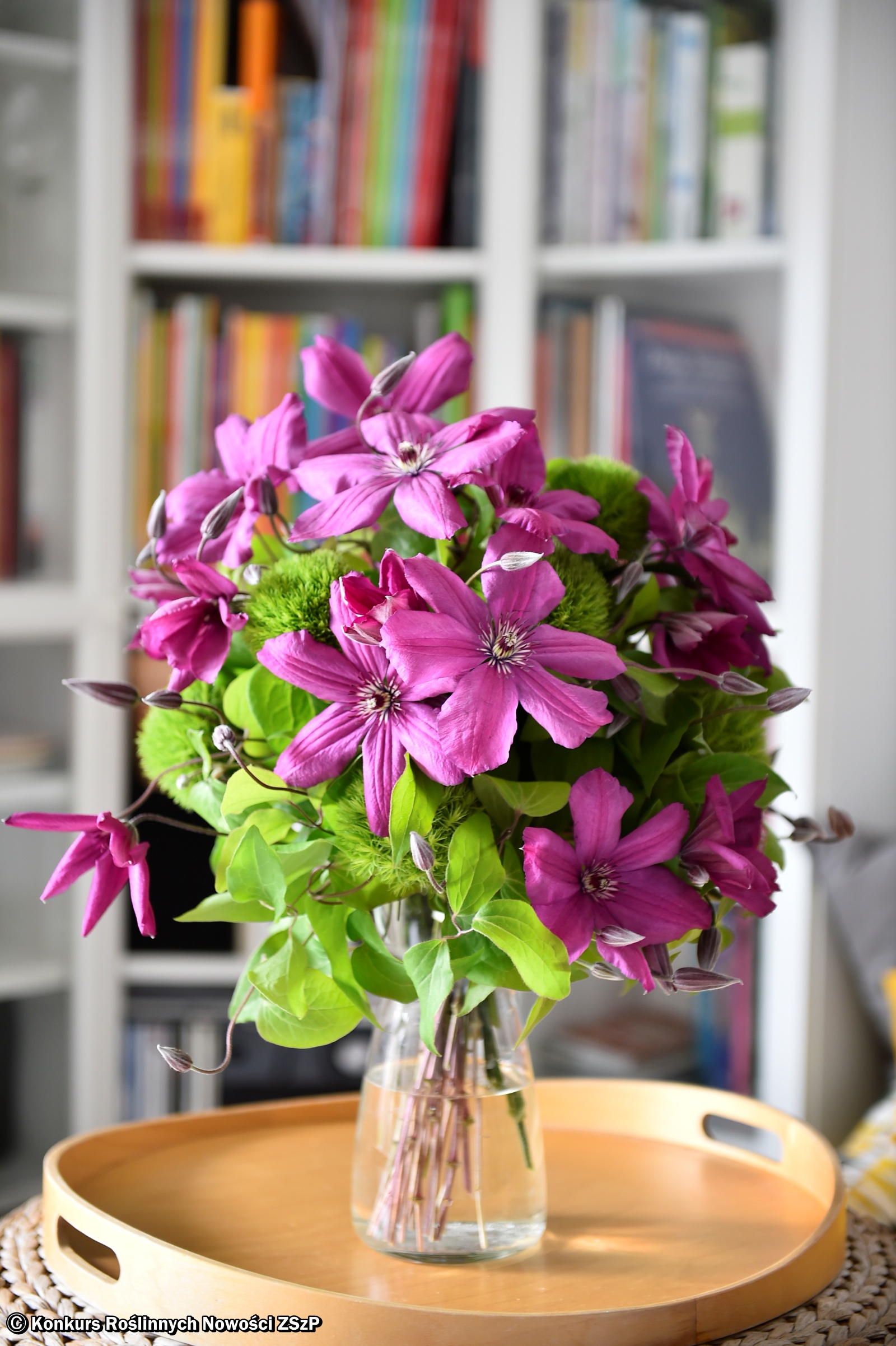
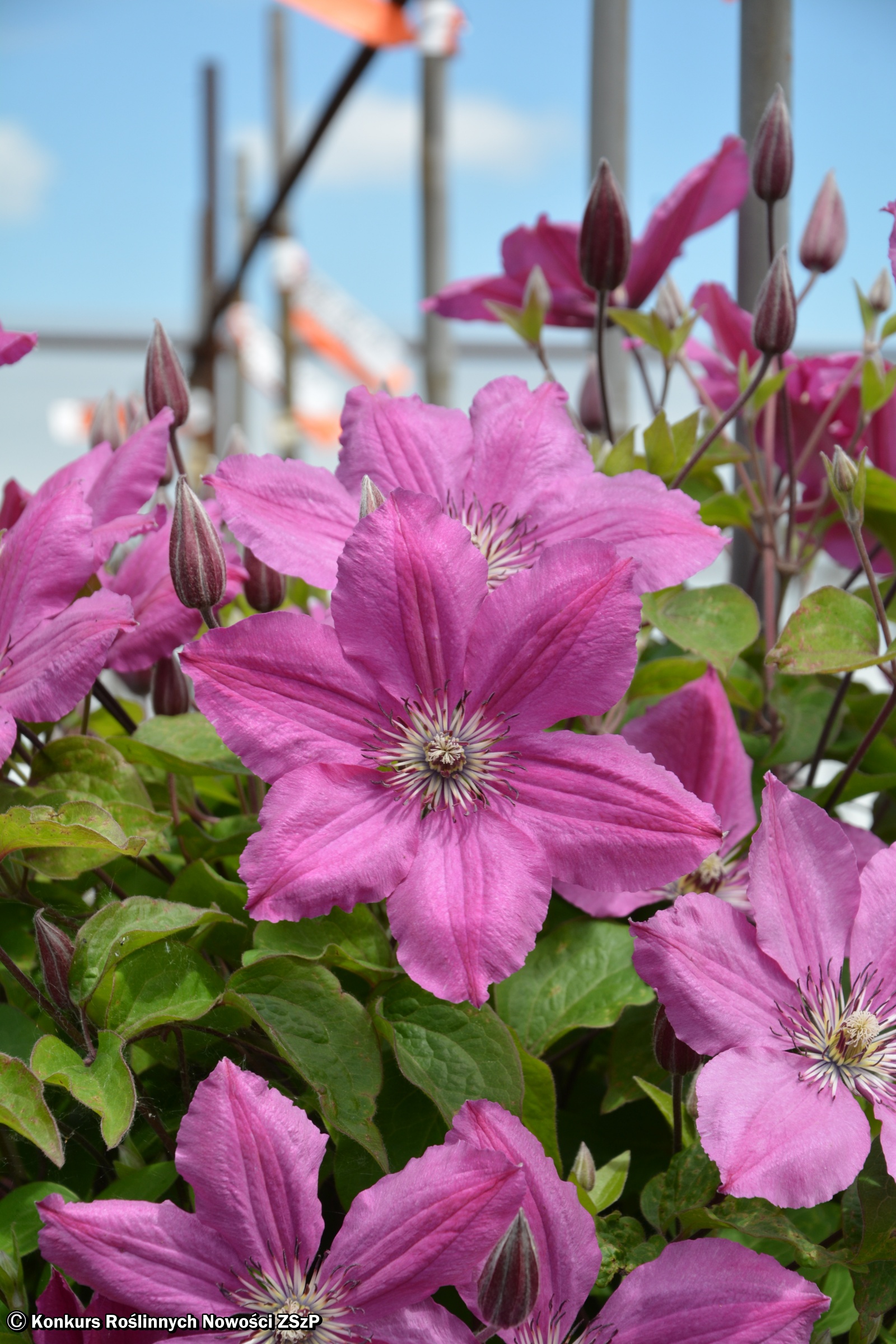
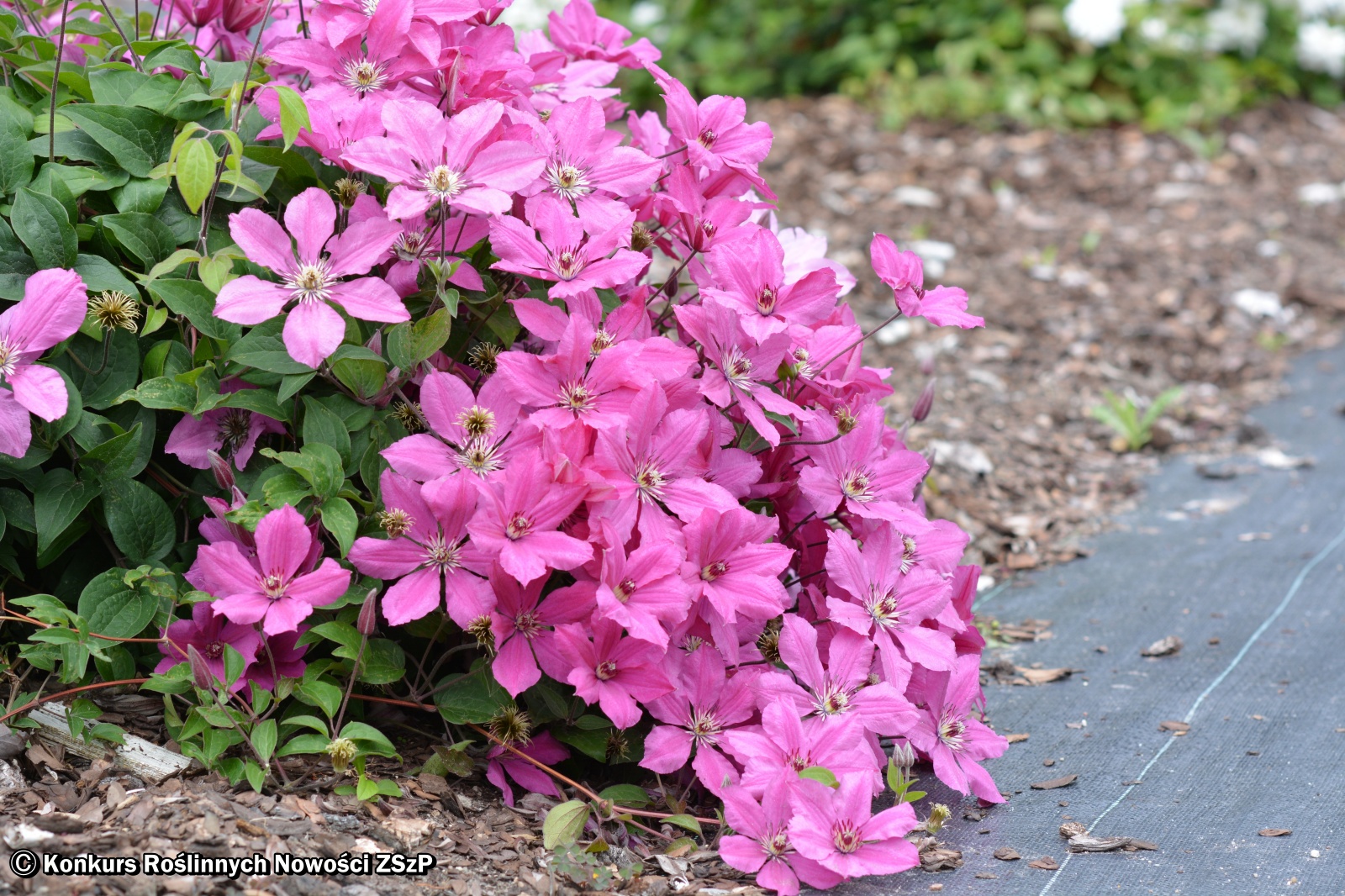
A new Polish variety of herbaceous clematis from the Integrifolia Group, distinguished by its very large flowers, striking pink coloration, and abundant, long-lasting flowering. The flowers reach 13–15 cm in diameter; they are single, widely opened, and composed of 5–6 sepals. They resemble the flowers of large-flowered cultivars. The sepals are an intense pink with a slightly darker stripe running through the center of each segment, and their edges are gently wavy. The filaments are white and contrast with the burgundy anthers. The plant blooms profusely from mid-May to the end of July, and then repeats flowering until the end of September. After flowering, ornamental seed heads appear. The leaves are light green, matte, and either simple or trifoliate. The plant belongs to the so-called primitive climbers and does not cling to supports. It forms dense clumps covered abundantly with flowers. It grows to a height of 1–1.5 m, but its shoots may sprawl over low supports or intermingle with other plants. It grows vigorously, producing numerous shoots throughout the season. This cultivar is healthy, disease-resistant, and easy to grow. It requires only a single, hard pruning at the beginning of the season (all shoots should be cut back to 5–10 cm above the ground), which greatly simplifies maintenance. It grows best in sunny positions, in fertile, well-drained soils with a neutral or slightly alkaline pH. It also performs well in heavier, clay soils. Particularly recommended as a ground cover plant. It combines beautifully with other herbaceous clematis. The flowers are suitable for cut flowers, remain fresh in a vase for a long time, and work well in bouquets. Hardiness zone: 4 (−34 / −29 °C).

Cultivar denomination: ‘MAR-2015-187-007’ PBR

Breeder: Szczepan Marczyński, Poland

Year of market introduction: 2026

Applicant: CLEMATIS Źródło Dobrych Pnączy Sp. z o.o. Spółka Komandytowa, ul. Duchnicka 27, 05-800 Pruszków, Poland

Clematis SWEET WAVE

Clematis SWEET WAVE

A herbaceous clematis variety from the Integrifolia group, covered throughout summer with masses of fragrant, purple flowers. Particularly useful as a ground cover or terrace plant. The flowers are fragrant, slightly nodding, open, 10–11 cm in diameter, and composed of 4–6 sepals. The sepals are violet, velvety, with a slightly darker central stripe, they are elliptical and attractively twisted, becoming lighter in color as they fade. The stamens consist of yellow anthers and pale yellow filaments. It blooms abundantly from May to July, and then repeats flowering until the end of October. The plant is classified as a so-called primitive climber and does not cling to supports. The leaves are dark green, matte, either simple or trifoliate, with pointed tips. New growth is greenish-purple. Shoots reach 1.7–2 m in length and may sprawl over low supports or weave among other plants. This clematis produces numerous shoots throughout the season. When planted as a specimen, it forms attractive clumps covered with many blue flowers. The variety is healthy, disease-resistant, and easy to grow. It requires only a single, hard pruning at the beginning of the season (all shoots should be cut back to 5–10 cm above ground level). It grows best in sunny positions, in fertile, well-drained soils with a neutral or slightly alkaline pH. It also performs well in heavier, clay soils. It looks most attractive when interwoven with other plants, especially those with yellow foliage. It can be grown on low supports (in which case tying the shoots is required) or used as a ground cover plant. It also grows well in containers. The flowers are suitable for cutting, remain fresh in a vase for a long time, and are excellent for bouquets. Hardiness zone: 4 (−34 / −29 °C).

Cultivar denomination: ‘MAR-2019-100-001’ PBR

Breeder: Szczepan Marczyński, Poland

Year of market introduction: 2025

Applicant: CLEMATIS Źródło Dobrych Pnączy Sp. z o.o. Spółka Komandytowa, ul. Duchnicka 27, 05-800 Pruszków, Poland

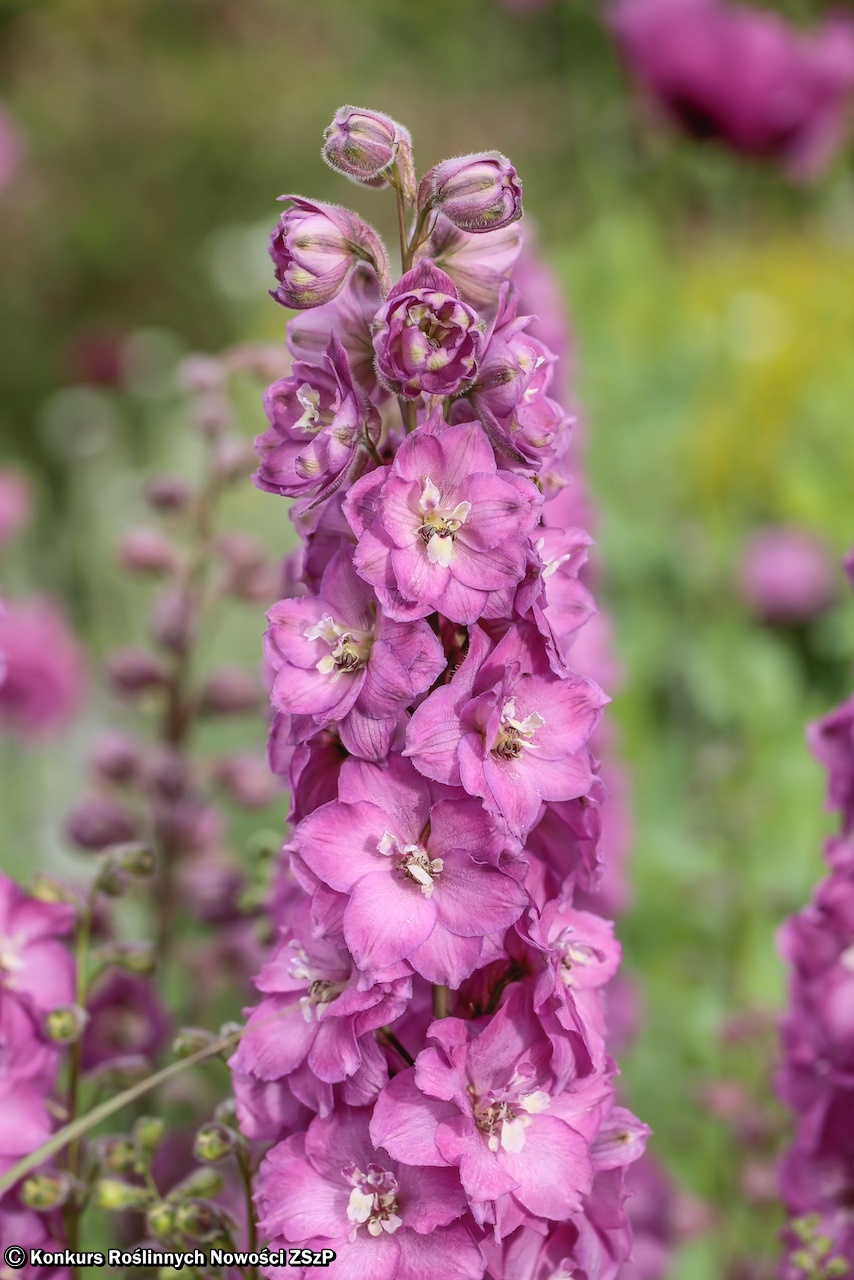
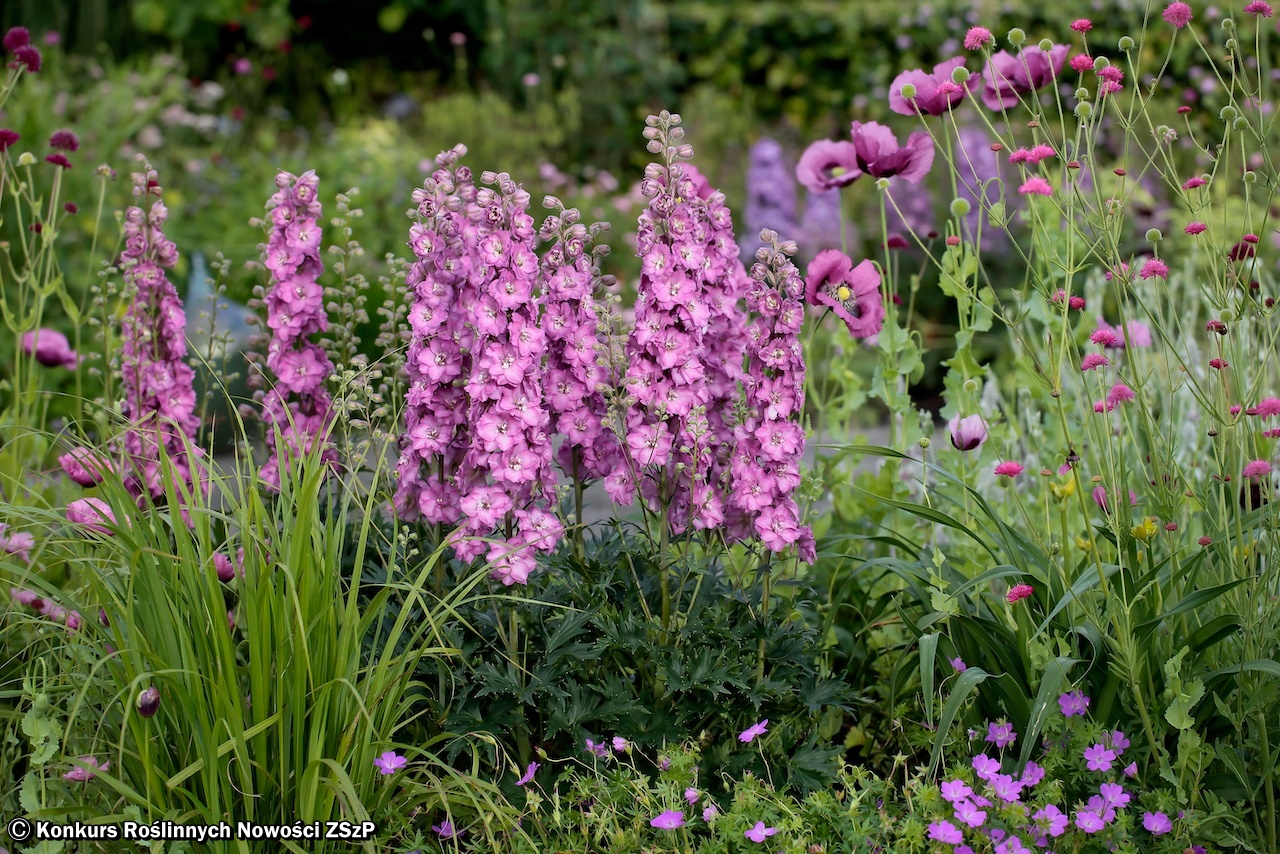
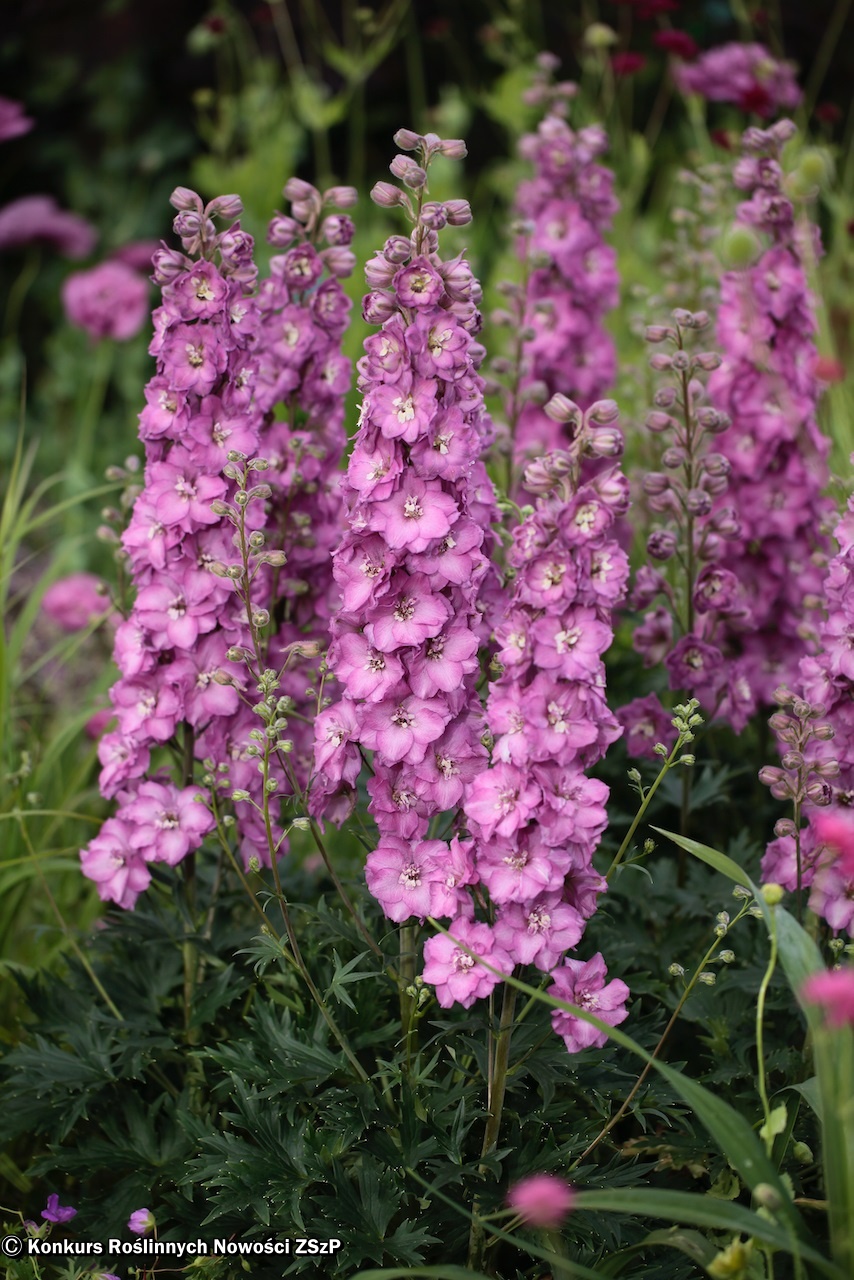
Delphinium DELGENIUS® CHANTAY

Delphinium ELGENIUS® CHANTAY

A compact delphinium variety distinguished by its vigorous growth, long-lasting foliage, and semi-double pink flowers with a pale center. The plant forms dense clumps and reaches a height of 70–80 cm when in bloom. Its stems are strong, upright, and resistant to lodging. It flowers abundantly from late June to July. After removing spent inflorescences (recommended), it repeats flowering in autumn. The flowers are large, semi-double to double, in a lilac-pink shade; they attract pollinators and add strong structure to borders. The plant retains its ornamental dark green leaves throughout the season, unlike many other delphinium varieties, they do not die back after the first flowering. It grows best in sunny or partially shaded positions, in fertile, humus-rich, moderately moist, well-drained soils with a slightly acidic pH. This variety is heat-tolerant and easy to grow. Recommended for container planting as well as perennial borders, especially when planted in groups. It creates striking garden compositions, and the flowers are suitable for cutting and arranging in bouquets. Hardiness zone: 7a (−17 / −15 °C).

Cultivar denomination: ‘ET DLP 827’ PBR

Breeder: Eternal Plant Boijl B.V., The Netherlands

Year of market introduction: 2021

Applicant: Gospodarstwo Ogrodnicze Krzysztof SÓJKA, ul. Lubelska 100, 24-100 Puławy,  Poland

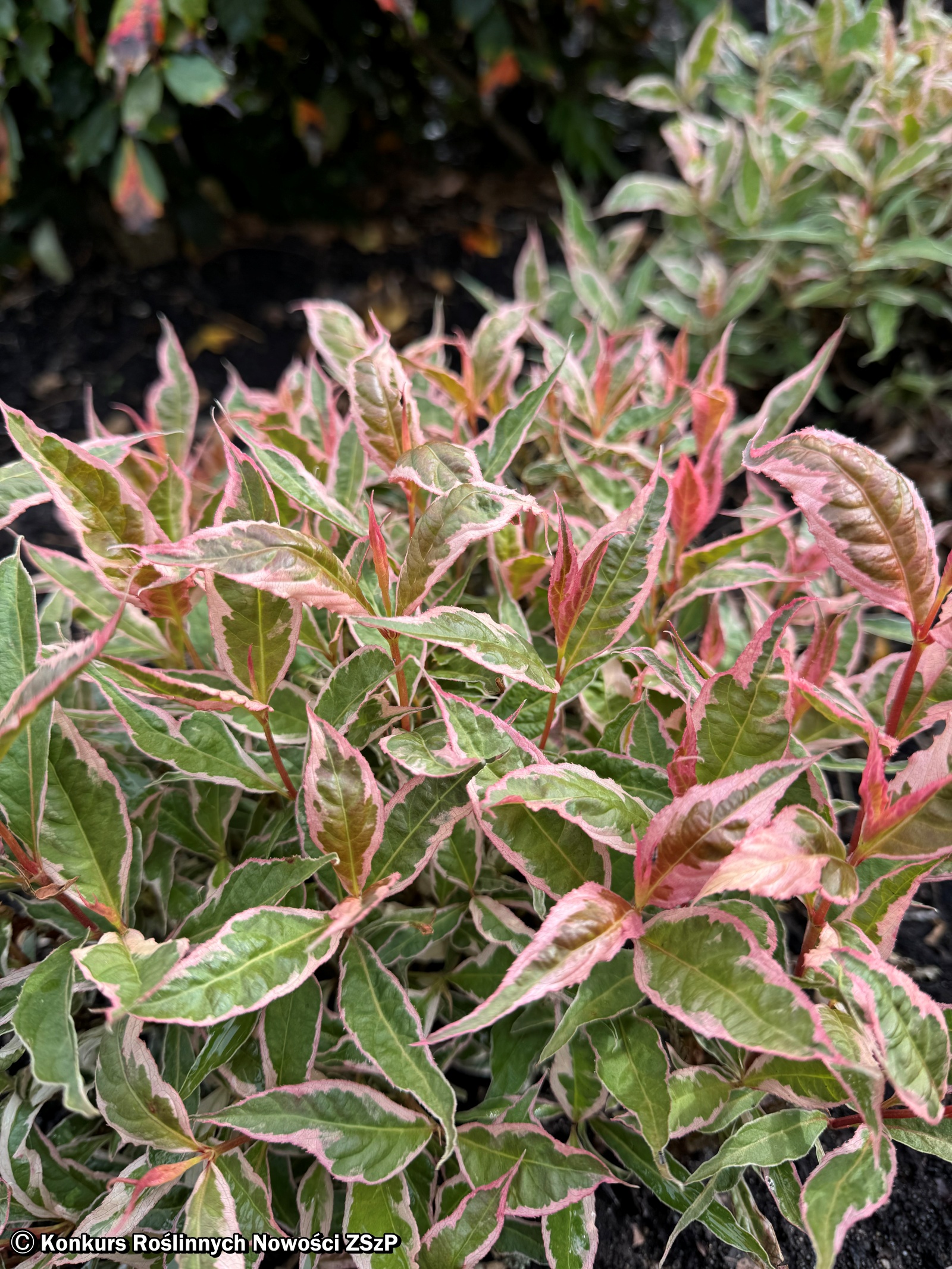
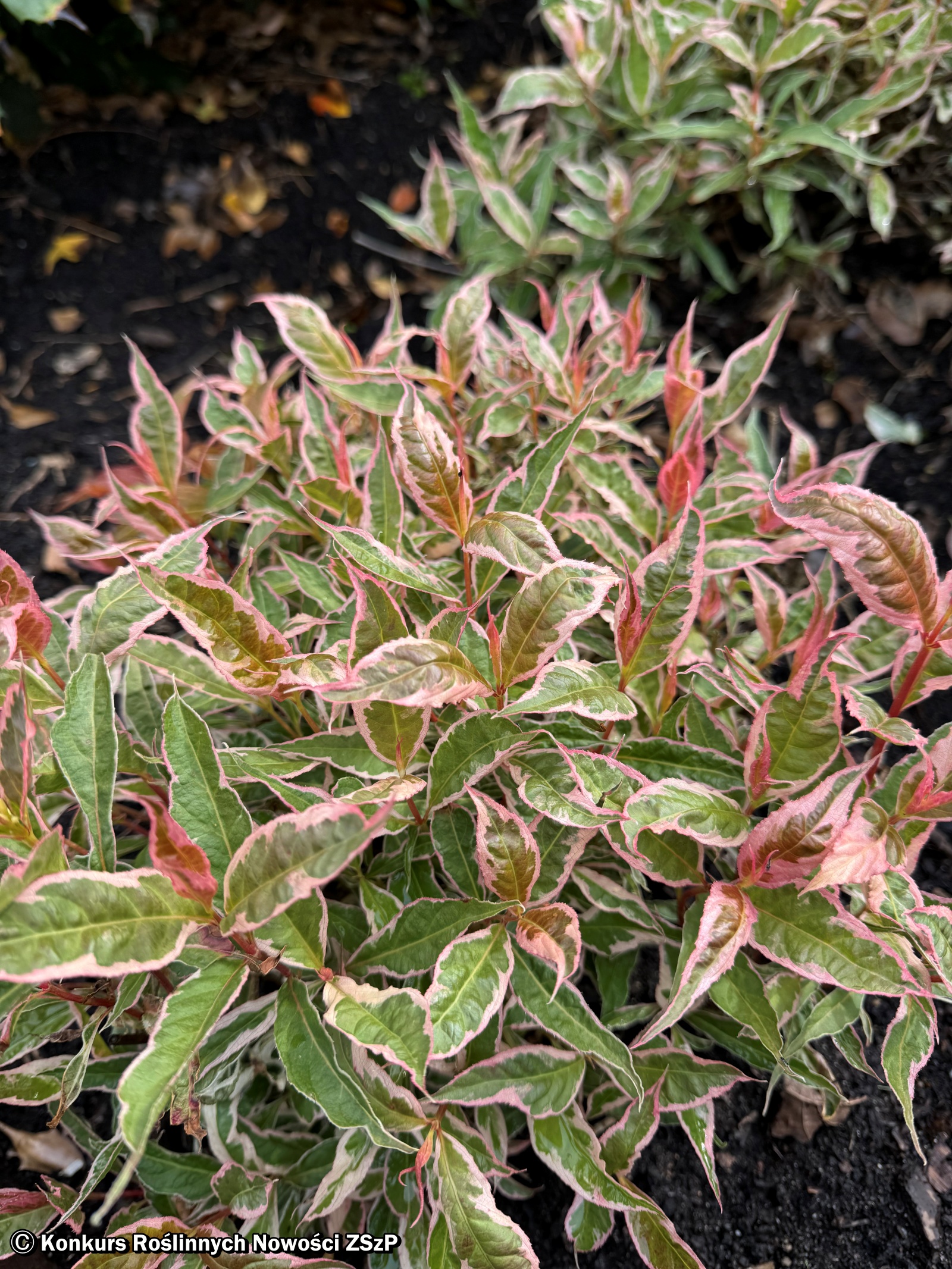
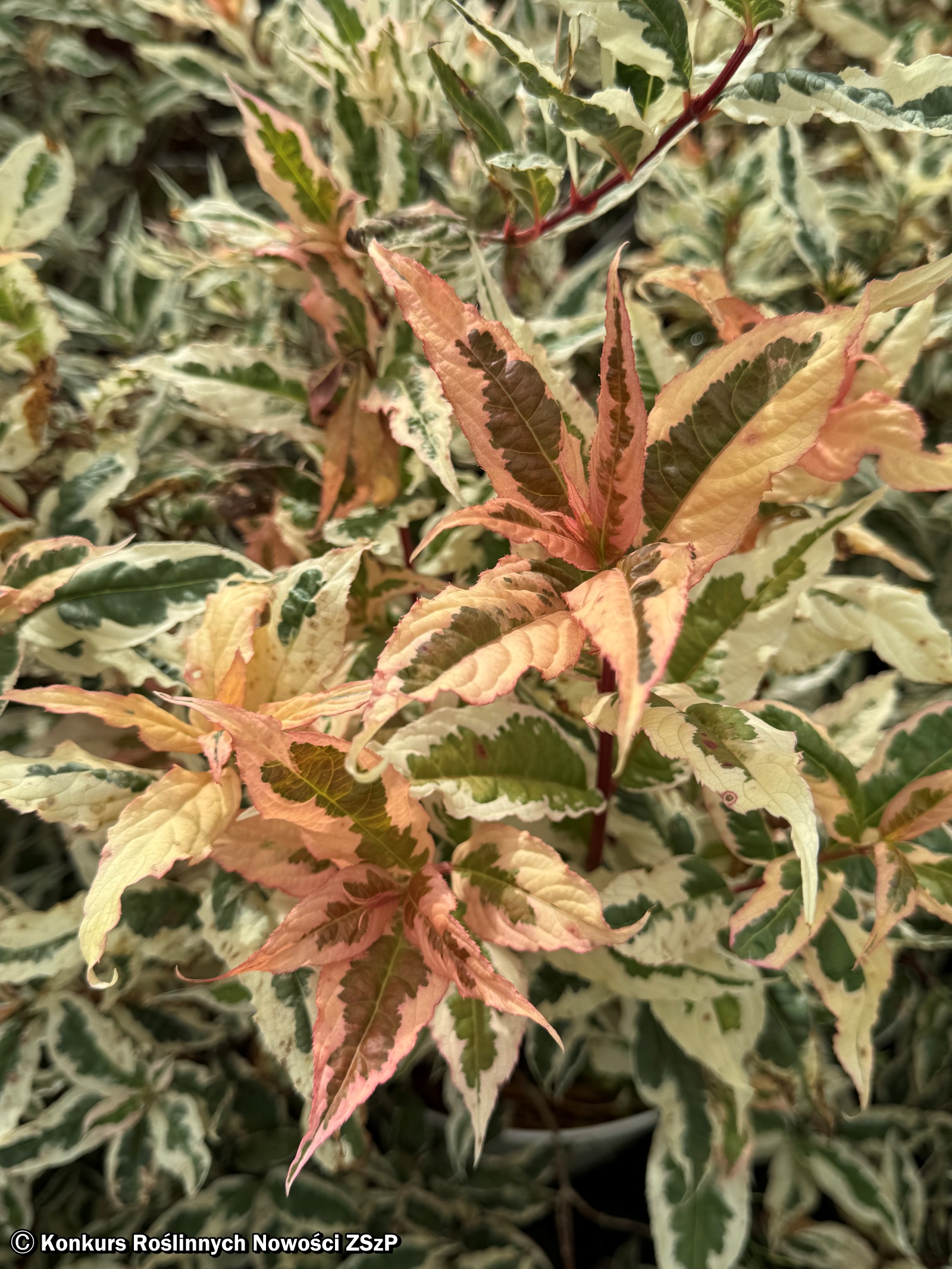
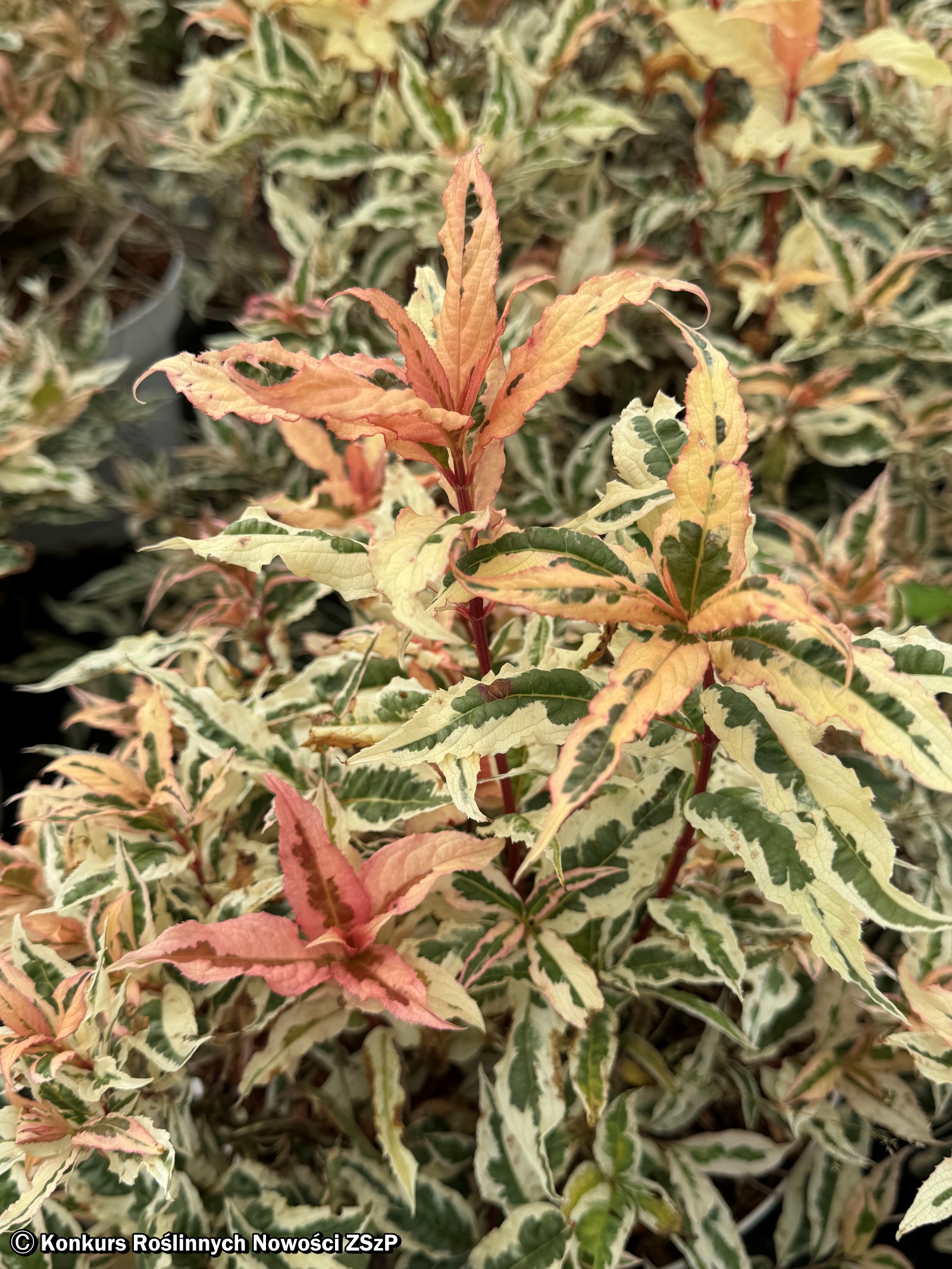
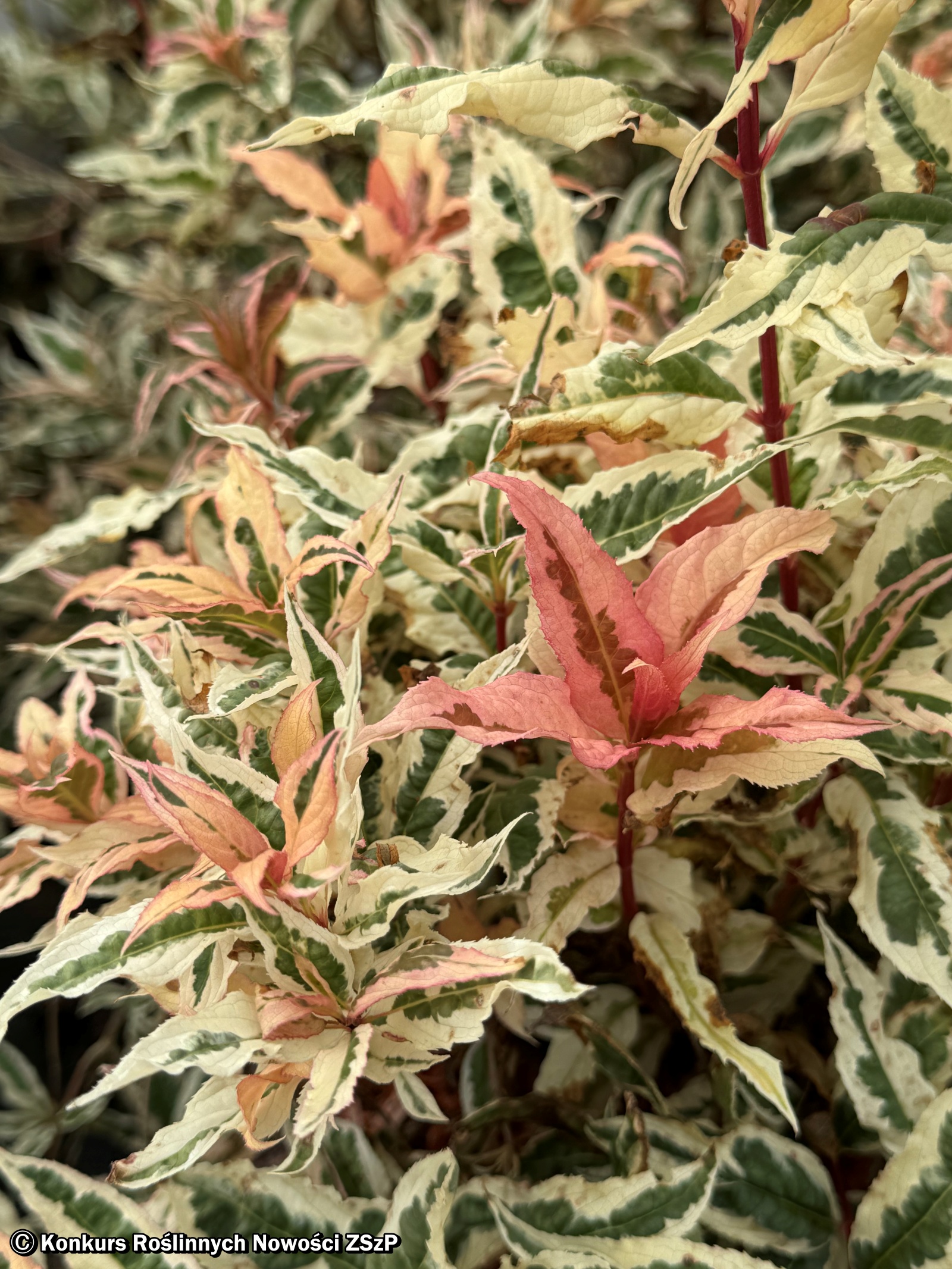
Diervilla ×splendens KODIAK® MIXX

Diervilla ×splendens KODIAK® MIXX

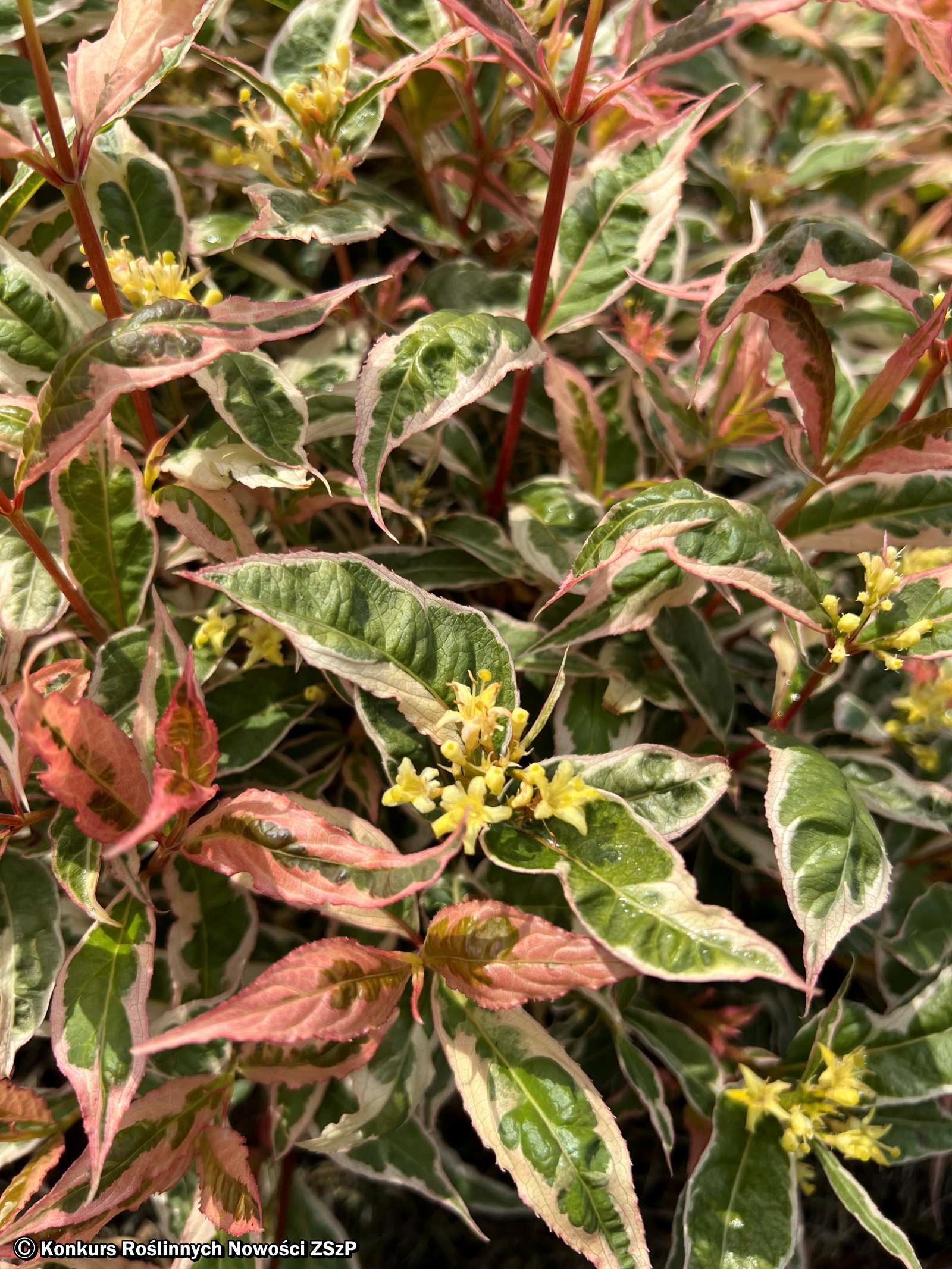
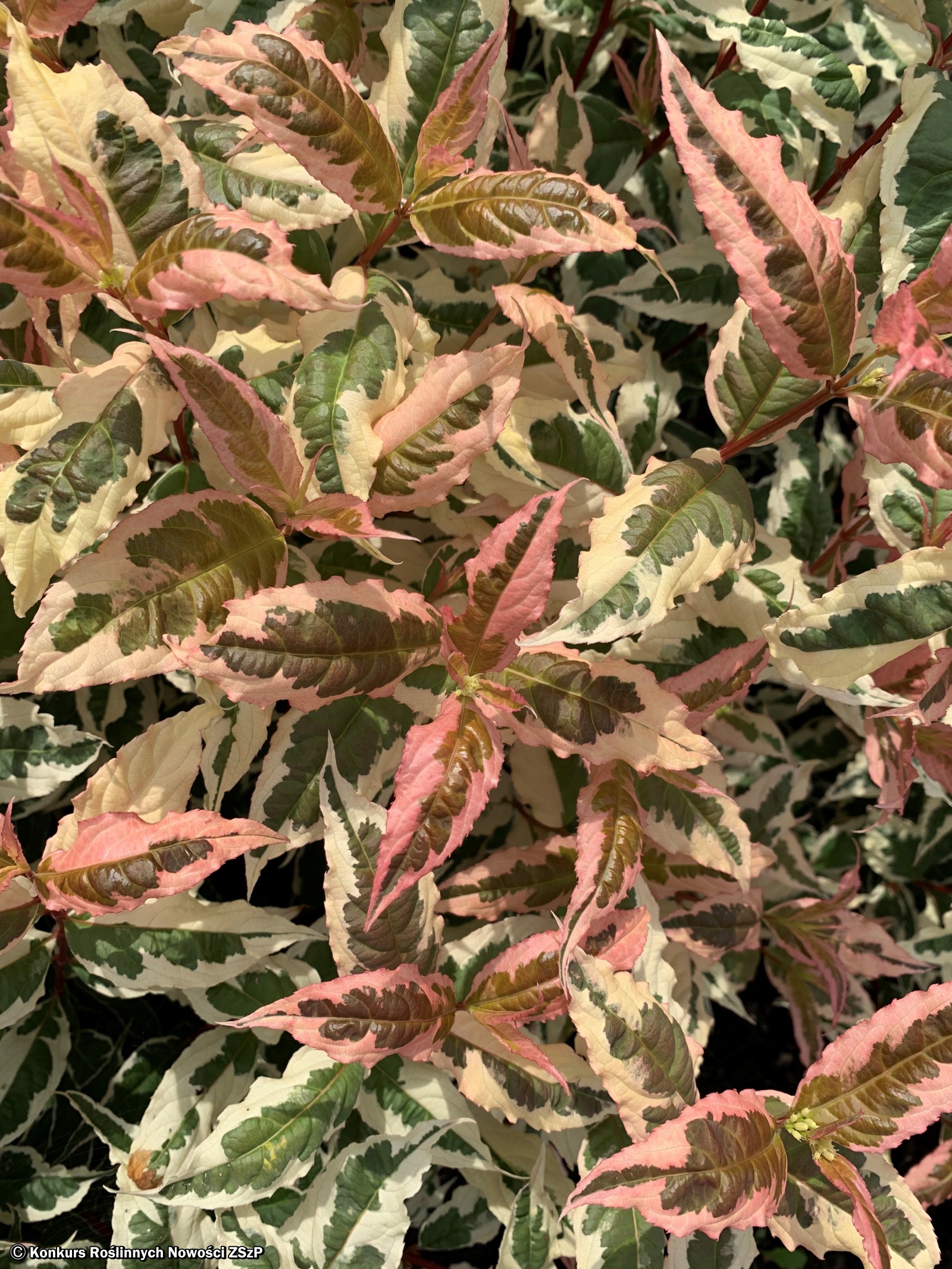
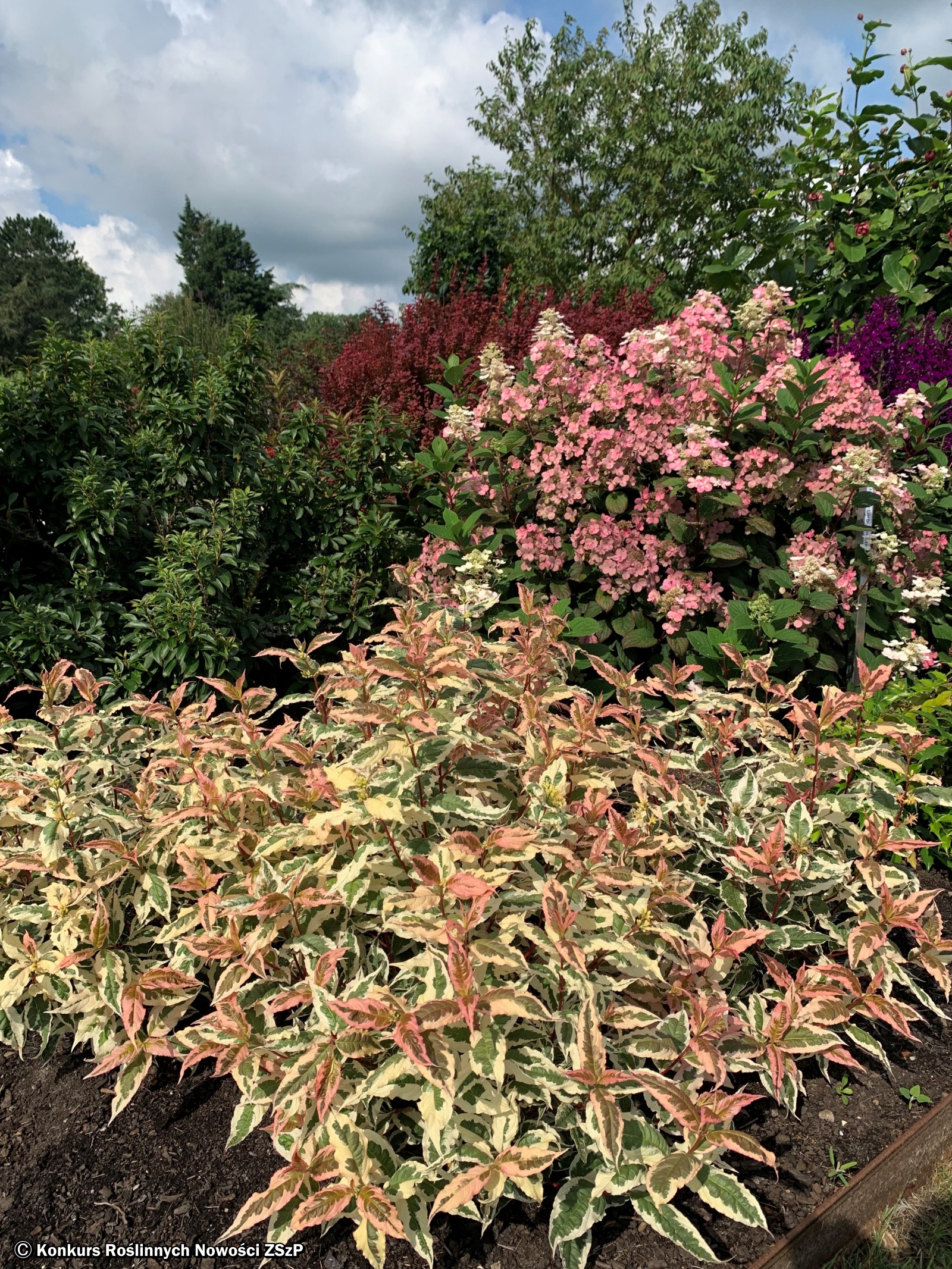
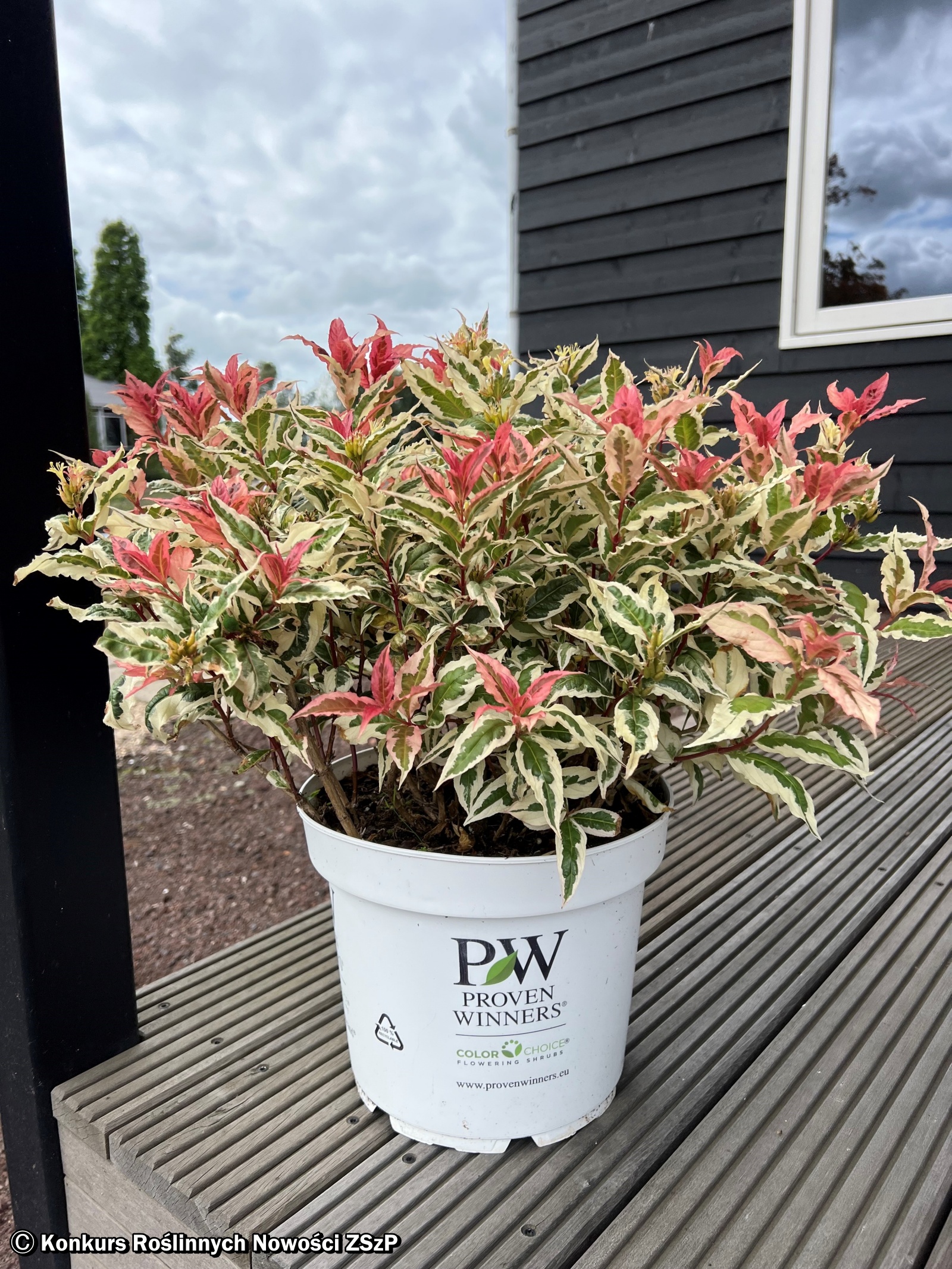
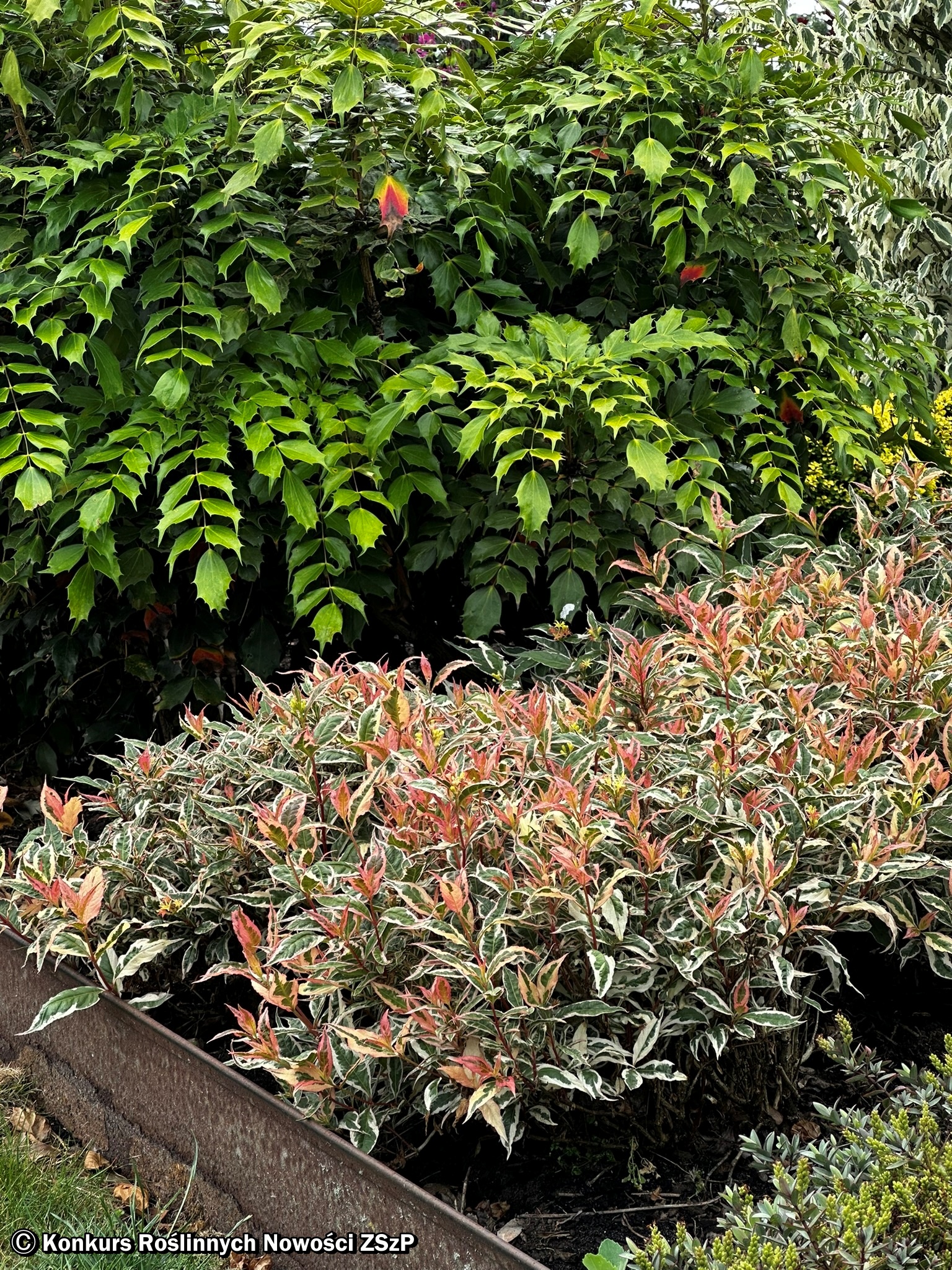
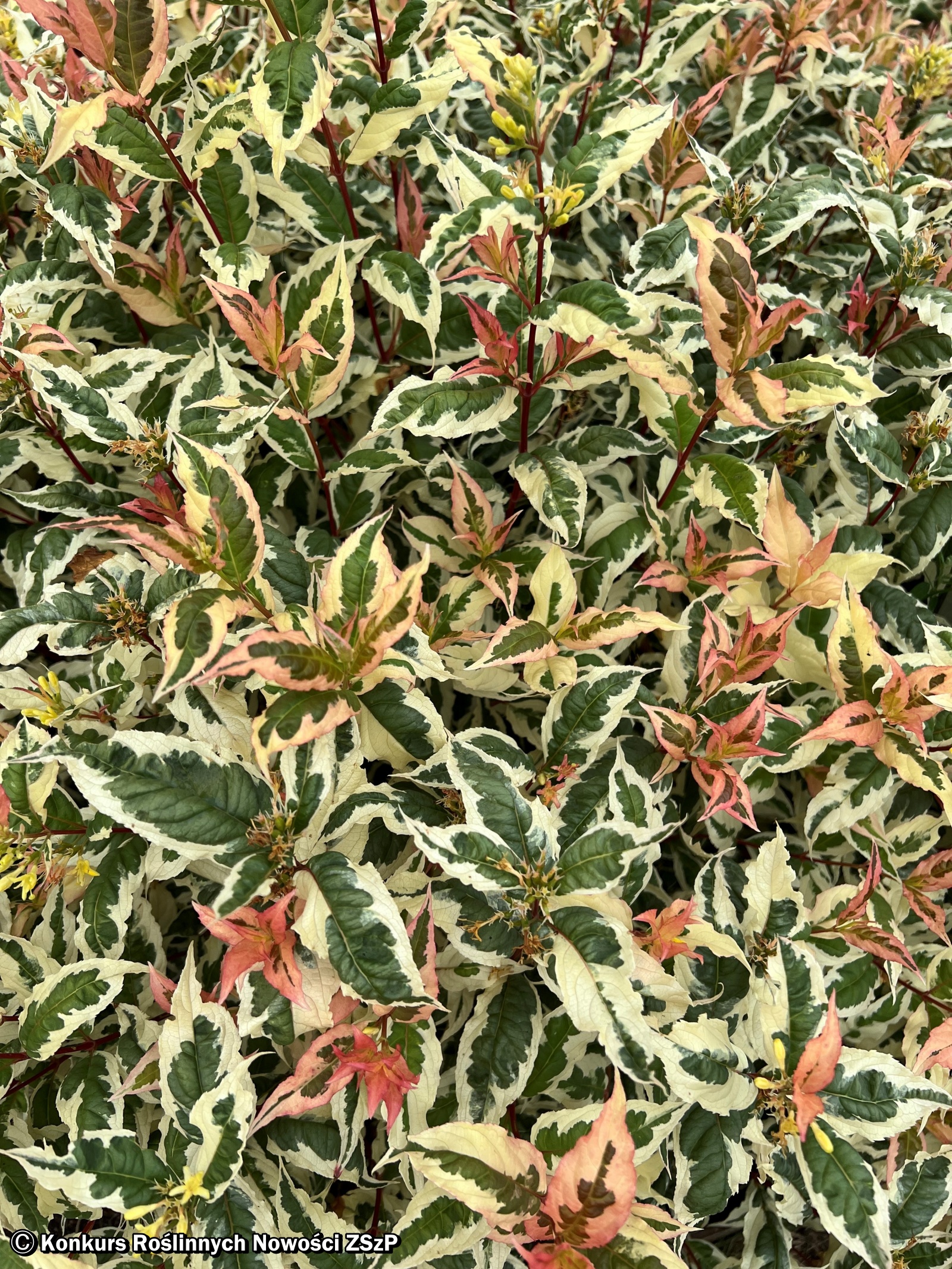
A compact, low-growing, multi-coloured shrub with green leaves irregularly edged in creamy white and vibrant pink new growth. It reaches 60–80 cm in height. Young shoots and emerging leaves are intensely pink, allowing the shrub to maintain its attractive colouring throughout much of the growing season. From early summer until autumn, the plant produces small, pale yellow flowers that are highly attractive to pollinating insects. It grows well in full sun, partial shade, and shade, tolerates a range of well-drained soils, and withstands periods of drought. The shrub responds well to rejuvenation pruning. To maintain a compact habit and encourage the production of colourful young shoots, plants may be pruned in early spring. Due to its compact size, it is well suited to small gardens and locations where many ornamental shrubs perform poorly because of partial shade or periodic water shortages. The cultivar is recommended for borders, group plantings, urban landscapes, and container cultivation. Hardiness Zone: 5a (−29 to −27°C).

Cultivar denomination: ‘G2X88544VAR’ PBR

Breeder: Richard A. Grazzini, USA

Year of market introduction: 2024

Applicant: Szkółki KUROWSCY, ul. Kurowska 105, 24-130 Końskowola, Poland

Echinacea purpurea BOLERO YELLOW

Echinacea purpurea BOLERO YELLOW

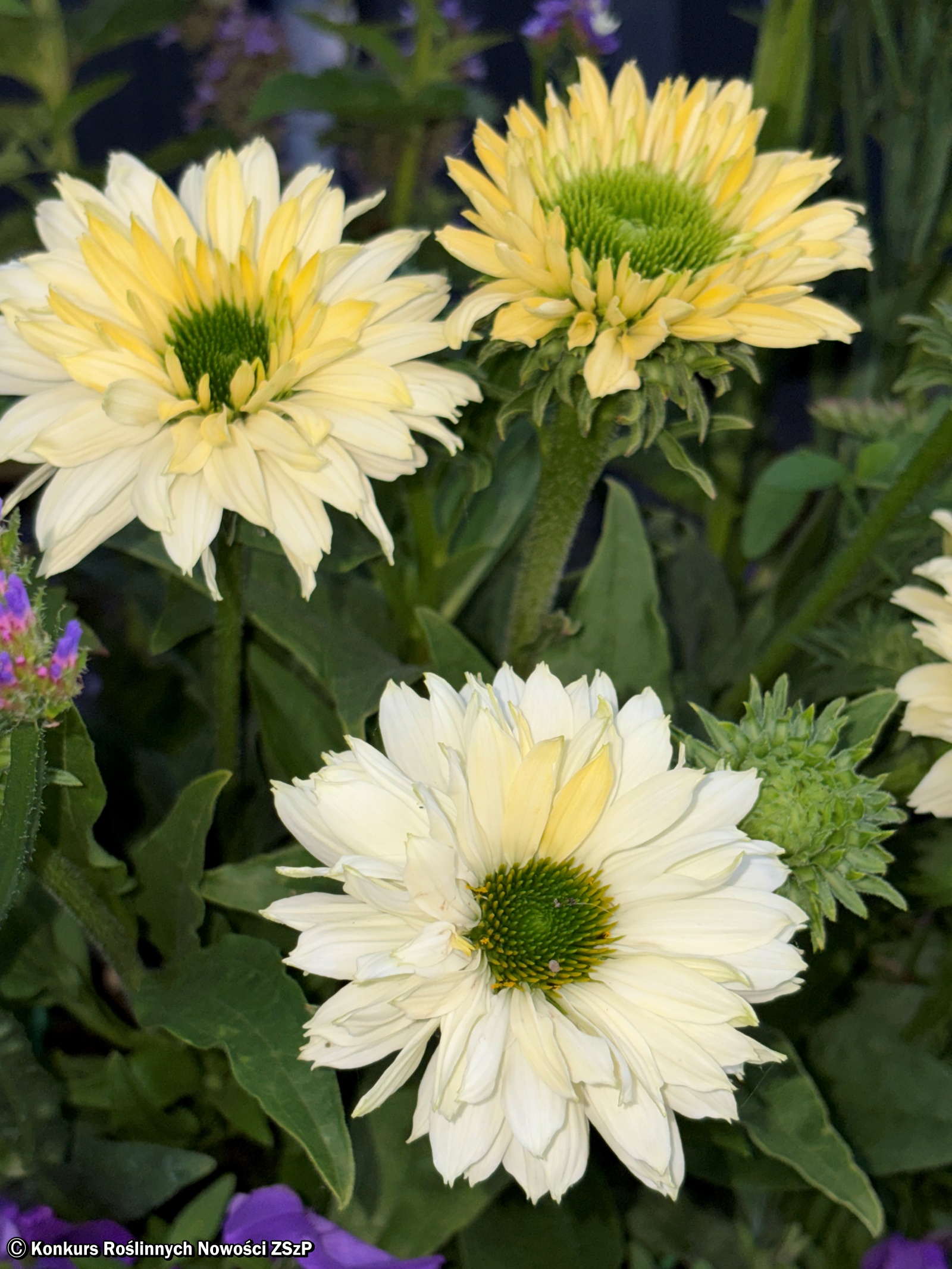
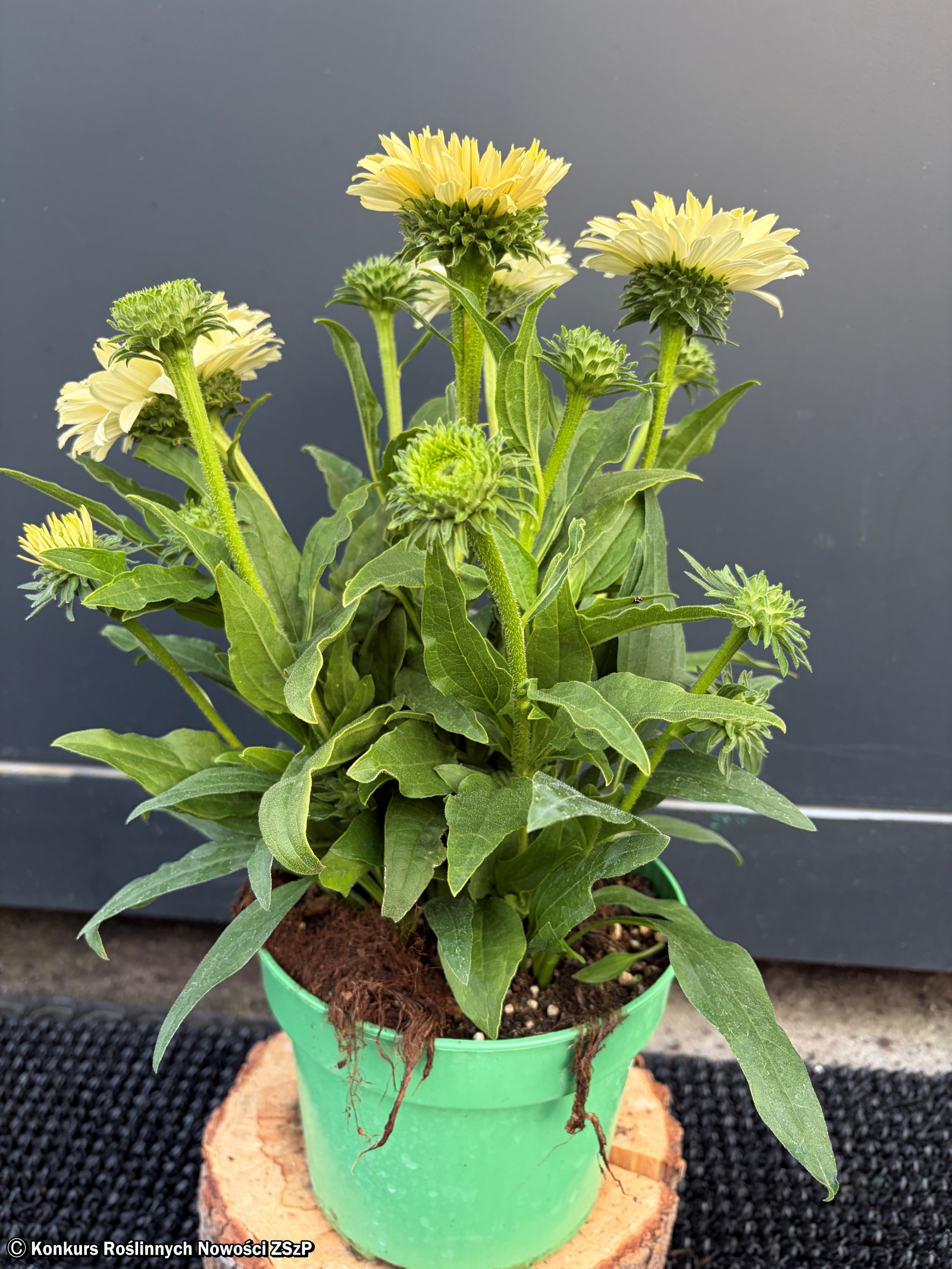
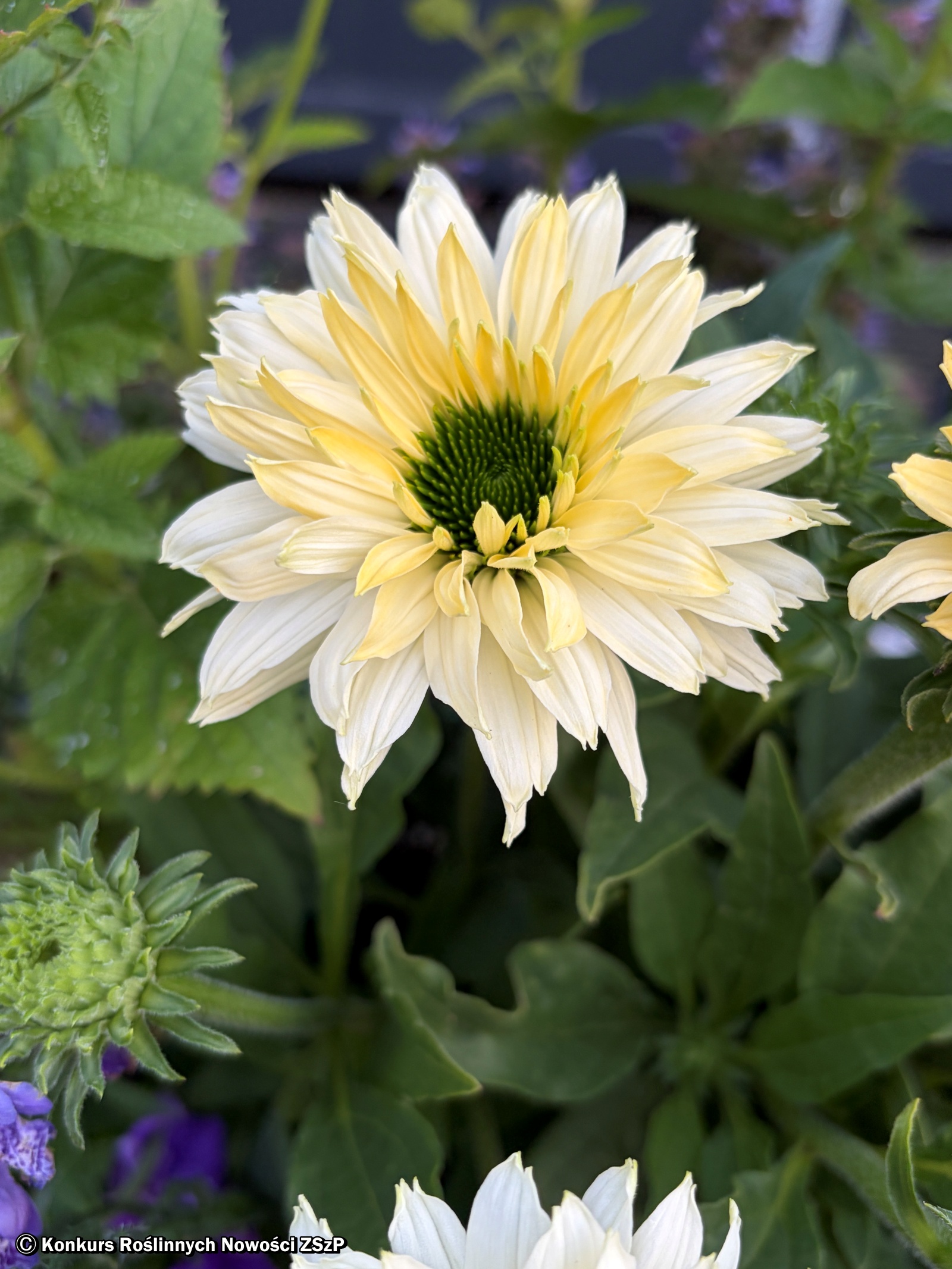
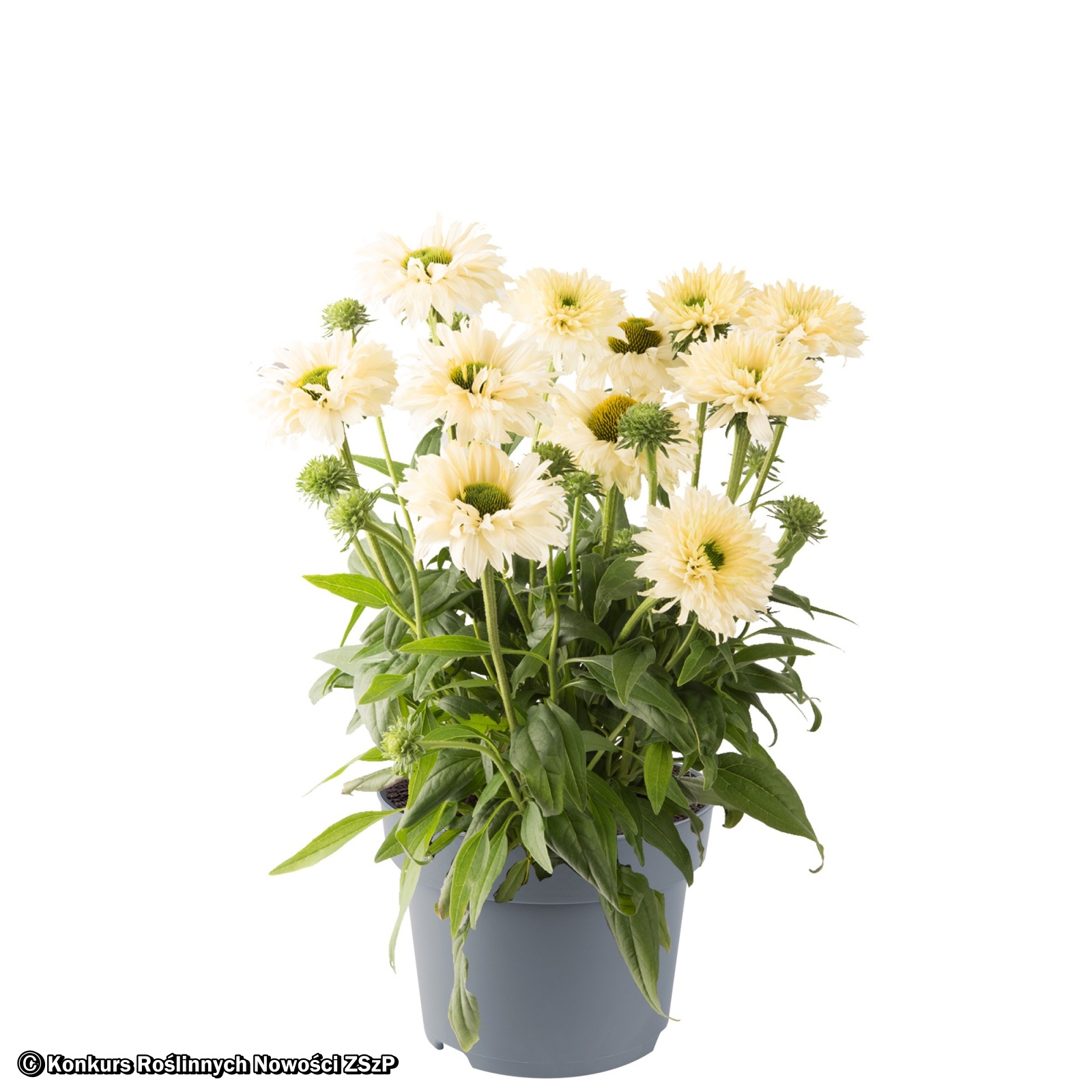
A low-growing, compact cultivar with creamy-yellow flower heads featuring a double row of ray florets. It reaches 40–45 cm in height and branches well, forming a dense, bushy habit. The stems and leaves are dark green and covered with short, rough hairs. The flowers are borne in large flower heads held singly on the tips of sturdy stems. The ray florets are gracefully arching, creamy yellow in color, with finely toothed tips, and are densely arranged around the edge of the inflorescence. The centre of the flower head is filled with short, greenish tubular florets borne on a raised receptacle, forming the characteristic cone-shaped centre. Flowering begins in early July and continues through September. The blooms are highly attractive to butterflies and other nectar-seeking pollinators. This perennial is fully hardy and easy to grow, with modest cultivation requirements. It performs best in full sun and in fertile, well-drained, moderately moist soil. Good drainage is essential for successful overwintering. The cultivar is recommended for perennial borders and mixed planting schemes. Owing to its compact growth habit, it is also highly suitable for patio and balcony containers. Hardiness Zone: 5b (-26 to -23°C).

Cultivar denomination: ‘Bolero Yellow’

Breeder: AB Cultivars, The Netherlands

Year of market introduction: 2025

Applicant: Gospodarstwo Specjalistyczne PANEK Dariusz Panek, ul Marii Dąbrowskiej 12, 05-800 Pruszków, Poland

Heliopsis helianthoides SOLAR FLARE

Heliopsis helianthoides SOLAR FLARE

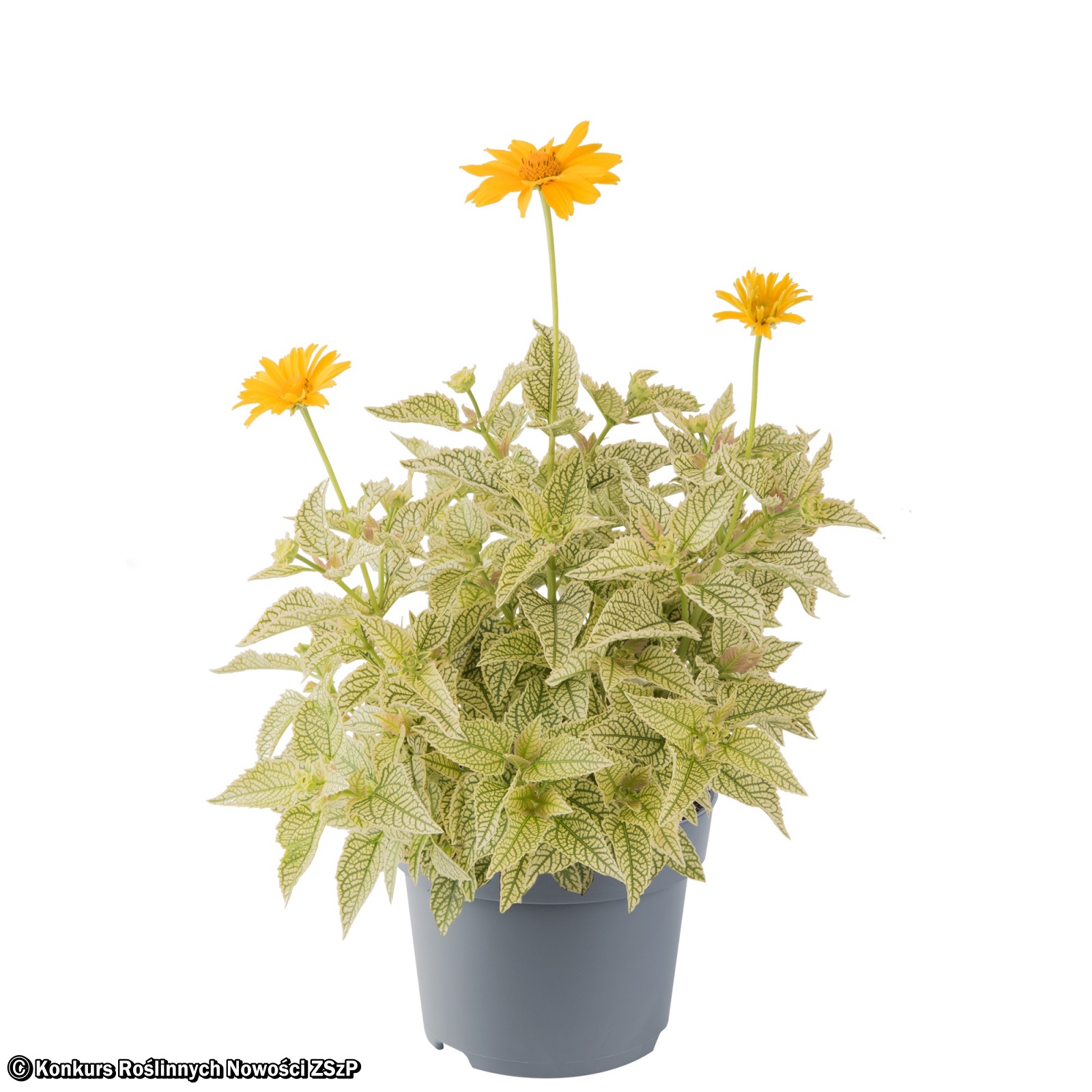
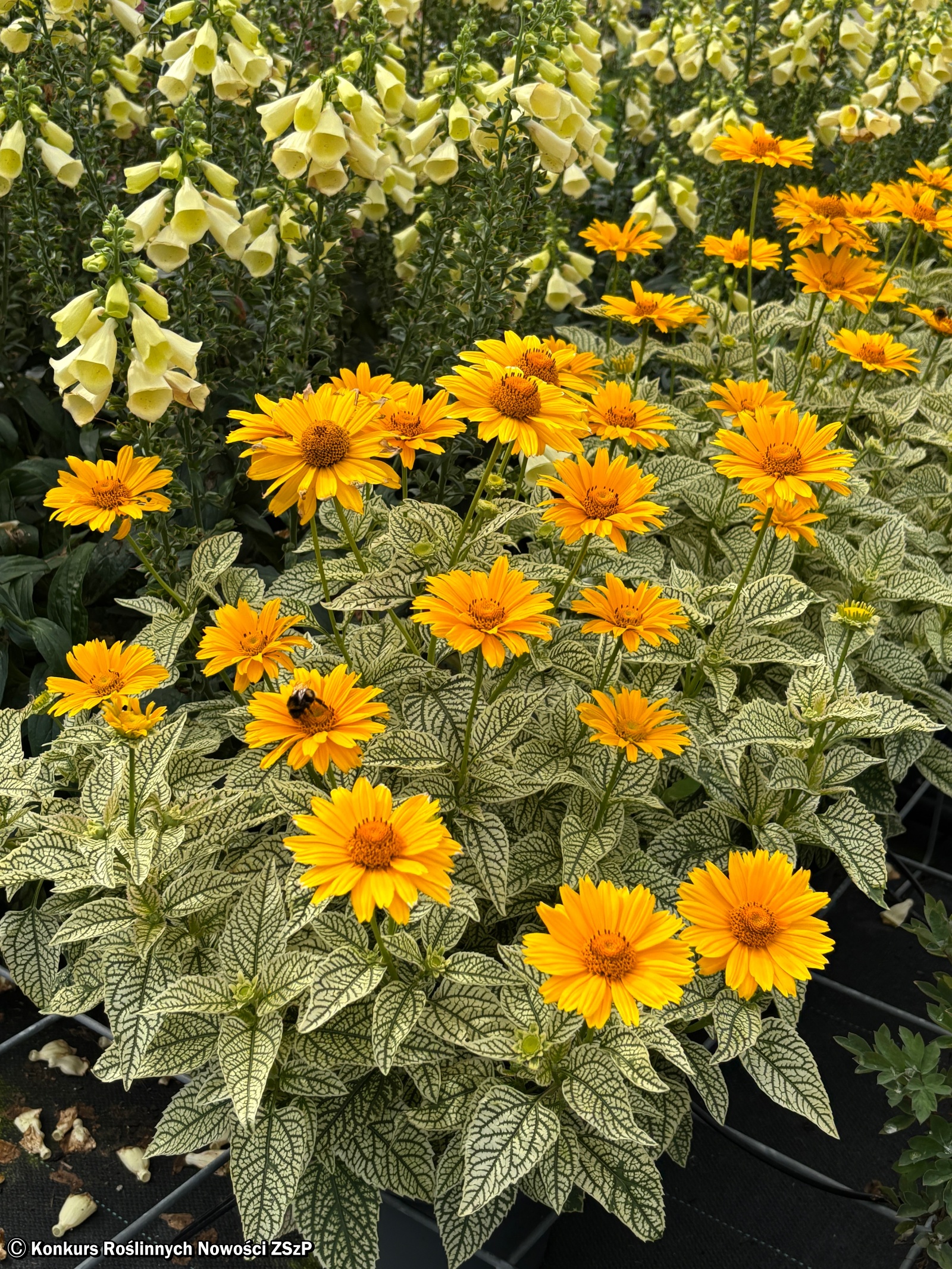
A compact, low-growing cultivar distinguished by its attractive variegated foliage and yellow flowers. It reaches approximately 35 cm in height. The stems are stiff and well branched. The leaves are ovate-lanceolate with pointed tips, featuring a striking creamy coloration highlighted by prominent green veins that create a marbled pattern. The flower heads are golden yellow, composed of short tubular florets in the centre and long ray florets arranged around the margins. Flowering extends from July to September. This perennial is easy to grow, hardy, and undemanding in cultivation. It performs best in fertile, moderately moist, well-drained soils in full sun to partial shade. The plant is recommended for planting singly or in groups in perennial borders and mixed garden beds. Hardiness Zone: 4 (−34 to −29°C).

Cultivar denomination: ‘Solar Flare’

Breeder: Arie Peterse, The Netherlands

Year of market introduction: 2025

Applicant: Gospodarstwo Specjalistyczne PANEK Dariusz Panek, ul. Marii Dąbrowskiej 12, 05-800 Pruszków, Poland

Hydrangea FAIRYTRAIL™ GREEN

Hydrangea FAIRYTRAIL™ GREEN

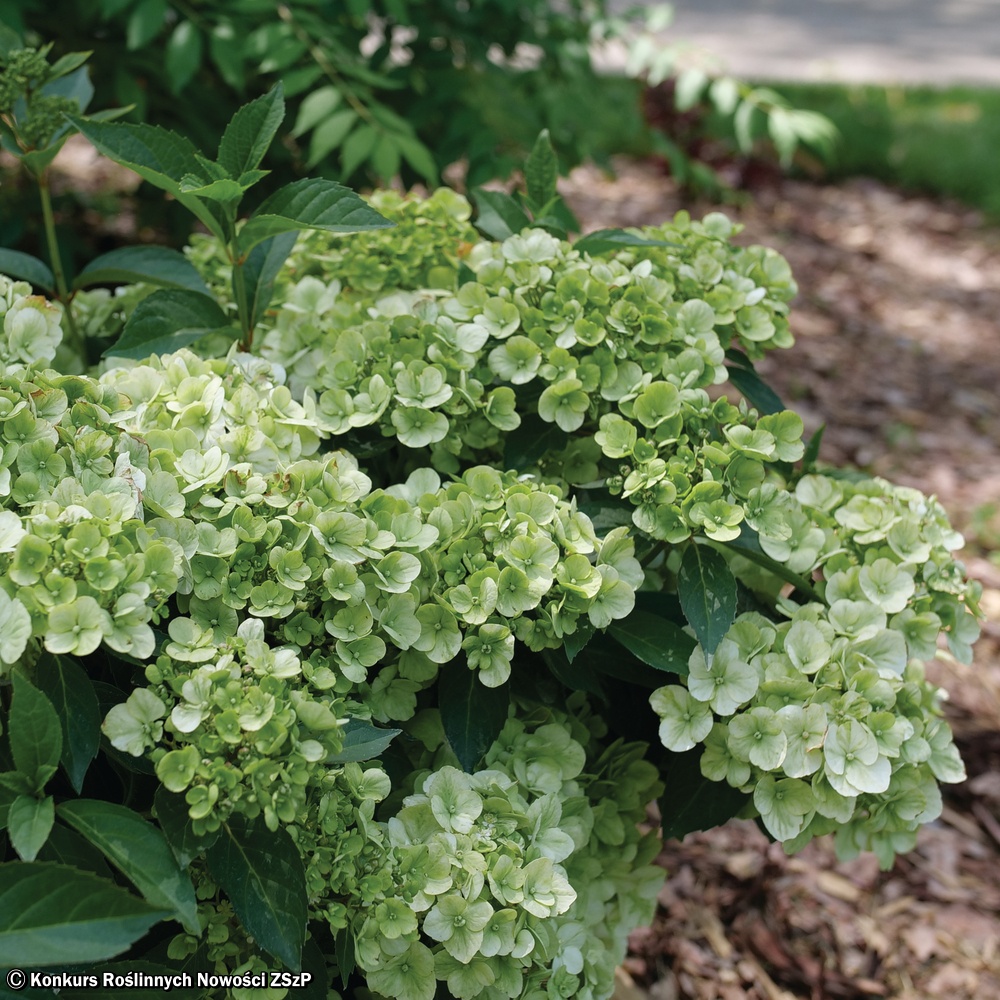
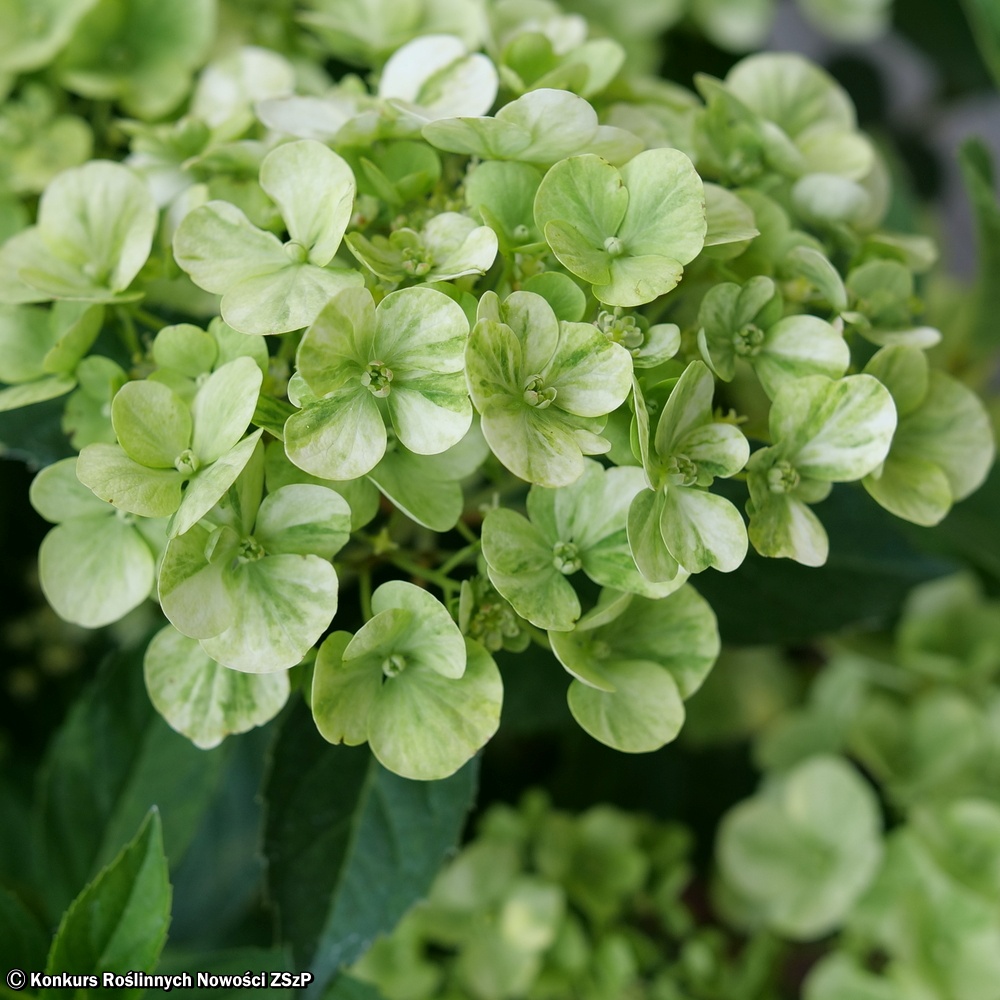
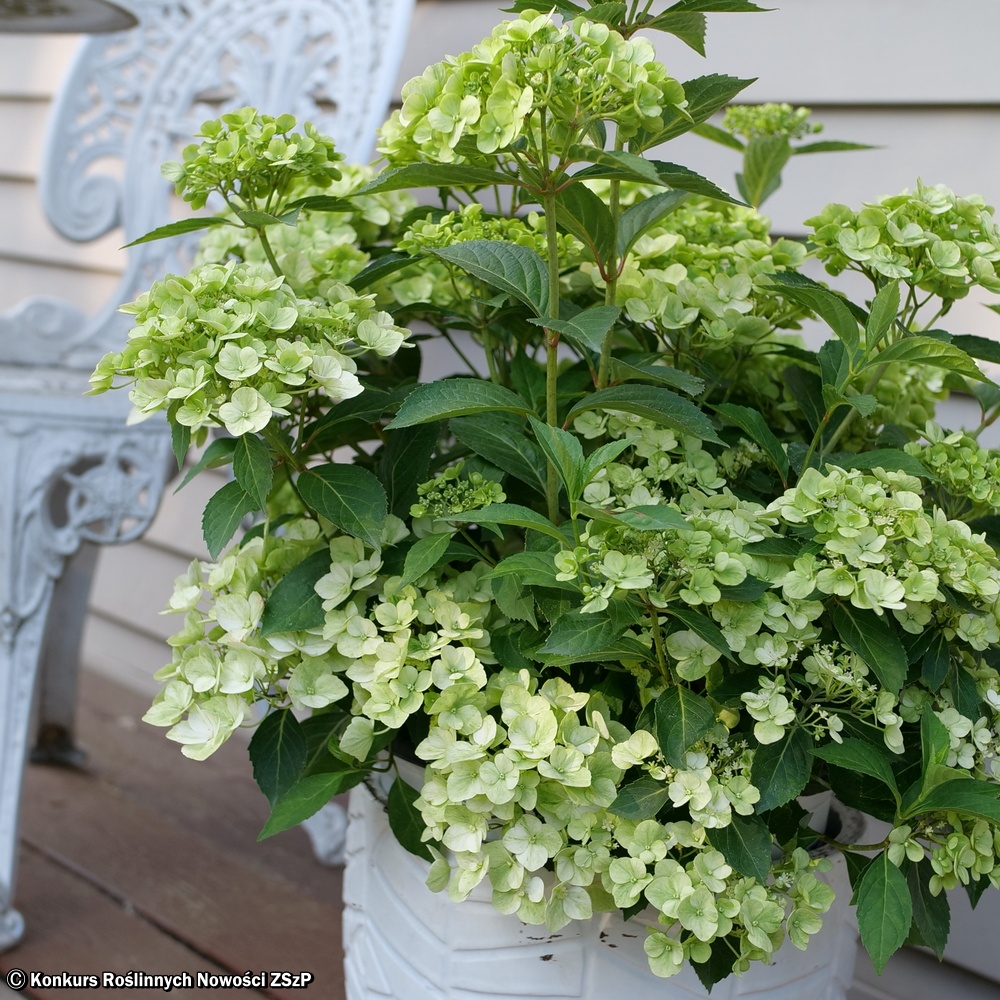
A hybrid cultivar from the Cascade Hydrangea series, bred from a cross between Hydrangea luteovenosa and H. macrophylla, distinguished by its unique cascading habit and green flowers. It grows to approximately 1 m in height and 1.2–1.4 m in width. The shoots are gracefully arching and pendulous, while the leaves are small and green. Flowers are produced on both old and new wood, appearing not only at the shoot tips but also along the stems. They are attractive lime green in colour and borne in panicle-like inflorescences. Flowering begins in mid-spring and continues until late summer. The plant performs best in partial shade. When grown in the garden, it prefers fertile, humus-rich soil that remains consistently slightly moist. It is particularly well suited to tall containers placed on patios and balconies. Its winter hardiness is comparable to that of Hydrangea macrophylla. However, due to its very early flowering period, the flower buds are more susceptible to damage from unexpected spring frosts and freezes. Hardiness Zone: 5b (−26 to −23°C).

Cultivar denomination: WNHYDFBWMH’ PBR

Breeder: Ushio Sakazaki, Japan

Year of market introduction: 2025

Applicant: Szkółka Roślin Ozdobnych WAŻYŃSCY, Pniewo 37, 99-311 Bedlno, Poland

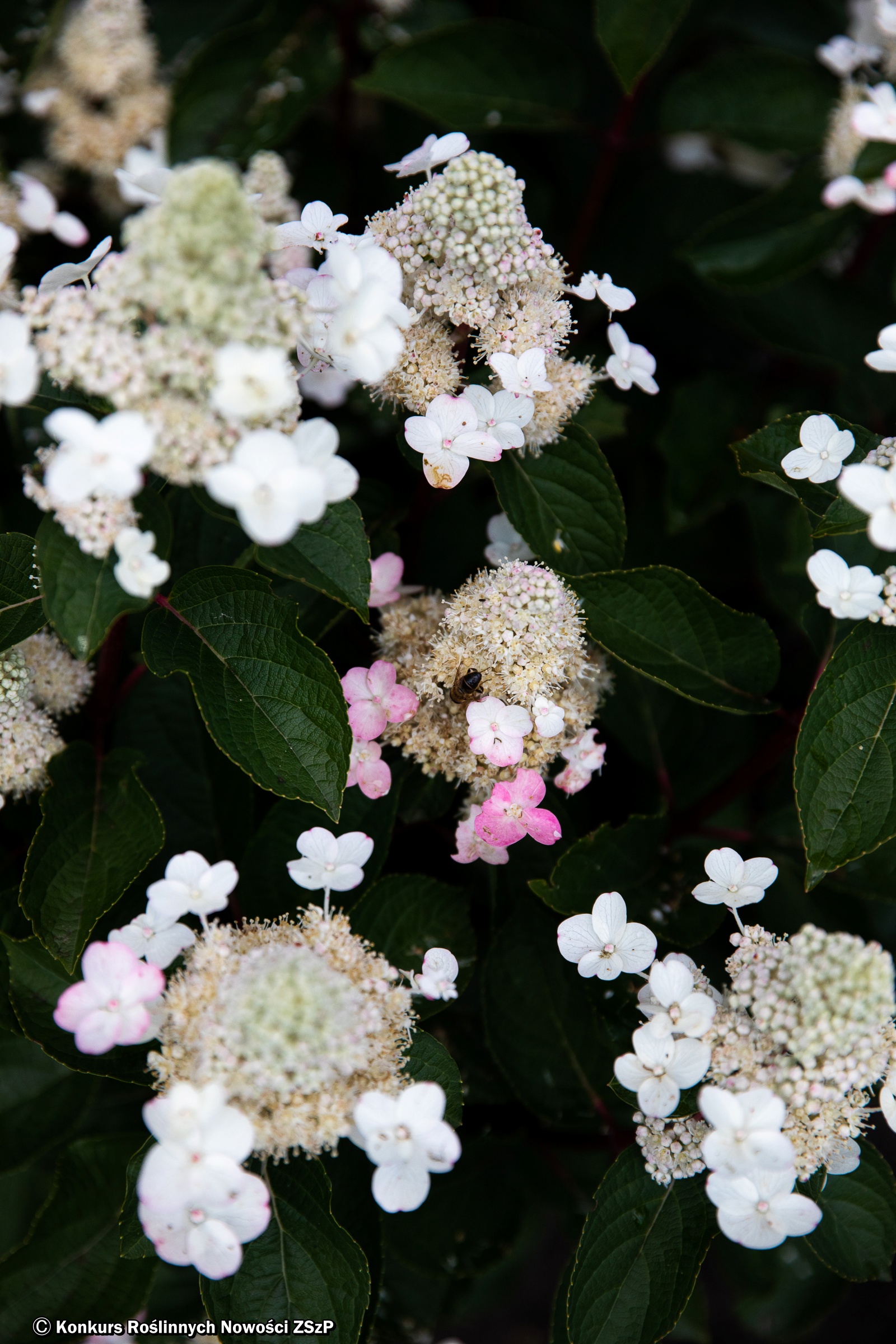
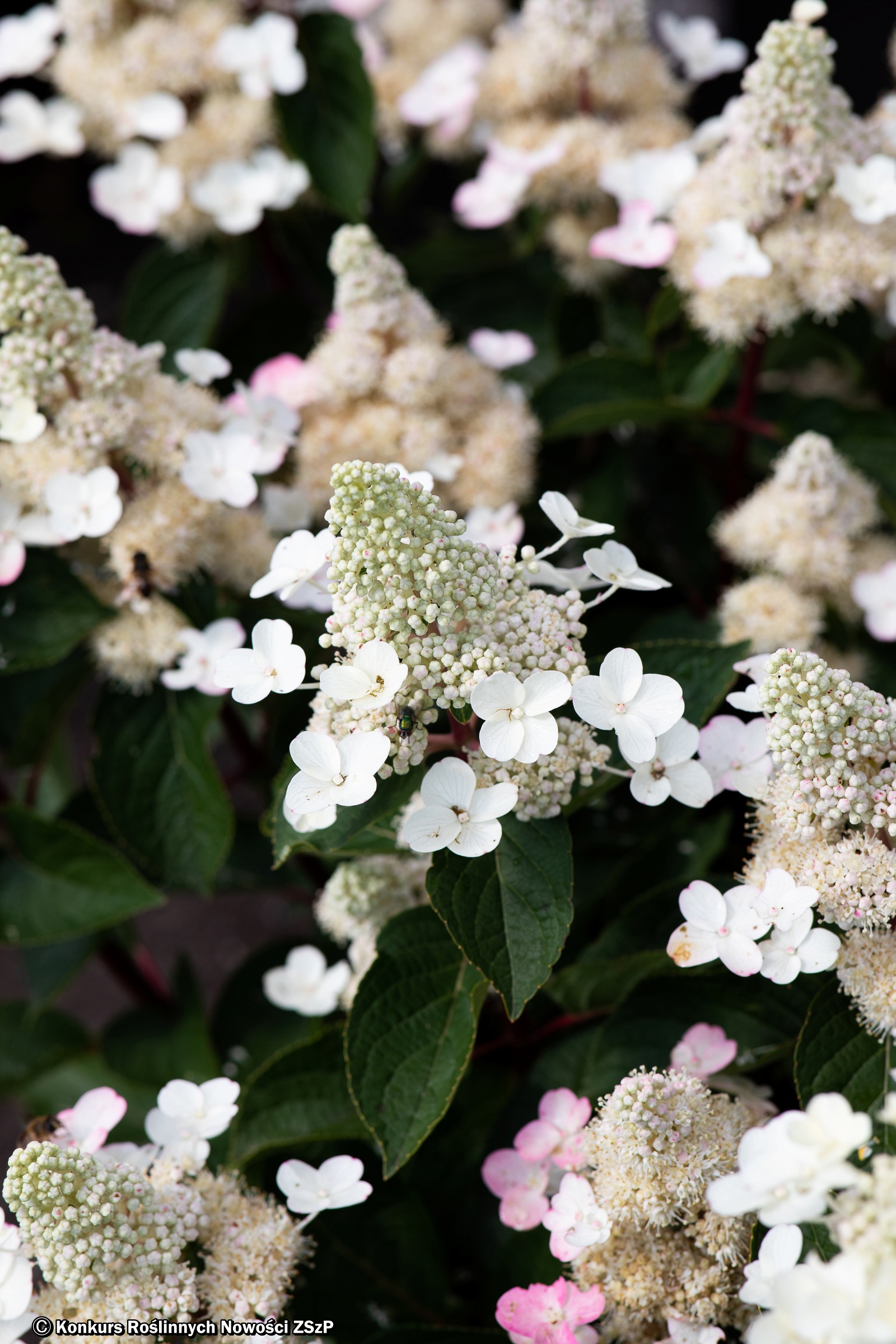
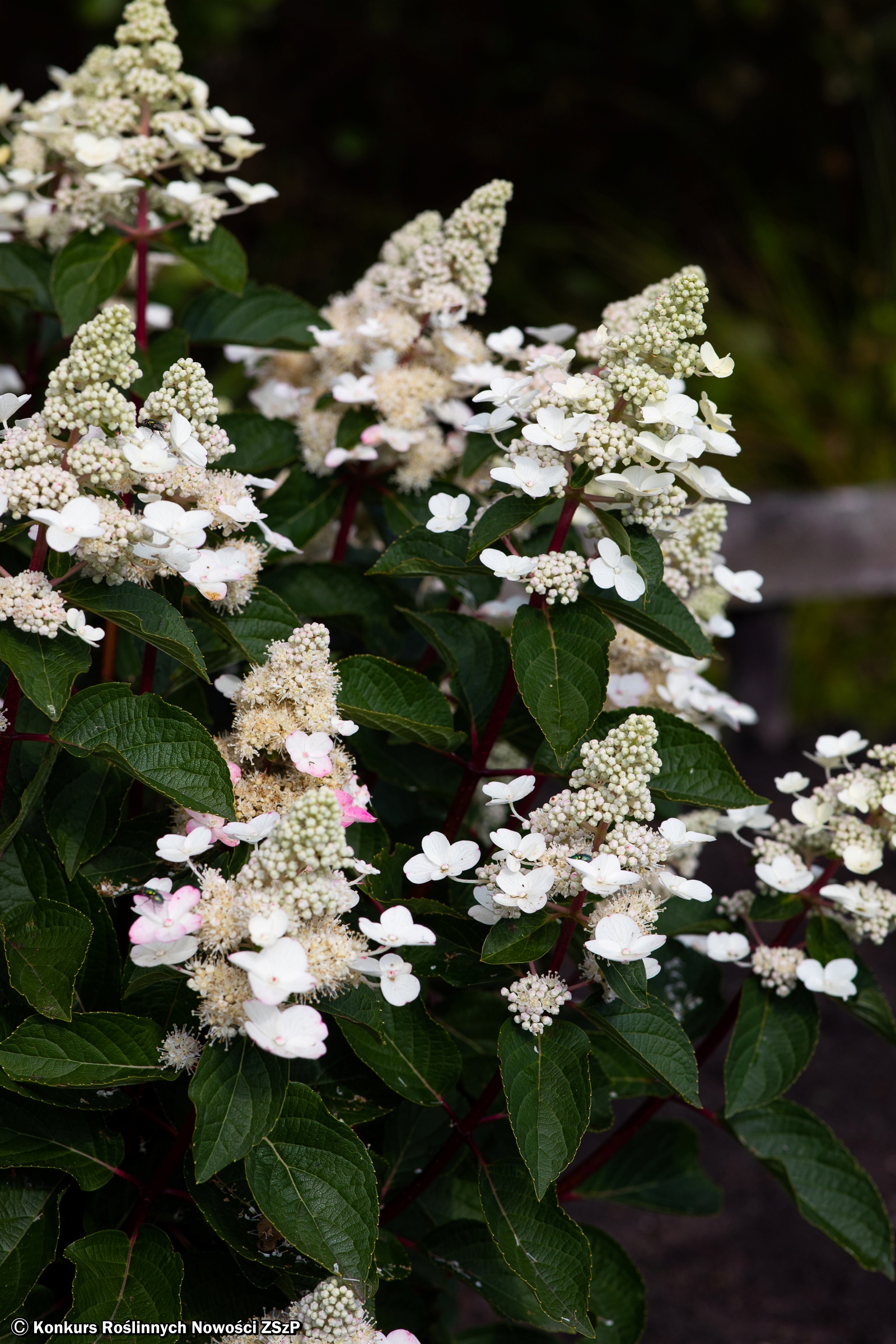
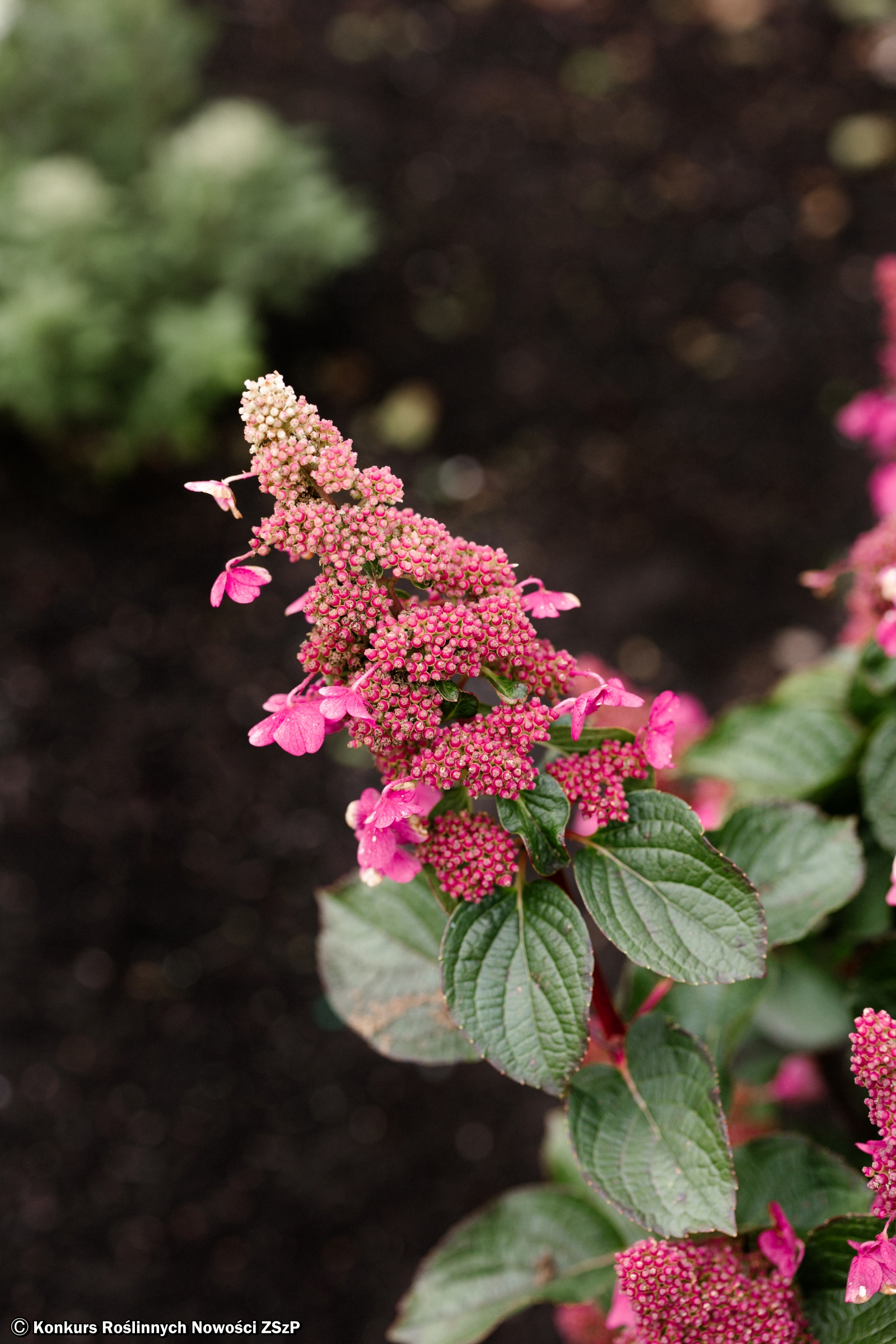
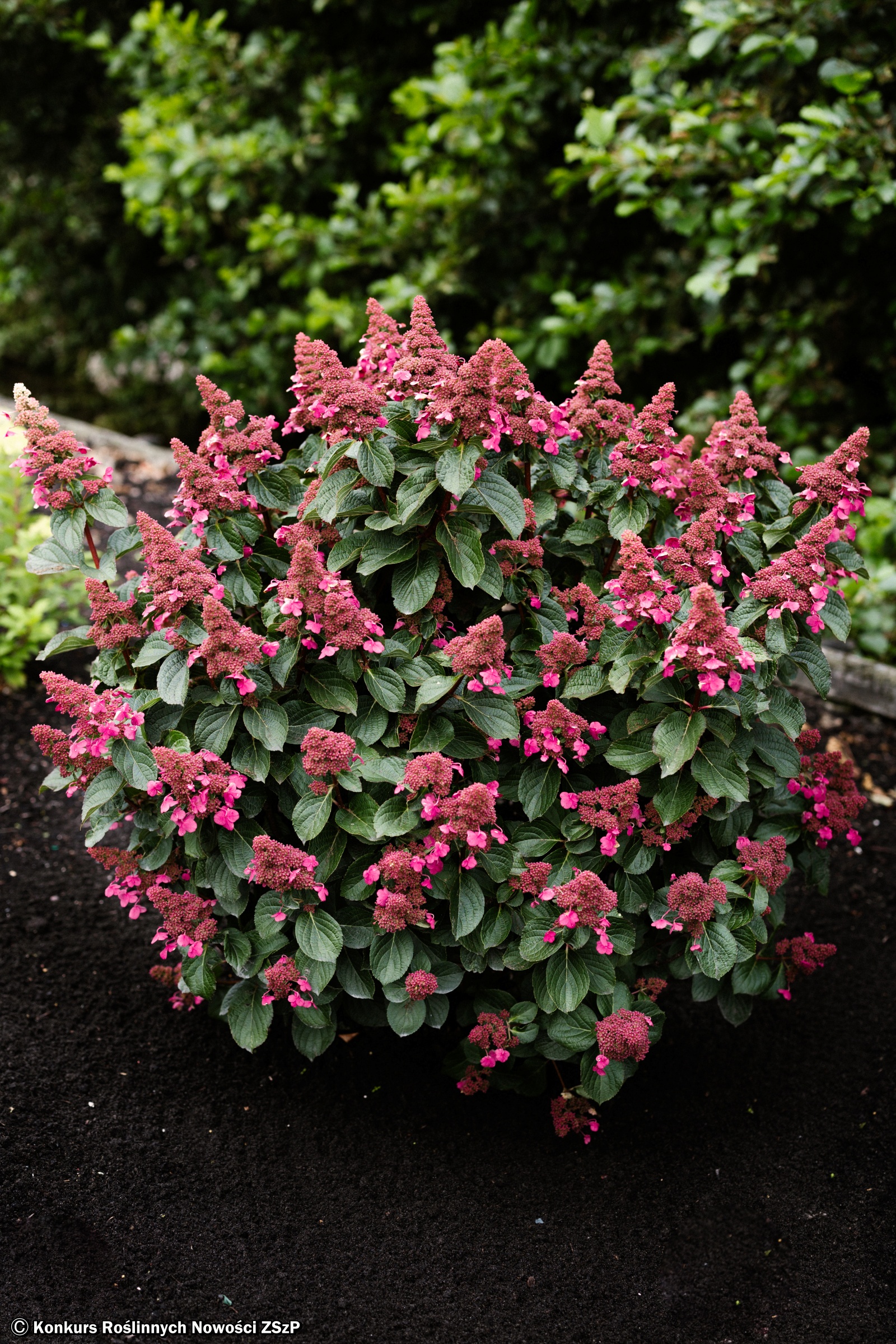
Hydrangea paniculata GROUNDBREAKER® RUBY™

Hydrangea paniculata GROUNDBREAKER® RUBY™

A compact, ground-covering hydrangea with a long flowering period lasting approximately 100 days. It blooms from July to September, producing white flower heads that gradually develop a delicate pink flush as they mature. The plant reaches about 30 cm in height and 60 cm in width, making it an excellent choice as a ground cover, border plant, or ornamental feature in containers on patios and balconies. Easy to grow and fully hardy, it combines reliability with ornamental appeal. It fits particularly well into modern, naturalistic, and minimalist garden designs. Hardiness Zone: 4 (−34 to −29°C).

Cultivar denomination:LC NO27’ PBR

Breeder: Alex Schoemaker, The Netherlands

Year of market introduction: 2025

Applicant: Szkółka SZMIT, ul. Kwiatowa 18, 06-400 Pęchcin, Poland

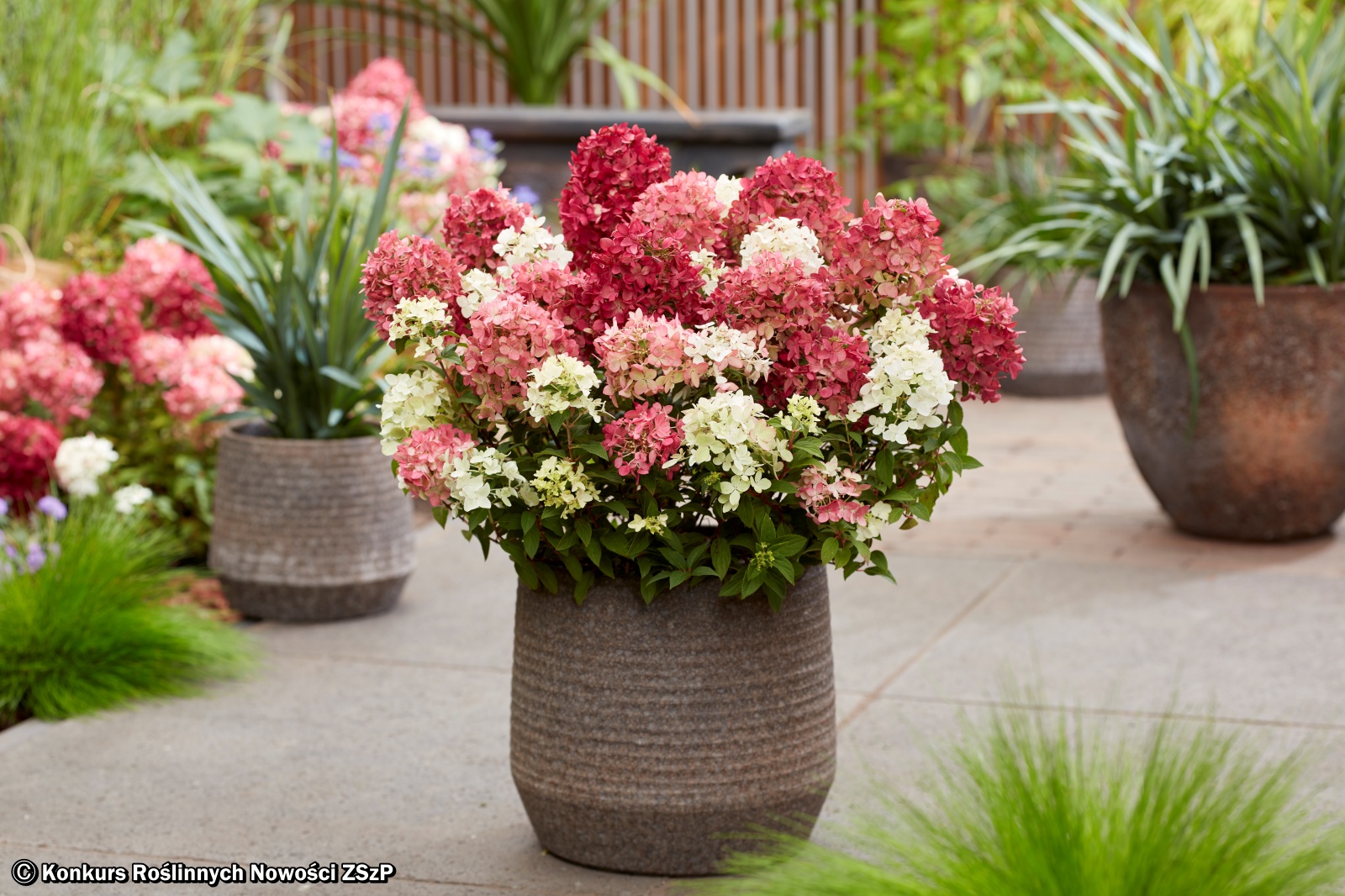
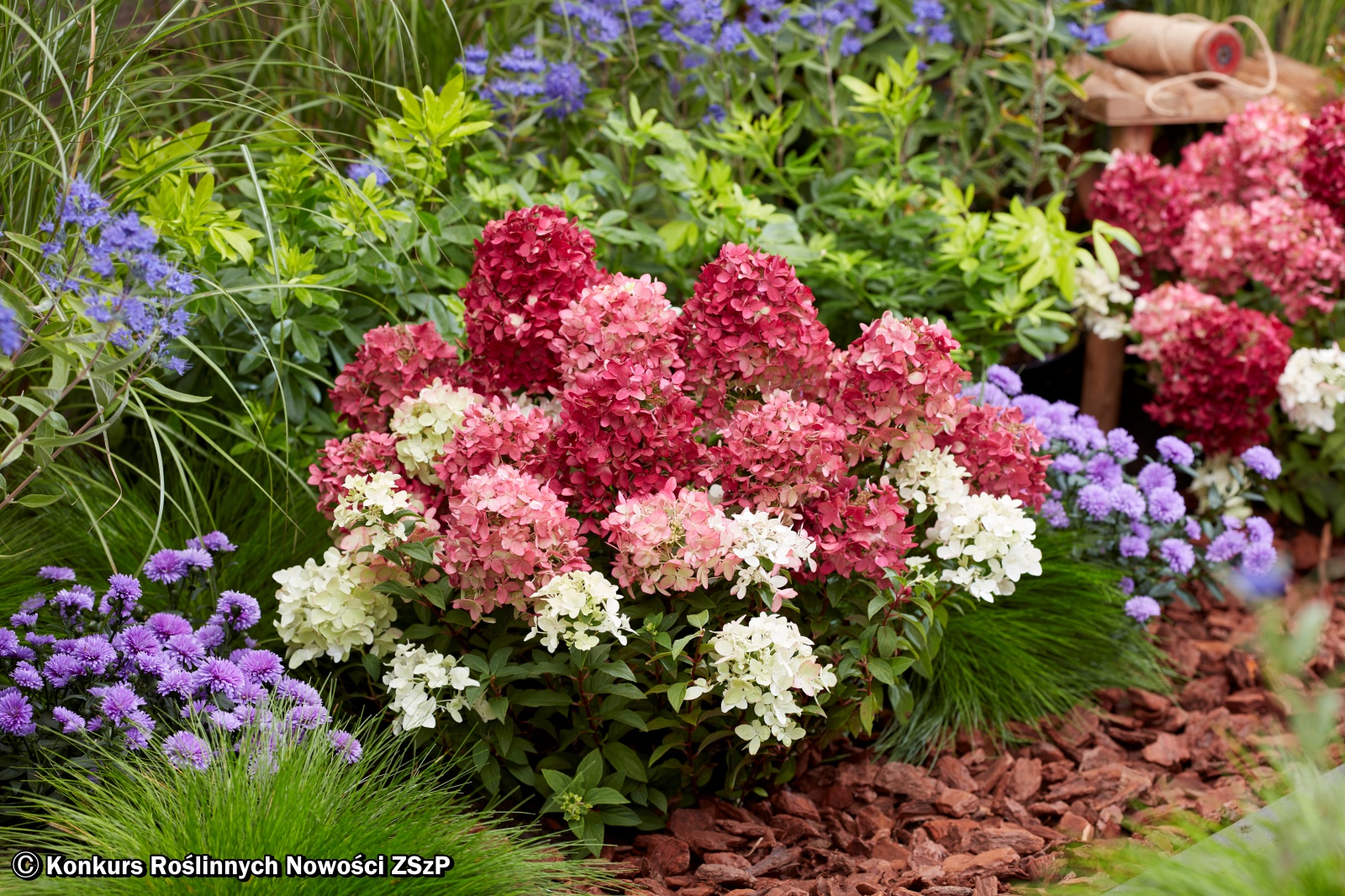
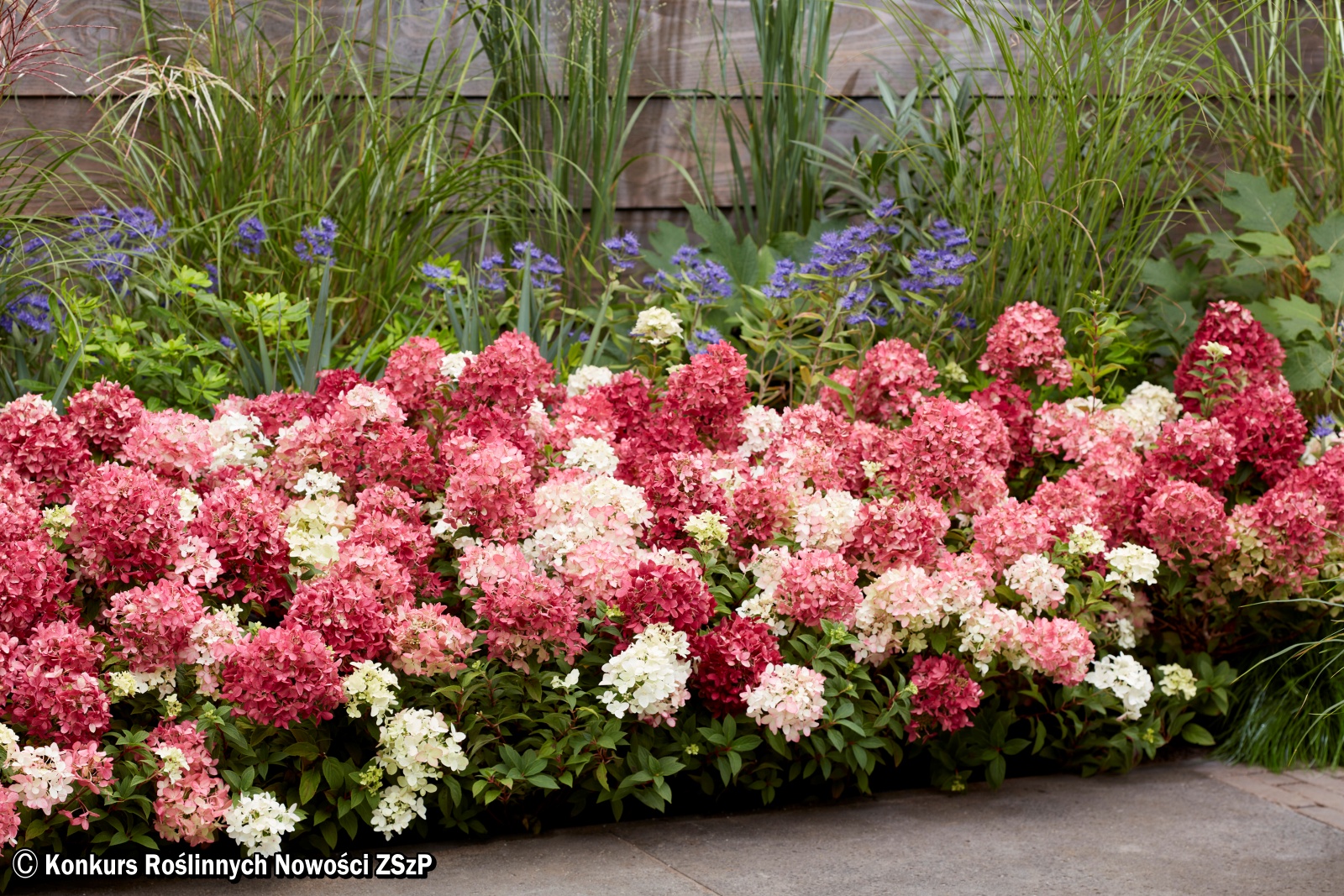
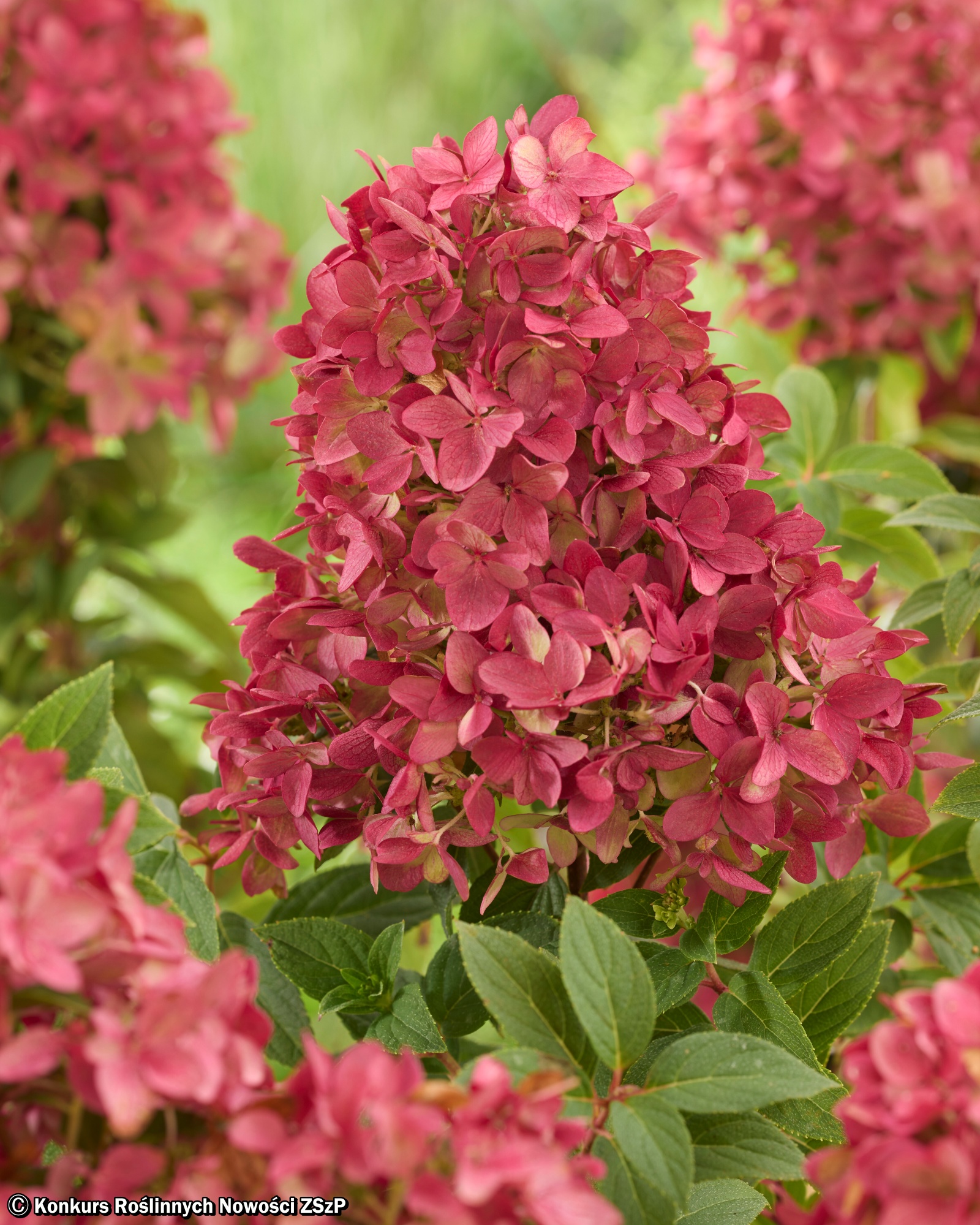
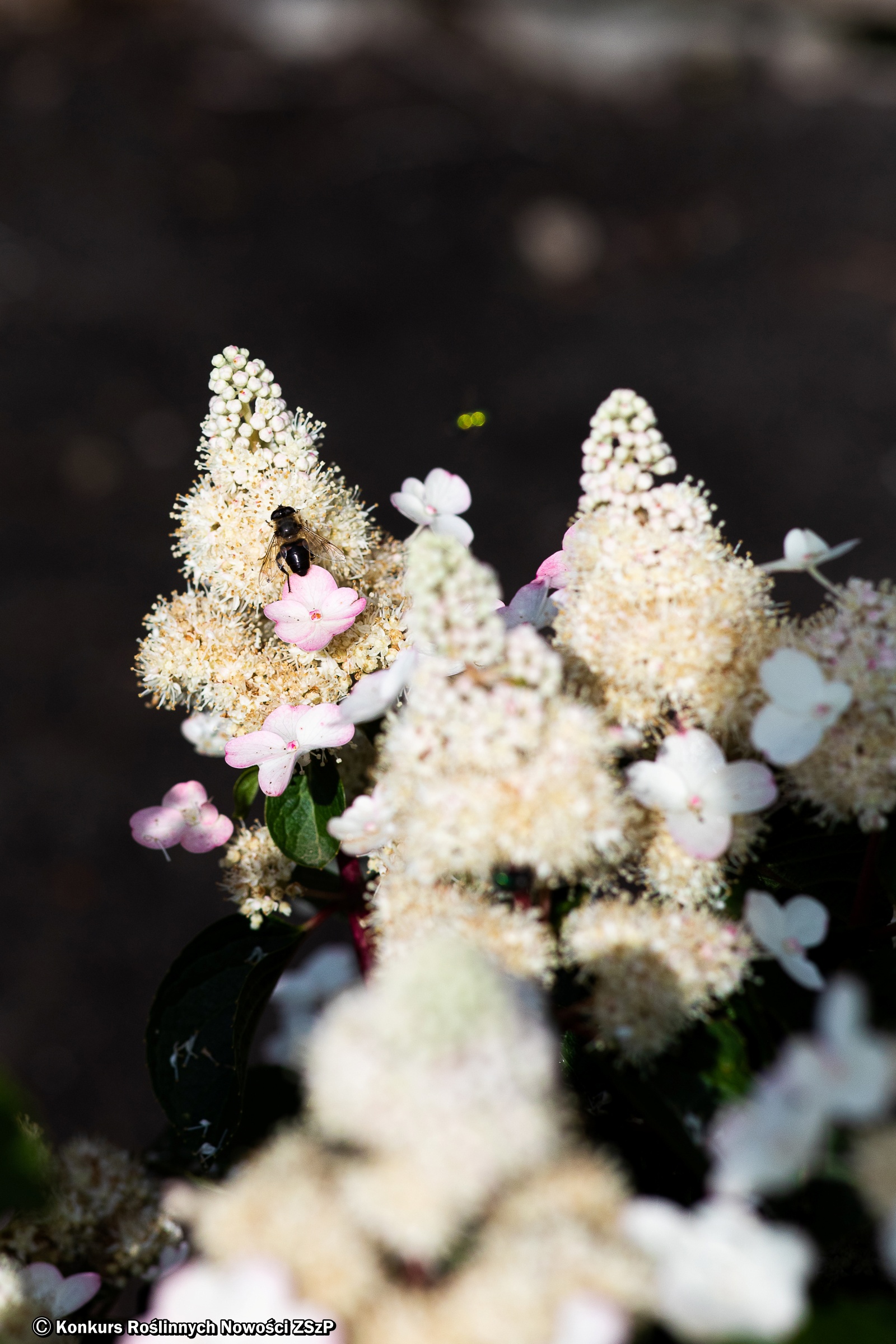
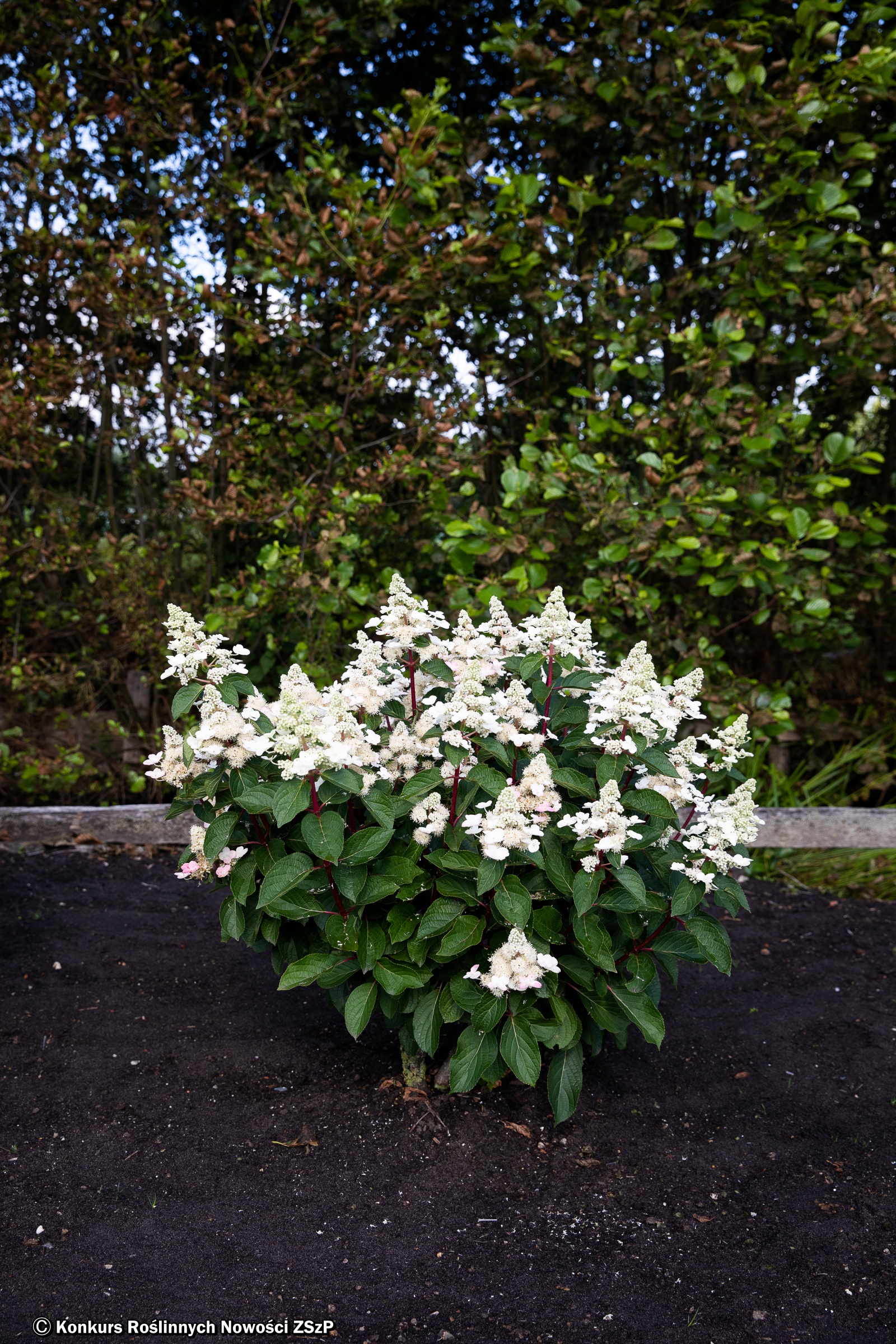
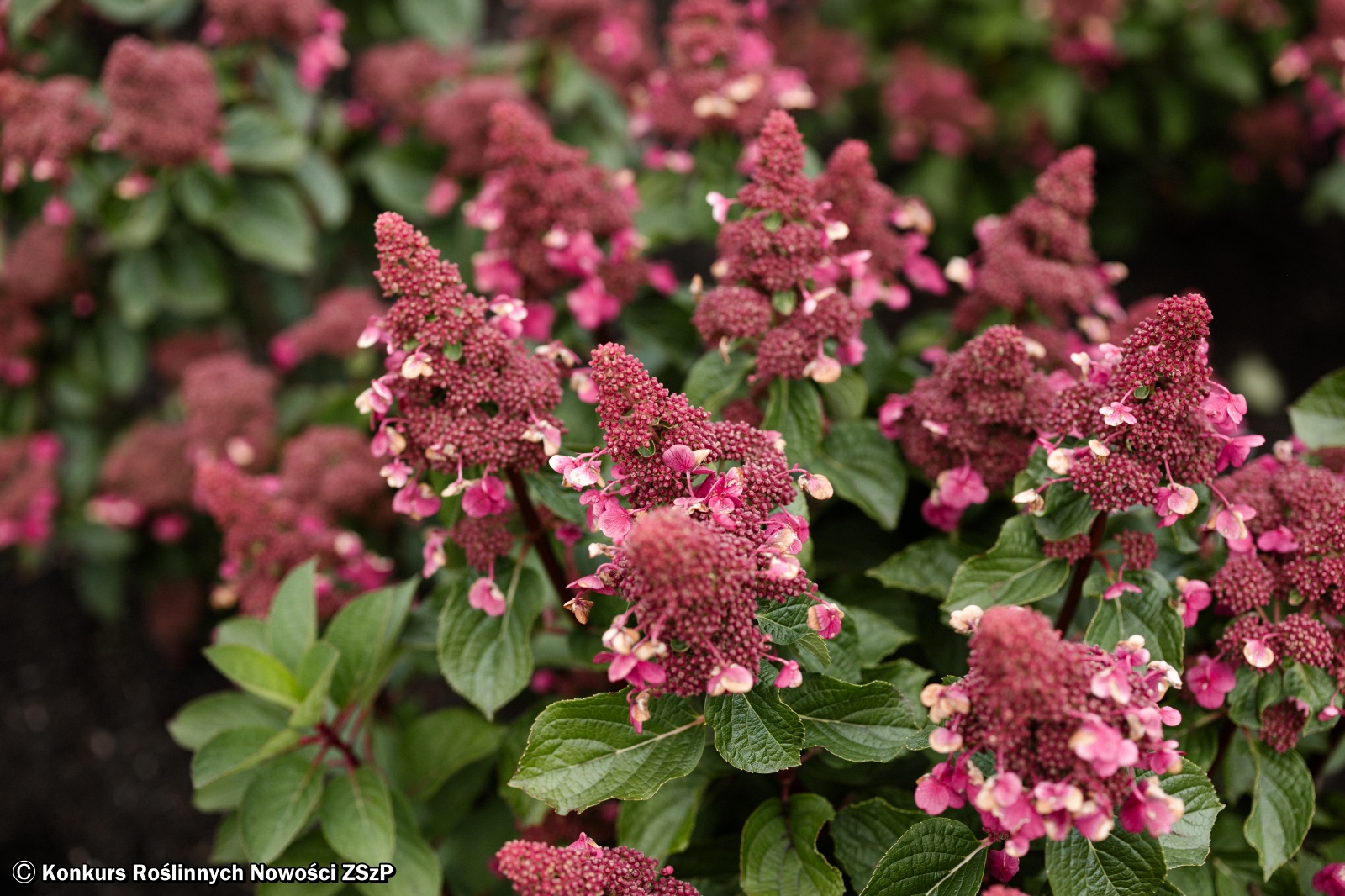
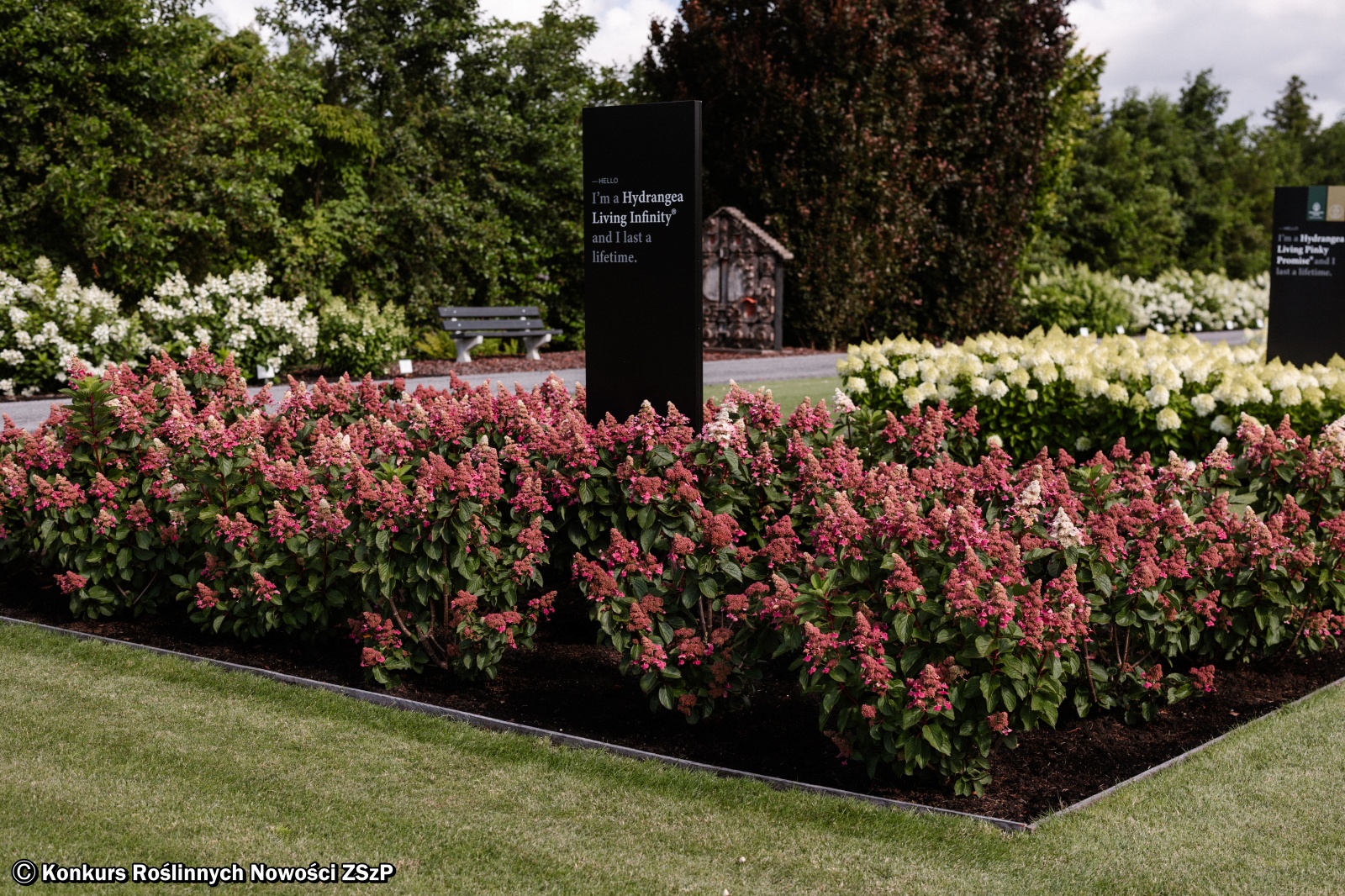
Hydrangea paniculata LIVING INFINITY®

Hydrangea paniculata LIVING INFINITY®

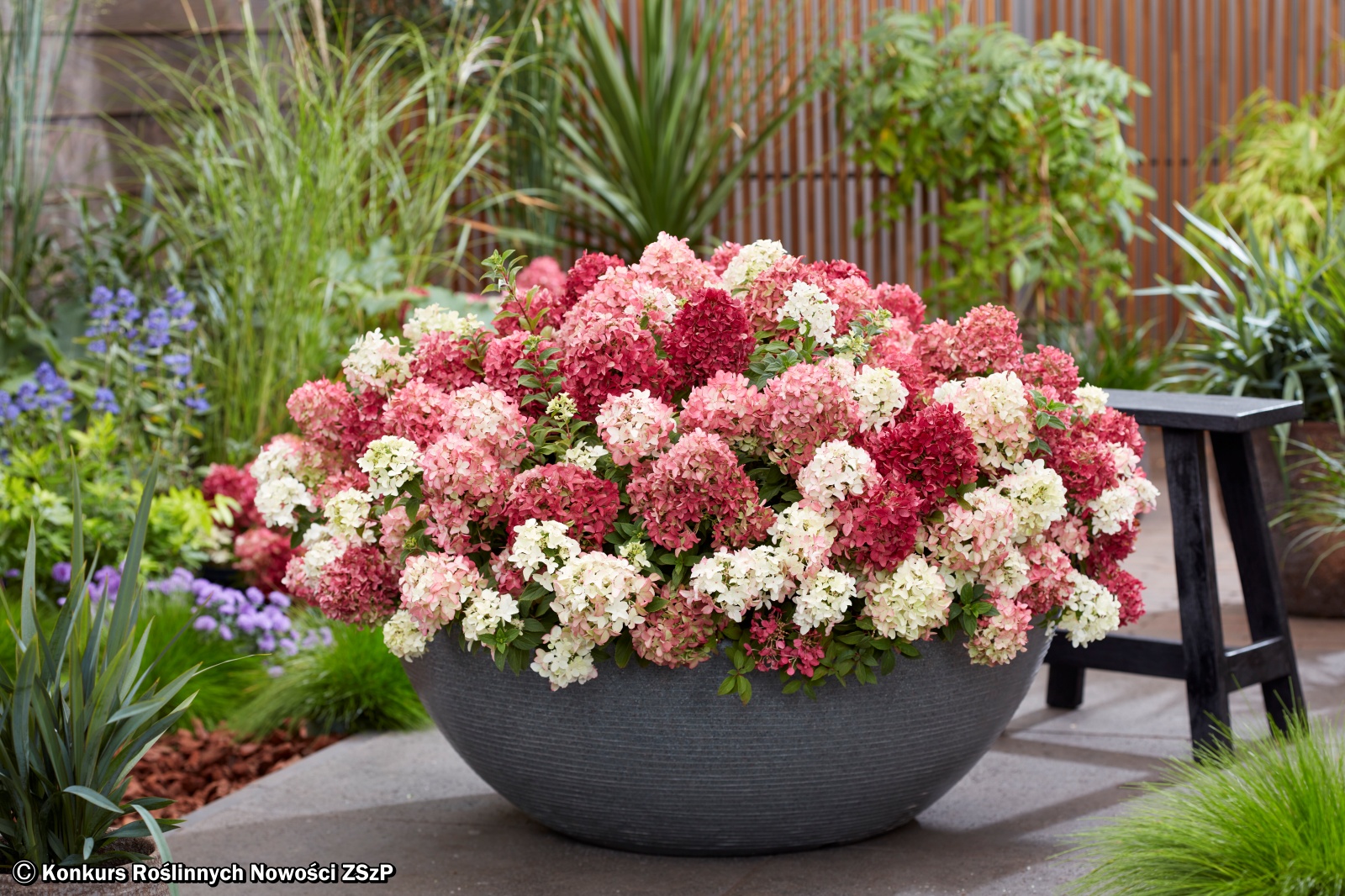
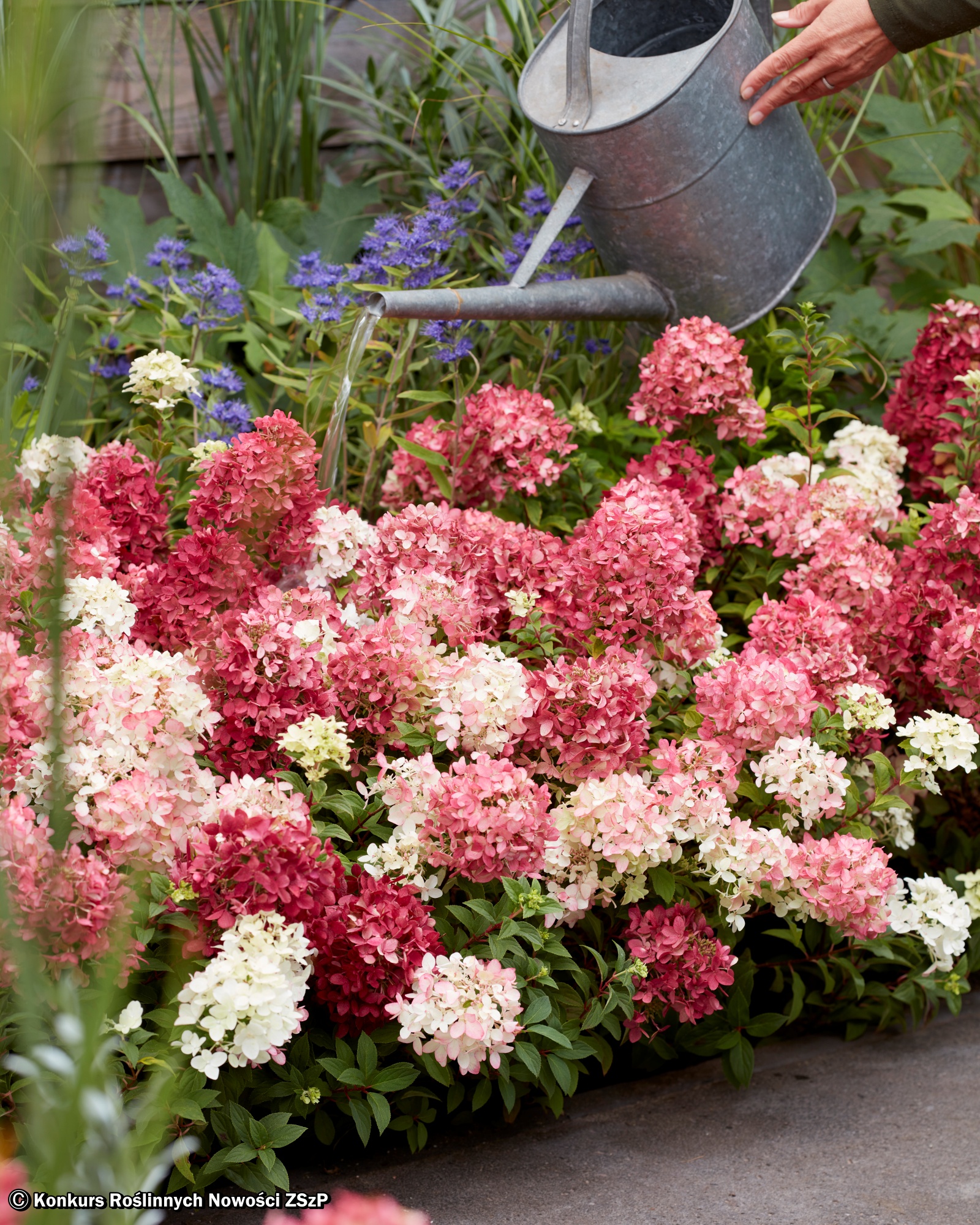
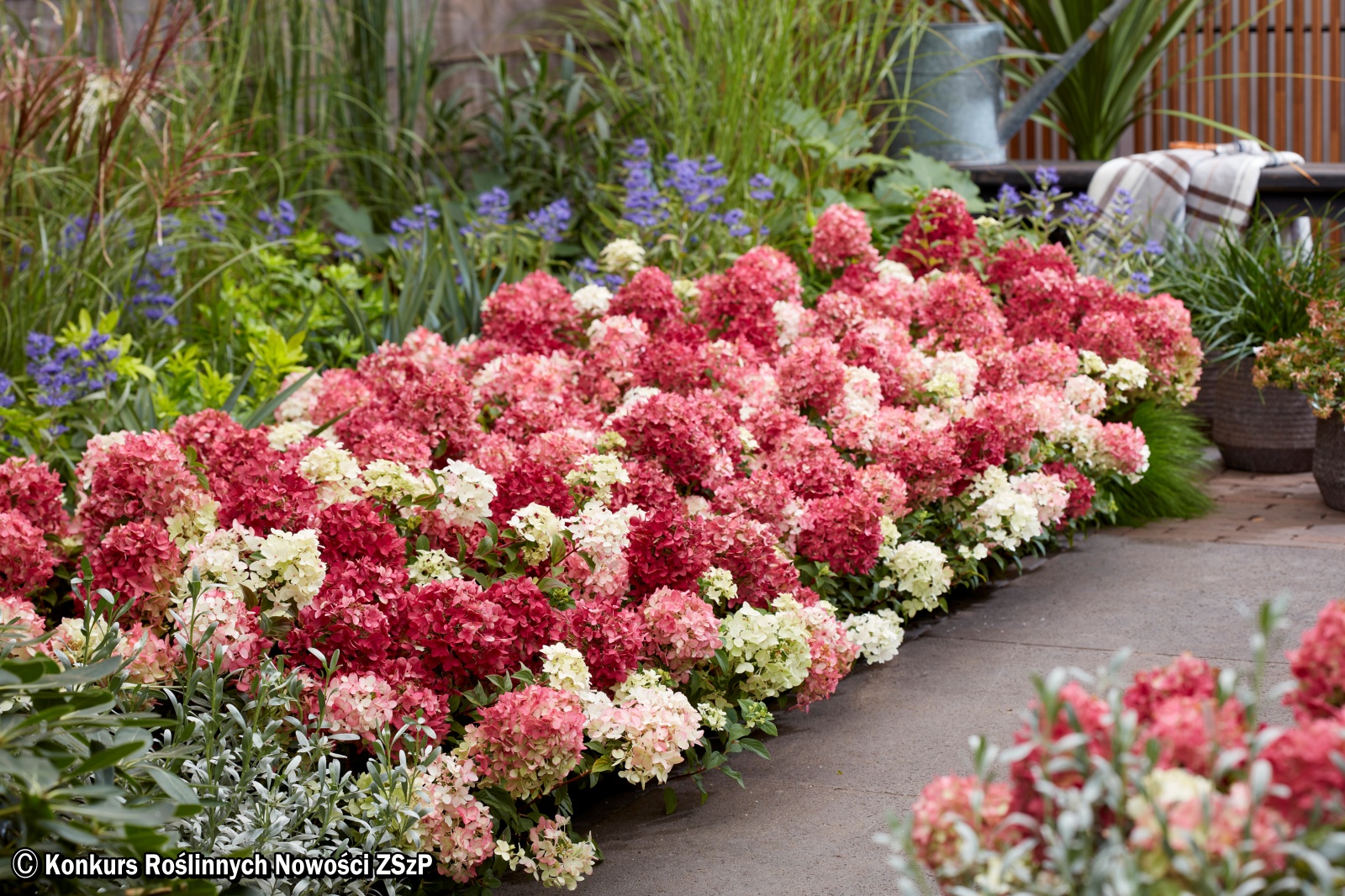
A compact and relatively low-growing cultivar reaching approximately 1 m in height and a similar width, distinguished by the changing colour of its flowers throughout the flowering season and its high value for pollinating insects. The shoots are stiff and upright. The leaves are ovate, dark green, and rough-hairy on both surfaces. Flowering begins in July and can continue for up to 150 days, with numerous panicle-shaped inflorescences produced at the tips of the shoots. The inflorescences are composed predominantly of fertile, pollen-rich flowers, which make the shrubs especially attractive to bees and other pollinating insects during the early stages of flowering, along with sterile flowers. The flowers are initially white, gradually turning pink during the summer and deep red in autumn. The cultivar is recommended for cultivation in moderately fertile, moist, well-drained soils in sunny locations. It is fully hardy and well suited for planting in groups in home gardens and residential landscapes, as well as for growing in containers placed on balconies and patios. Hardiness Zone: 4 (−34 to −29°C).

Cultivar denomination:LC N09’ PBR

Breeder: Alex Schoemaker, The Netherlands

Year of market introduction: 2021

Applicant: HOOGENRAAD Handelskwekerijen BV, Oudendijk 1B, 6744PT, Ederveen, The Netherlands

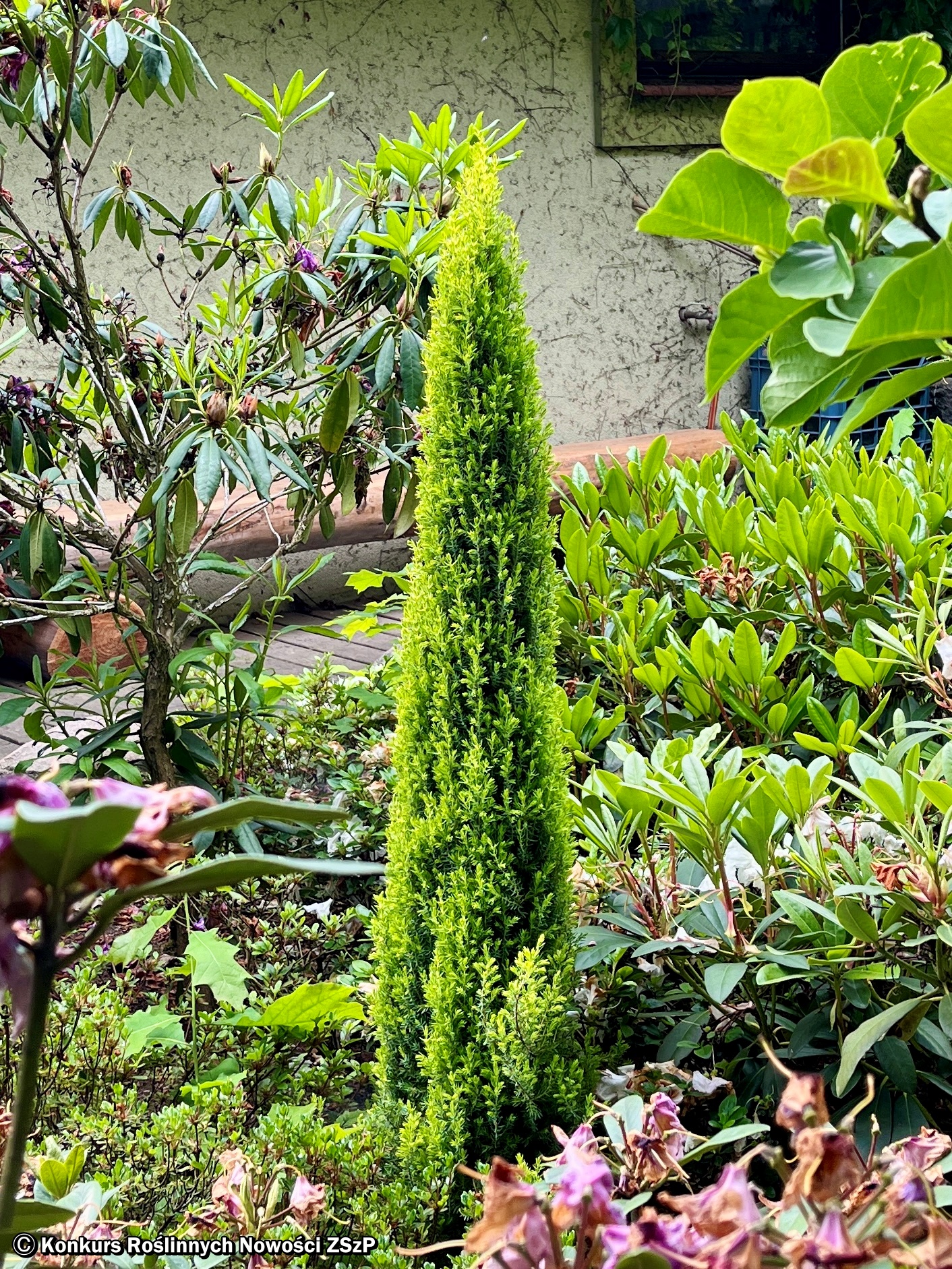
Juniperus communis SENTINEL GOLD

Juniperus communis SENTINEL GOLD

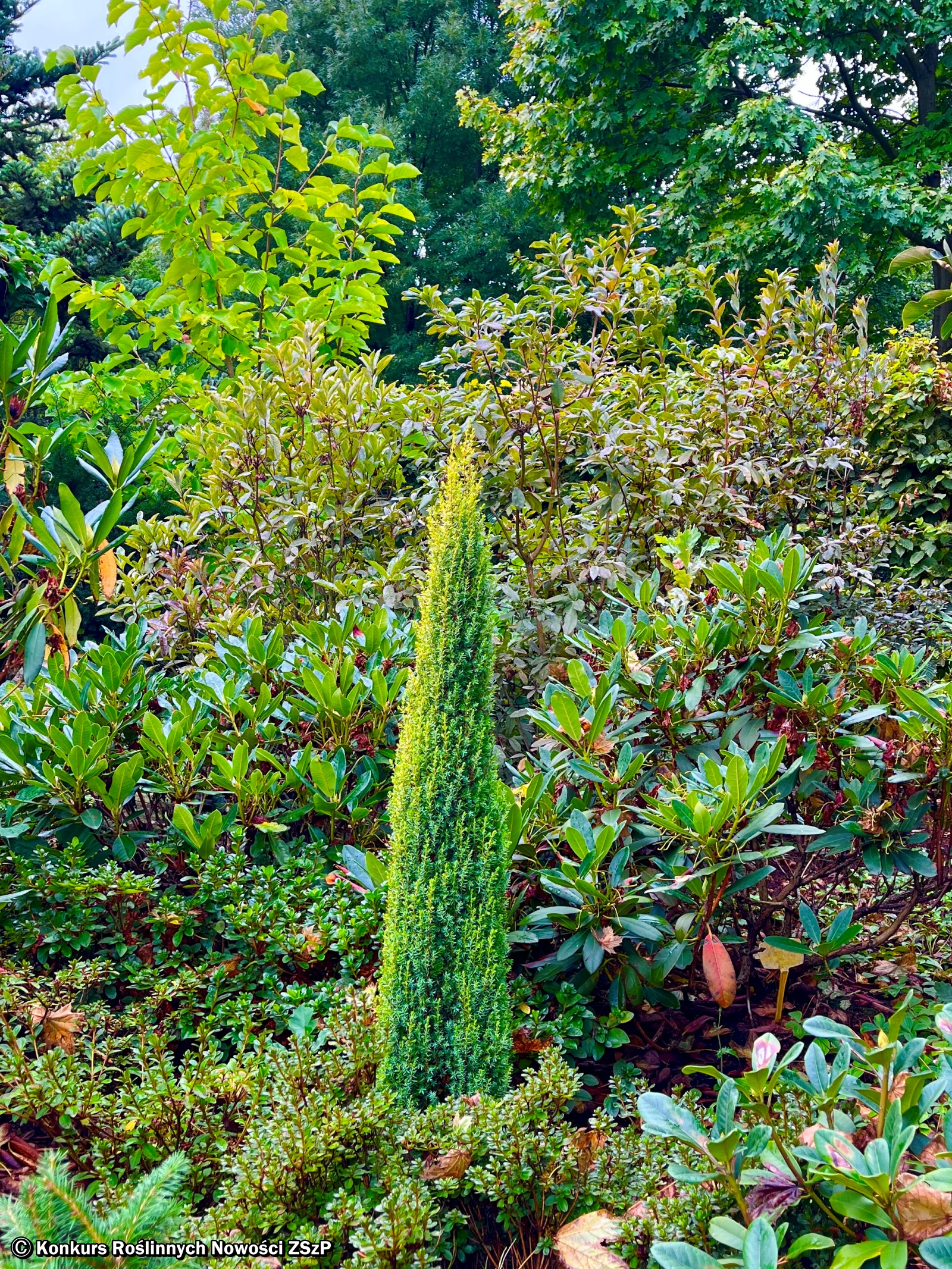
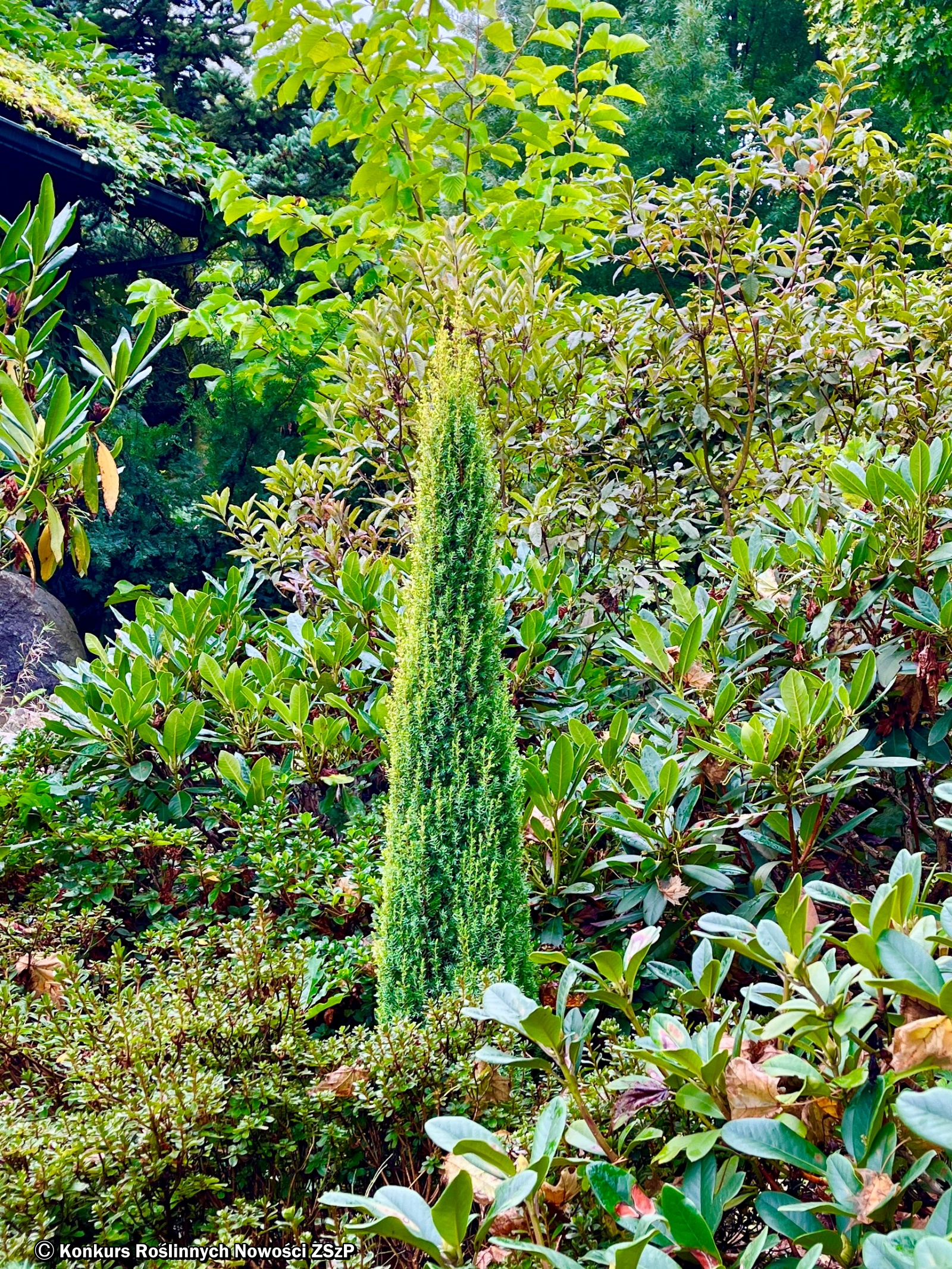
A Polish cultivar, one of the narrowest columnar forms of common juniper, reaching approximately 1.5 m in height and only 0.3 m in width after 10 years of cultivation. The shoots and branchlets are short, slender, upright, and closely spaced, forming a dense, uniform surface. It lacks a central leader, with a narrow, pointed crown. The needles are short and yellow in color. It grows well in most well-drained garden soils and requires a sunny position. This cultivar is recommended for planting in heath gardens, rock gardens, and mixed conifer beds. Hardiness zone: 6a (–23 to –21°C).

Cultivar denomination: ‘Sentinel Gold’

Breeder: Eugeniusz Pudełek, Poland

Year of market introduction: 2023

Applicant: Szkółka Krzewów Ozdobnych PUDEŁEK, ul. Pańska 40, 43-332 Pisarzowice, Poland

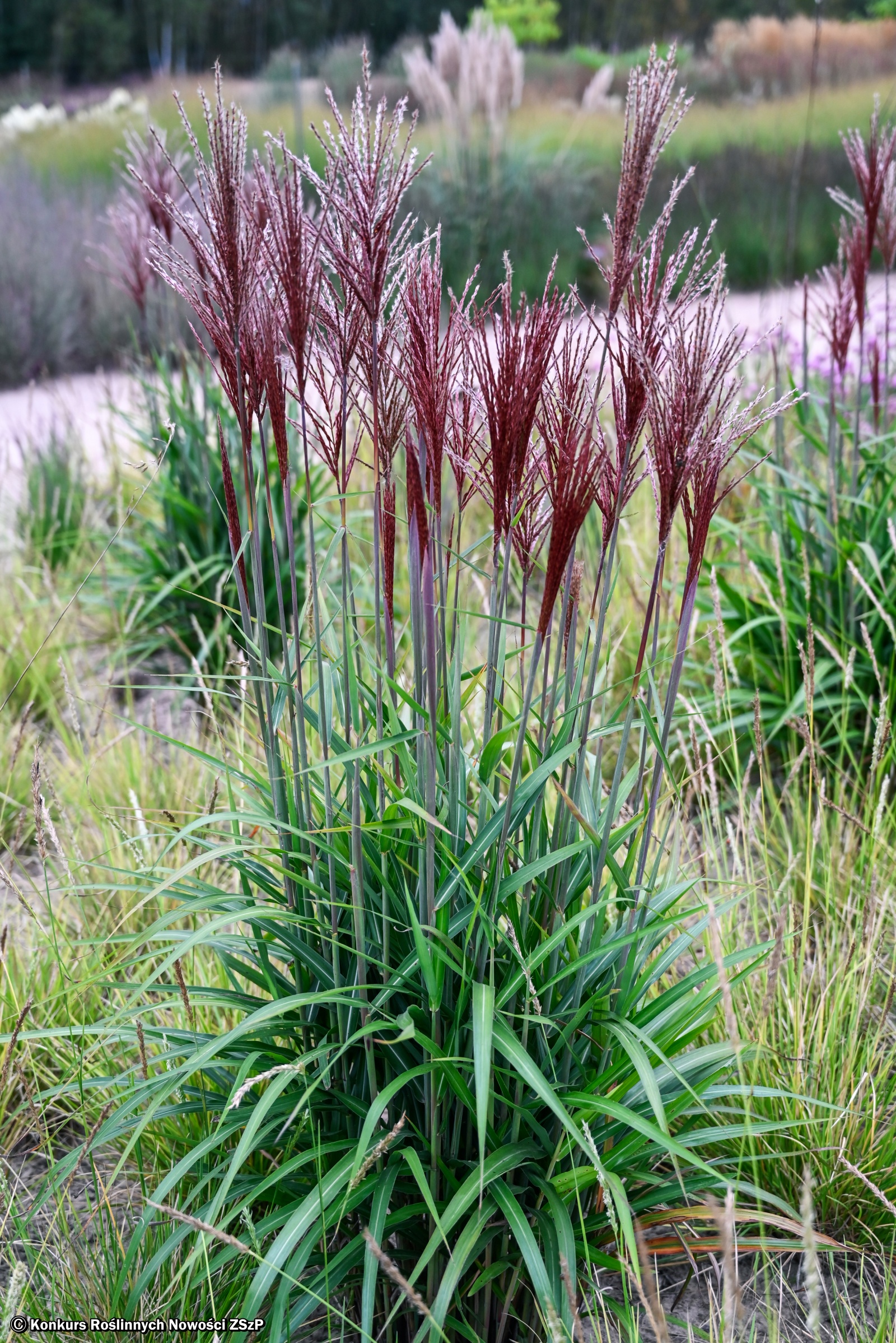
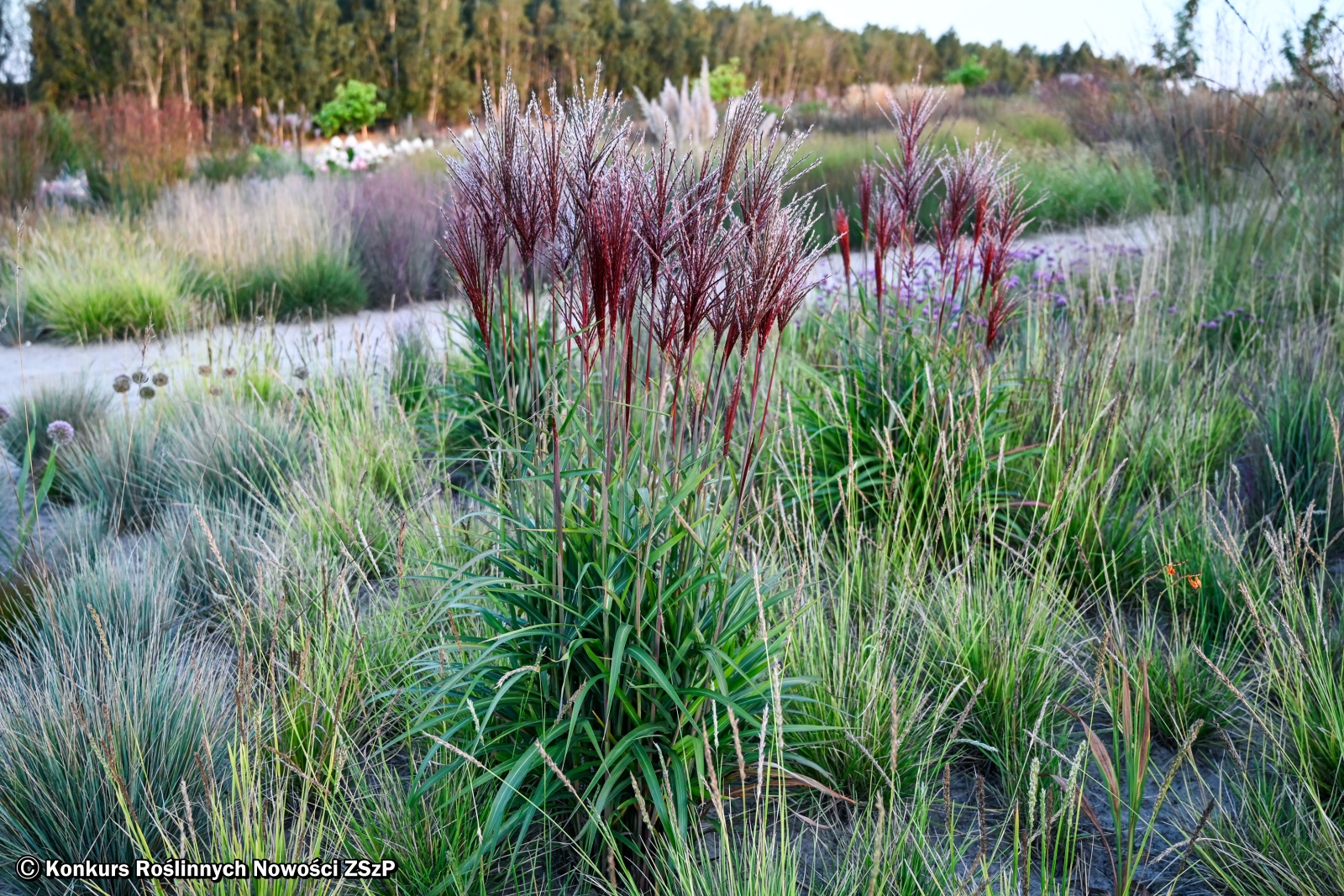
Miscanthus sinensis ALA

Miscanthus sinensis ALA

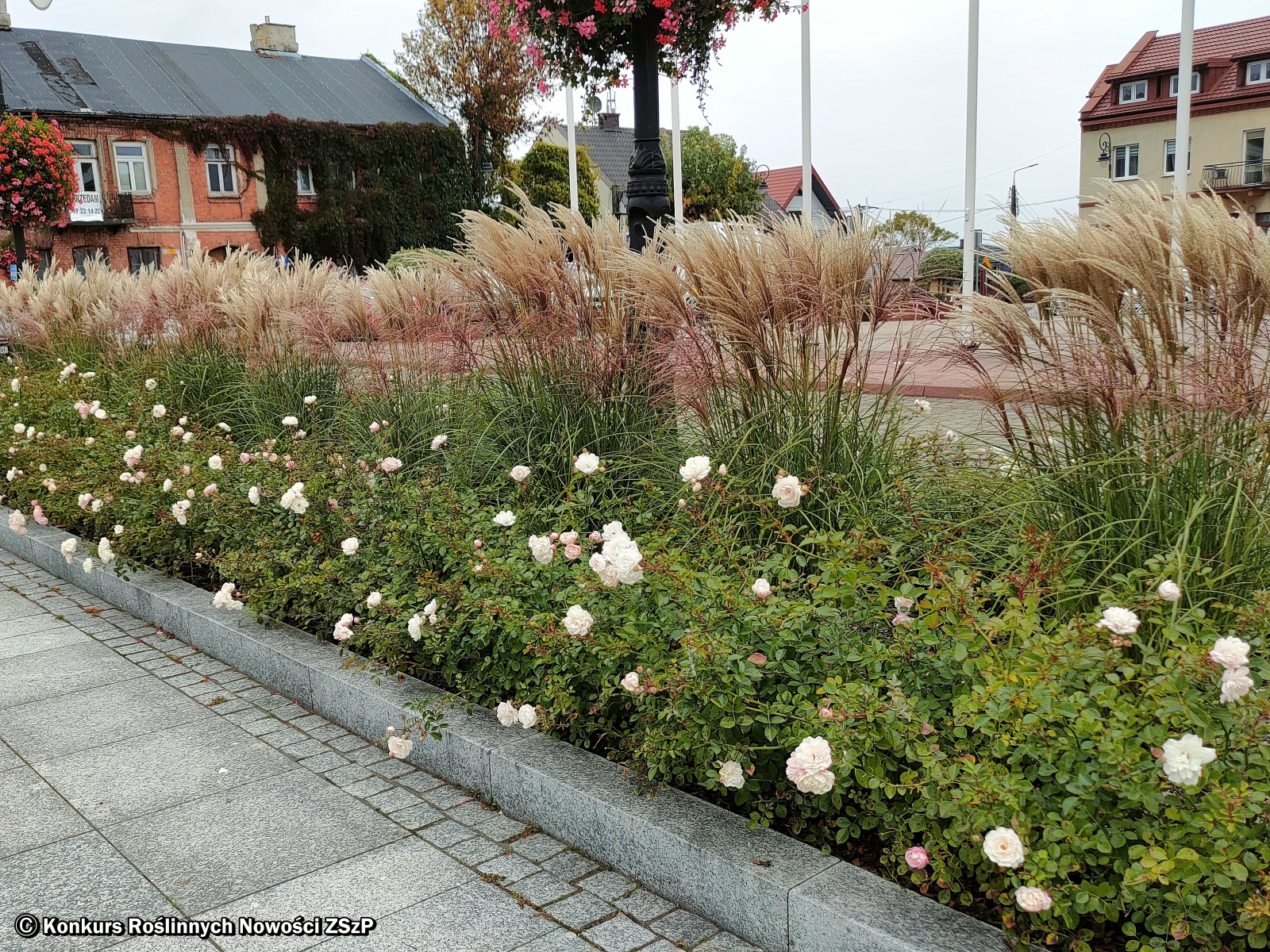
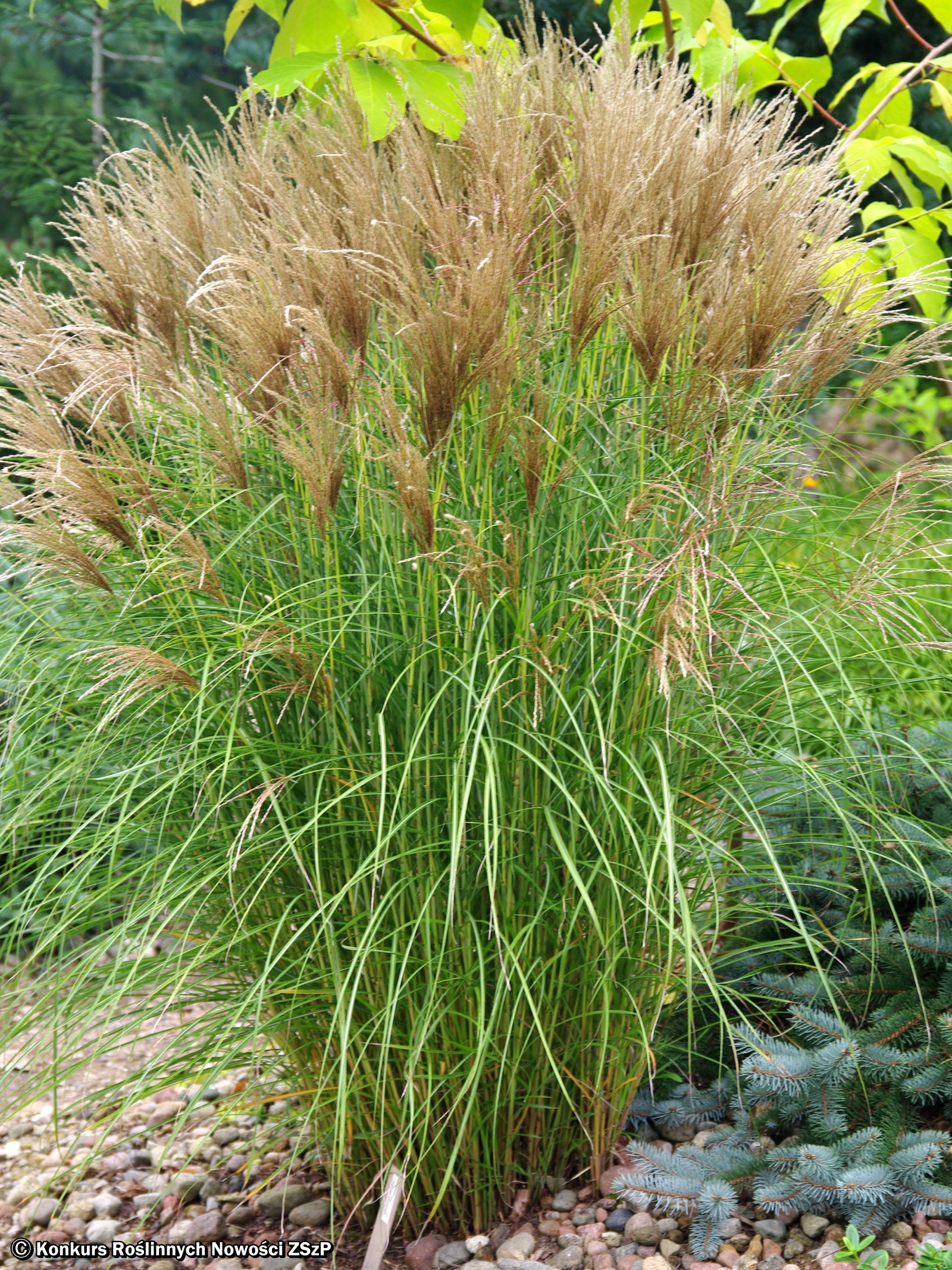
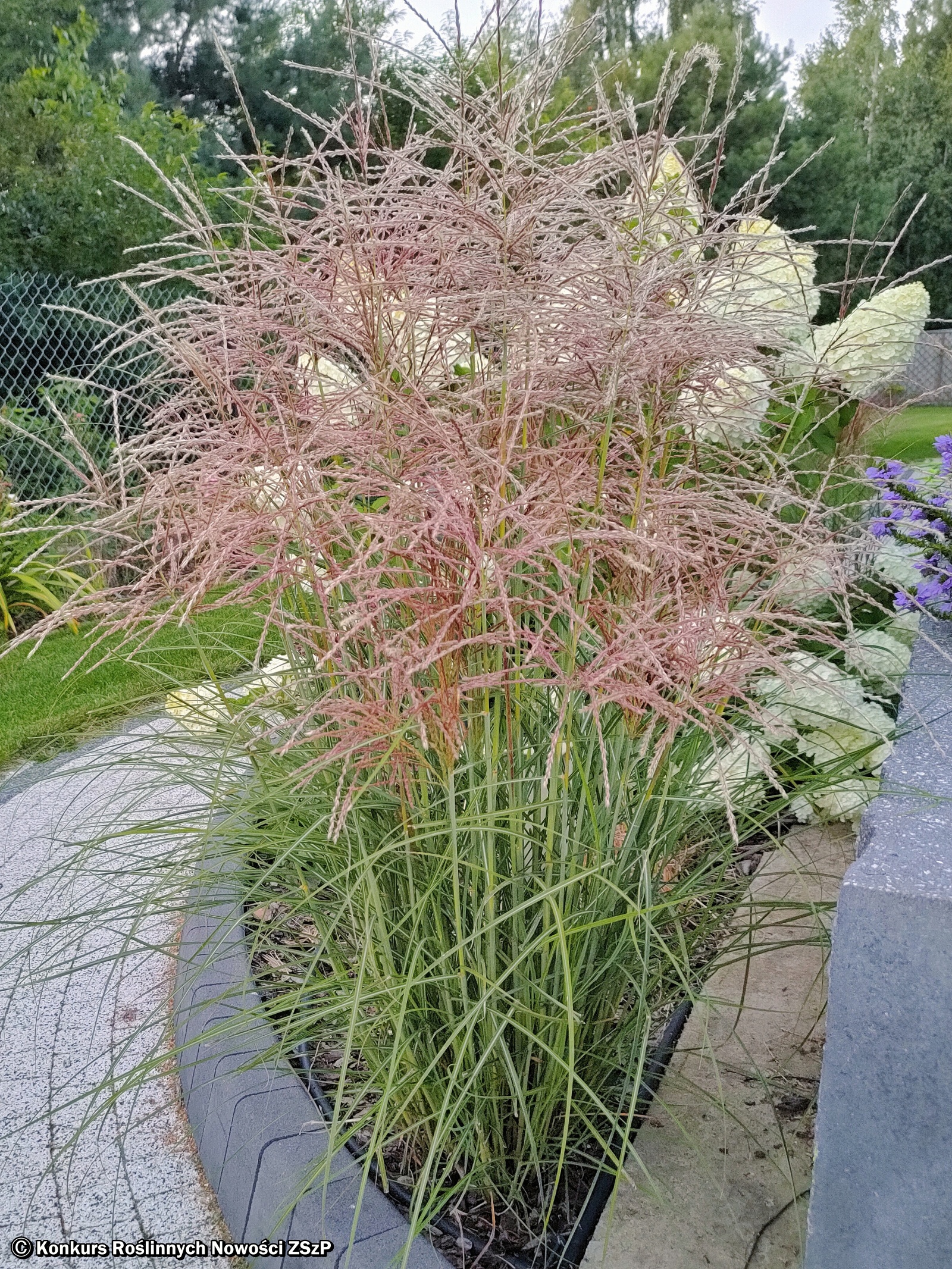
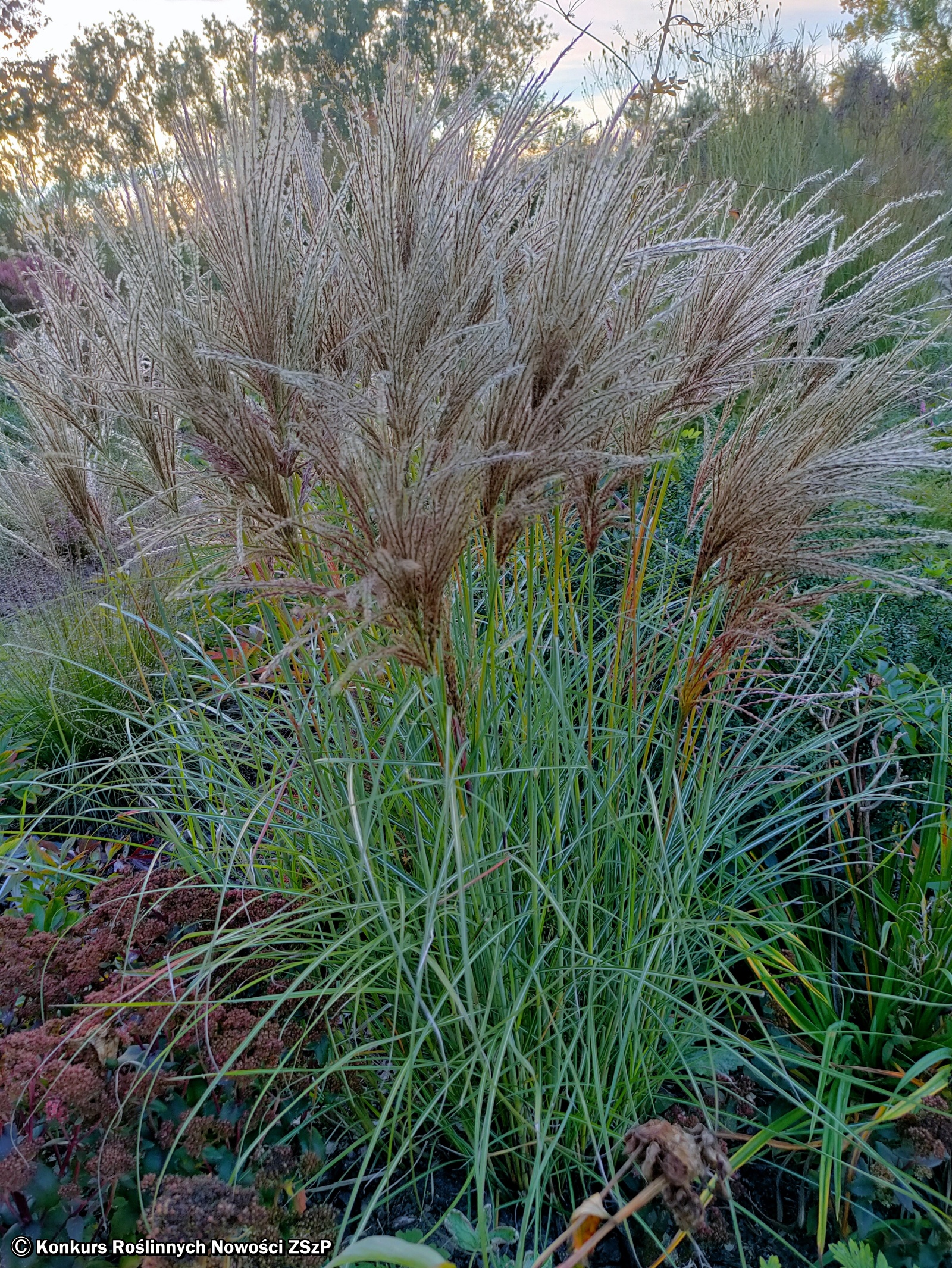
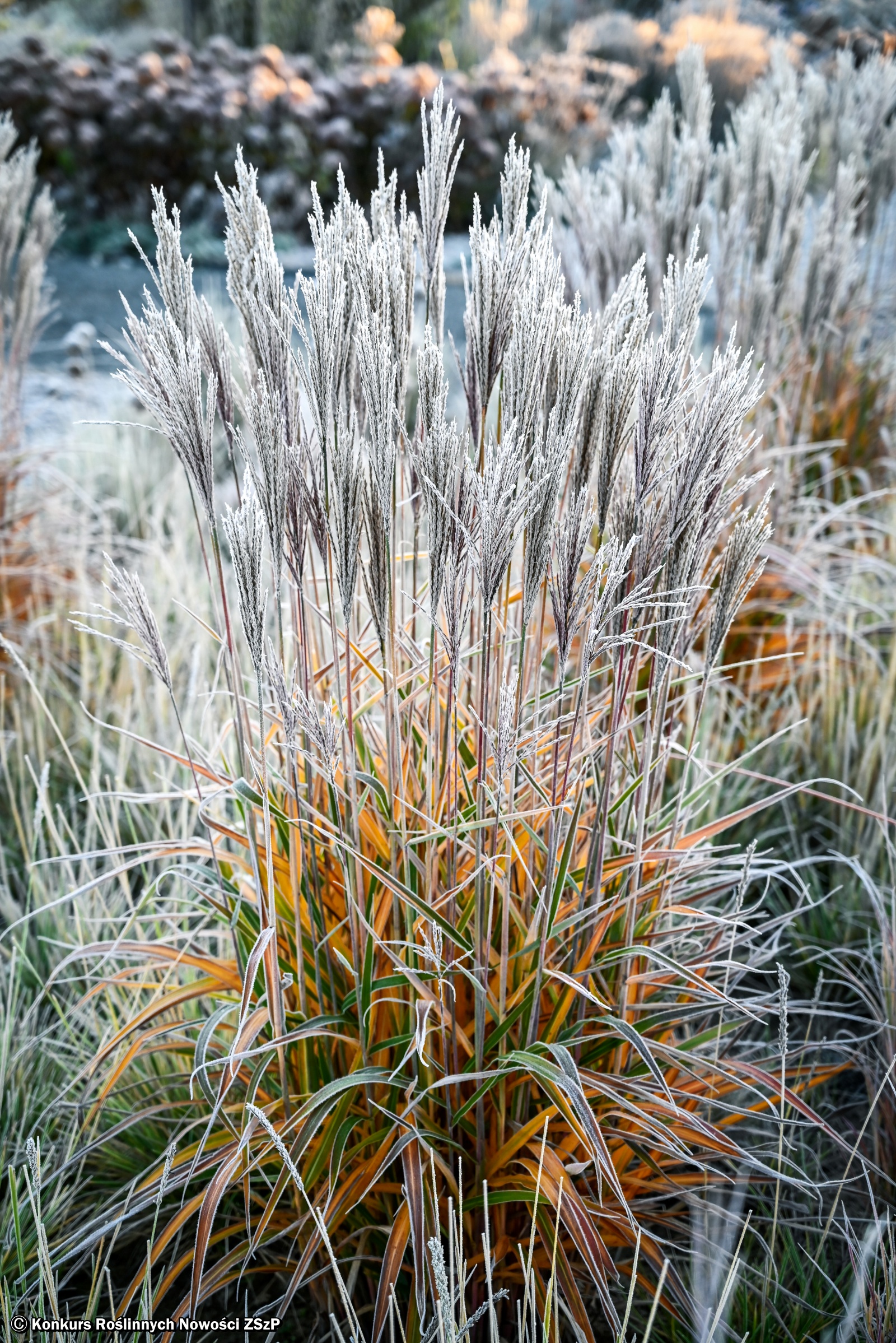
A Polish cultivar distinguished by its very early flowering time, abundant blooming, and exceptional repeat flowering performance. Delicate, powdery-pink panicles rise above the compact clump of foliage like a light mist. The elegantly arranged leaves give the plant a graceful, fountain-like silhouette. The plant reaches approximately 1.3 m in height, forming dense clumps of slender leaves and producing pink flowers at the beginning of the flowering period. Blooming begins in June and continues uninterrupted, with new flowers continuously forming until October. The cultivar ‘Ala’ performs exceptionally well in garden plantings, ornamental grass borders, and mixed beds with perennials and shrubs. It is also highly suitable for container arrangements. Thanks to its drought tolerance and good winter hardiness, it is recommended for urban landscapes as well as naturalistic gardens. The plant has modest cultivation requirements and grows best in sunny locations. Hardiness zone: 5a (–29 to –27°C).

Cultivar denomination: ‘Ala’ PBR

Breeder: Sławomir Majewski, Poland

Year of market introduction: 2021

Applicant: OGRODY O ZIELONYCH PROGACH Przemysław Godlewski – Szkółka Bylin, Skubianka, ul. Zegrzyńska 82, 05-140 Serock, Poland

Miscanthus sinensis PICCOLO RUBINO

Miscanthus sinensis PICCOLO RUBINO

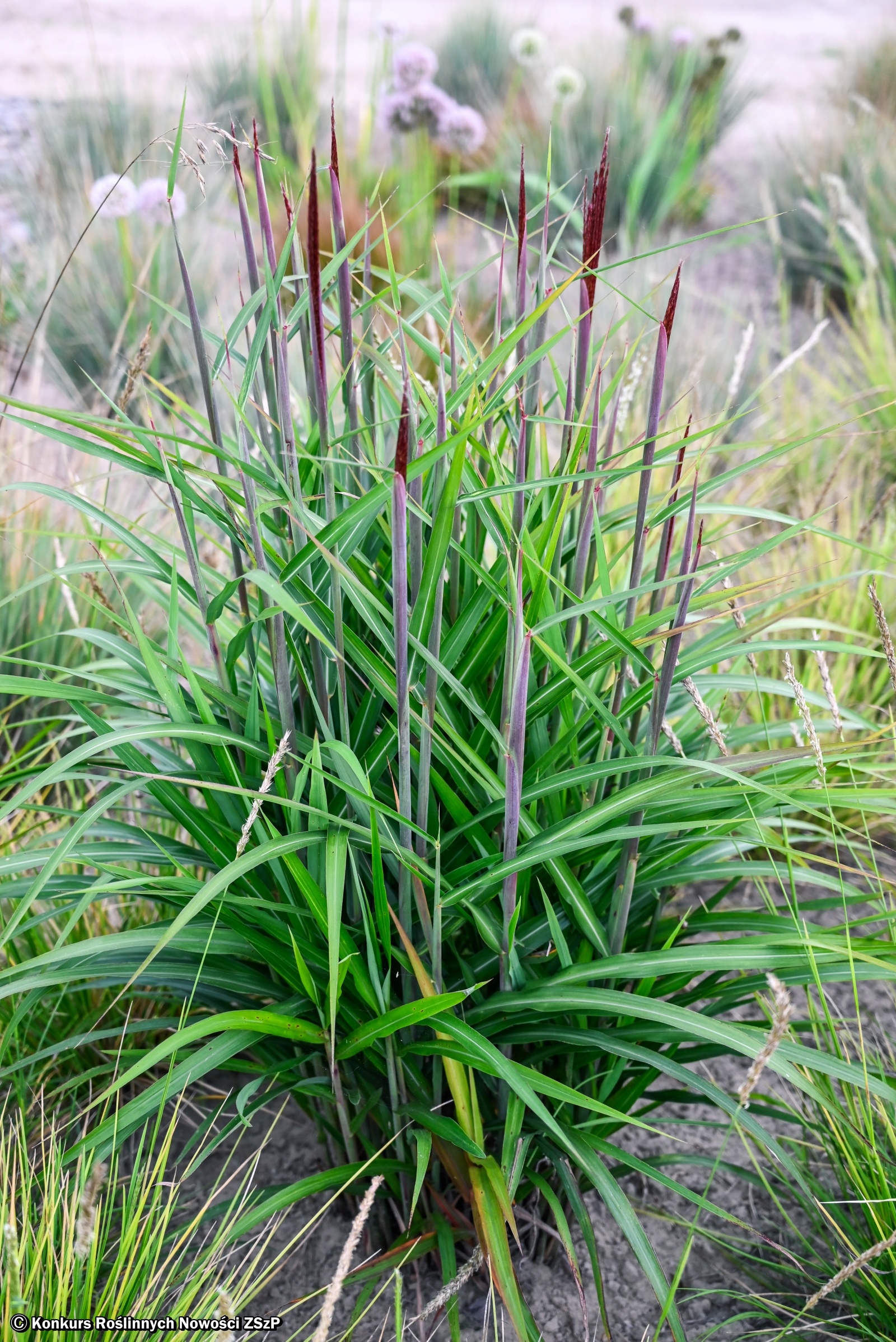
A Polish, compact cultivar distinguished by its unique and striking inflorescences. Flowering begins in the second half of August. Initially, the ruby-red panicles are tightly clustered and held upright like candles. The thick, rigid stems are additionally colored a cool blue-grey, creating an exceptionally attractive and unusual color combination. As the inflorescences develop, they retain their ruby coloration, which gradually fades to lighter shades over time. The leaves are green, broad, and borne relatively low on the plant. In autumn, after flowering, the panicles turn brown while the foliage develops attractive orange-yellow autumn color. The clump is compact and dense, reaching approximately 1.2–1.3 m in height when in bloom. Miscanthus sinensis 'Piccolo Rubino' maintains its upright habit throughout the growing season and shows no tendency to flop. It prefers sunny locations and moderately moist, well-drained soils. Owing to its exceptionally compact size, it is particularly well suited for container plantings and smaller gardens. Hardiness zone: 5a (–29 to –27°C).

Cultivar denomination: ‘AM2021-1’  PBR

Breeder: Artur Maj, Poland

Year of market introduction: 2026

Applicant: Szkółka Roślin Ozdobnych DAGLEZJA Artur Maj, ul. Okopowa 60, 08-500 Ryki, Polska, Poland

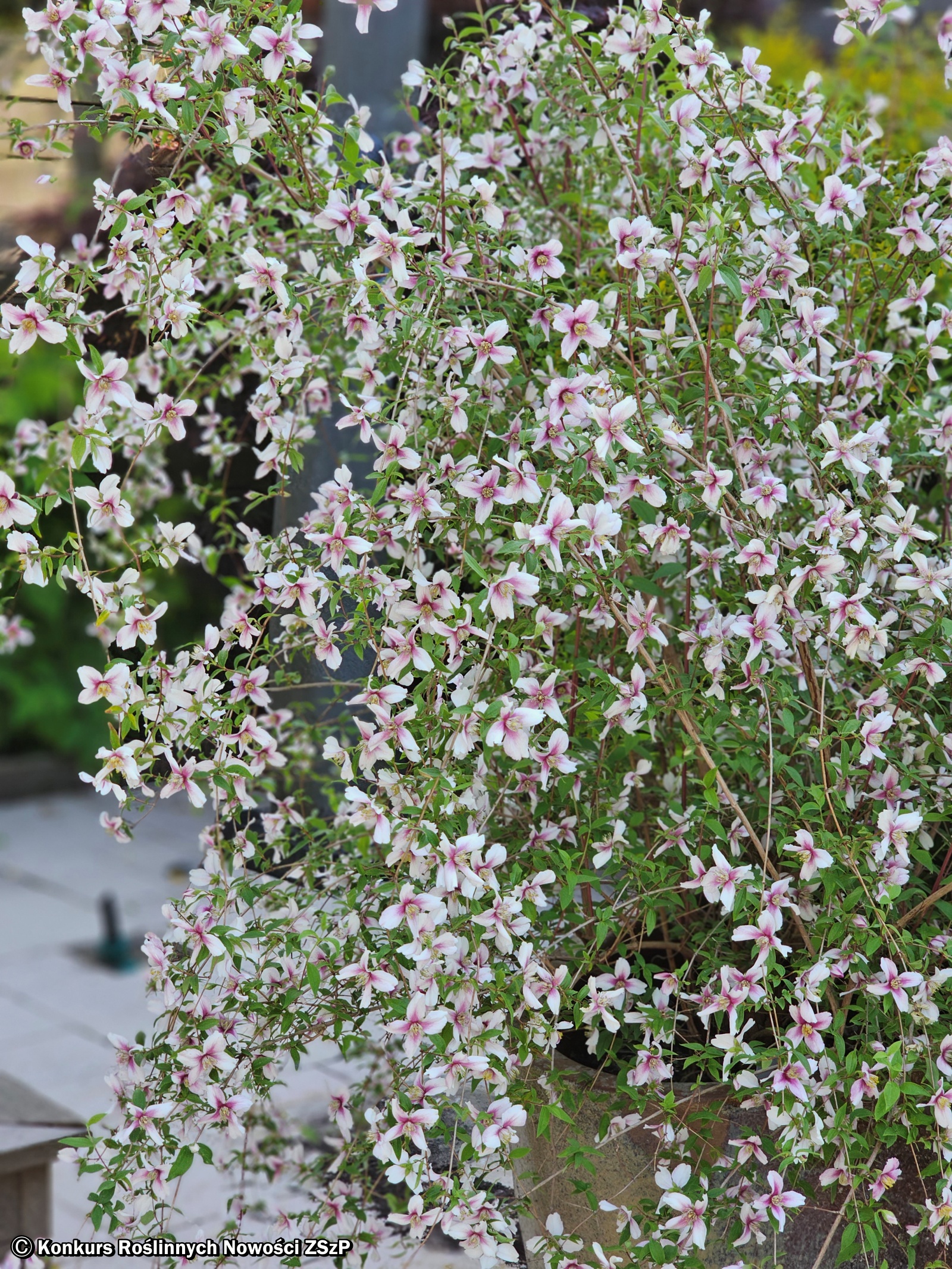
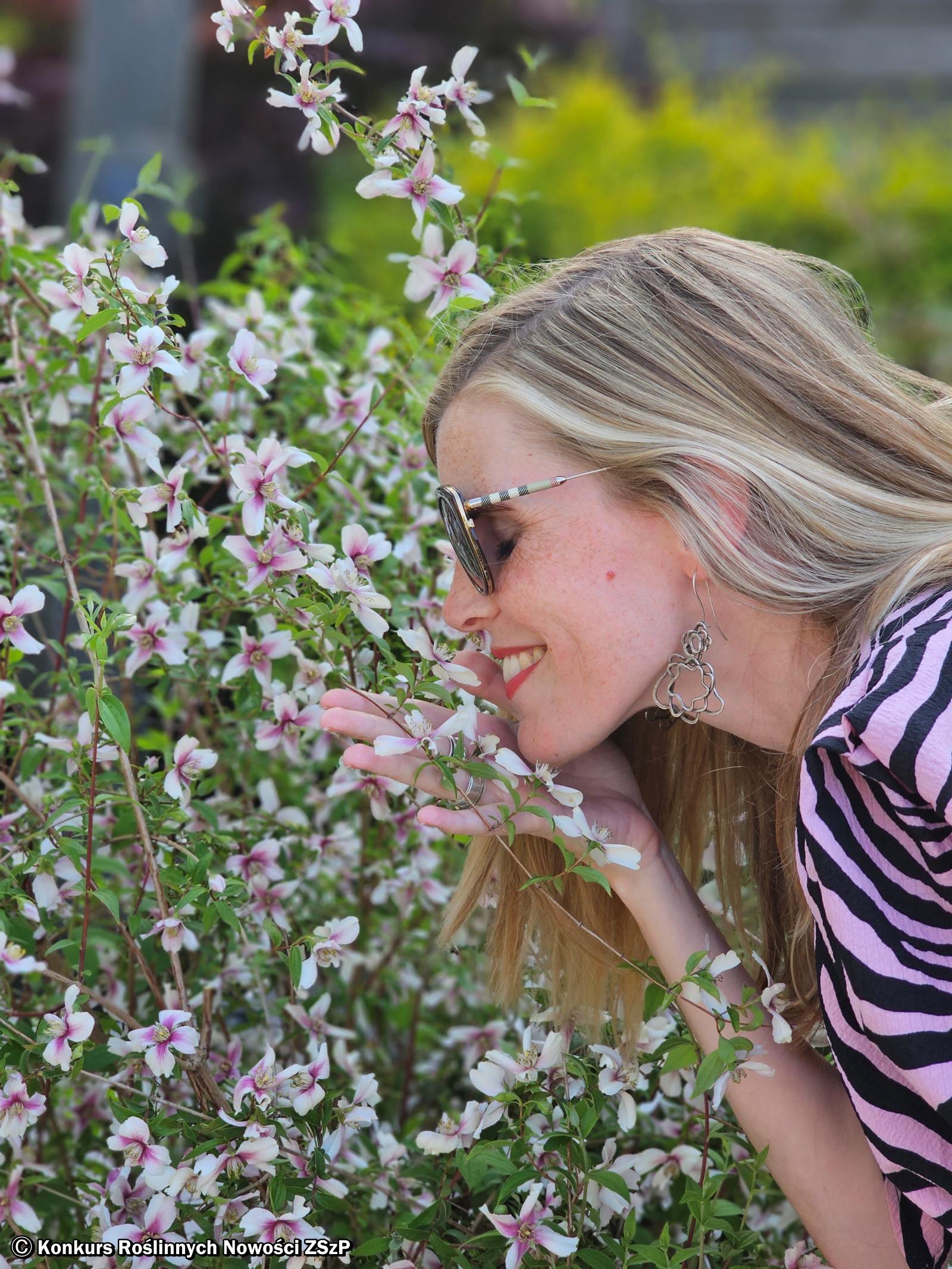
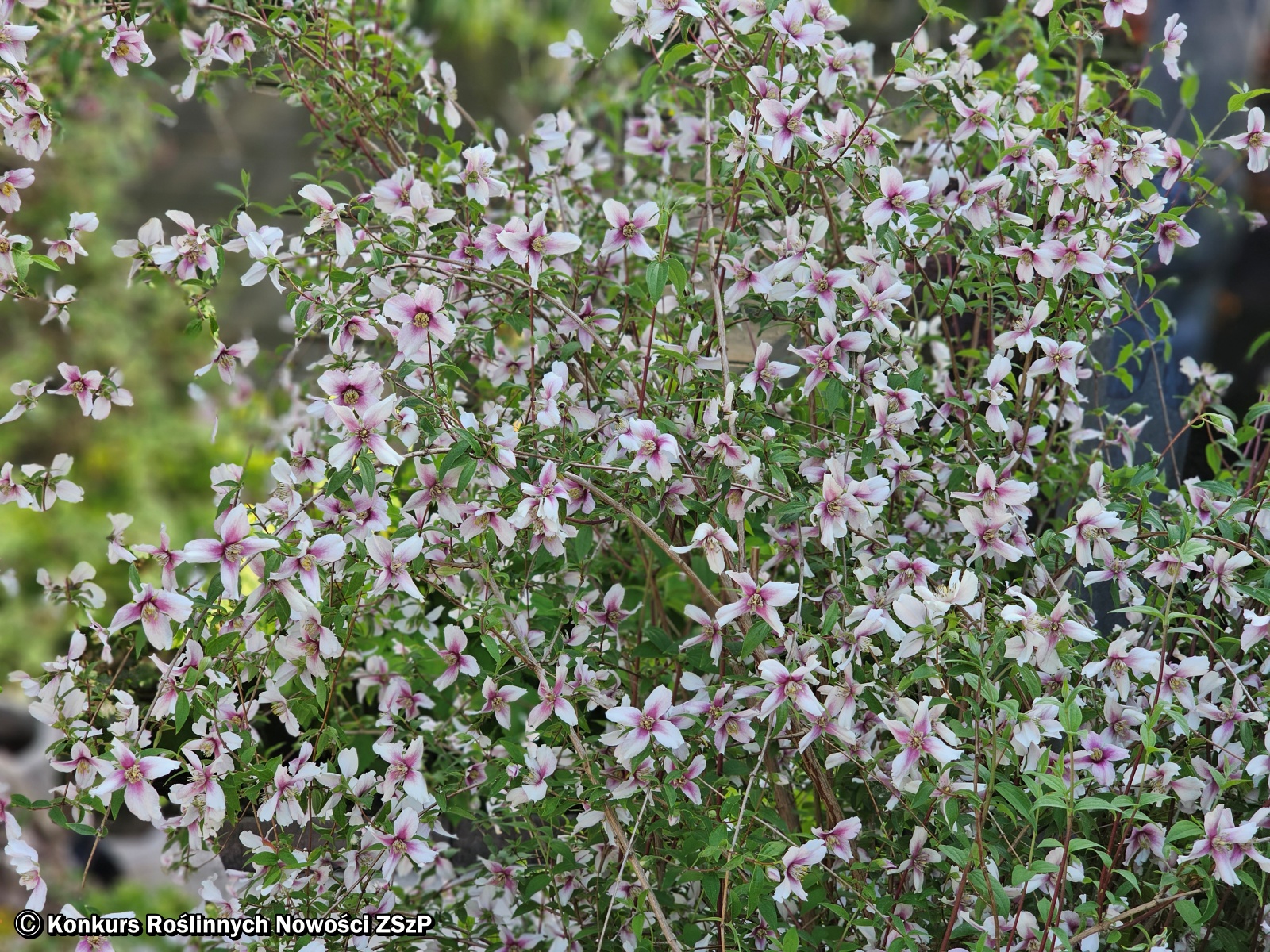
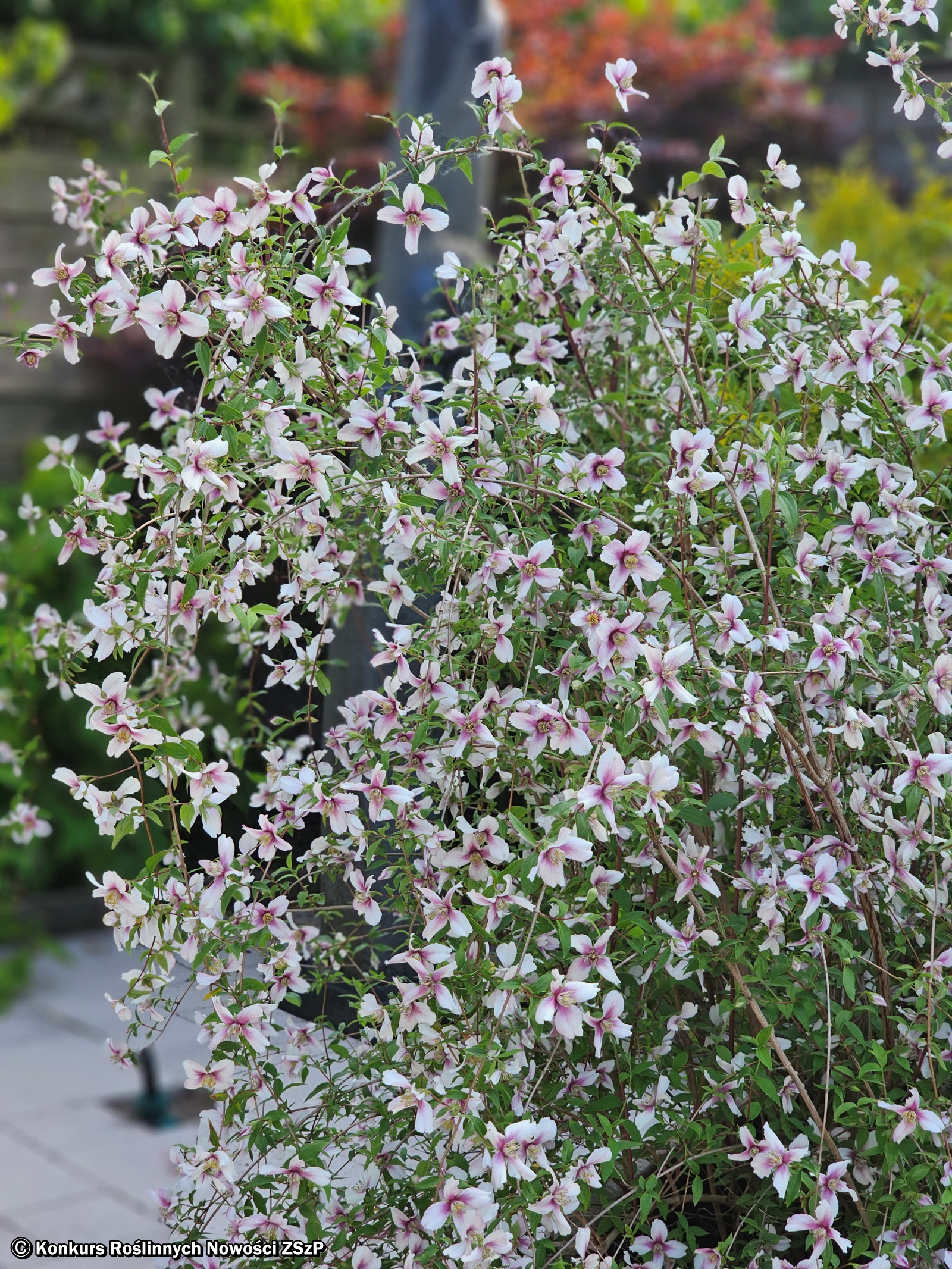
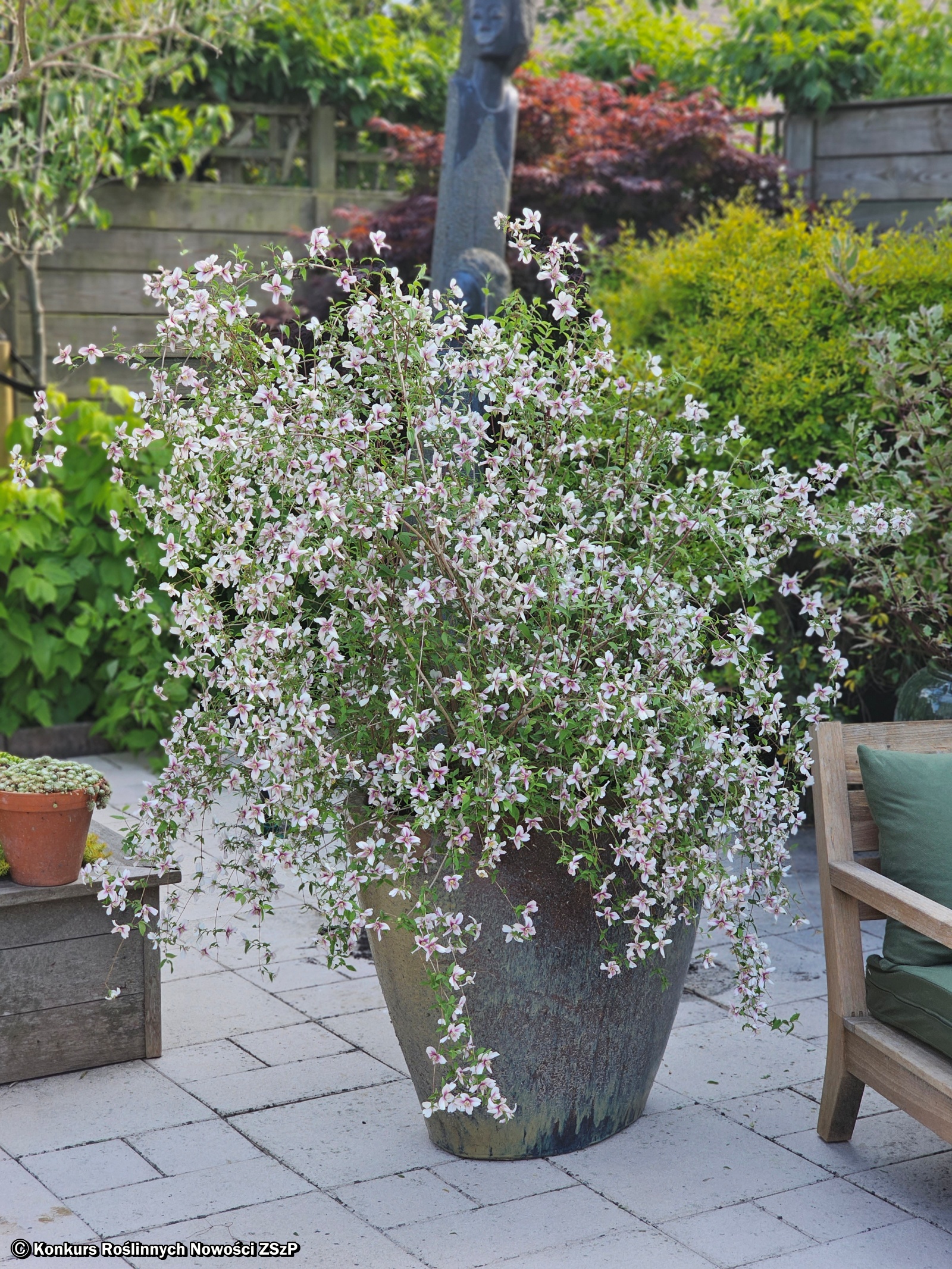
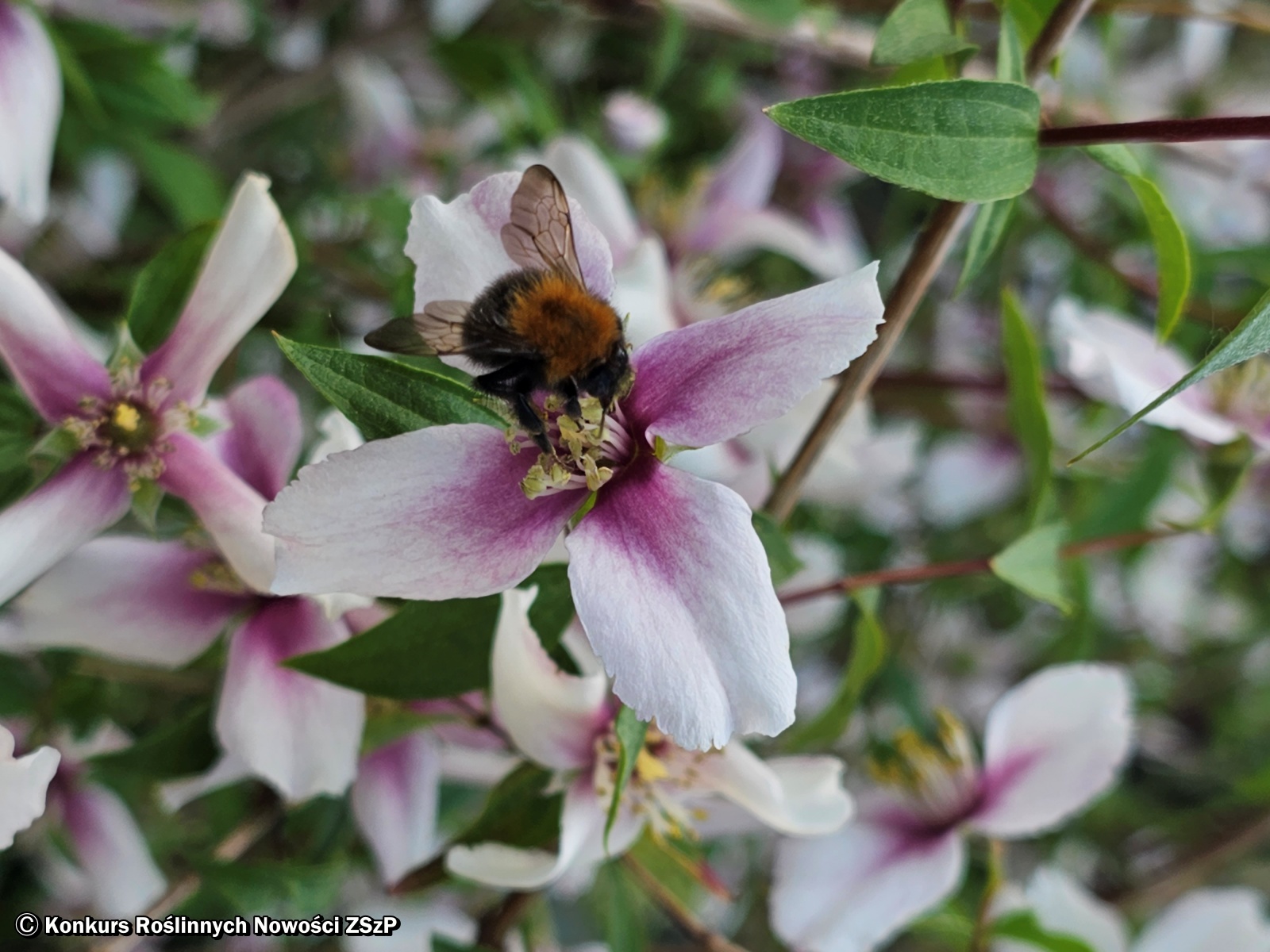
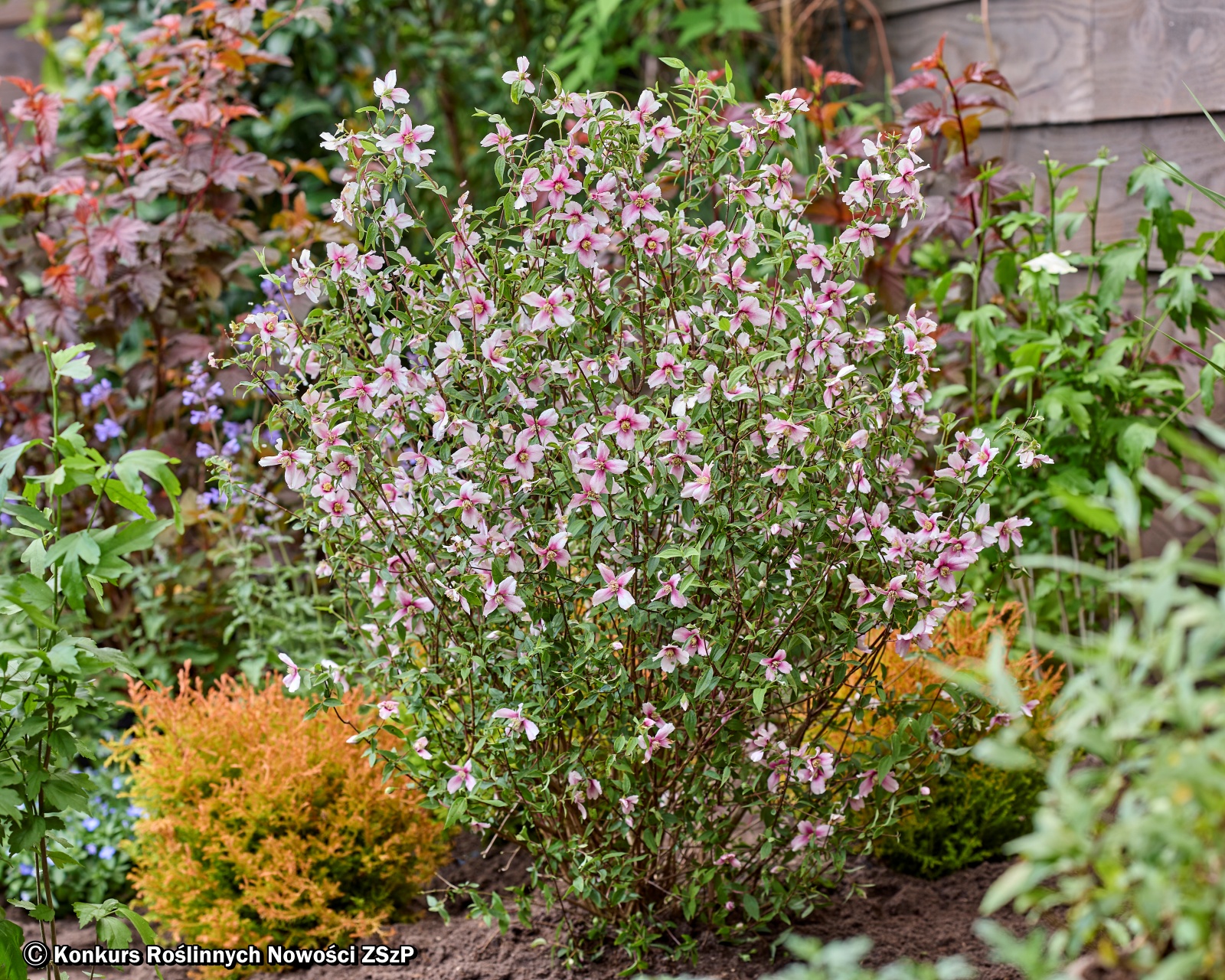
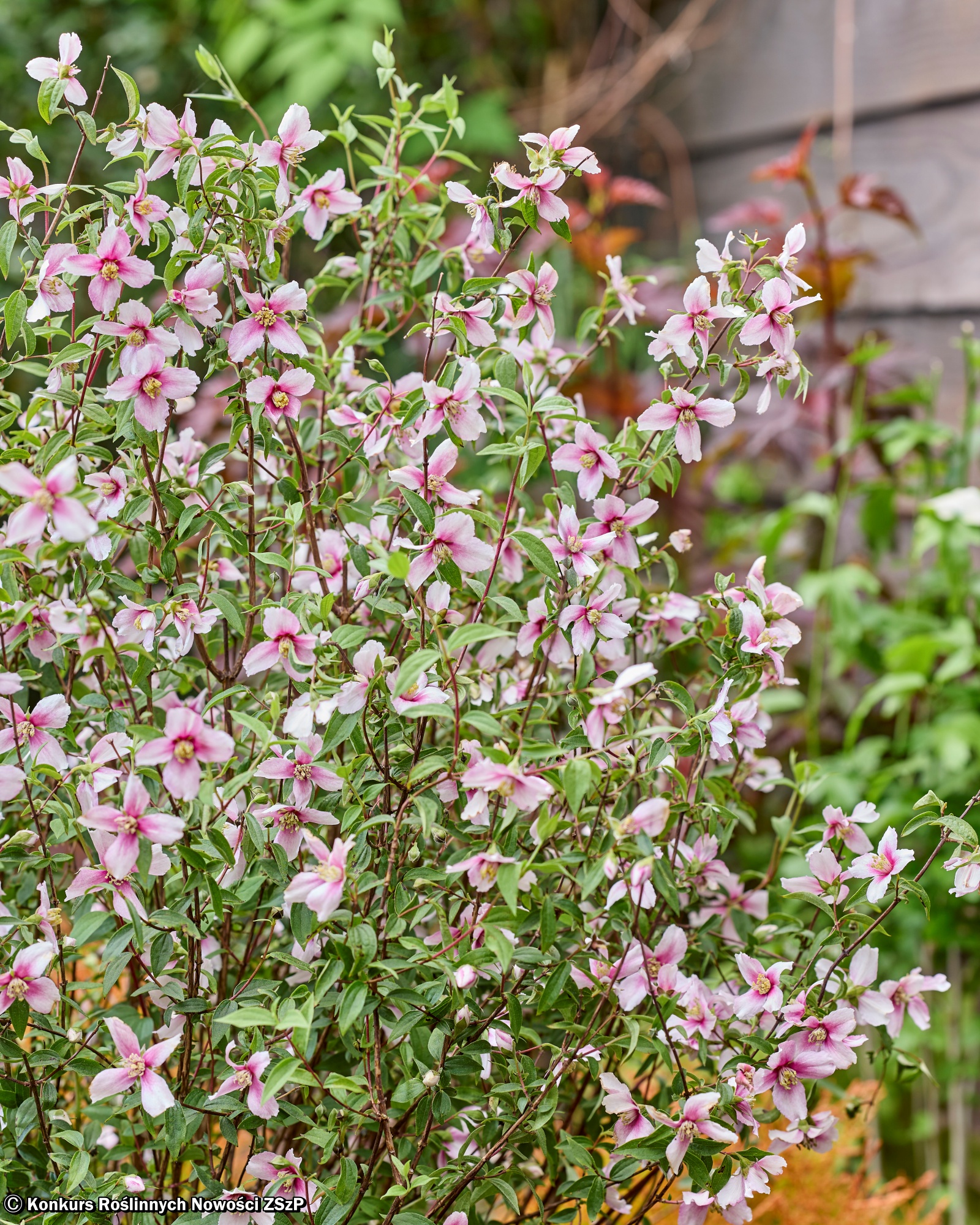
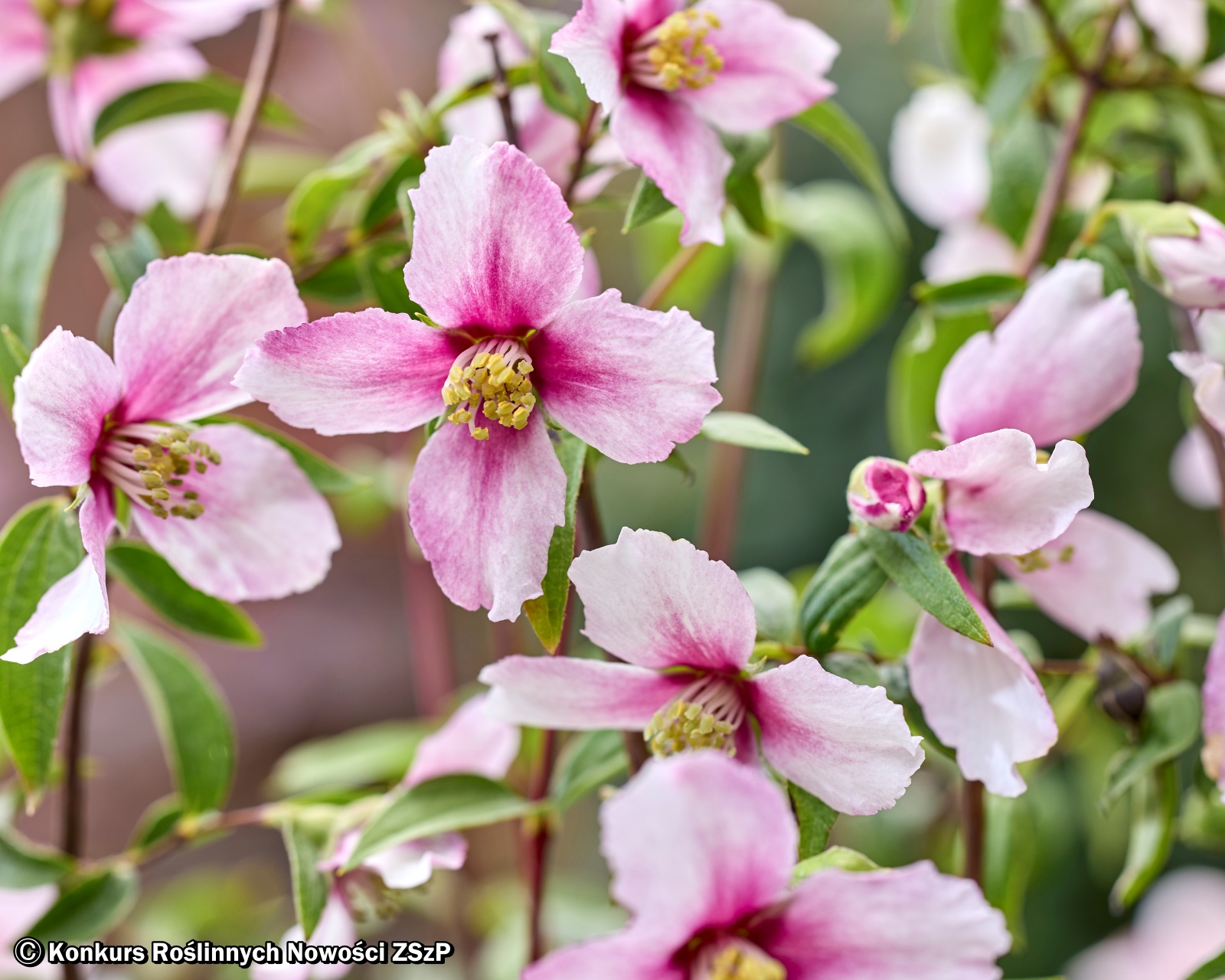
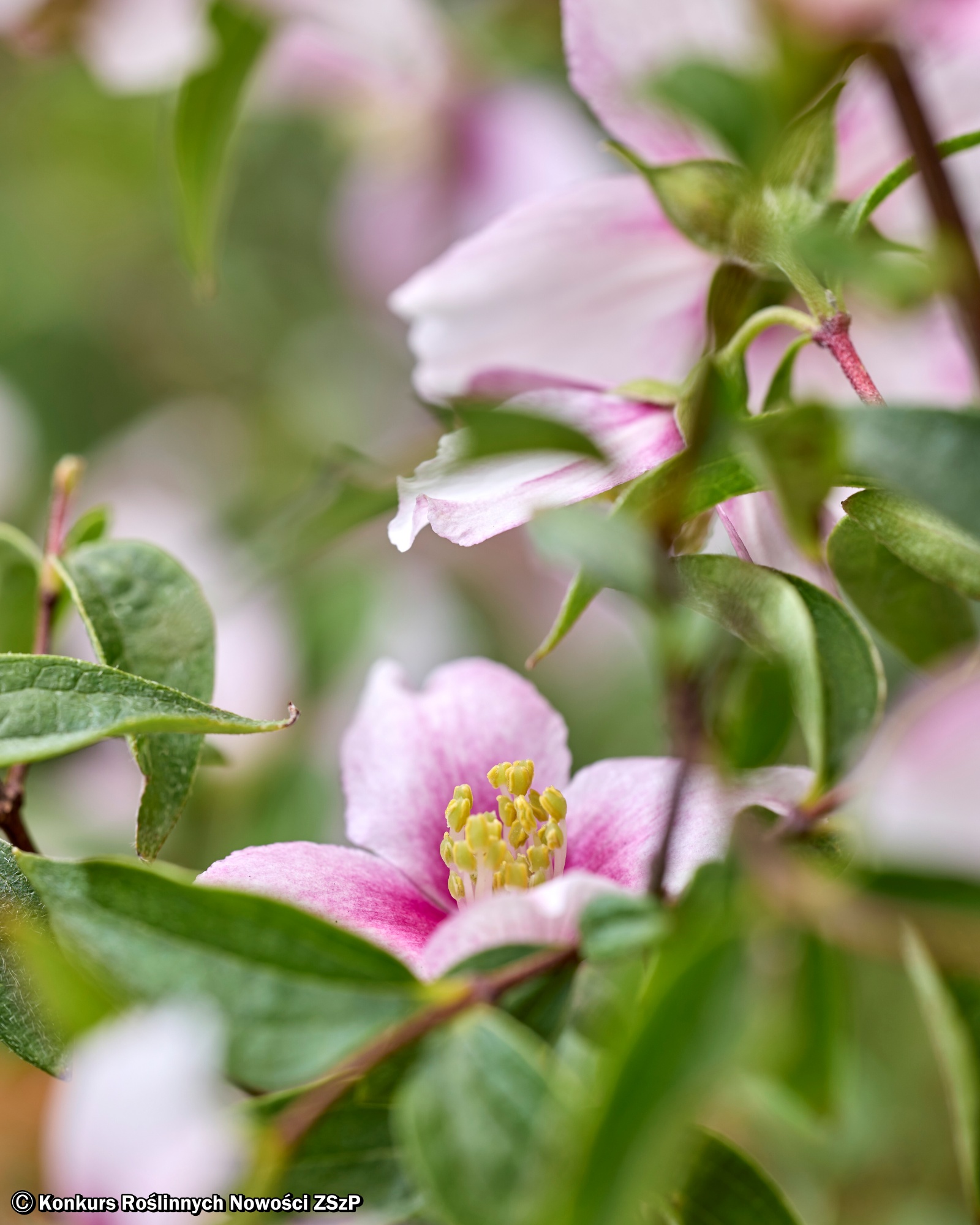
Philadelphus PETITE PERFUME PINK

Philadelphus PETITE PERFUME PINK

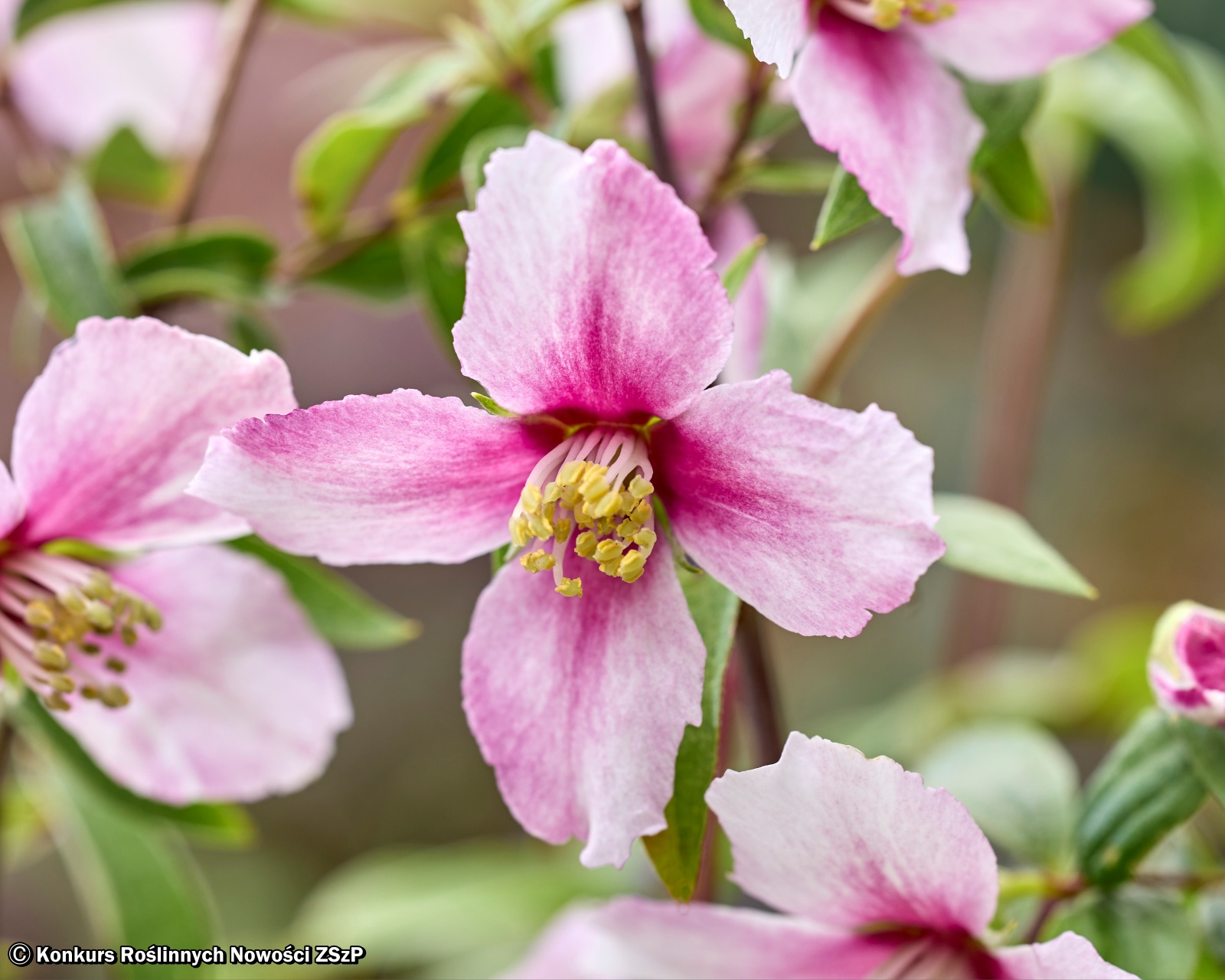
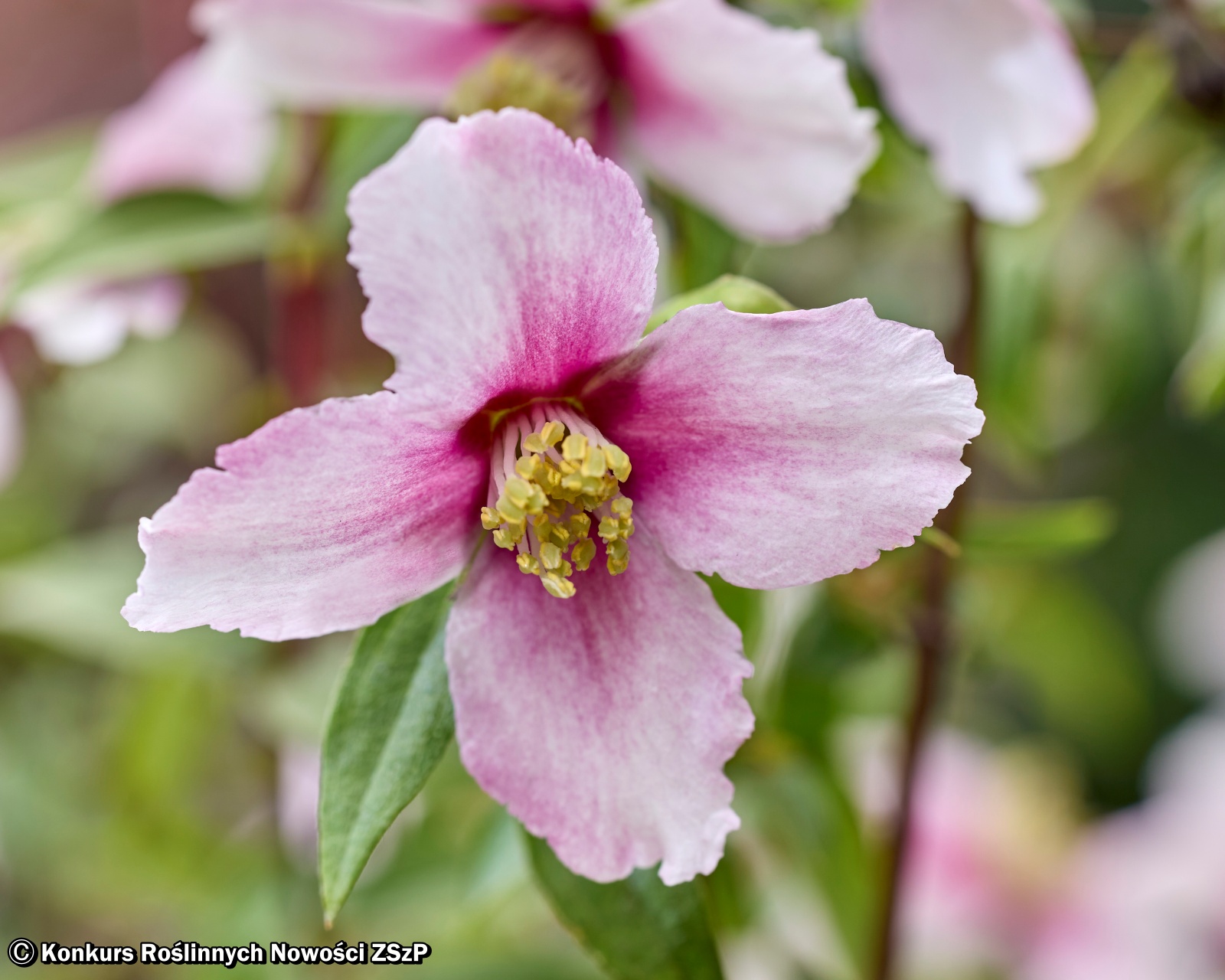
A compact shrub reaching about 1.2 m in height, with dark green leaves and abundant flowering. Dark pink buds open from May to July into strongly fragrant, light pink flowers with a darker center. The flowering period lasts around six weeks. The cultivar performs best in sunny or semi‑shaded locations, in fertile, well‑drained soil. Once established, it tolerates periodic drought, air pollution and coastal conditions. Recommended for small gardens, urban greenery, borders, scented gardens and containers. Winner of the RHS Chelsea Plant of the Year 2025 competition. Hardiness zone: 5b (‑26/‑23 °C).

Cultivar denomination: ‘P1’ PBR

Breeder: Alan Postill, United Kingdom

Year of market introduction: 2025

Applicant: Szkółki KUROWSCY, ul. Kurowska 105, 24-130 Końskowola, Poland

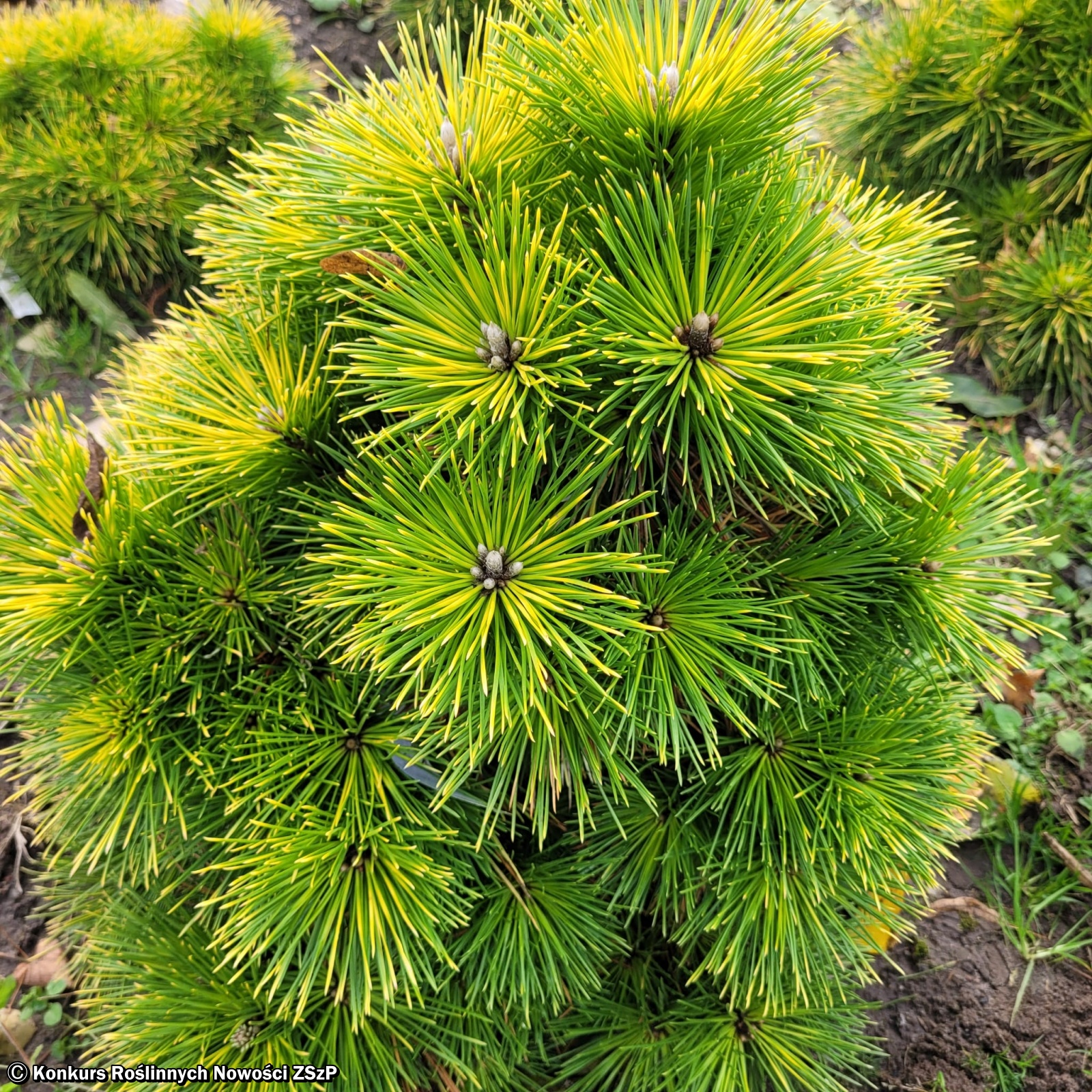
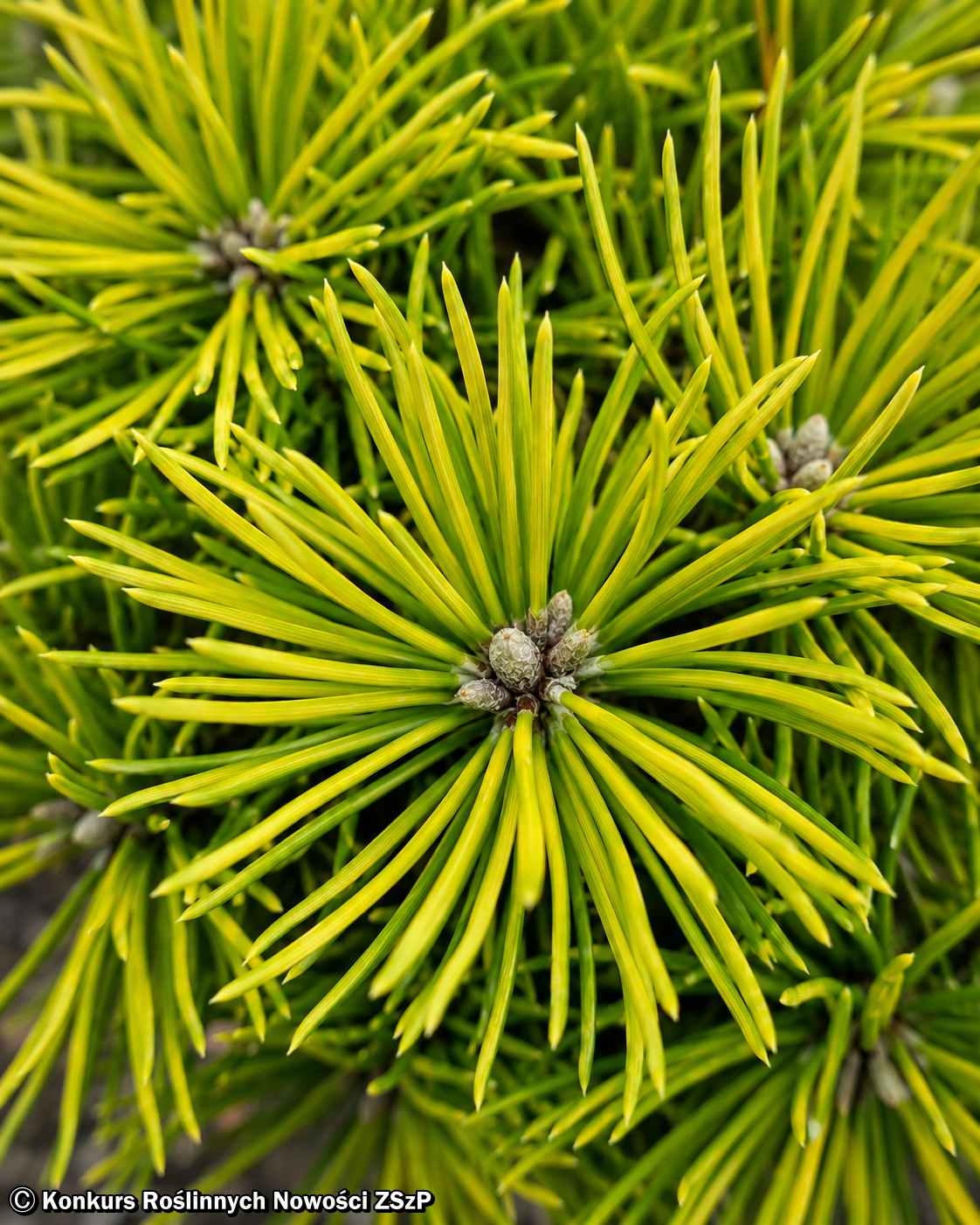
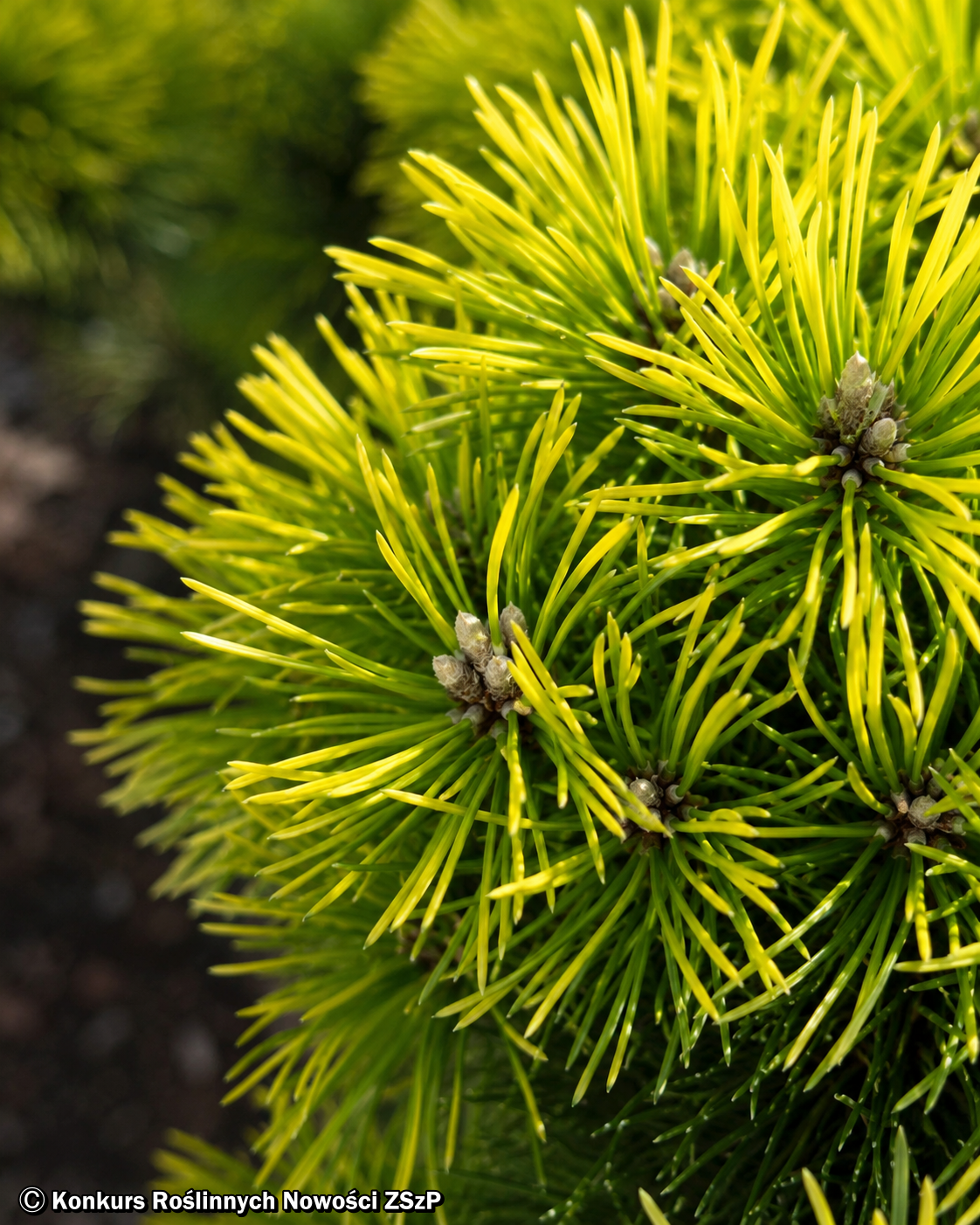
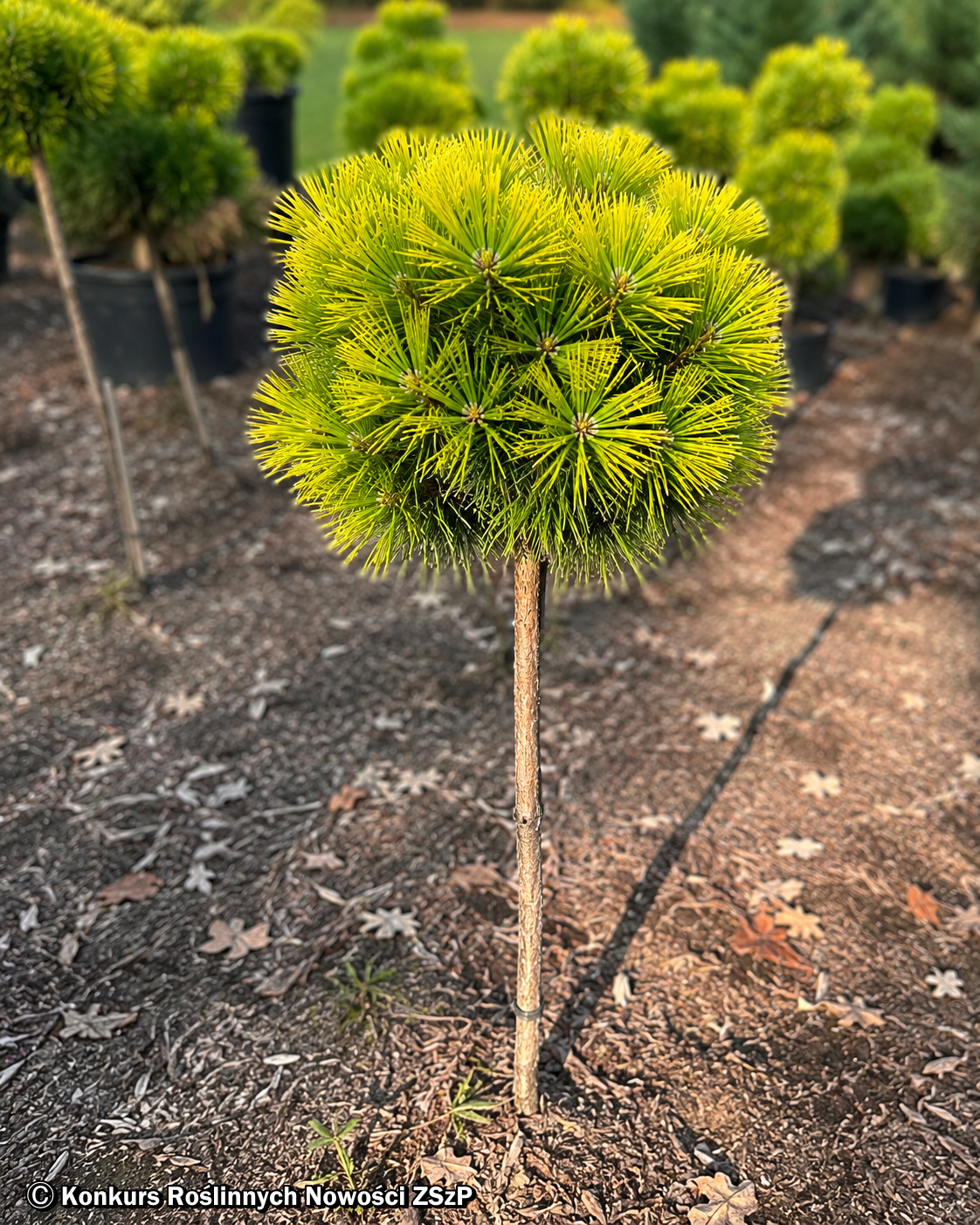
Pinus thunbergii GIFUTO

Pinus thunbergii GIFUTO

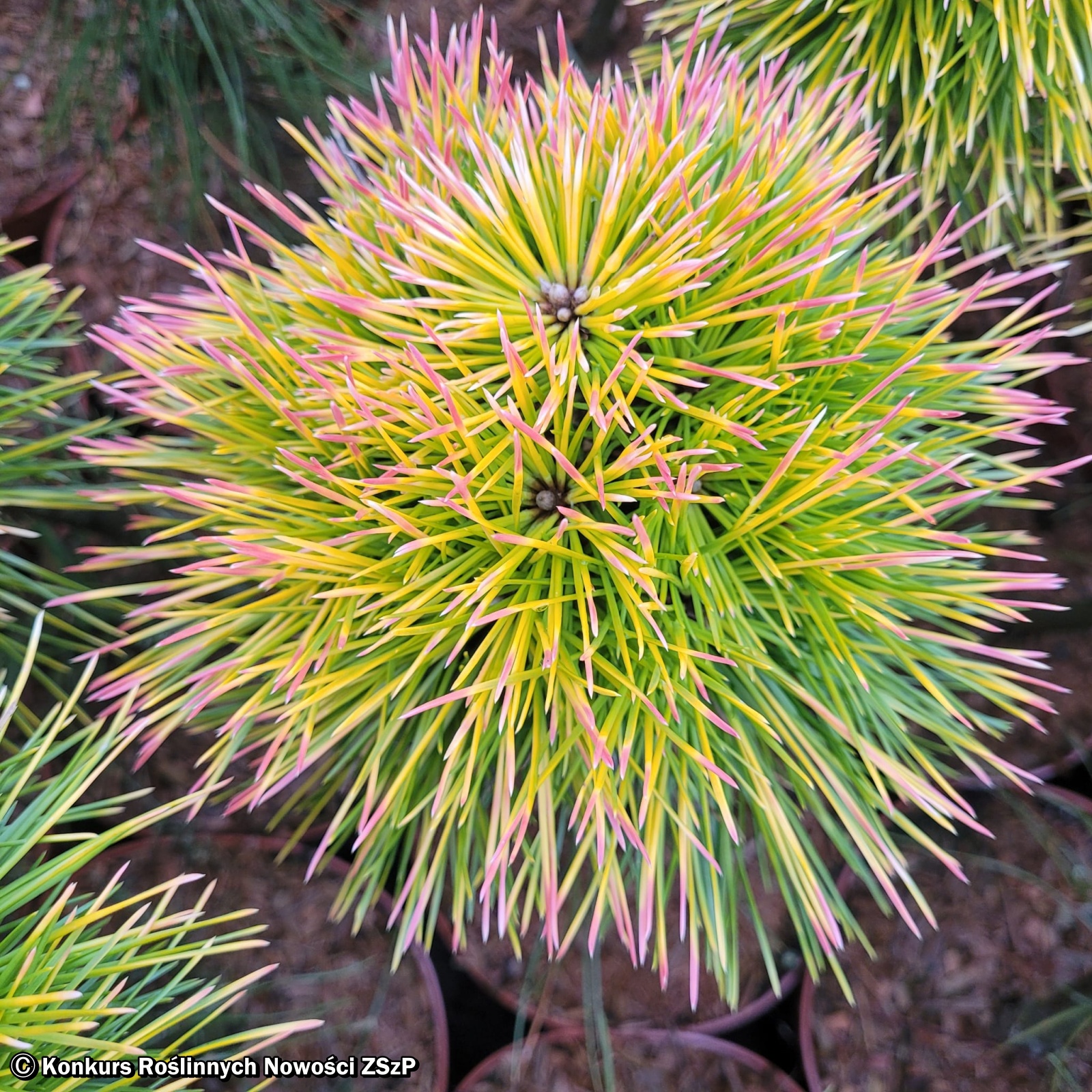
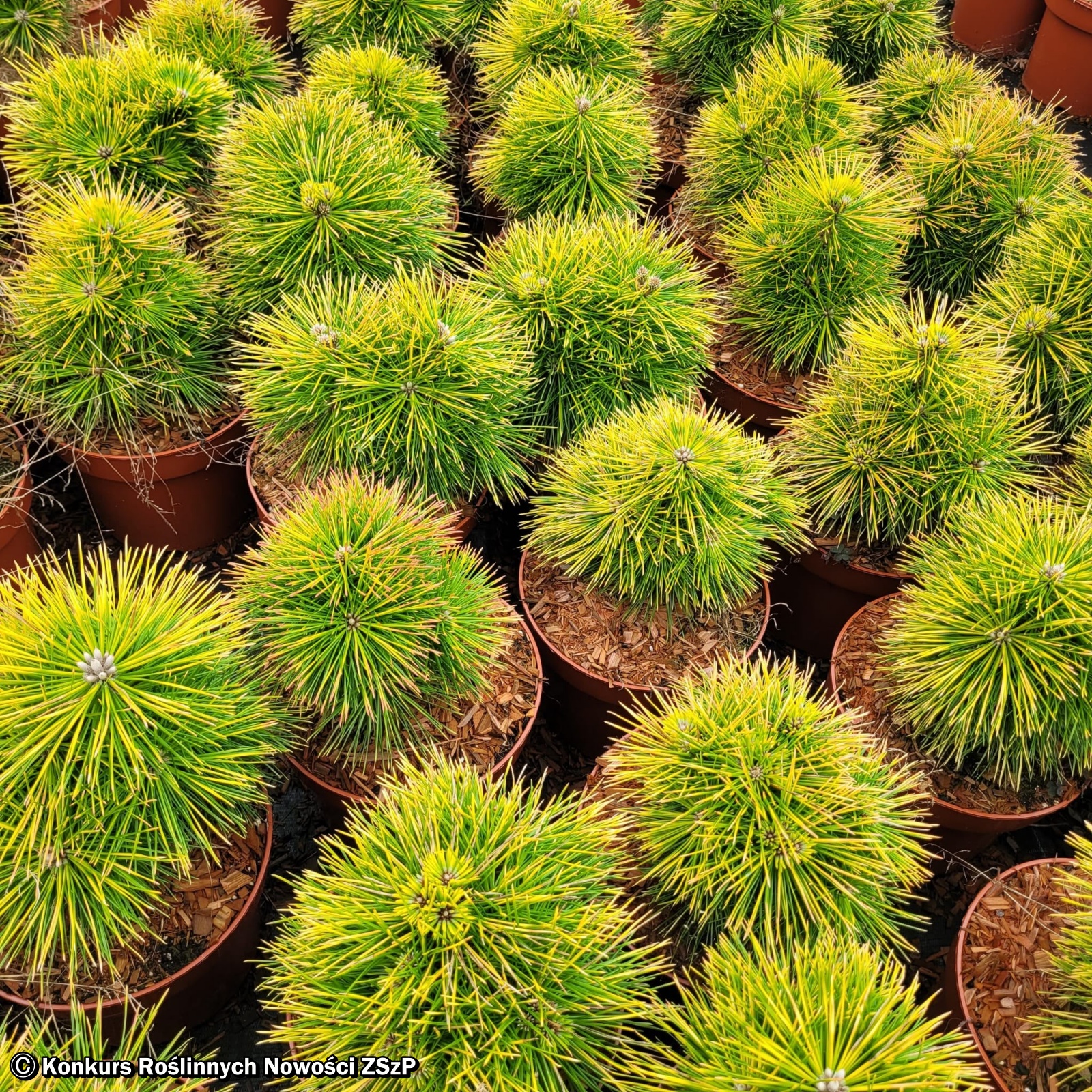
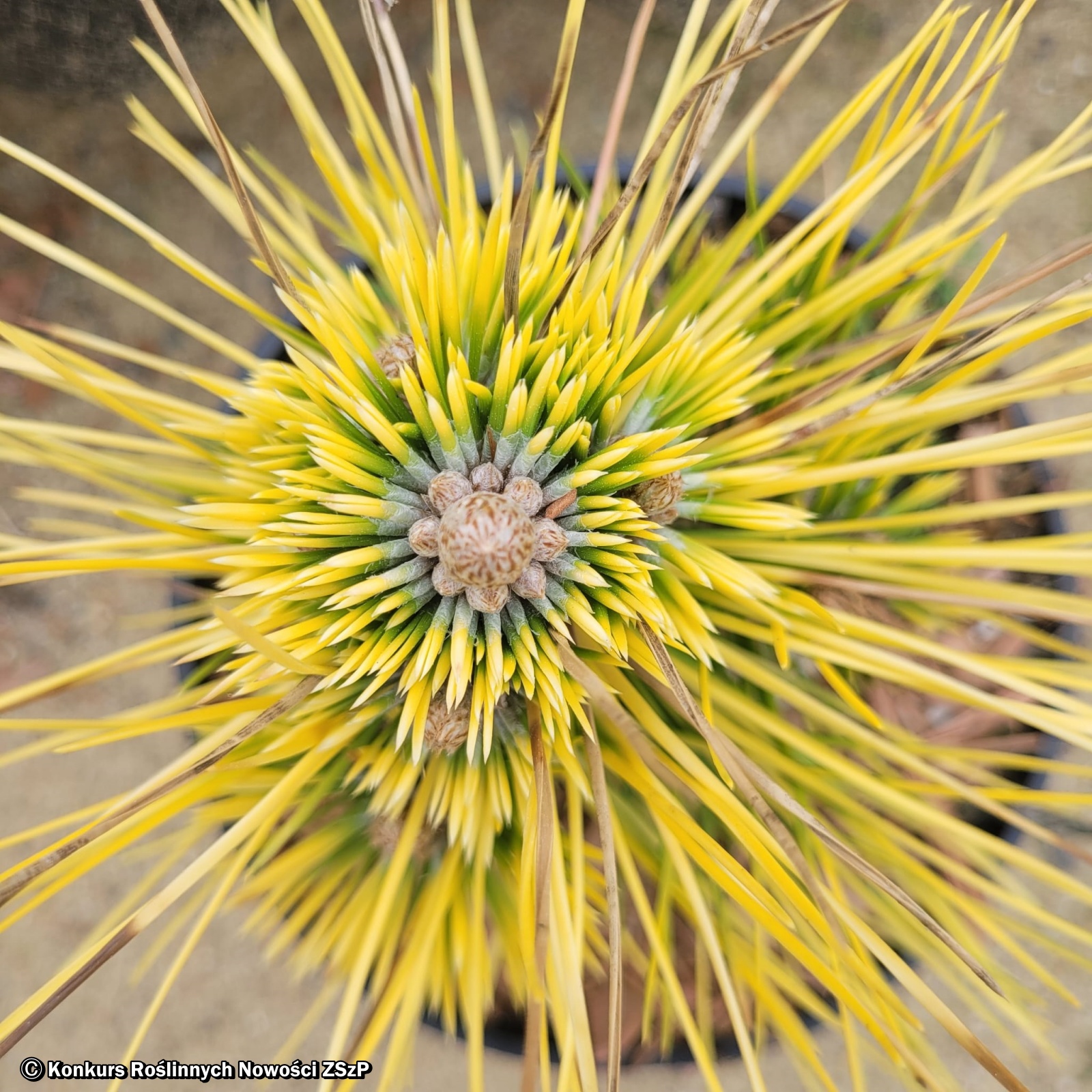
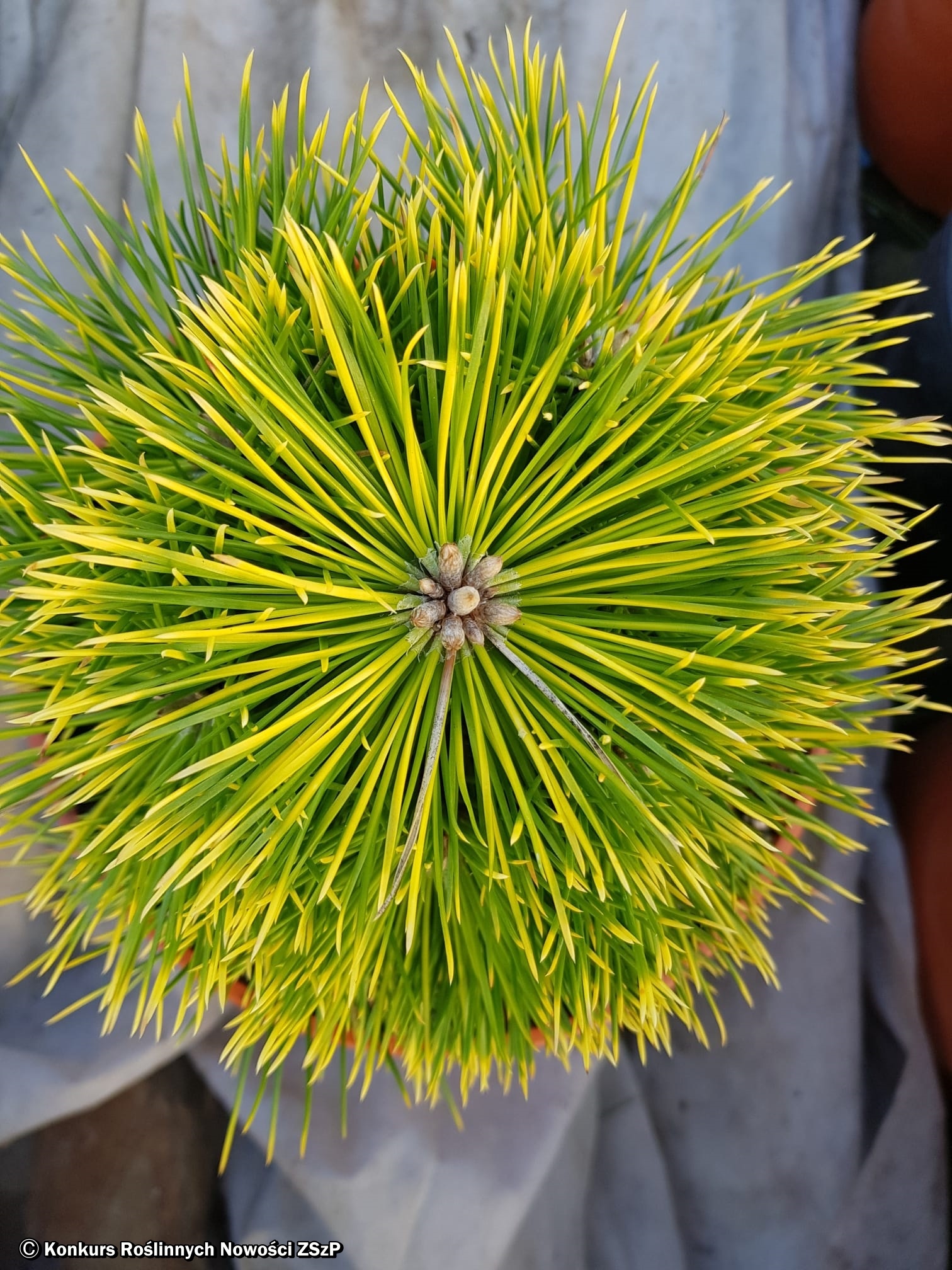
A Polish cultivar developed through deliberate hybridization and careful selection. It is distinguished by its naturally rounded, compact habit and therefore requires no pruning. The plant reaches approximately 1–2 m in height. For most of the year, it impresses with its lime-yellow needles, which intensify to a rich golden color during winter. An interesting feature of this cultivar is the presence of two distinct types of growth: a spring flush with longer needles and a summer flush that is shorter and more compact. In autumn and winter, the plant is further enhanced by its long, white buds, while some specimens develop the attractive “red peacock” effect, characterized by pinkish-red needle tips that persist throughout cold winter weather. This cultivar is ideal for containers, Japanese gardens, and small garden spaces. Hardiness zone: 5b (–26 to –23°C).

Cultivar denomination: ‘Gifuto’ PBR

Breeder: Nikodem Nowaczyk, Poland

Year of market introduction: 2026

Applicant: Szkółka NOWACZYK, Wyganów 1, 63-740 Kobylin, Poland

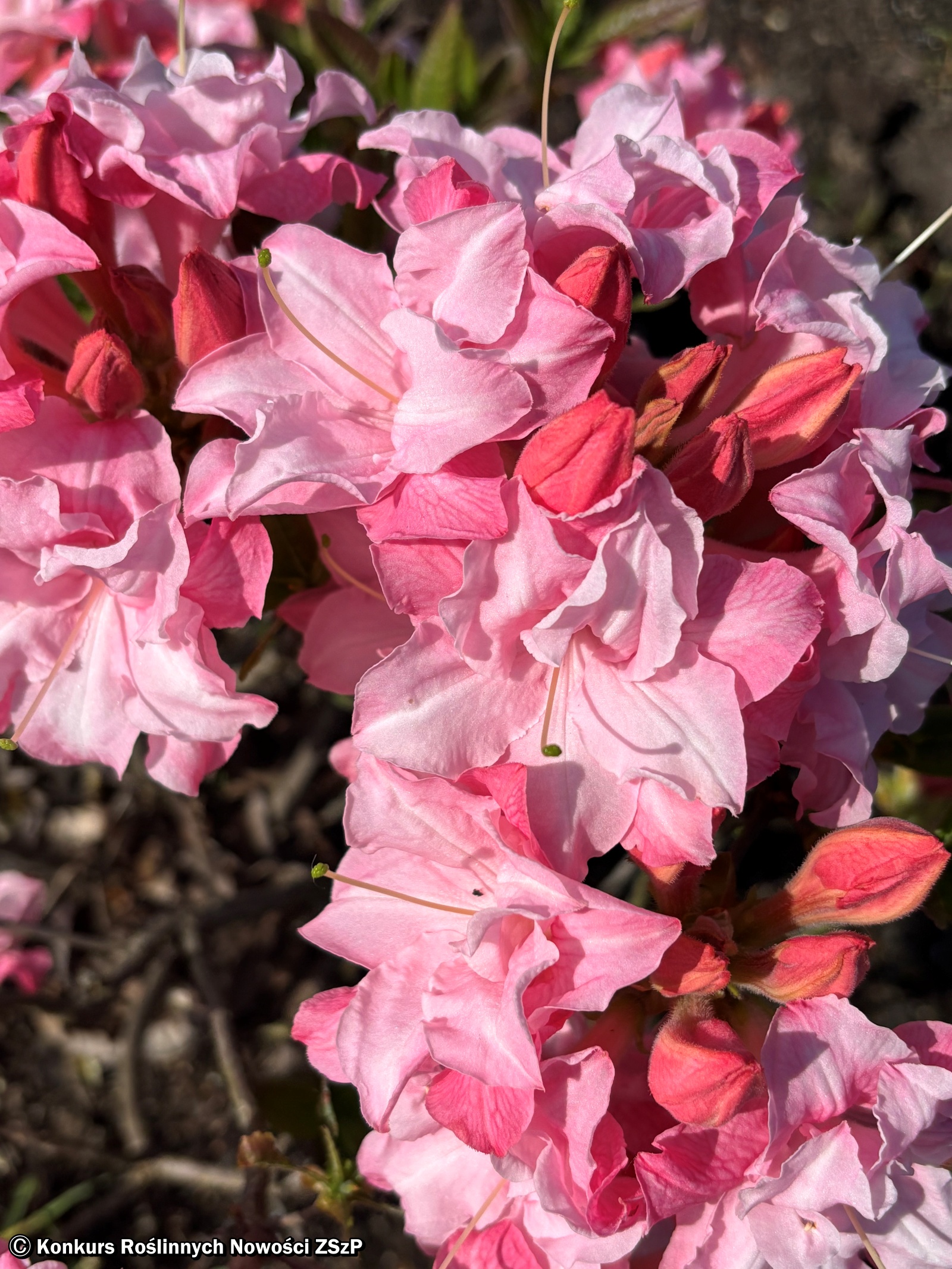
Rhododendron KASIA

Rhododendron KASIA

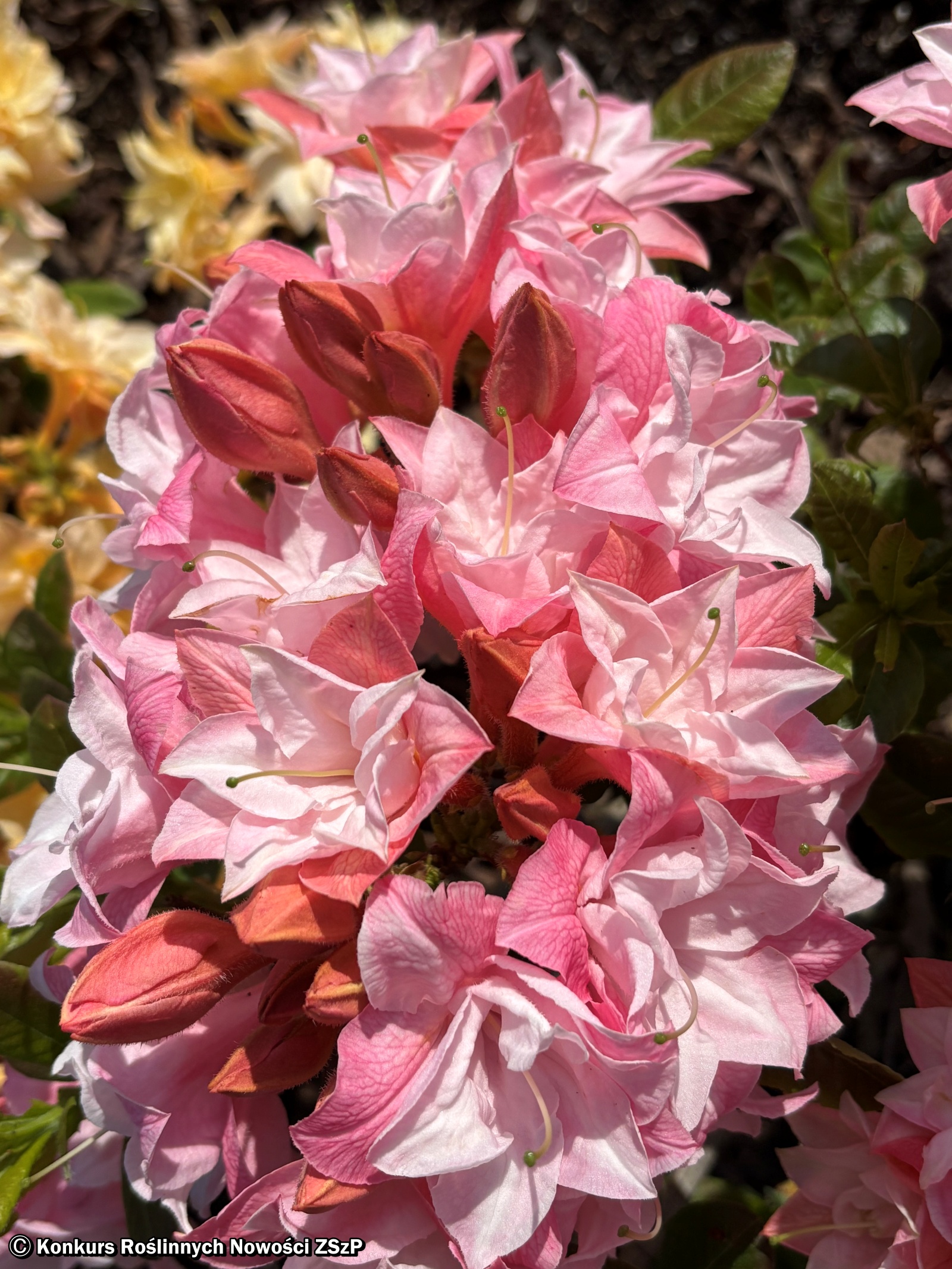
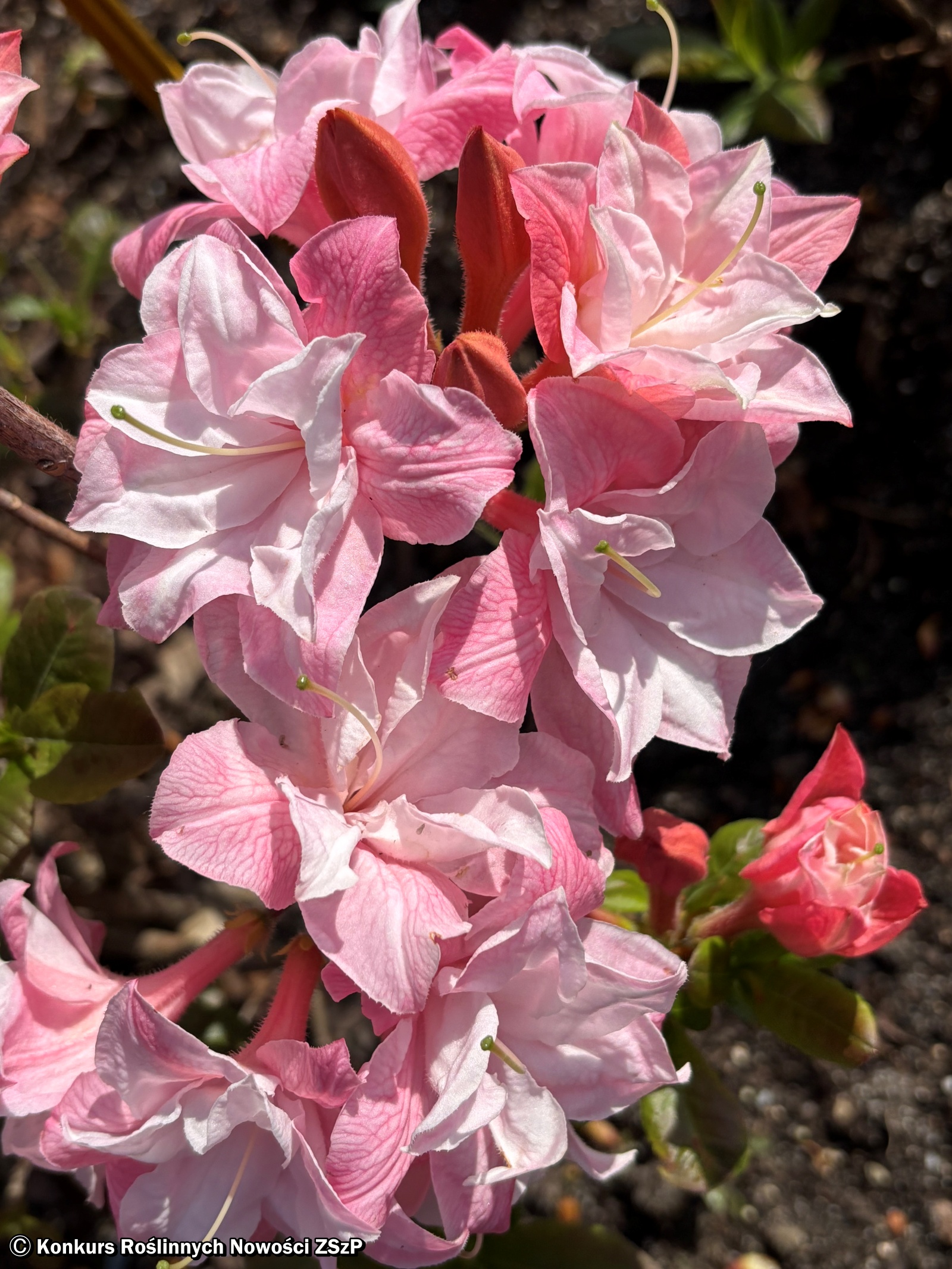
A Polish azalea cultivar with double, light pink flowers borne in dense, rounded flower clusters at the ends of the shoots. The shrub grows up to 2 m in height and flowers abundantly in the second half of May. Flower buds are intensely pink, covered with fine hairs, and characteristically sickle-shaped. As the flowers open, they become light pink and fully double. A notable feature of this cultivar is its high resistance to powdery mildew. The deciduous foliage remains healthy throughout the season, appearing light green during flowering and turning dark green in summer. The shrub is frost hardy and requires acidic, humus-rich soils with adequate moisture during the flowering period. The cultivar is recommended for planting in partially shaded locations in home and residential gardens, as well as in heath and woodland-style plantings. It is also suitable for cultivation in large containers on balconies and terraces. Hardiness zone: 5b (–26 to –23°C).

Cultivar denomination: ‘Kasia’

Breeder: Eugeniusz Pudełek, Poland

Year of market introduction: 2026

Applicant: Szkółka Krzewów Ozdobnych PUDEŁEK, ul. Pańska 40, 43-332 Pisarzowice, Poland

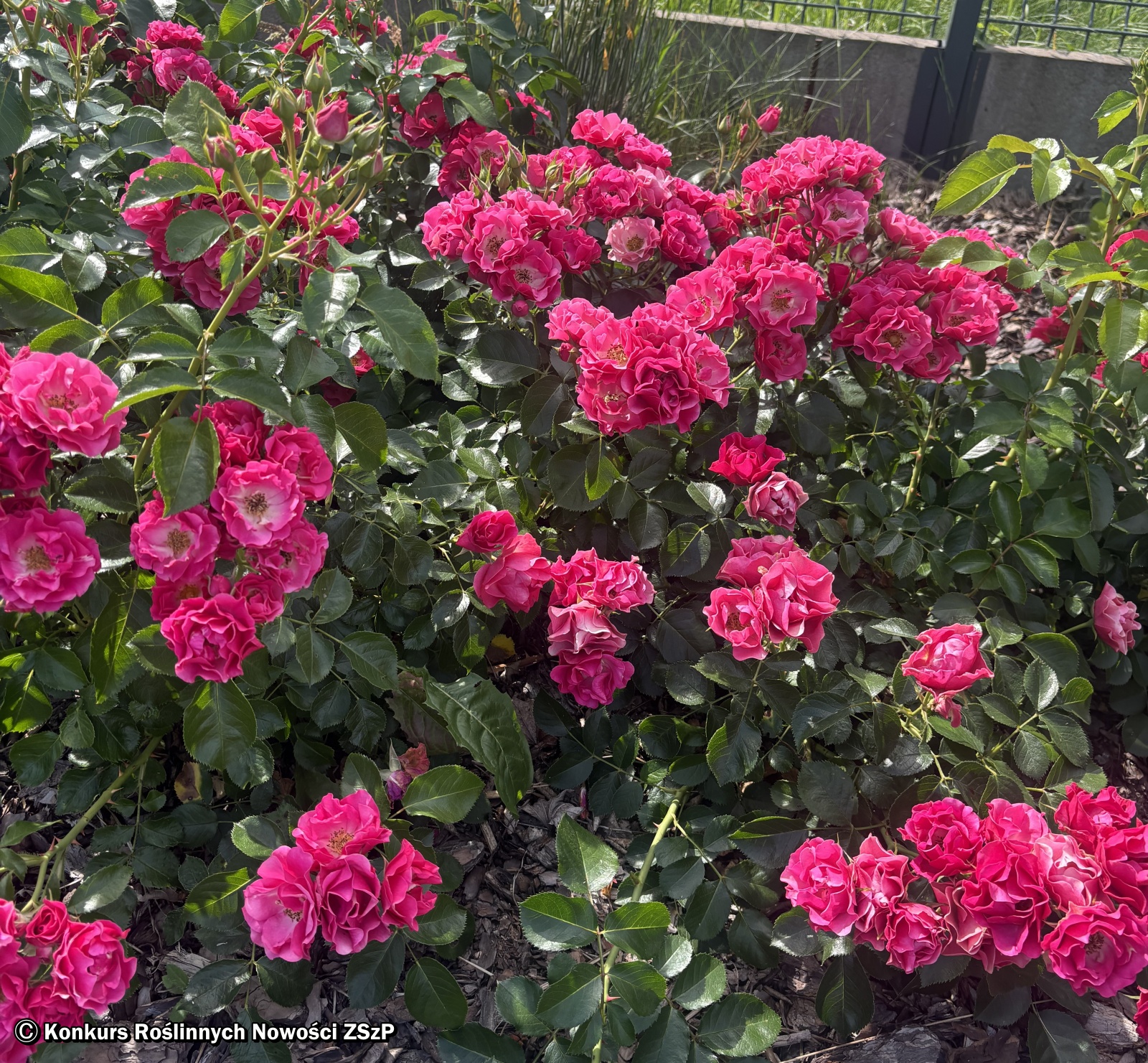
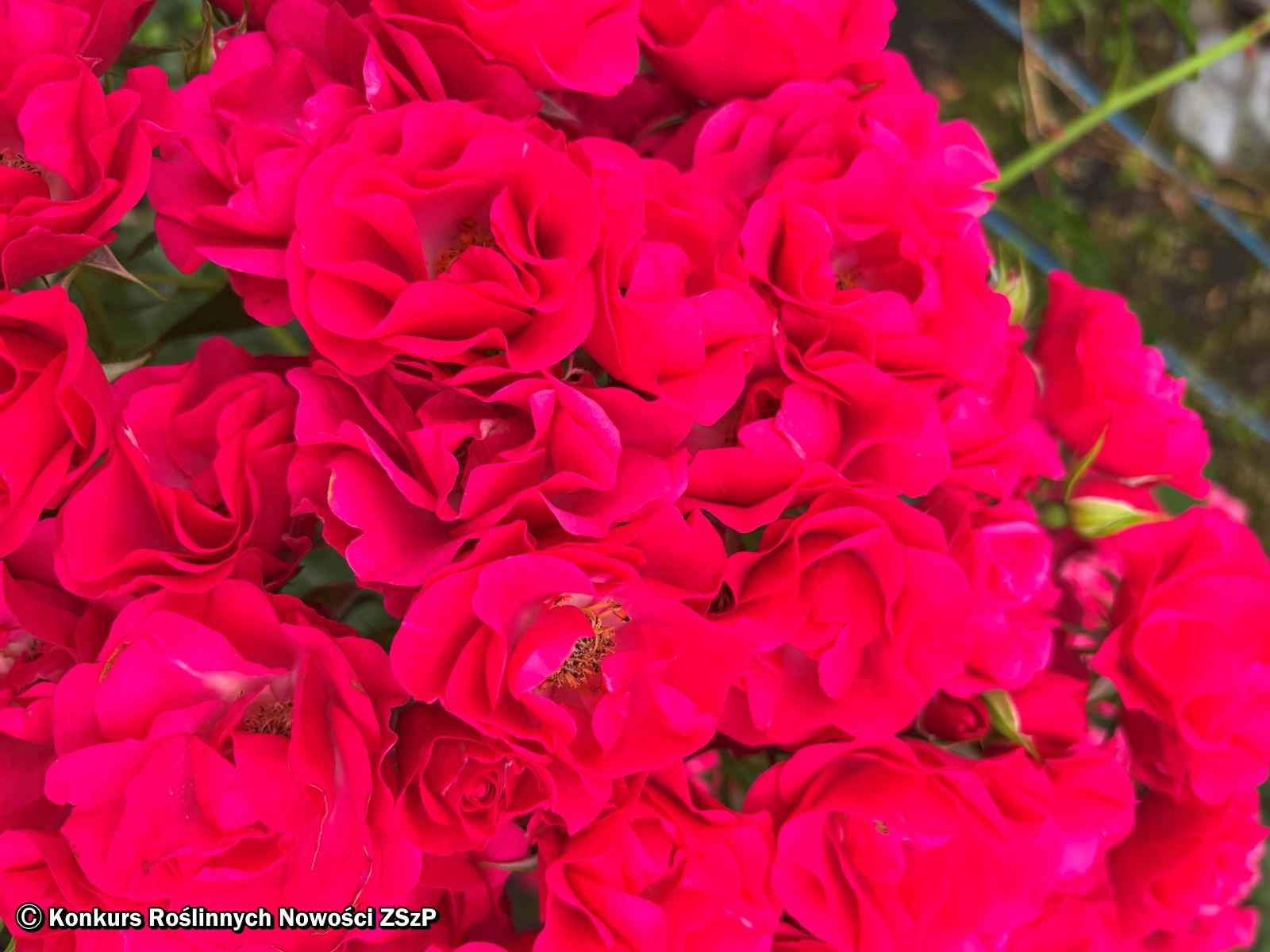
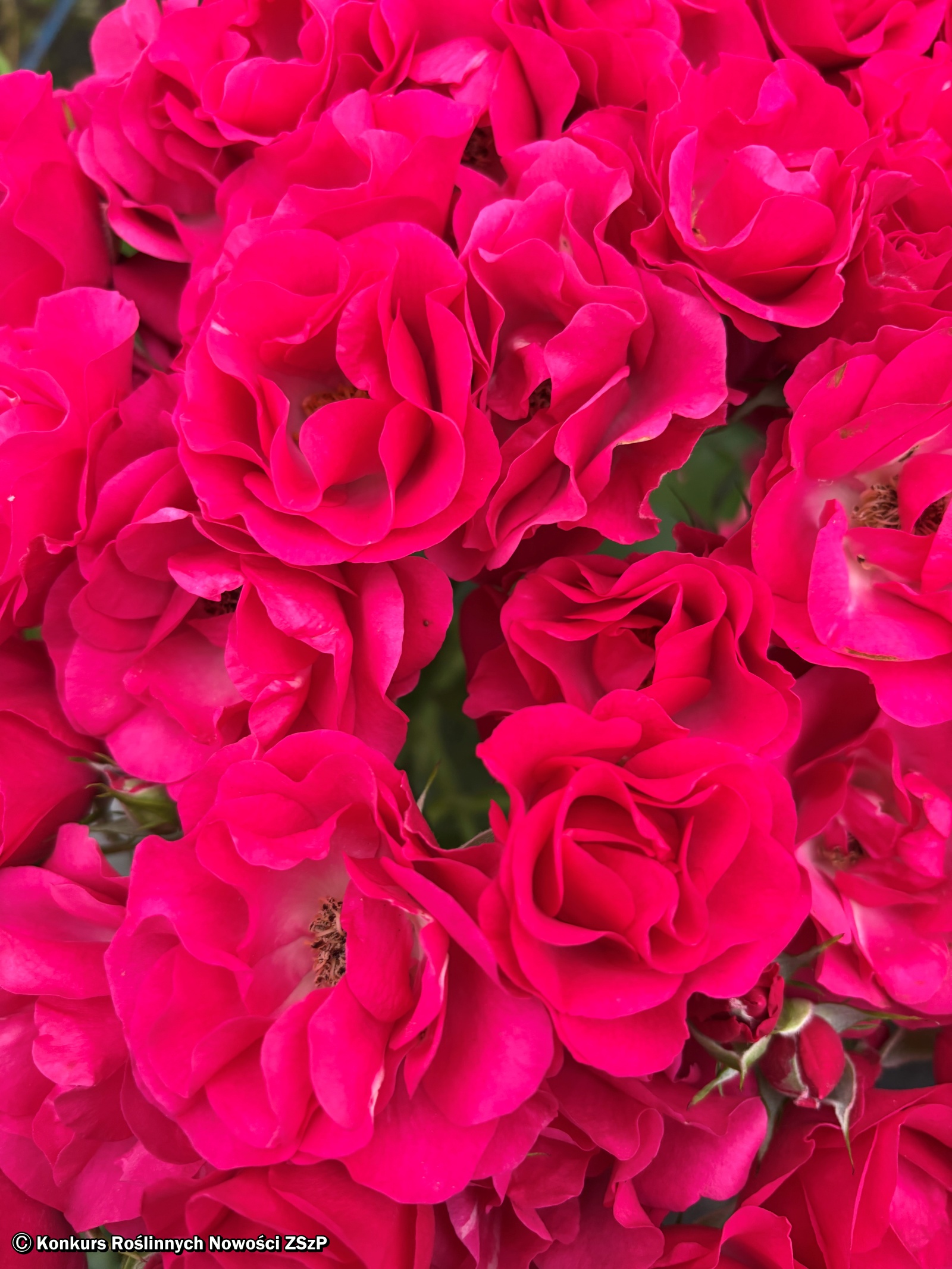
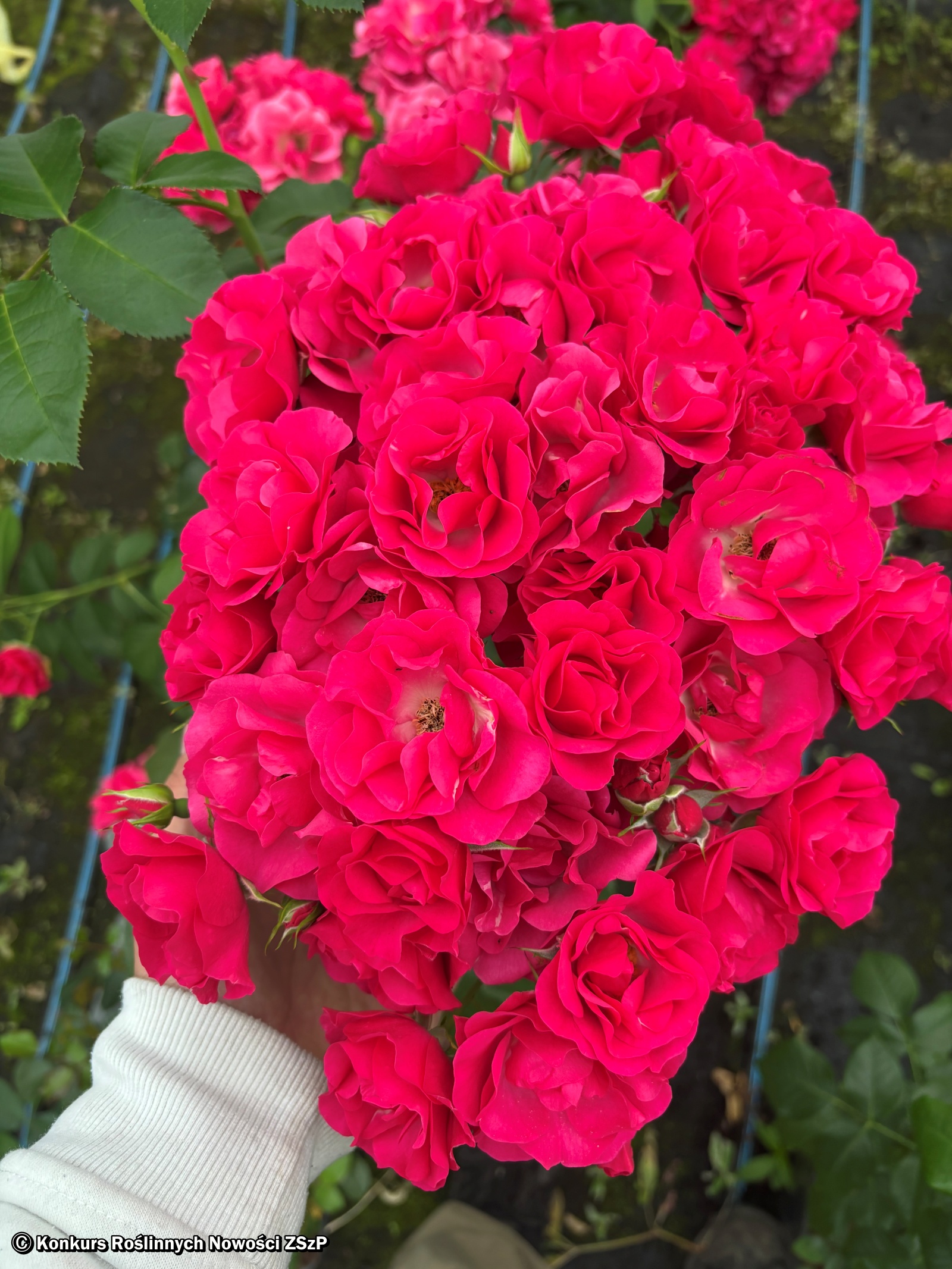
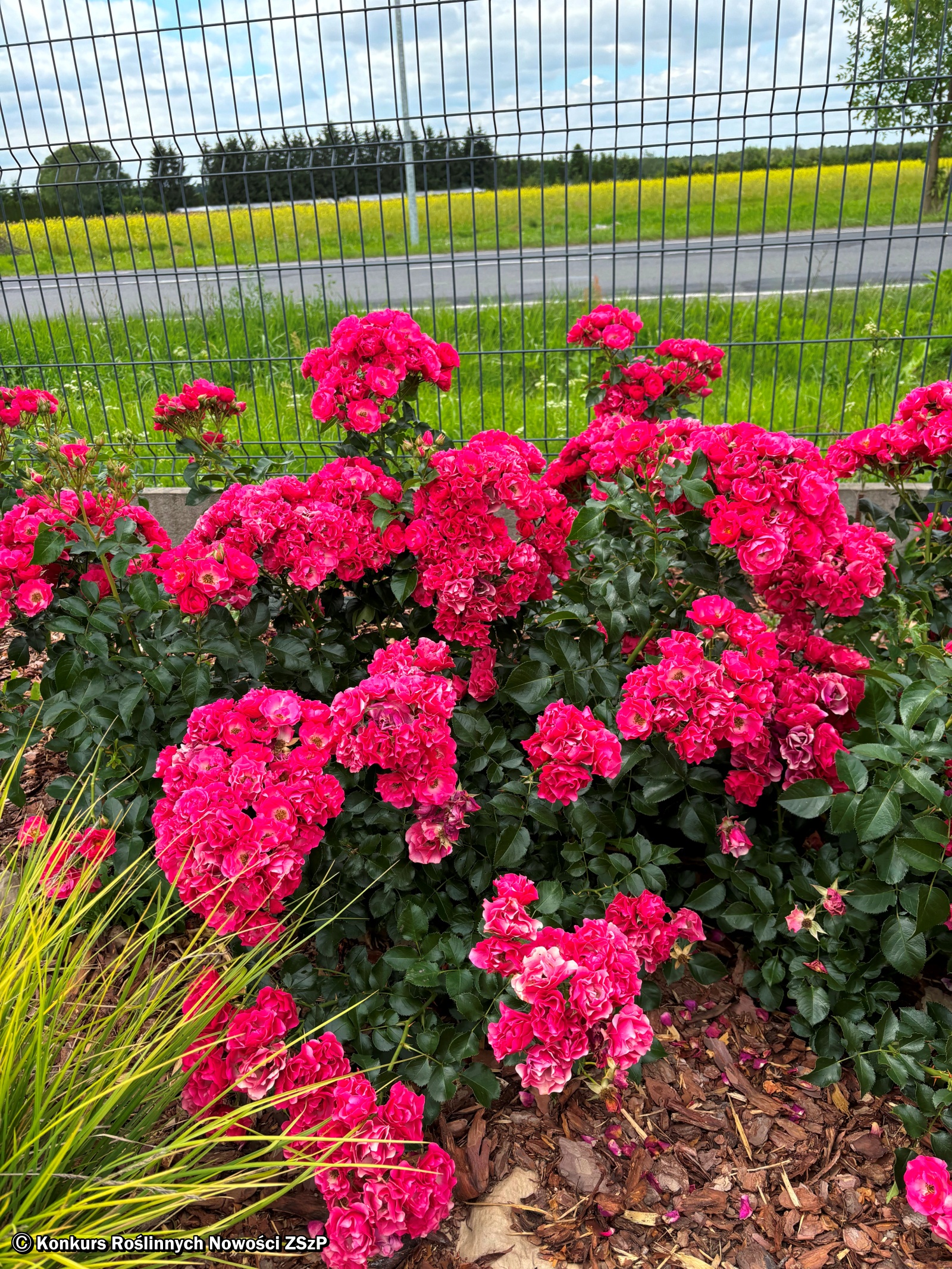
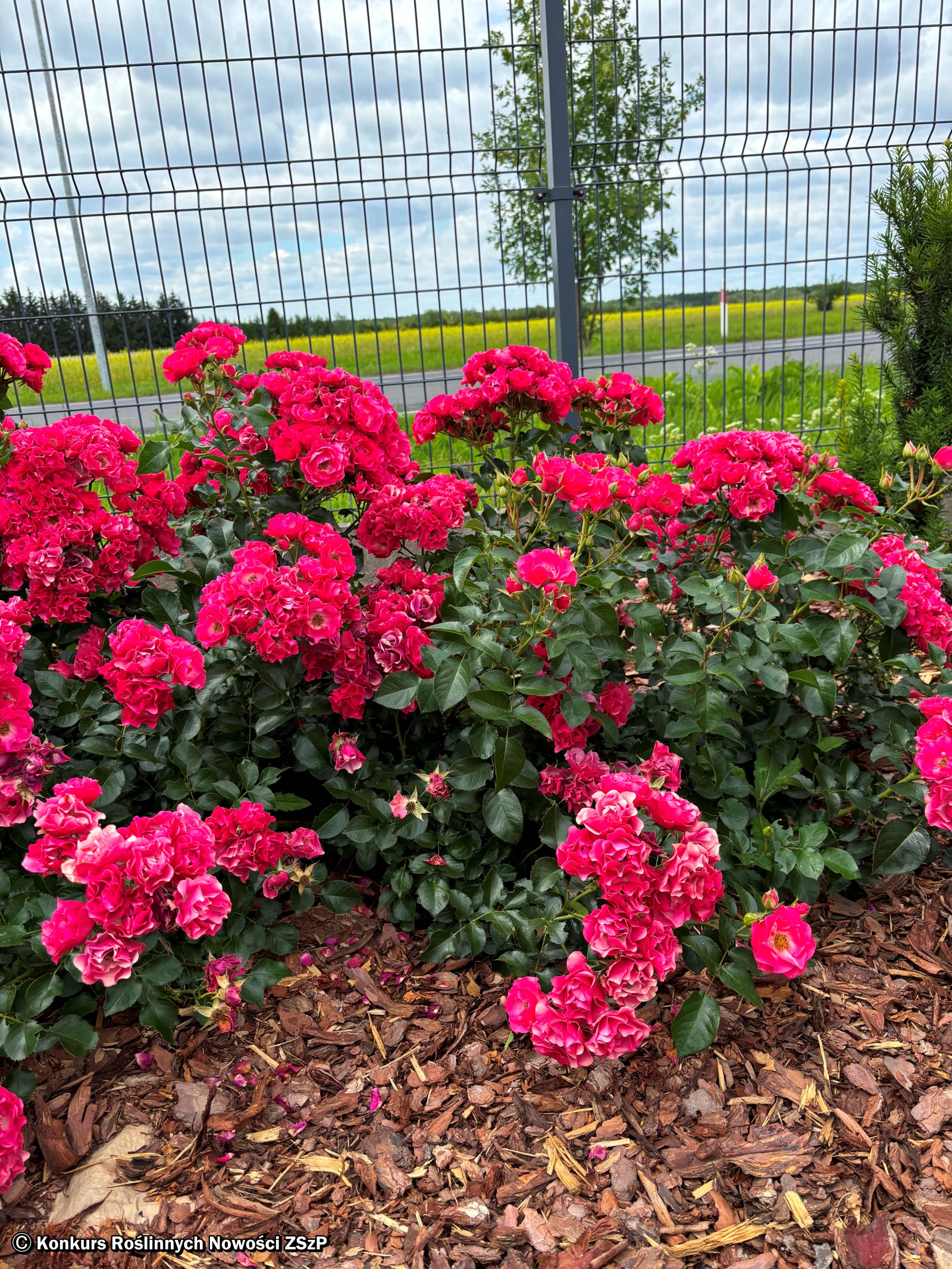
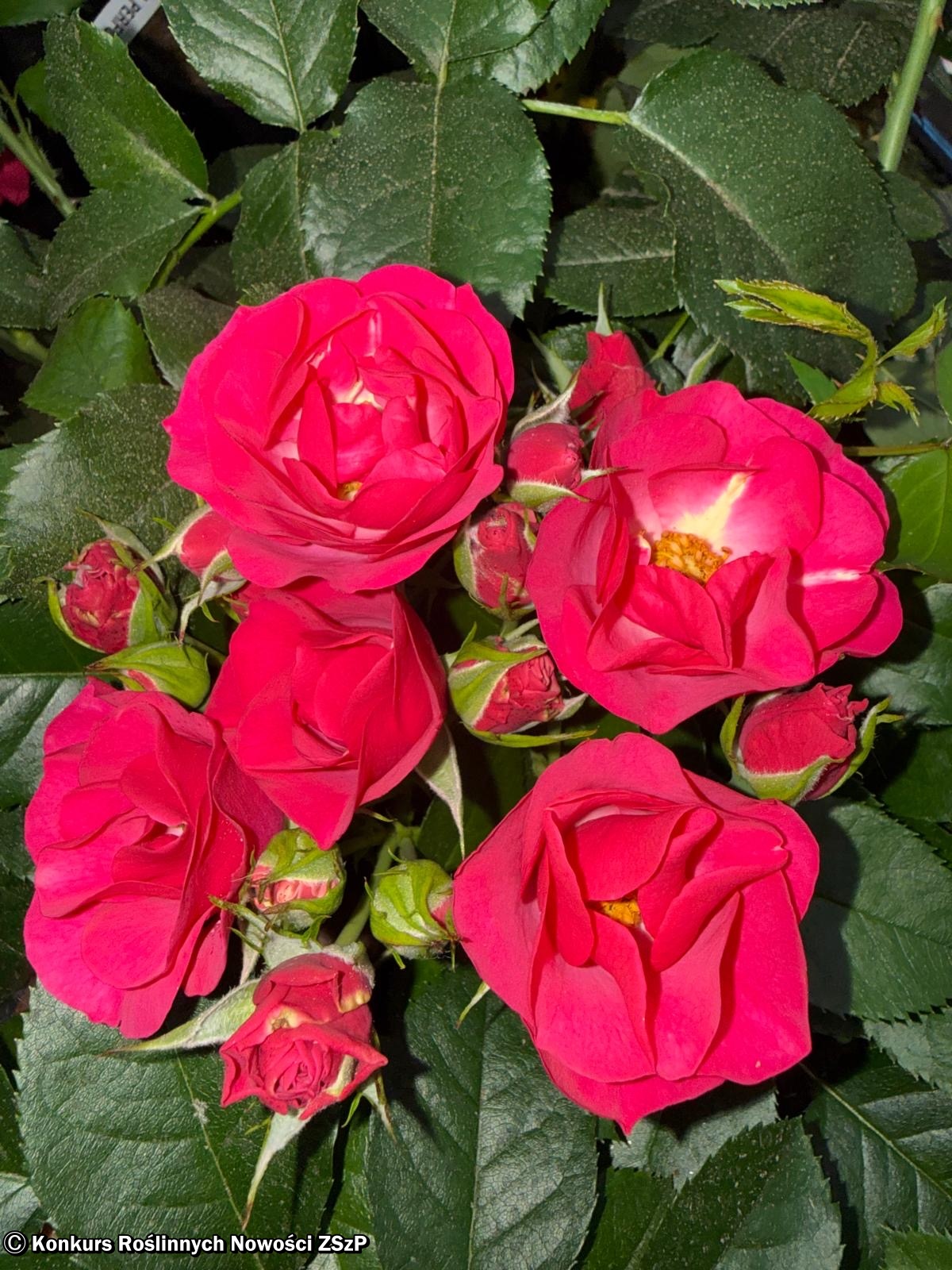
Rosa MATKA POLKA

Rosa MATKA POLKA

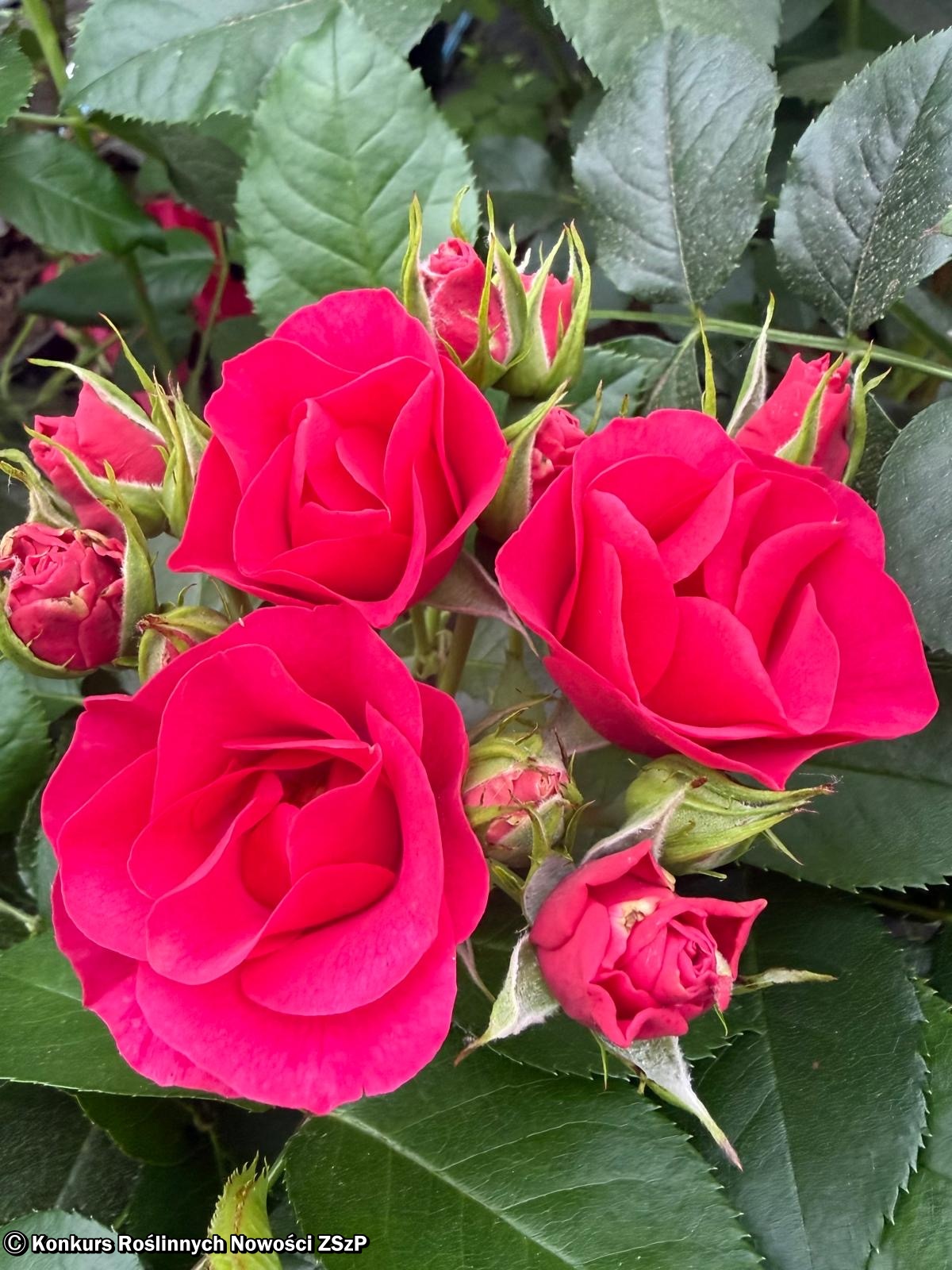
A healthy groundcover rose distinguished by its abundant flowering and large clusters of blooms borne at the ends of the shoots. The plants develop a harmonious, well-branched habit, while the flowers, with their elegant form, rich structure, and excellent durability, maintain a high ornamental value both at peak bloom and after flowering has finished, thanks to the decorative red hips. These fruits not only enhance the plant’s ornamental appeal but also provide a valuable food source for wildlife. This cultivar is highly tolerant of stressful environmental conditions, including drought and soil salinity, making it particularly suitable for roadside plantings and urban green spaces. It also performs exceptionally well in containers. This Polish cultivar was officially named in 2025 at the Polish Mother’s Memorial Hospital – Research Institute (Instytut Centrum Zdrowia Matki Polki) in Łódź, on the occasion of the institute’s 35th anniversary. The name ‘MATKA POLKA’ refers to values deeply rooted in Polish tradition: strength, perseverance, care, and beauty. The rose is a tribute to women who, for generations, have helped build families, communities, and culture. Combining outstanding beauty with resilience and reliability, the cultivar embodies the qualities symbolized by its name. Hardiness zone: 5b (–26 to –23°C).

Cultivar denomination: ‘SOBoz19’ PBR

Breeder: Mateusz Sobieszek, Poland

Year of market introduction: 2025

Applicant: ROZA Sobieszek, Łopatki 2a, 98-100 Łask, Poland

Rubus fruticosus MARYNA

Rubus fruticosus MARYNA

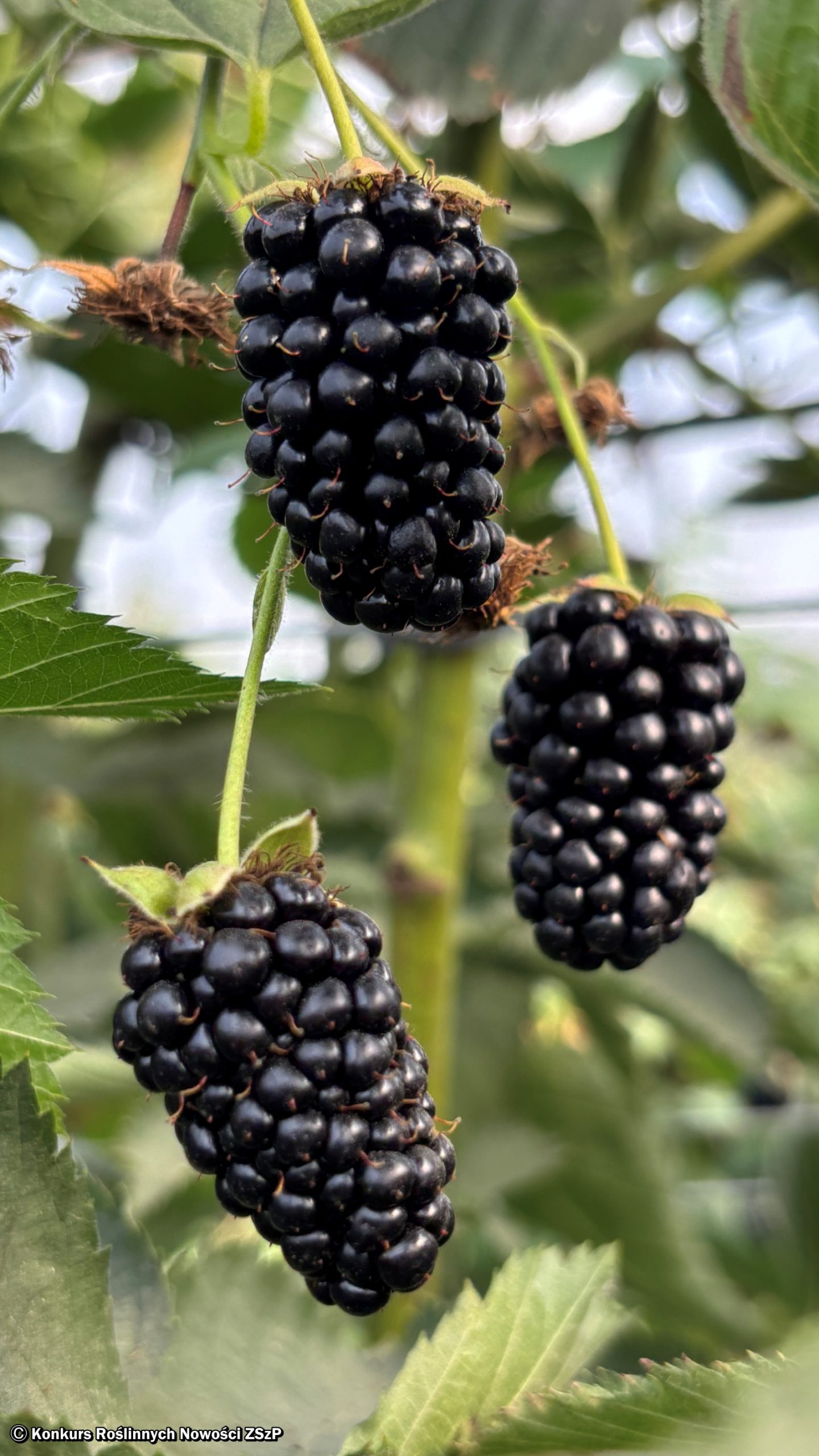
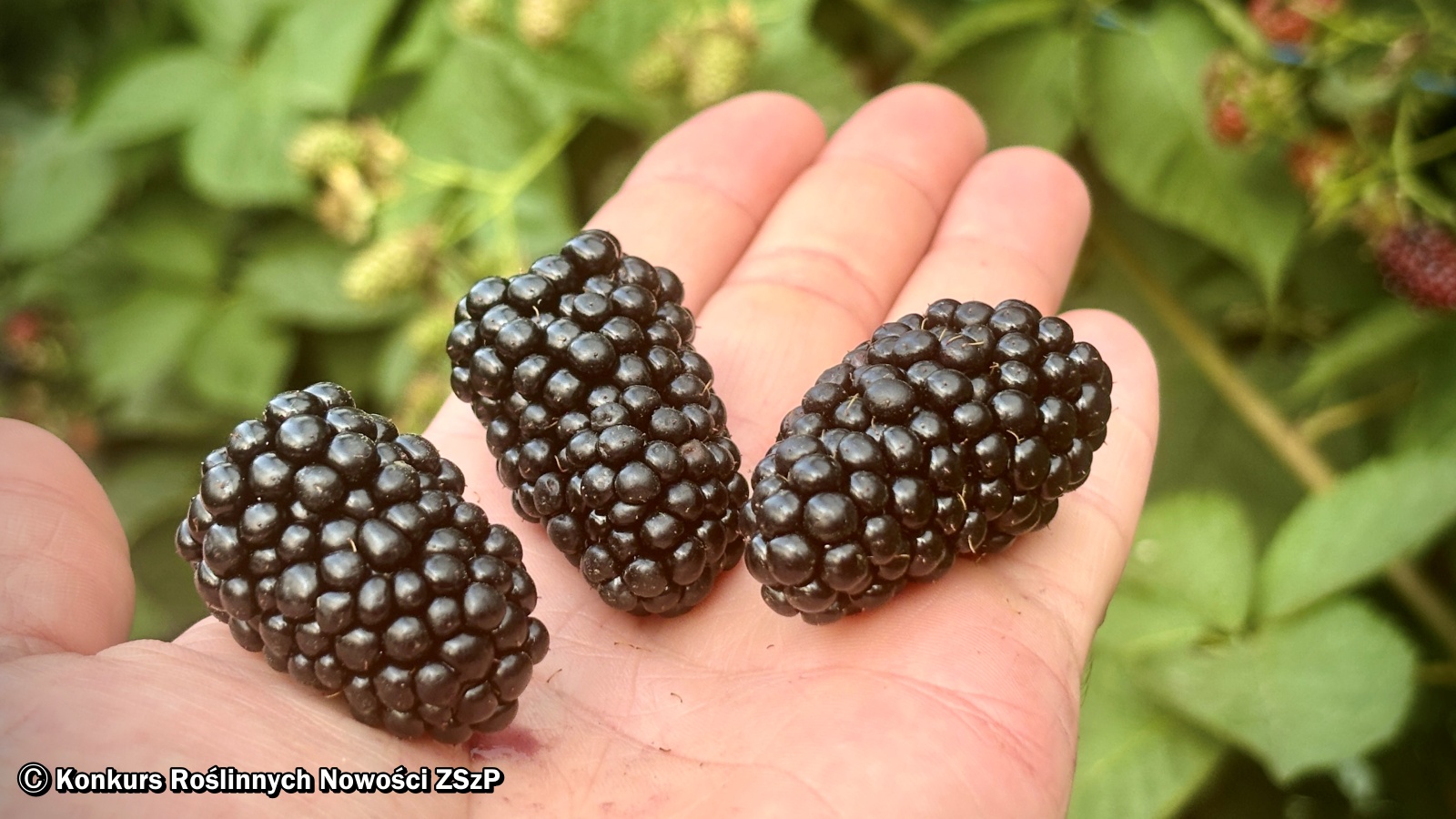
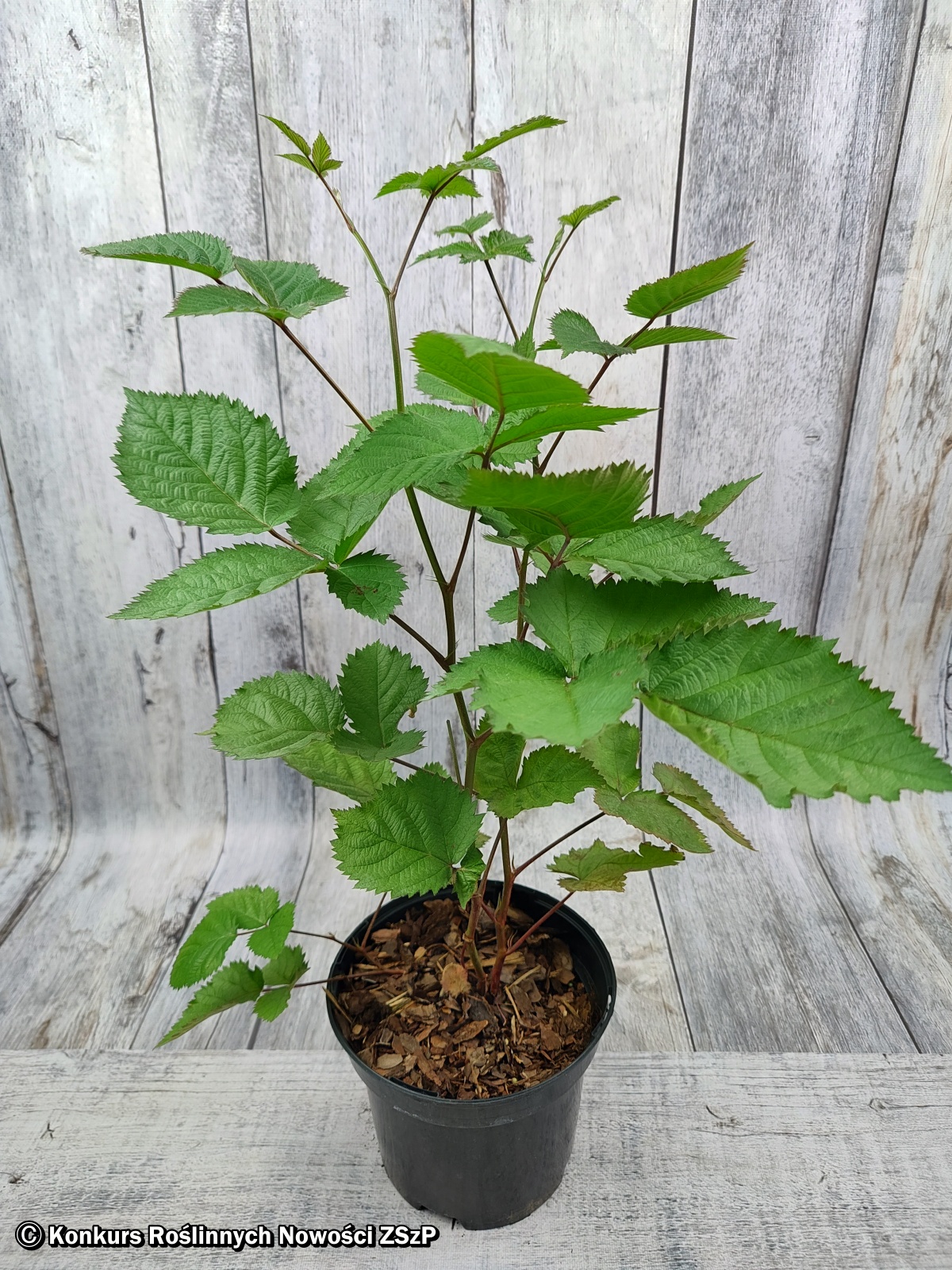
A new Polish-bred cultivar distinguished by exceptionally large fruit, reaching up to 3.5–4.0 cm in length and weighing 8.5–10 g. Thanks to its high sugar content, with soluble solids reaching up to 13%, the fruit is aromatic and sweet. The approximate yield per bush is 3–4 kg. The cultivar is also resistant to diseases, including anthracnose and cane dieback. The fruit shows low susceptibility to rot and color reversion during storage. Its high firmness and excellent texture allow for storage under refrigerated conditions (5–9°C) for up to two weeks. The plant is characterized by moderate vigor and an upright growth habit, reaching up to 2.5 m in height. The leaves are intensely dark green with a slight gloss, deeply serrated, and curled upward along the margins. This cultivar fruits on second-year canes in June and then produces a second crop on current-season canes from early September onward. Fully ripe berries have an attractive, uniform black color with a glossy appearance. They are exceptionally firm and are particularly recommended for the fresh market as dessert fruit. The cultivar is recommended for both commercial plantations and home gardens. Hardiness zone: 5b (–26 to –23°C).

Cultivar denomination: ‘Maryna’ PBR

Breeder: Niwa Hodowla Roślin Jagodowych, Poland

Year of market introduction: 2024

Applicant: Gospodarstwo Szkółkarskie Anna KOWALSKA-CIEPŁUCHA, ul. Górna 50, 95-050 Konstantynów Łódzki, Poland

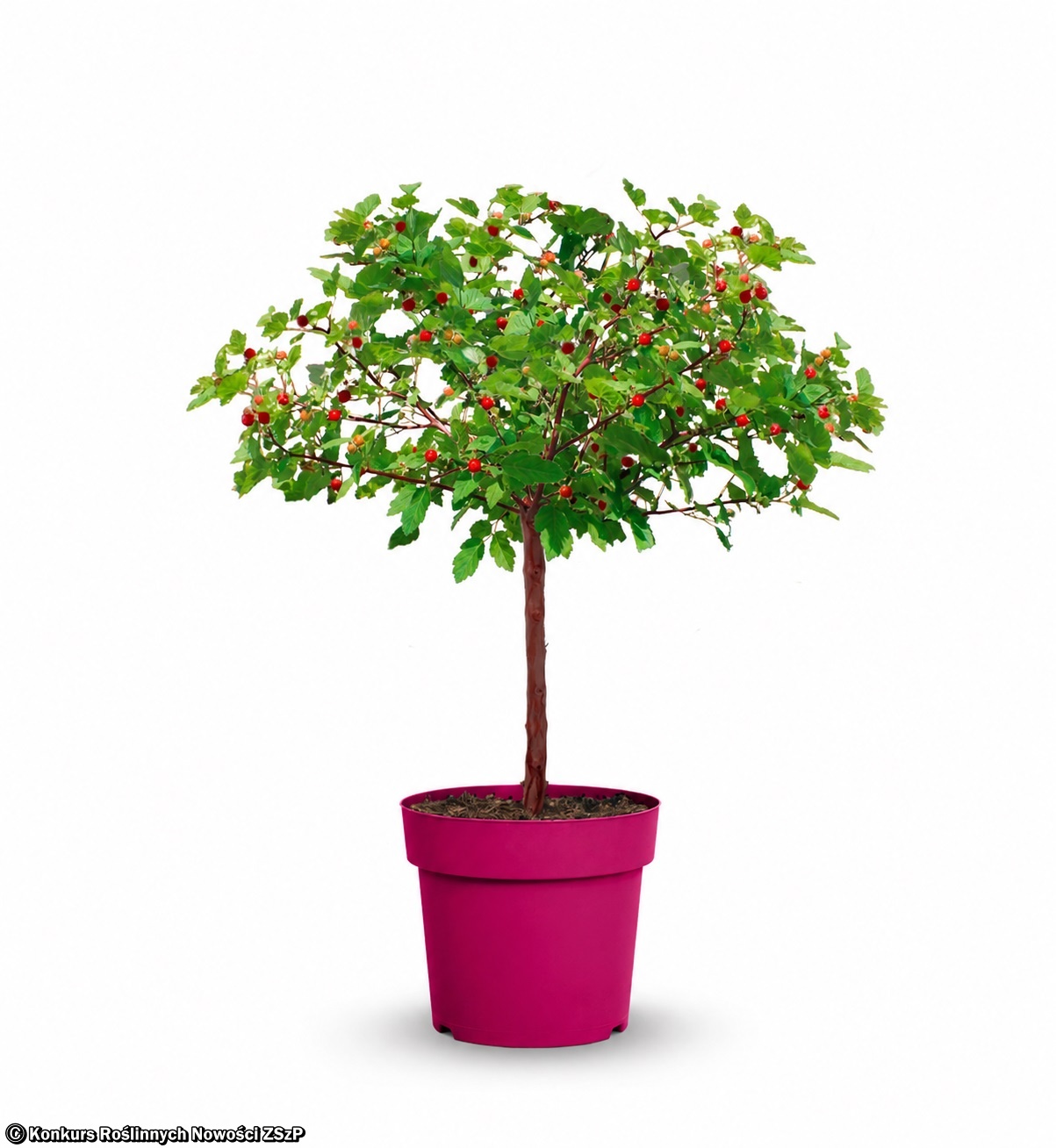
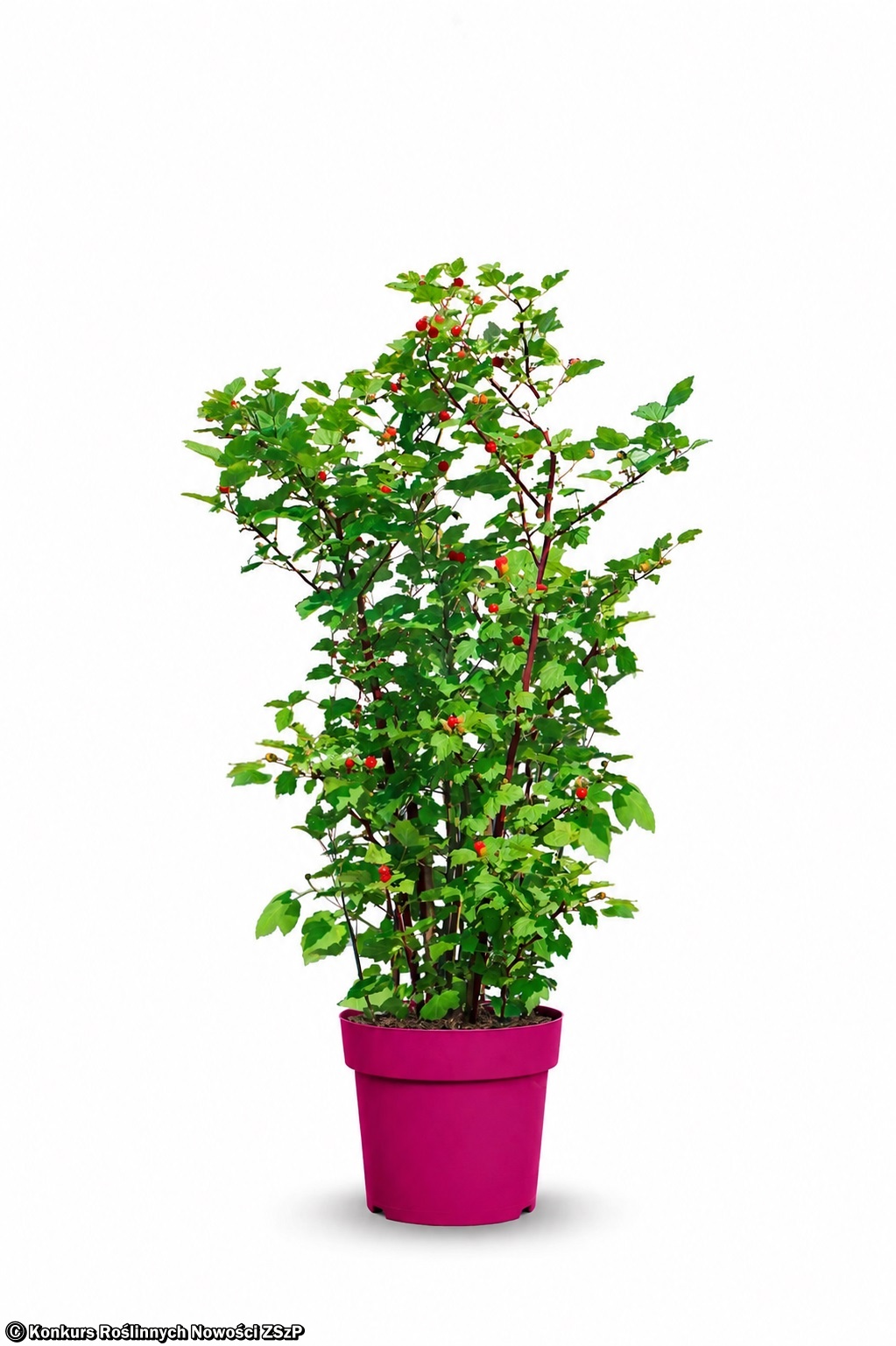
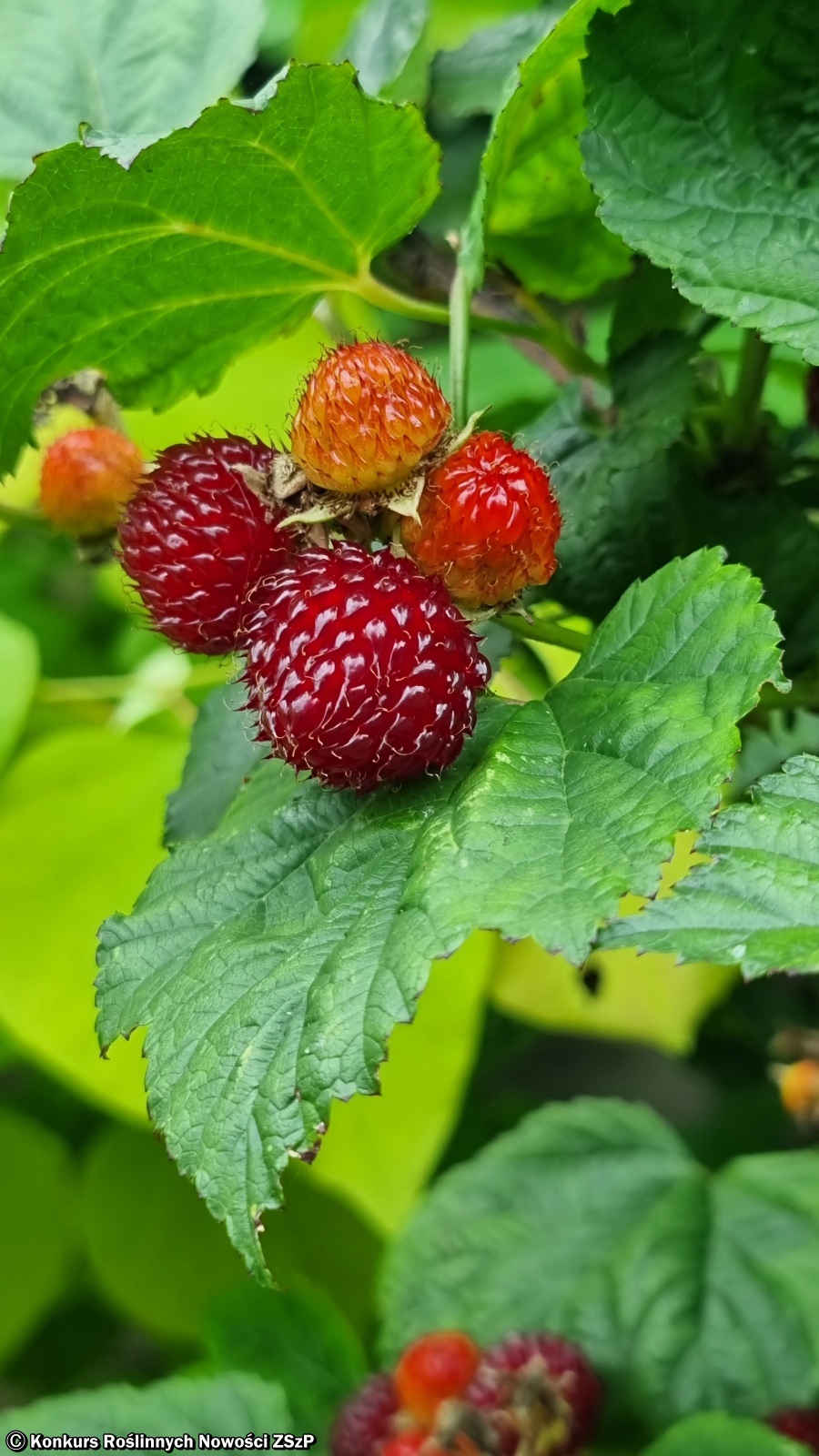
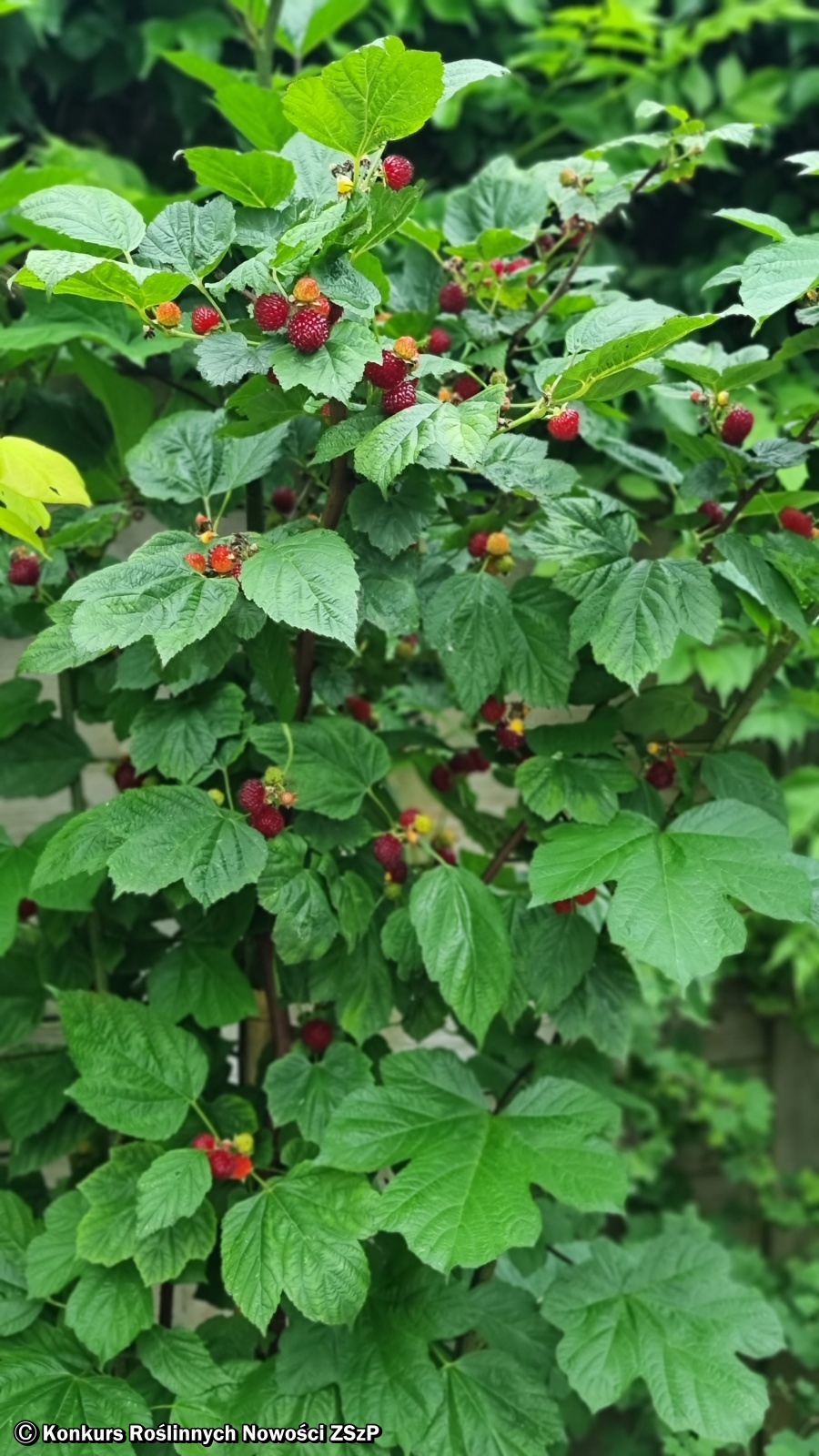
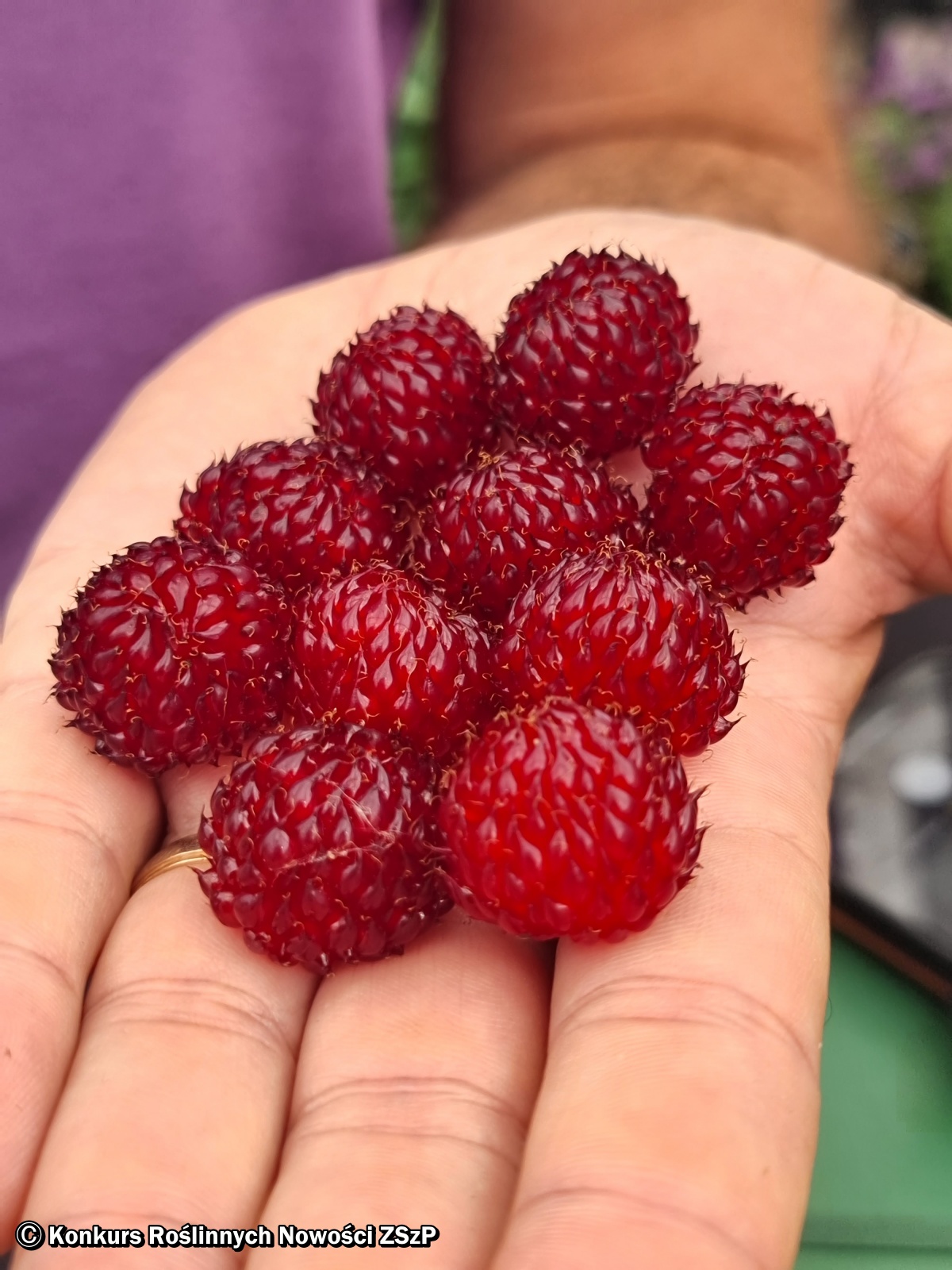
Rubus idaeus RASPBEARY

Rubus idaeus RASPBEARY

A distinctive new raspberry cultivar characterized by vigorous growth and thick, sturdy canes that do not suffer winter dieback, which has led to it being referred to as a tree raspberry. The plant has an upright, erect growth habit and produces fruit on second-year canes. The cultivar is tolerant of heat and drought, distinguished by its early fruit ripening and extended harvest period. It blooms in late April to early May with white flowers, and the first fruits ripen in early June. The plant is highly productive, yielding abundant, aromatic berries measuring 2–3 cm in length. The fruit is flavorful, juicy, and bright red in color. The fruiting season may continue from June through September. The cultivar is fully winter hardy, tolerating temperatures down to –25°C. Thanks to its compact structure and high productivity, it is ideally suited for small gardens and is also an attractive cultivar for sale through garden centers and nurseries. Hardiness zone: 5b (–26 to –23°C).

Cultivar denomination: ‘Hararasp’ PBR

Breeder: Toshihiko Hara, Japan

Year of market introduction: 2022

Applicant: Joh. STOLWIJK & SONS, Rijneveld 71, 2771 XW, Boskoop, The Netherlands

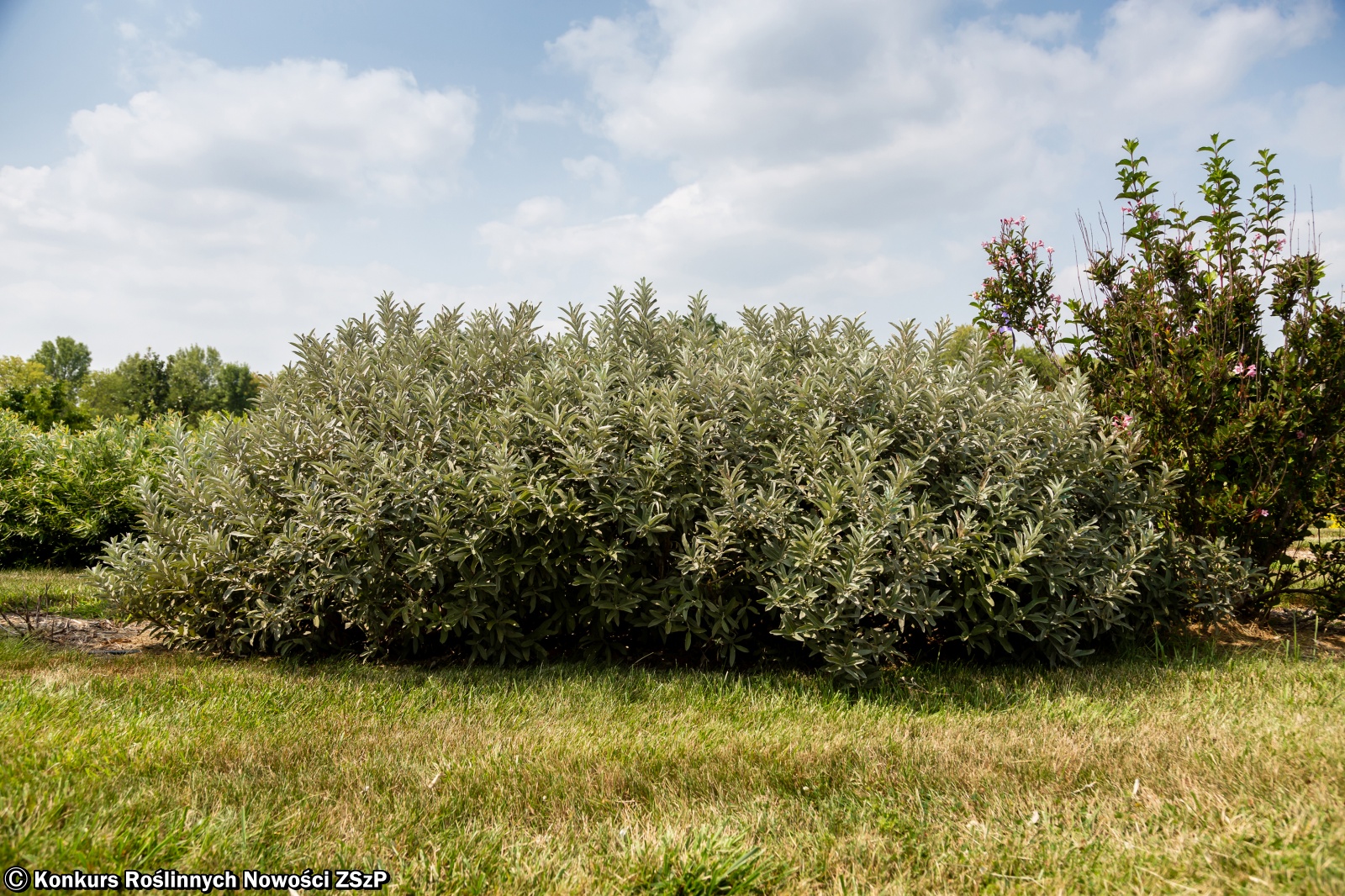
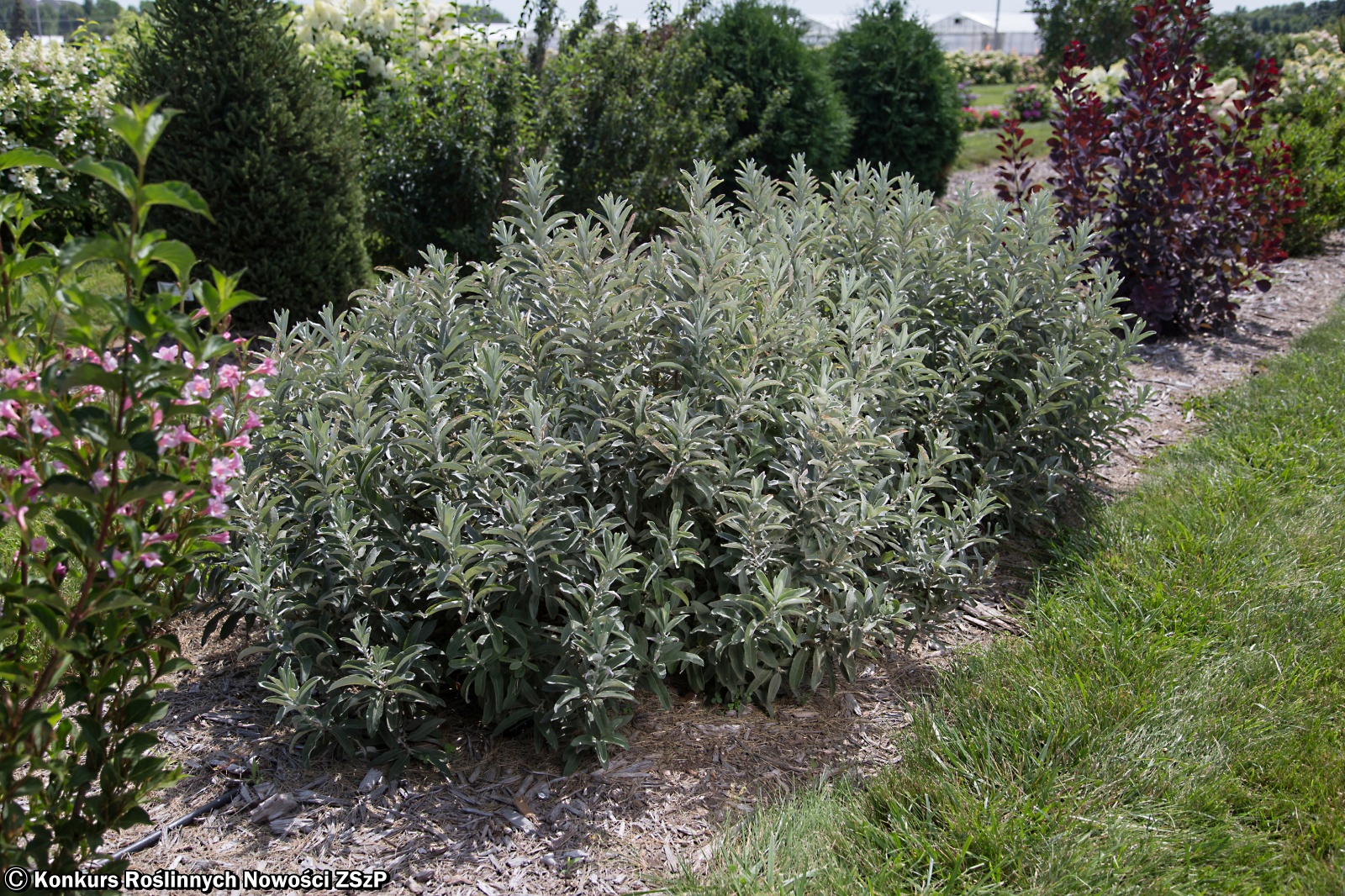
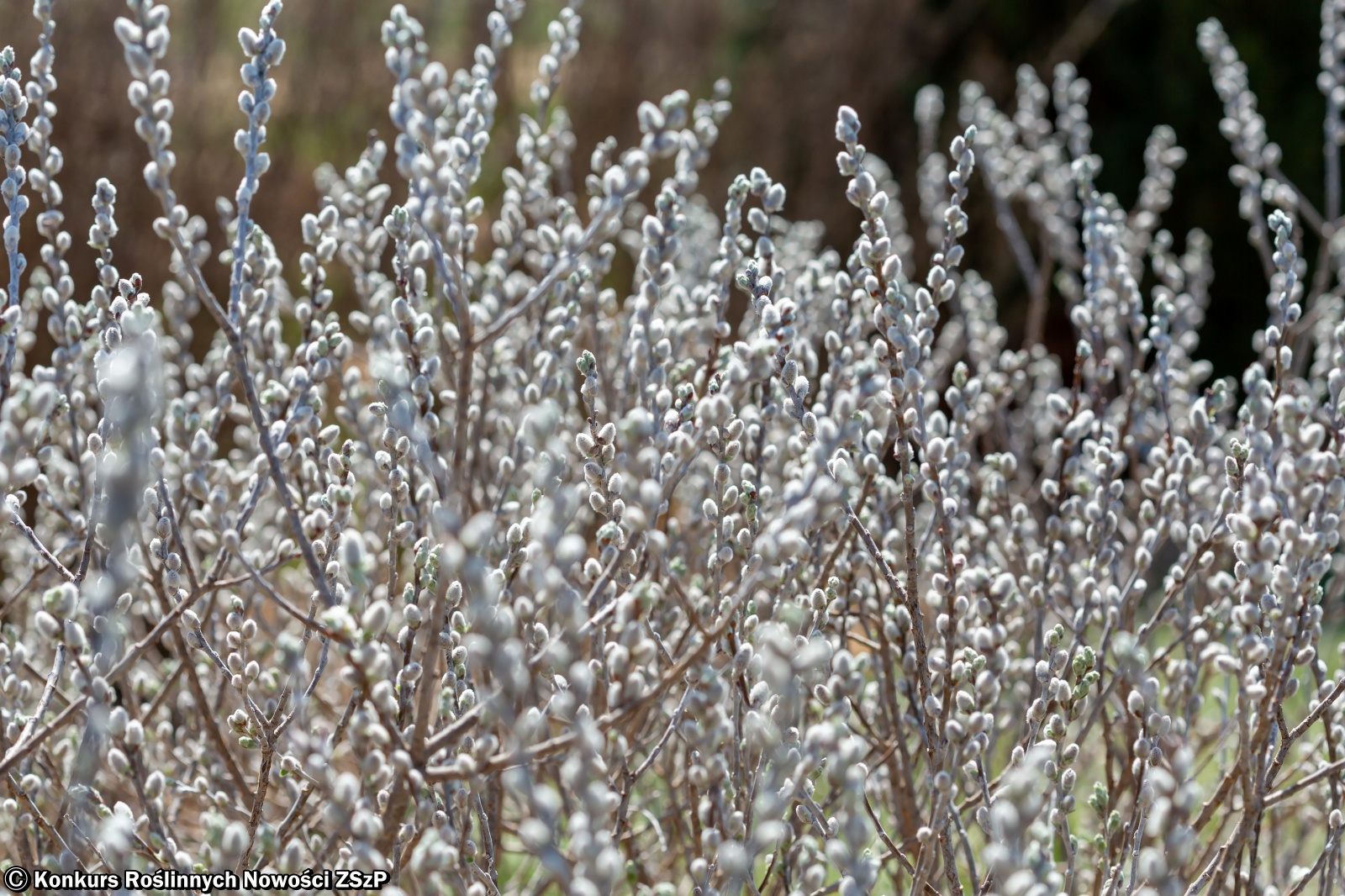
Salix candida ICEBERG ALLEY®

Salix candida ICEBERG ALLEY®

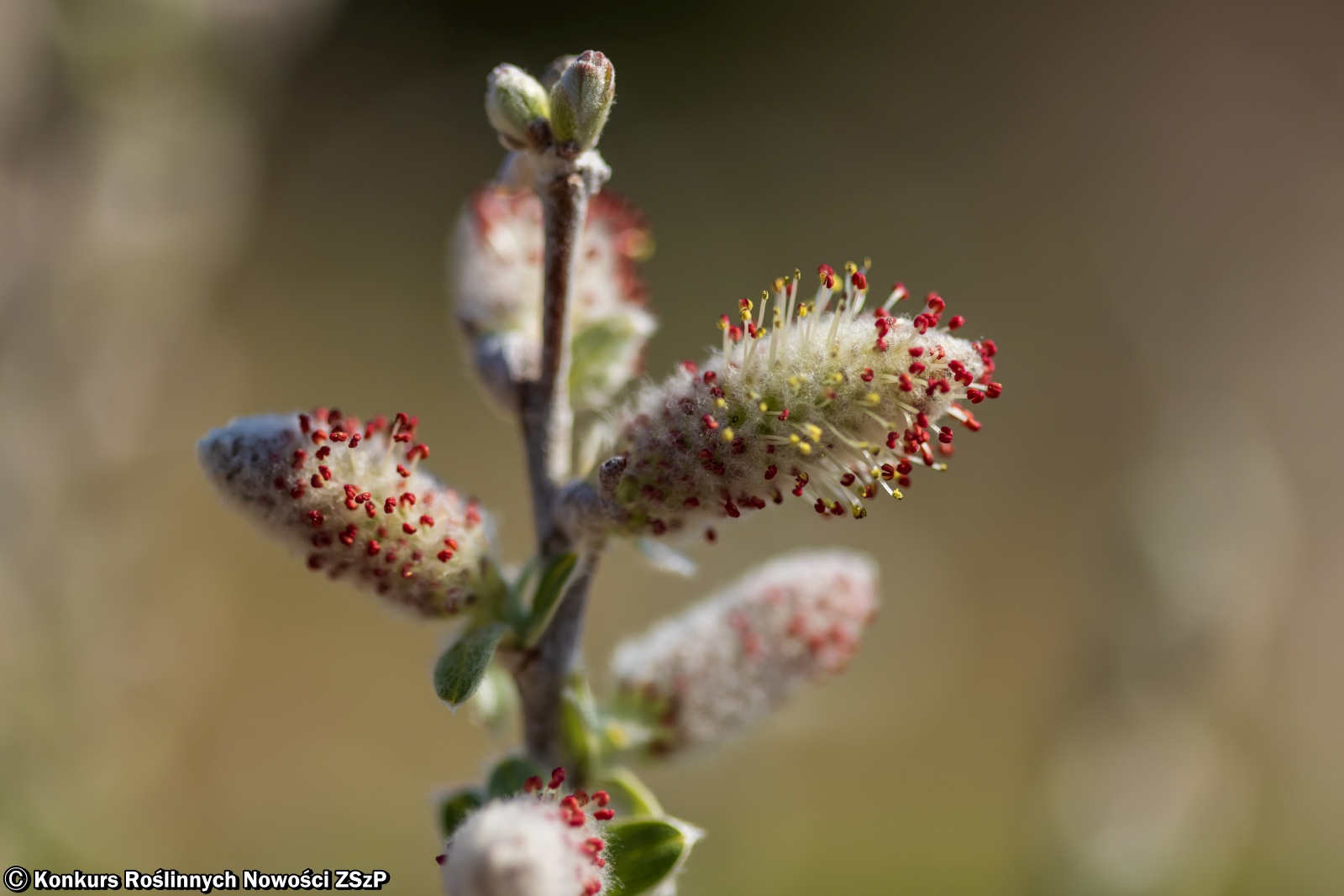
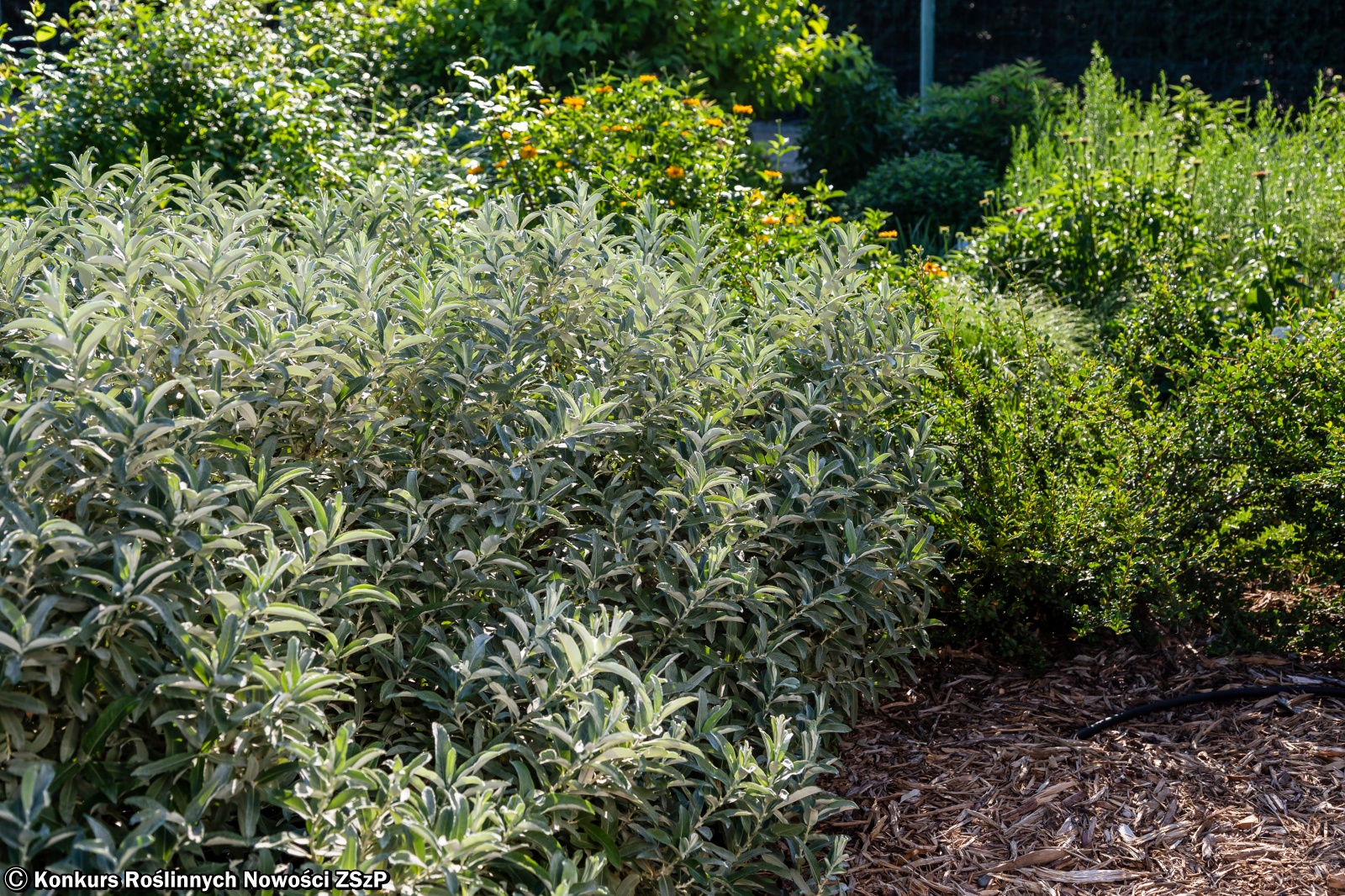
A compact, rounded shrub distinguished by its exceptionally bright, silvery foliage. The narrow leaves are covered with fine hairs, giving the plant a cool, almost icy appearance that contrasts beautifully with green perennials and darker shrubs in mixed borders. In spring, before the leaves are fully developed, ornamental silvery catkins with red stamens appear and are highly attractive to pollinating insects. The plant typically reaches 1–1.5 m in height, has a dense, compact habit, and responds well to pruning. It performs best in full sun and in moist to wet soils, making it particularly suitable for planting near ponds, water features, and in rain gardens. The cultivar is frost hardy and easy to maintain. Hardiness zone: 2 (–45 to –40°C).

Cultivar denomination: ‘Jefberg’ PBR

Breeder: Todd Boland, Canada

Year of market introduction: 2026

Applicant: Szkółka SZMIT, ul. Kwiatowa 18, 06-400 Pęchcin, Poland

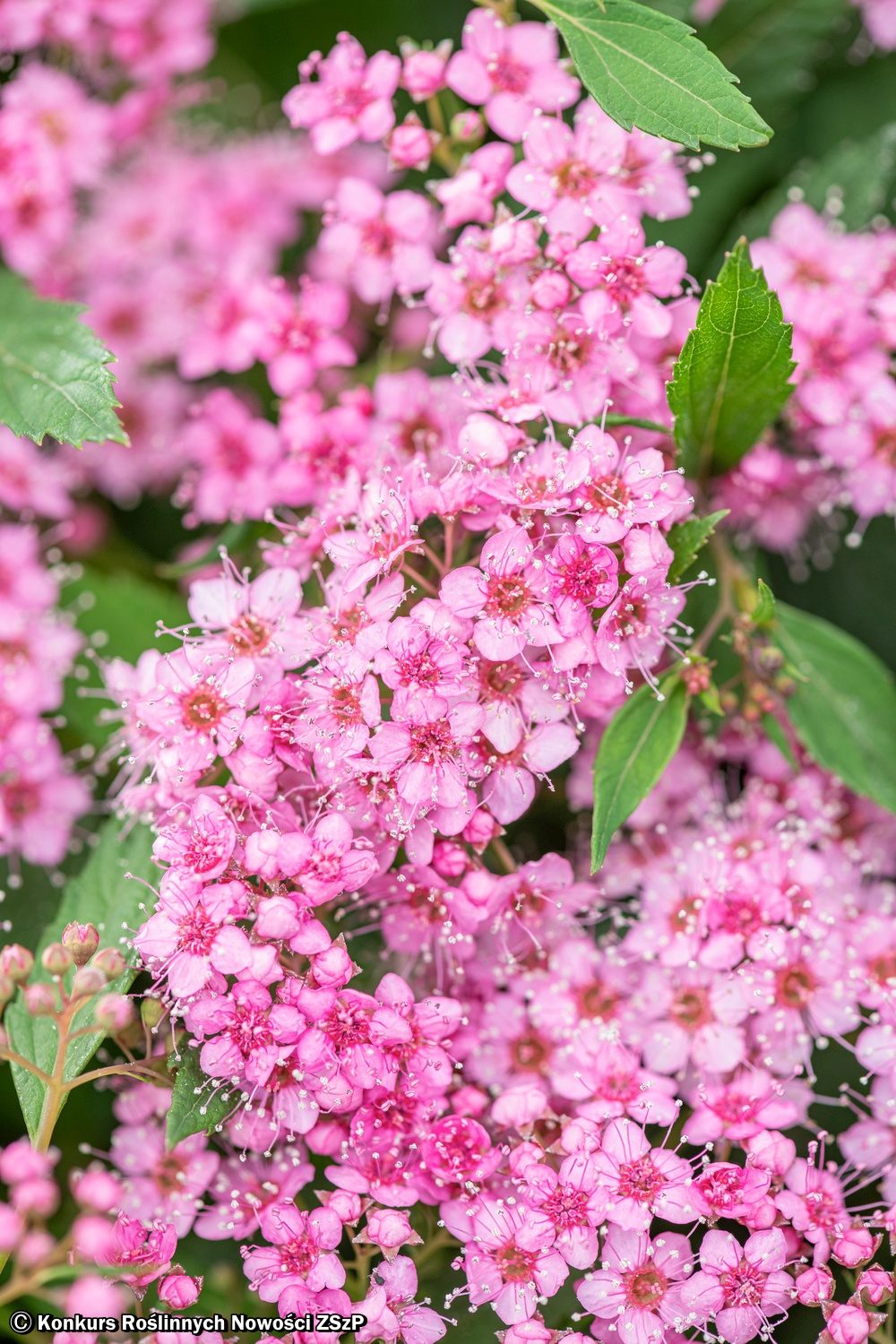
Spiraea japonica RICK STAR

Spiraea japonica RICK STAR

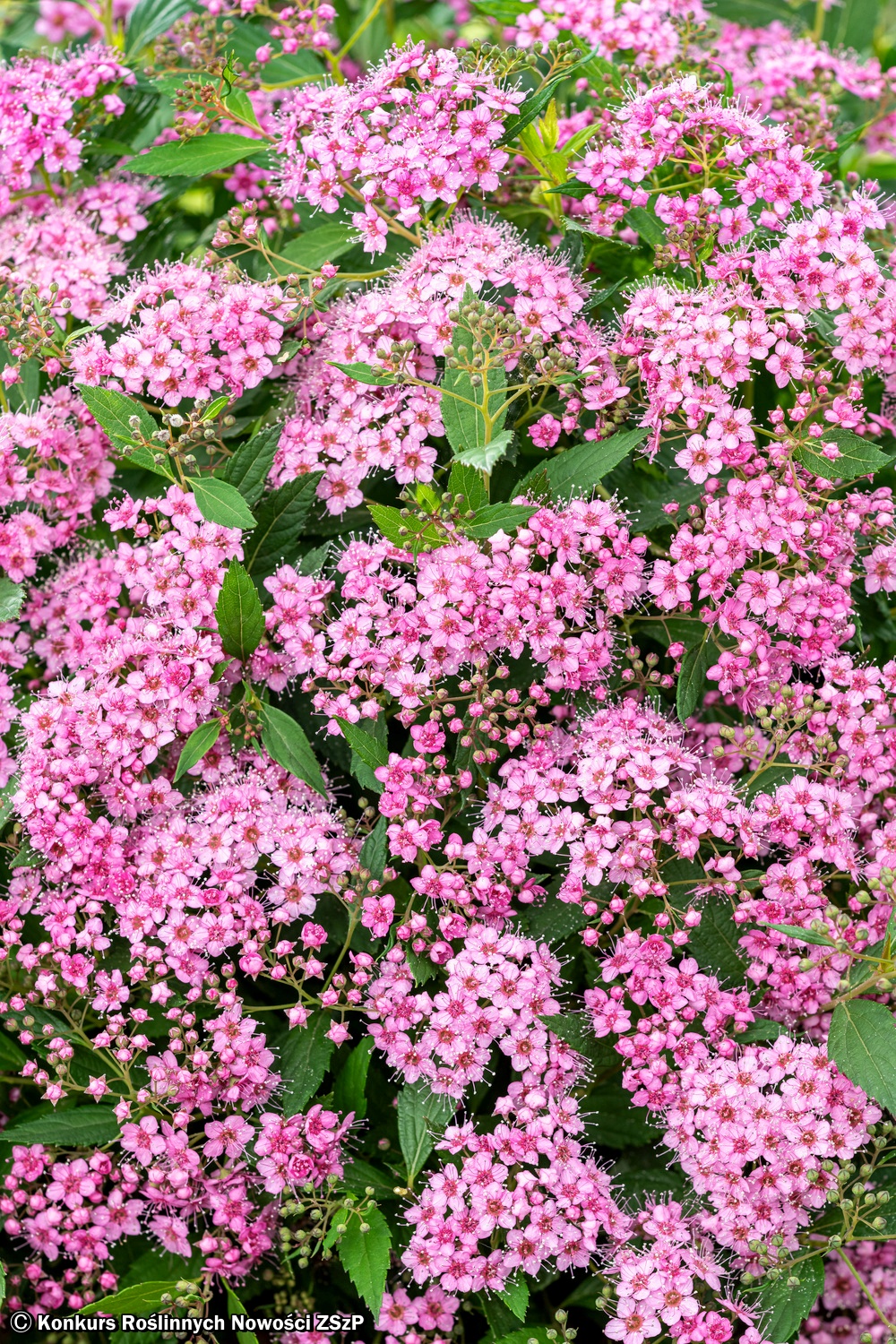
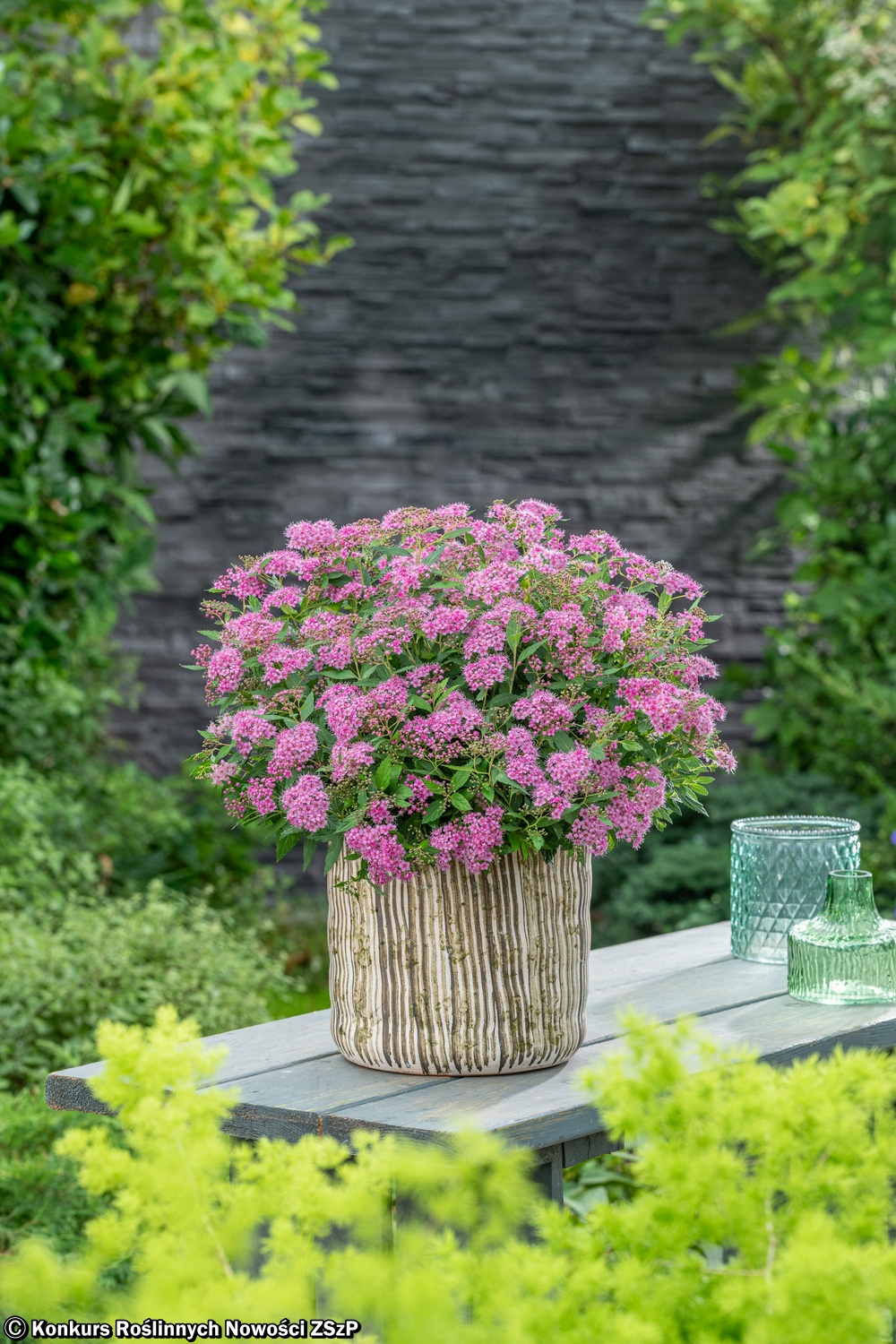
A compact, dense shrub with a rounded, mounded habit, green foliage, and pink flowers, reaching approximately 30–40 cm in height. The leaves are green, sharply pointed, and serrated along the margins, with good resistance to powdery mildew. The flowers are deep pink and borne in flat-topped clusters. They appear abundantly at the tips of current-season shoots in June and July, creating a striking ornamental display. From cuttings, the plant can be grown into a ready-to-sell product within a 3 months. It is an undemanding shrub with average soil requirements and performs best in full sun. The cultivar is frost hardy and is recommended for home gardens as well as urban landscaping. It is well suited for flower beds, rock gardens, borders, and container cultivation on patios and terraces. The cultivar also carries a personal meaning. It commemorates Rick, the breeder’s nineteen-year-old neighbor who tragically lost his life in an accident. ‘Rick Star’ symbolizes his energy, strength, and joy of life, qualities reflected in the plant’s vibrant and profuse flowering. Hardiness zone: 4 (–34 to –29°C).

Cultivar denomination: ‘JW1’ PBR

Breeder: Jos Willemsen, The Netherlands

Year of market introduction: 2025

Applicant: NL PLANTS BV, Lentsebaan 1, 4884 MN Wernhout, The Netherlands

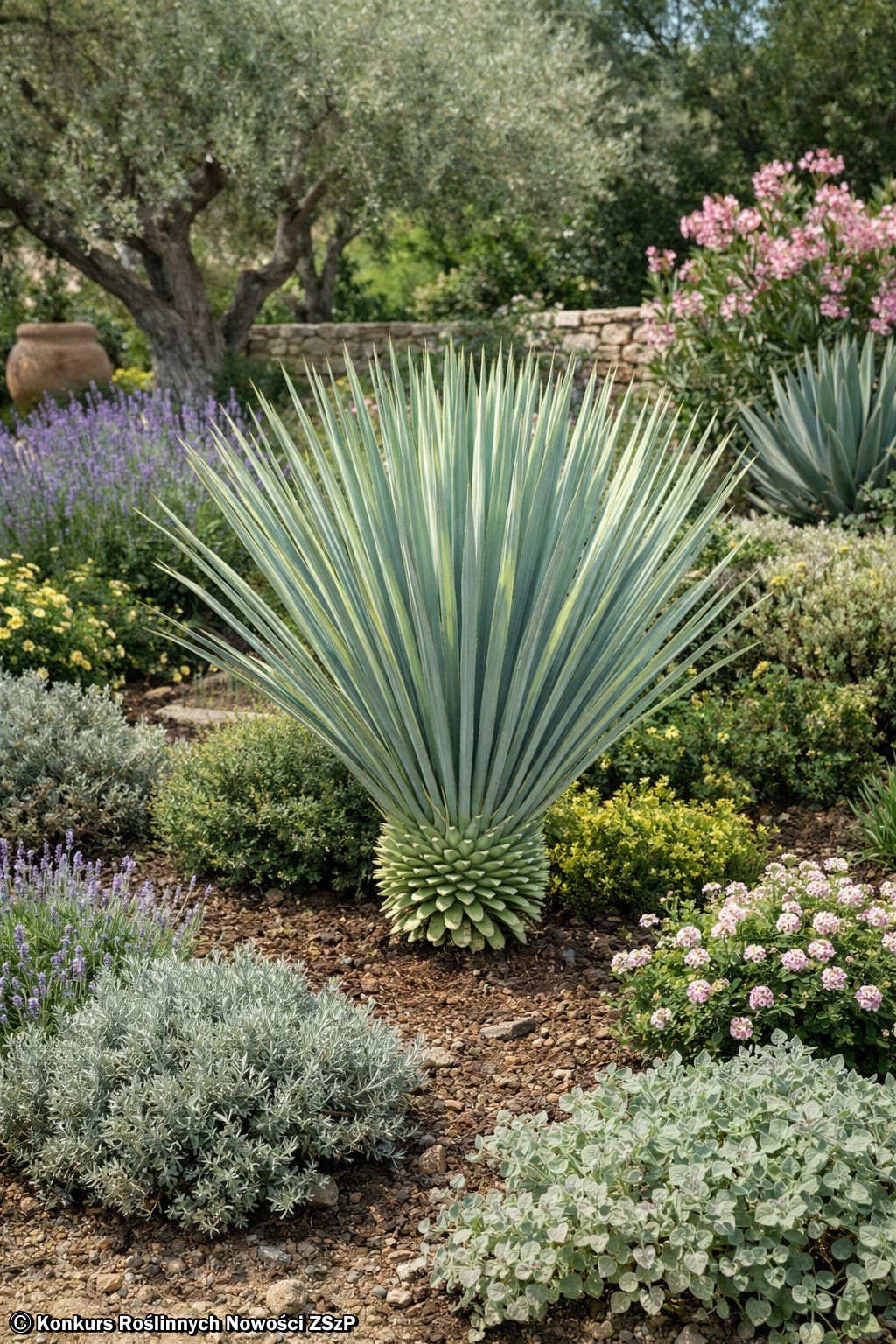
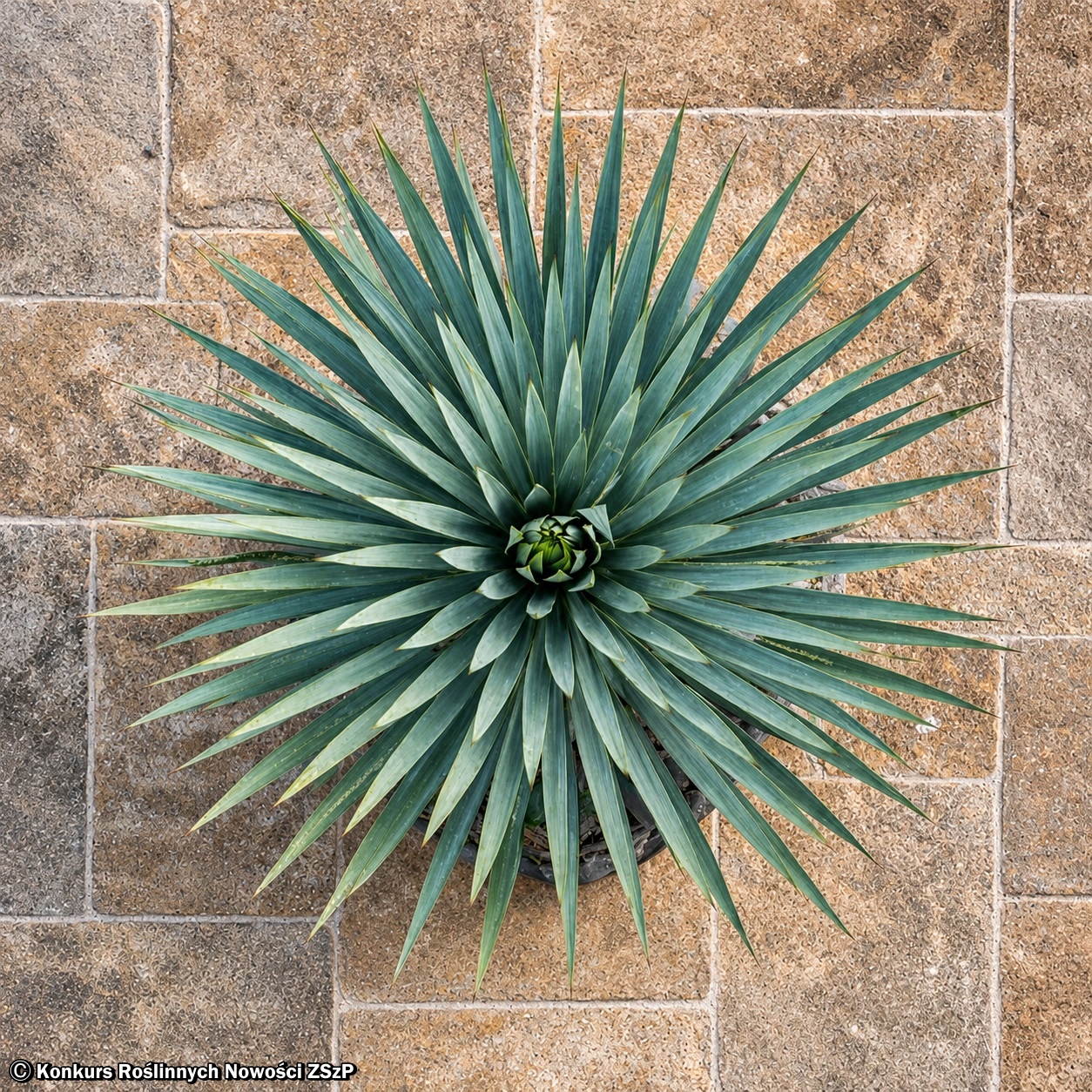
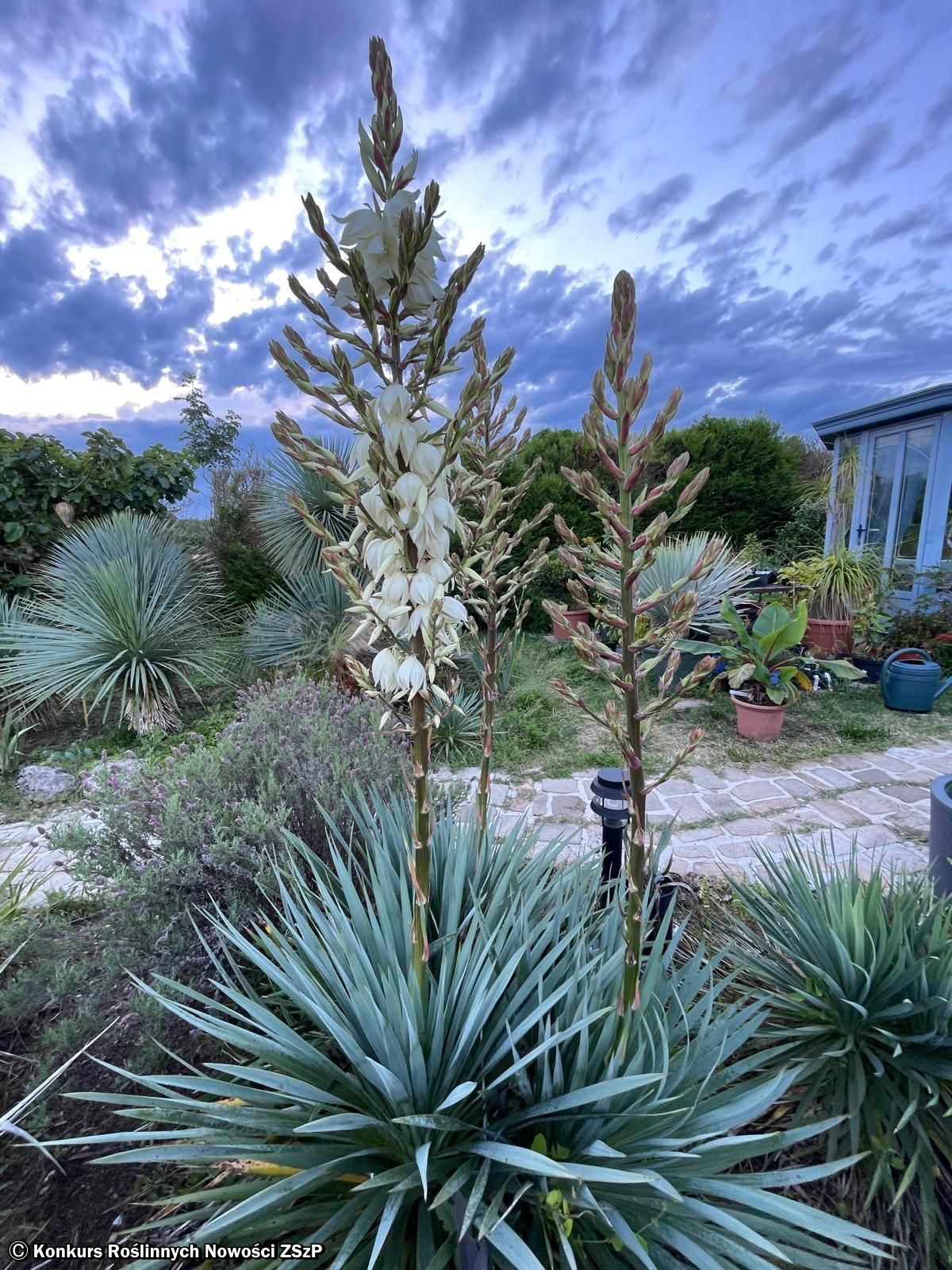
Yucca FRENCH FLAG

Yucca FRENCH FLAG

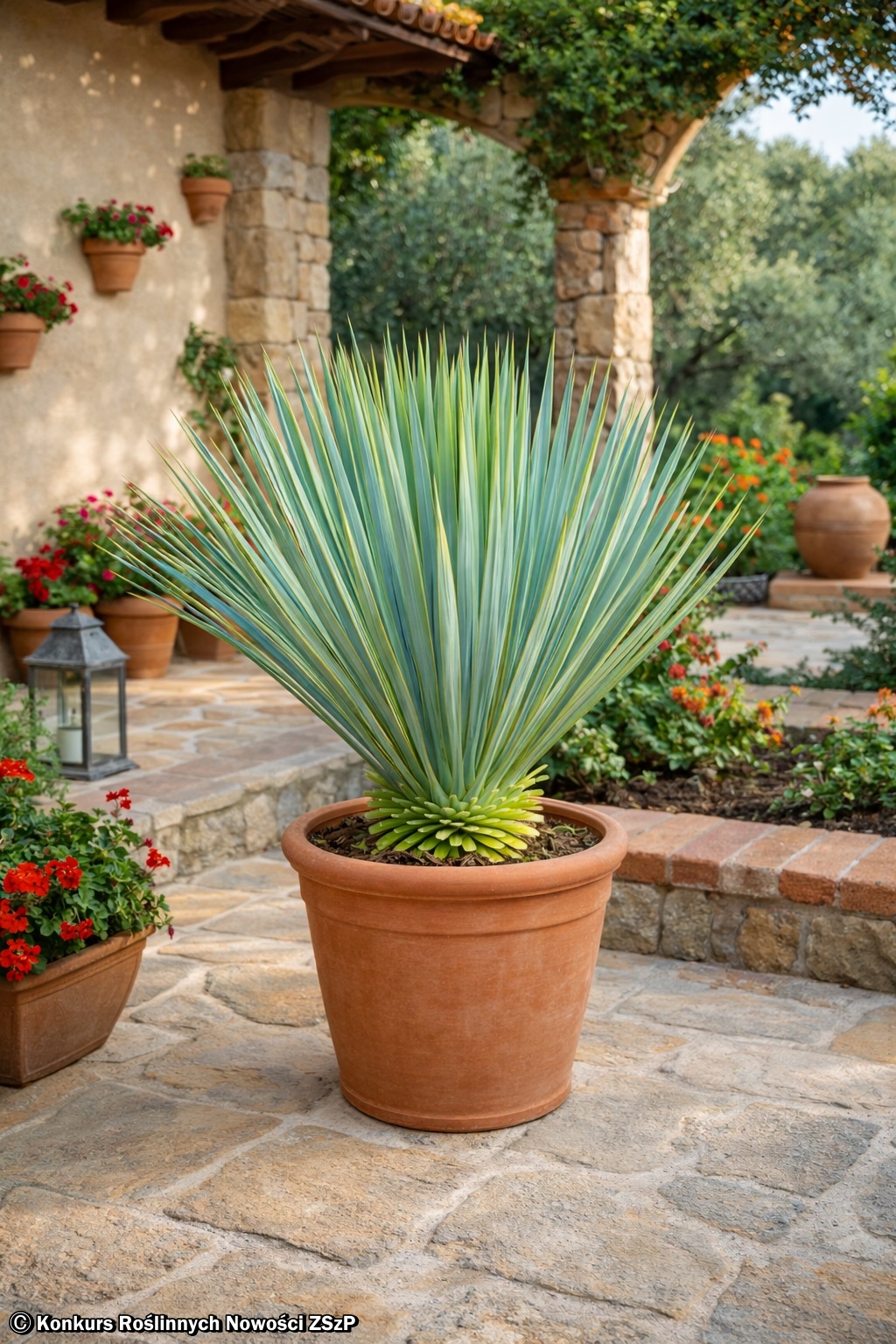
Yucca ‘French Flag’ is a striking interspecific hybrid between Y. filamentosa and Y. rostrata that immediately draws the eye with its silvery blue leaves. The long, narrow leaves form a stunning rosette, making it a showstopper in any landscape. Its softer texture makes it more approachable than one of its parents, Yucca rostrata. In late spring, tall panicles of showy ivory-white flowers rise above the foliage, creating a dramatic contrast against the striking silvery blue leaves. ‘French Flag’ is evergreen, drought tolerant, low maintenance and notably hardy, making it a dependable choice for Mediterranean-style borders, gravel gardens, rock gardens, and large containers on terraces or balconies. Yucca ‘French Flag’ grows up to 100–150 cm high and wide and prefers a spot in well-drained soil in full sun. Hardiness zone: 6a (−23 to −21°C).

Cultivar denomination: ‘BotEx 016’ PBR

Breeder: Amélie Jeckert, France

Year of market introduction: 2026

Applicant: Van SON & KOOT BV, Dongenseweg 3a, 5171 NA, Kaatsheuvel, The Netherlands

Plant Novelties Competition 2026

Dear Exhibitors of the GREEN IS LIFE 2026 Fair,

We invite you to take part in the Plant Novelties Competition, organized as part of the International Fair of Plants, Horticultural Technology and Landscape Architecture Green is life. The competition is intended for Exhibitors who wish to promote and popularize their plants — companies, breeders and nurseries introducing new cultivars to the market.

The aim of the competition is the broad promotion of new, interesting cultivars of trees, shrubs, climbers and perennials with high commercial potential. This year, once again, the plants will be evaluated by an international Jury, and an additional award will be granted by representatives of horticultural media through email voting, as well as by gardeners and plant enthusiasts in a public vote held on social media.

Participation in the competition is linked to the promotion of both the novelties and the companies submitting them. The plants and their descriptions, together with information about the submitting entity, will be:

  • displayed at the competition stand during the International Fair of Plants, Horticultural Technology and Landscape Architecture GREEN IS LIFE
  • published on the websites of the Polish Nurserymen Association (zszp.pl and e-katalogroslin.pl) and the GREEN IS LIFE Fair
  • included in the printed Fair Guide
  • promoted in Facebook/Instagram posts on the Association’s and Fair’s profiles
  • promoted in horticultural magazines

Information about the awarded and distinguished plants will be:

  • provided to horticultural trade publishers in Poland and leading foreign media
  • shared with lifestyle and advisory media, as well as bloggers covering gardening topics
  • published in the 2027 Polish Nurserymen Association Nursery Catalogue, distributed among professionals, with the gold‑medal plant featured on the cover.

According to the competition rules, novelties are defined as new taxa that have been introduced into production and/or sold in Poland for no longer than 5 years. Cultivars that have already appeared in previous editions are not eligible. The full list is available at: https://zszp.pl/en/plants/plant-novelties-competition-zszp/list-of-plants-qualified-for-the-competition-in-the-years-2008-2025/.

Only Exhibitors of the International Fair of Plants, Horticultural Technology and Landscape Architecture GREEN IS LIFE may submit plants to the competition. Detailed requirements, criteria and information are provided in the REGULATIONS OF THE 2026 PLANT NOVELTIES COMPETITION.

Submission of new cultivars to the Competition is carried out via the ONLINE APPLICATION FORM, completed separately for each cultivar.

IMPORTANT! Applications must be submitted and the participation fee paid by 30 June 2026 at 23:59.

Applications submitted after this deadline, incomplete, without photos or unpaid, will be rejected.

If you have any questions, please contact: g.falkowski@zszp.pl, tel. +48 22 435 47 22.

RULES OF THE PLANT NOVELTIES COMPETITION

APPLICATION FORM

Organizers:

Polish Nurseryman Association
Agencja Promocji Zieleni
ph. +48 22 435 47 20

www.zszp.pl     www.greenislife.pl